


























Views
Downloads
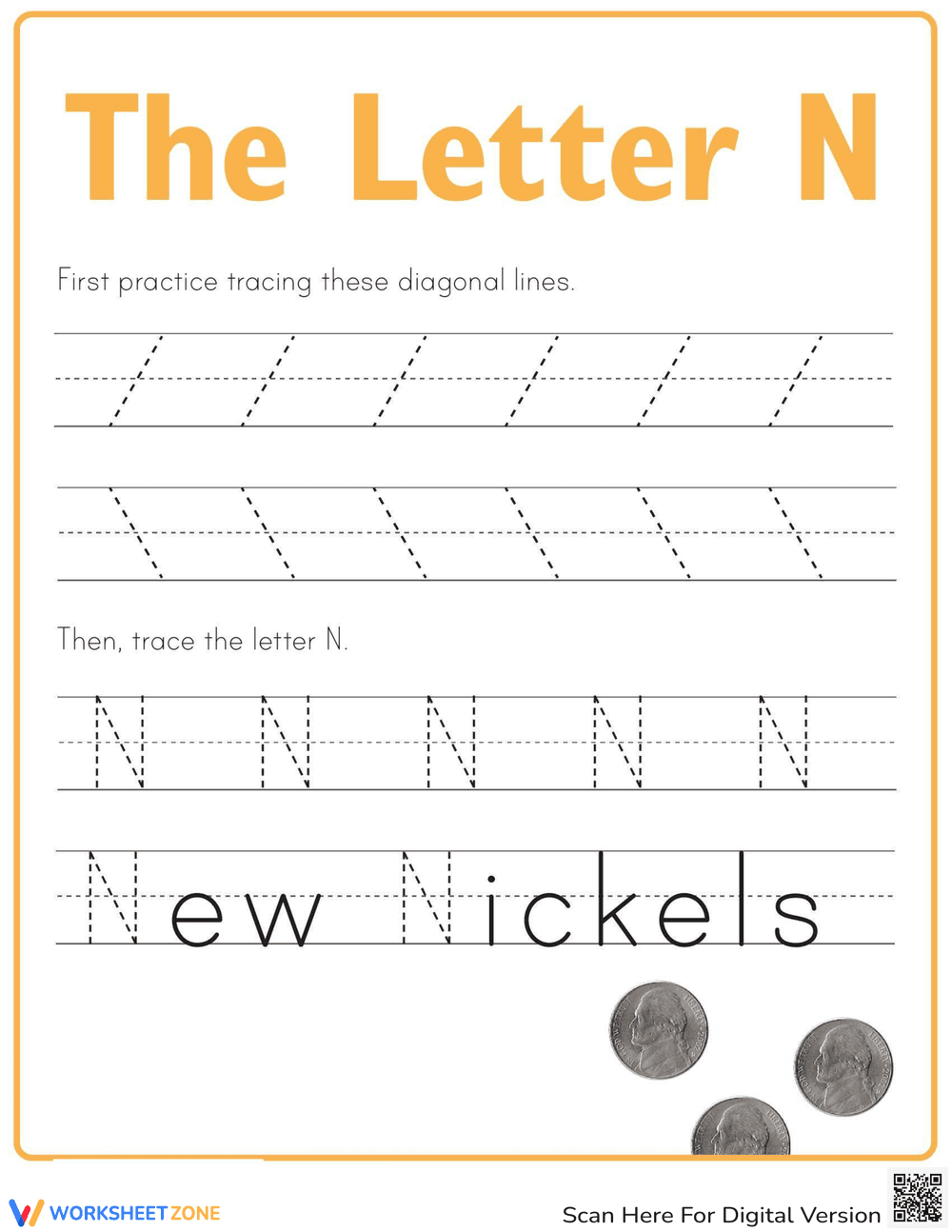

Letter N Handwriting Practice | Essential Grade K-1
Paste this activity's link or code into your existing LMS (Google Classroom, Canvas, Teams, Schoology, Moodle, etc.).
Students can open and work on the activity right away, with no student login required.
You'll still be able to track student progress and results from your teacher account.
This Kindergarten handwriting worksheet helps students master the uppercase letter N through a structured tracing progression. By starting with foundational diagonal strokes before moving to full letter formation, learners build the muscle memory and fine motor control necessary for legible writing. It provides a clear, distraction-free path to alphabet mastery and early literacy success.
At a Glance
At a Glance
- Grade: Kindergarten · Subject: Handwriting
- Standard:
L.K.1.A— Print many upper- and lowercase letters with proper form- Skill Focus: Uppercase Letter N Formation
- Format: 1 page · 19 tasks · Answer key included · PDF
- Best For: Daily morning work or literacy centers
- Time: 10–15 minutes
What's Inside
Inside this single-page PDF, you will find three distinct practice zones. The top section features 12 diagonal line tracing prompts to warm up the hand. The middle section provides 5 uppercase N models on primary ruled lines. Finally, the bottom section includes the phrase "New Nickels" to practice letter integration within words, supported by visual coin cues.
Zero-Prep Workflow
This resource is designed for a zero-prep workflow. First, print the single-page PDF (30 seconds). Second, distribute the sheets to students during your phonics or handwriting block (1 minute). Third, review the completed strokes to check for proper top-to-bottom formation (30 seconds). Total teacher preparation time is under 2 minutes, making it an ideal sub plan or bell-ringer.
Standards Alignment
This worksheet aligns with `L.K.1.A`, focusing on the production of uppercase letters. It specifically targets the vertical and diagonal strokes required for the letter N. Additionally, it supports RF.K.1.B by reinforcing the relationship between printed letters and spoken words. Both standard codes can be copied directly into lesson plans, IEP goals, or district curriculum mapping tools.
How to Use It
Use this worksheet during the "You Do" phase of a gradual release handwriting lesson. After demonstrating the letter N on the whiteboard, assign this for independent practice. For a formative assessment, observe if students start their diagonal strokes from the top line. This 15-minute activity provides immediate feedback on pencil grip and stroke directionality.
Who It's For
This resource is for Kindergarten and Grade 1 students who are developing fine motor skills. It is particularly helpful for learners who struggle with diagonal intersections. Pair this worksheet with a "Letter N" anchor chart or a tactile sand-tracing activity to provide a multi-sensory learning experience for diverse classroom needs.
According to the RAND AIRS 2024 report, explicit handwriting instruction in early childhood is a significant predictor of later reading and writing fluency. This worksheet addresses the foundational mechanics of letter formation by isolating the diagonal stroke—a common hurdle for five-year-old learners. By providing 19 specific tracing opportunities, the resource ensures students receive the high-frequency practice required to move from effortful drawing to automatic writing. Research from Fisher & Frey (2014) emphasizes that scaffolded practice, such as the transition from isolated lines to full words seen here, supports the gradual release of responsibility. This alignment with L.K.1.A ensures that students are meeting national benchmarks for letter production while building the cognitive endurance needed for longer composition tasks. Educators can confidently integrate this tool into evidence-based literacy blocks to bridge the gap between letter recognition and functional written communication.


