




























Views
Downloads

Essential Letter E Handwriting & Phonics | Grade K-1

Paste this activity's link or code into your existing LMS (Google Classroom, Canvas, Teams, Schoology, Moodle, etc.).
Students can open and work on the activity right away, with no student login required.
You'll still be able to track student progress and results from your teacher account.
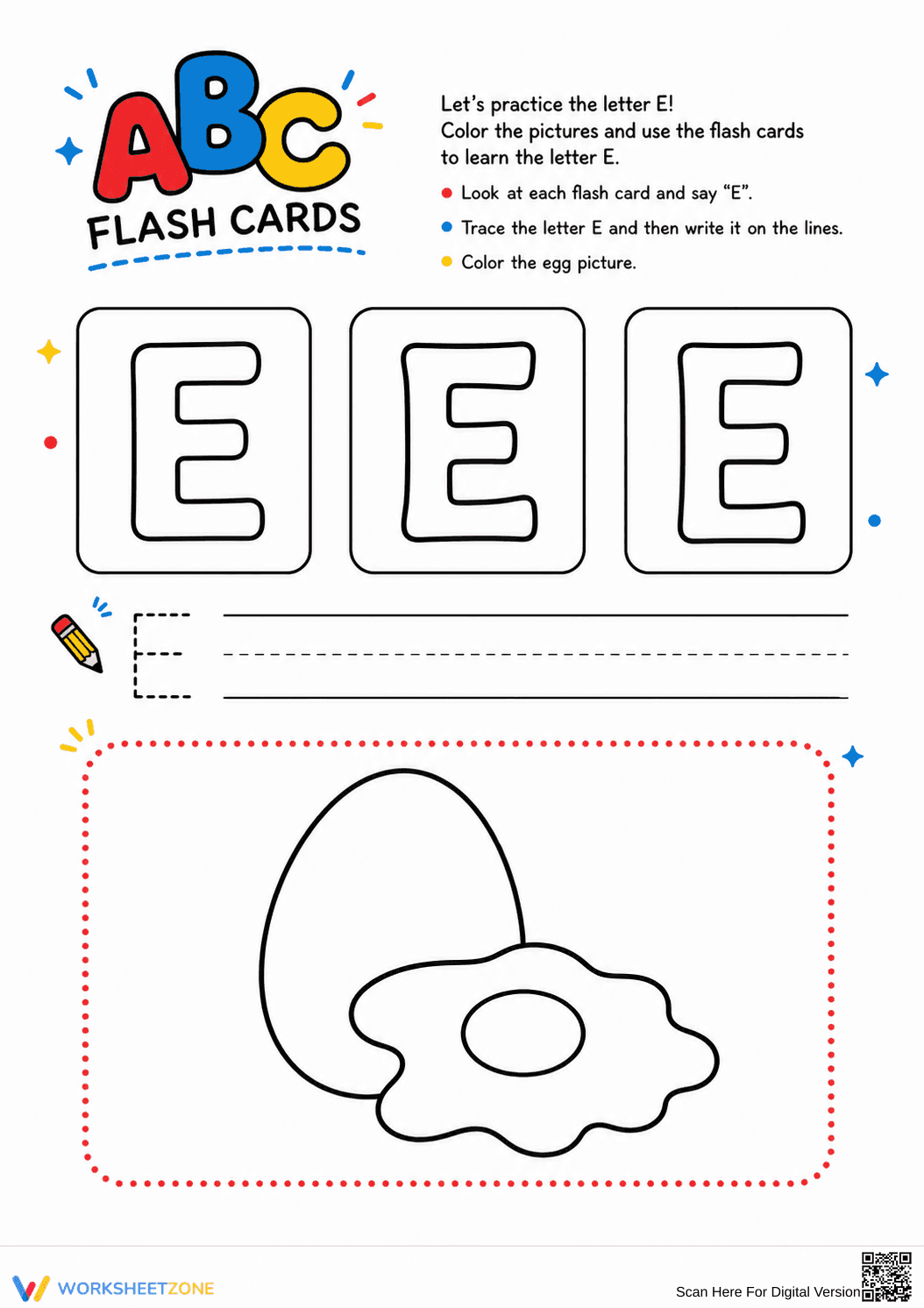
This Grade K-1 letter E worksheet helps young learners master uppercase letter recognition and formation through multi-sensory engagement. Students identify the letter on flash cards, practice precise tracing, and connect the sound to a visual egg anchor. It provides a foundational step toward phonemic awareness and fine motor development.
At a Glance
- Grade: K–1 · Subject: ELA & Handwriting
- Standard:
CCSS.ELA-LITERACY.RF.K.1.D— Recognize and name all upper- and lowercase letters of the alphabet- Skill Focus: Letter E formation and identification
- Format: 1 page · 3 activities · No-prep · PDF
- Best For: Morning work or literacy centers
- Time: 10–15 minutes
This single-page printable features three distinct learning zones. It includes three large-format letter E flash cards for visual recognition, a dedicated primary-ruled tracing line for handwriting practice, and a large egg illustration for coloring. The layout uses clear, bold lines and simple instructions to support independent student work without constant teacher intervention.
- Print: Select the PDF and print one copy per student in under 30 seconds.
- Distribute: Hand out the sheets along with crayons and pencils; no additional materials are required.
- Review: Spend 1 minute modeling the E sound and the top-to-bottom stroke order before students begin. This resource is an ideal sub-plan component or a quick filler for early finishers.
This resource aligns with `CCSS.ELA-LITERACY.RF.K.1.D`, focusing on the recognition and naming of uppercase letters. It also supports `CCSS.ELA-LITERACY.RF.K.3.A` by linking the letter E to its common beginning sound in egg. Both standard codes can be copied directly into lesson plans, IEP goals, or district curriculum mapping tools.
Use this worksheet during the independent practice phase of a gradual release model after introducing the letter E on an anchor chart. It serves as an excellent formative assessment; observe students' pencil grip and stroke direction during the tracing portion to identify those needing fine motor intervention. Expected completion typically takes 12 minutes.
This activity is designed for Kindergarten students beginning their phonics journey and Grade 1 students requiring handwriting remediation. It pairs naturally with a Letter of the Week curriculum or a read-aloud focused on short vowel sounds. The coloring element provides a necessary break for students developing stamina in a structured environment.
According to the RAND AIRS 2024 report, multi-sensory approaches that combine visual, auditory, and kinesthetic tasks—such as tracing and coloring—significantly improve letter-sound correspondence in early childhood education. This worksheet implements these findings by requiring students to say the letter name while physically tracing its form. By targeting CCSS.ELA-LITERACY.RF.K.1.D, the resource ensures that students build the foundational alphabetic knowledge necessary for later decoding and reading fluency. Research from Fisher & Frey (2014) emphasizes that such structured, independent practice reinforces direct instruction and helps bridge the gap between letter recognition and automaticity. Providing clear visual anchors like the egg illustration helps solidify the phonemic connection for emerging readers who benefit from pictorial mnemonics during the initial stages of literacy acquisition.


