




























Views
Downloads

Essential First Letter Worksheet | Grade K Printable

Paste this activity's link or code into your existing LMS (Google Classroom, Canvas, Teams, Schoology, Moodle, etc.).
Students can open and work on the activity right away, with no student login required.
You'll still be able to track student progress and results from your teacher account.
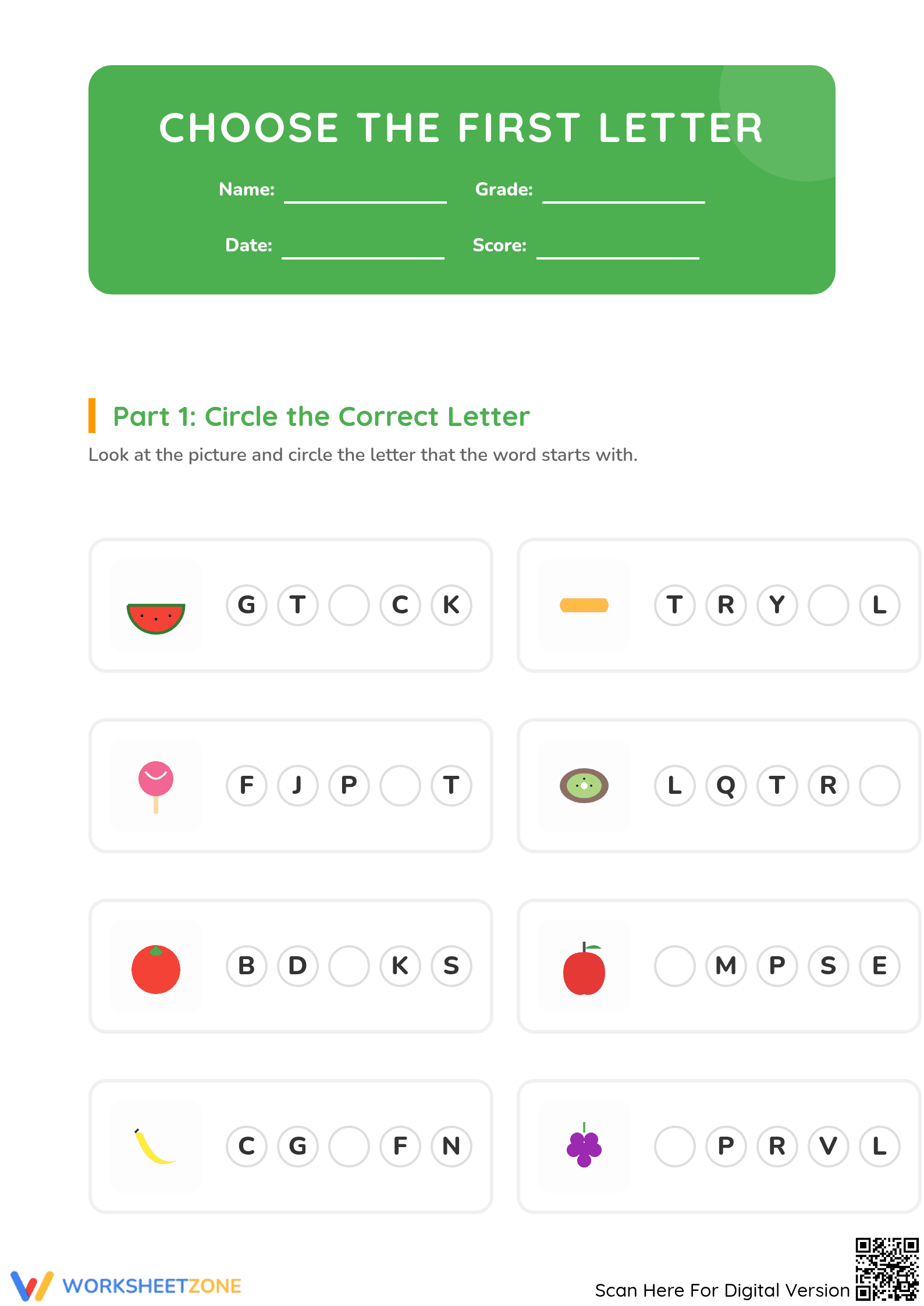
This printable Kindergarten phonics worksheet provides a focused way for early learners to master initial sounds. By combining visual recognition with tracing, students build a strong foundation for reading. This essential resource ensures young scholars confidently identify the first letters of common food items, promoting early literacy success.
At a Glance
- Grade: K · Subject: English
- Standard:
CCSS.ELA-LITERACY.RF.K.3.A— Demonstrate basic knowledge of one-to-one letter-sound correspondences by producing the primary sound- Skill Focus: Initial letter recognition · Tracing
- Format: 2 pages · 12 problems · Answer key included · PDF
- Best For: Daily phonics warm-ups or morning work
- Time: 15–20 minutes
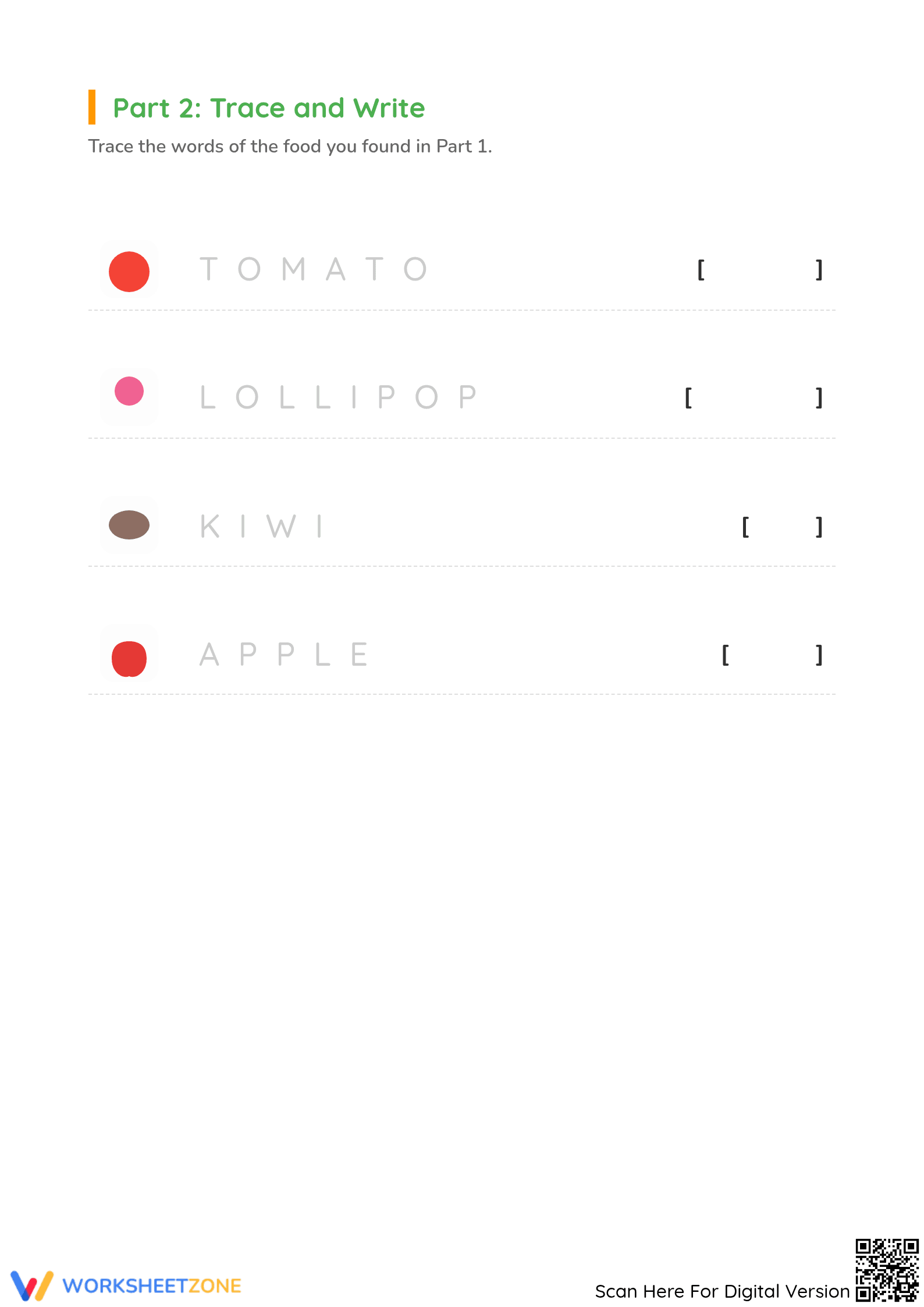
This 2-page PDF features 12 tasks for independent practice. The first page contains eight visual prompts where students identify the correct starting letter from a series of options. The second page offers four tracing exercises for words like "tomato" and "apple," reinforcing the connection between sounds and written words. A full answer key is included for teacher convenience.
The zero-prep design allows implementation in under two minutes. Simply print the two-page document (30 seconds), distribute with brief instructions on identifying the first sound of each fruit (30 seconds), and review using the included answer key or a smartboard (1 minute). This structure makes it ideal for sub-plans, morning work, or quick literacy rotations.
The primary focus is `CCSS.ELA-LITERACY.RF.K.3.A`, which requires knowledge of letter-sound correspondences. Identifying initial consonants in words like "banana" meets core phonological awareness requirements. The tracing component supports `CCSS.ELA-LITERACY.L.K.1.A` for letter formation. Both standard codes can be copied into lesson plans, IEP goals, or curriculum mapping tools.
Use this as a formative assessment after direct instruction on letter sounds. For a secondary use, place pages in dry-erase sleeves for literacy centers. Observe if students can name objects aloud before selecting letters to gauge phonemic segmentation and oral language proficiency. Expect completion within 15 to 20 minutes depending on individual student pace.
This resource is tailored for Kindergarten students and preschoolers. It is useful for ELL students as it pairs recognizable images with vocabulary. The clean layout supports students with fine motor challenges who need clear spacing. Pair this worksheet with an initial sound anchor chart or a "letter of the week" picture book for a complete lesson.
Identifying initial sounds is a critical milestone in early literacy development, serving as the bridge between phonemic awareness and decoding. Research from Fisher & Frey (2014) emphasizes the importance of scaffolding tasks from recognition to production to ensure long-term mastery of the alphabetic principle. This worksheet addresses `CCSS.ELA-LITERACY.RF.K.3.A` by providing 12 targeted opportunities for students to produce the primary sound for each consonant and vowel presented. By integrating visual cues with tracing exercises, the material supports the dual-coding theory of learning, which suggests that combining verbal and non-verbal information enhances memory retention. Teachers can utilize this printable resource to provide evidence-based phonics instruction that aligns with the Science of Reading. The inclusion of a clear answer key allows for immediate feedback, which NAEP studies indicate is vital for correcting misconceptions in early learners before they become ingrained habits during the literacy acquisition phase.


