




























Views
Downloads
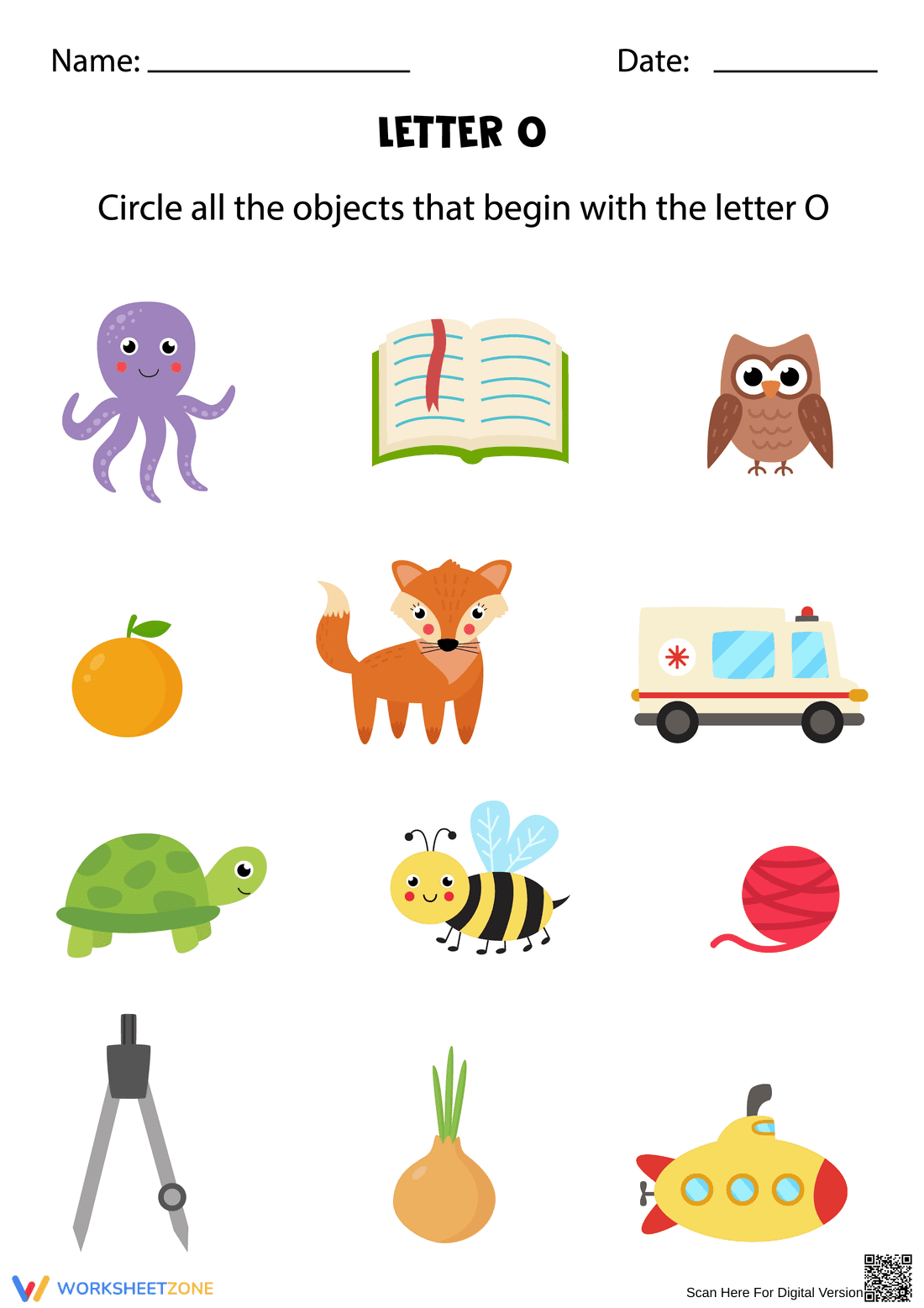

Letter O Beginning Sounds Worksheet | Grade K Essential

Paste this activity's link or code into your existing LMS (Google Classroom, Canvas, Teams, Schoology, Moodle, etc.).
Students can open and work on the activity right away, with no student login required.
You'll still be able to track student progress and results from your teacher account.
This Letter O beginning sounds worksheet helps early learners master initial phoneme isolation through visual identification. By connecting the letter O to familiar objects like an octopus or orange, students strengthen their letter-sound correspondence. This activity provides the foundational phonics practice necessary for developing early reading fluency and confident pronunciation in young learners.
At a Glance
- Grade: Kindergarten · Subject: ELA Phonics
- Standard:
CCSS.ELA-LITERACY.RF.K.3.A— Demonstrate basic knowledge of one-to-one letter-sound correspondences for each consonant- Skill Focus: Initial Phoneme Identification (Letter O)
- Format: 1 page · 12 problems · Answer key included · PDF
- Best For: Independent phonics practice or morning work
- Time: 10–15 minutes
Inside this single-page PDF, you will find 12 high-quality illustrations designed to engage young students. The layout features a clear instruction line and ample space for circling correct answers. The worksheet includes a mix of "O" words and distractors to ensure students are actively listening for the correct initial sound rather than just guessing based on the theme.
Skill Progression
- Guided practice: The teacher models the "O" sound using the first image (octopus) to establish the phonemic target.
- Supported practice: Students evaluate the middle-row images with verbal cues from the instructor to identify the orange and owl.
- Independent practice: Learners complete the final row of images to demonstrate individual mastery of the initial "O" sound.
This gradual-release model ensures students move from recognition to independent application of phonics rules using a structured I Do, We Do, You Do approach.
Standards Alignment
This resource is aligned with `CCSS.ELA-LITERACY.RF.K.3.A`, which requires students to demonstrate basic knowledge of one-to-one letter-sound correspondences. It also supports RF.K.2.D by focusing on isolating initial sounds in simple words. Both standard codes can be copied directly into lesson plans, IEP goals, or district curriculum mapping tools.
How to Use It
Use this worksheet during your phonics block after introducing the letter O. It works well as a formative assessment to check for understanding before moving to the next letter. For a quick observation tip, listen to students as they name the objects aloud to ensure they are correctly articulating the initial vowel sound. Completion typically takes 10 to 15 minutes.
Who It's For
This activity is ideal for Preschool, Kindergarten, and Grade 1 students who are beginning their literacy journey. It is particularly helpful for English Language Learners (ELL) who need visual aids to build vocabulary. Pair this worksheet with a letter O anchor chart or a short reading passage featuring the short "o" sound for a comprehensive lesson.
Phonemic awareness is a critical predictor of later reading success, as highlighted in the RAND AIRS 2024 report on early literacy interventions. This worksheet targets the specific skill of initial sound isolation, which is a core component of the CCSS.ELA-LITERACY.RF.K.3.A standard. By requiring students to distinguish between the "O" sound and other phonemes across 12 distinct tasks, the resource reinforces the one-to-one letter-sound correspondence necessary for decoding. Research from Fisher & Frey (2014) emphasizes that visual scaffolding, such as the illustrations provided here, helps bridge the gap between abstract sounds and concrete meaning for developing readers. This structured practice ensures that students build the phonological foundation required for more complex blending and segmenting tasks in later grades. Educators can use this data-driven approach to provide targeted support for students struggling with vowel recognition or initial sound identification.


