


























Views
Downloads

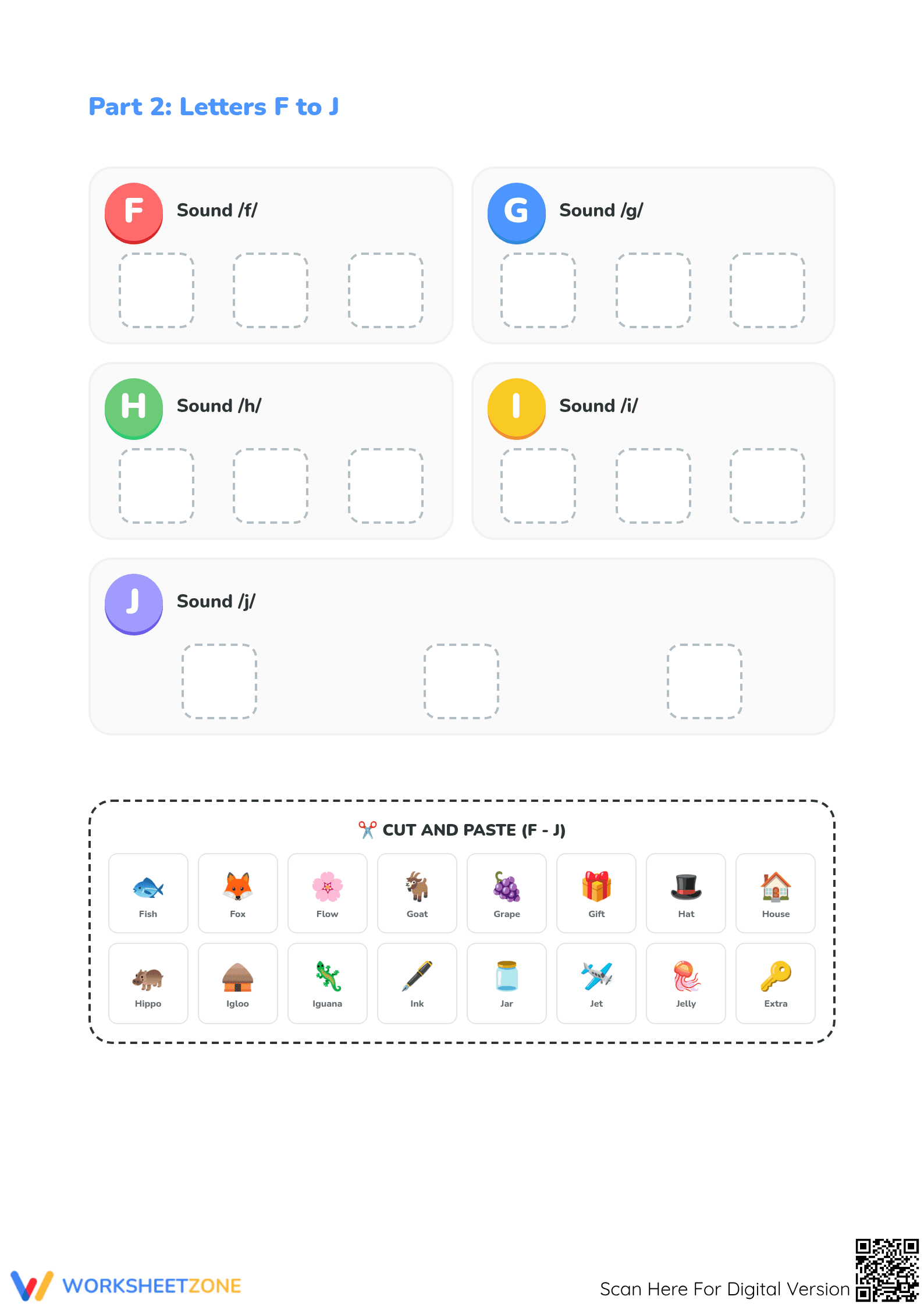
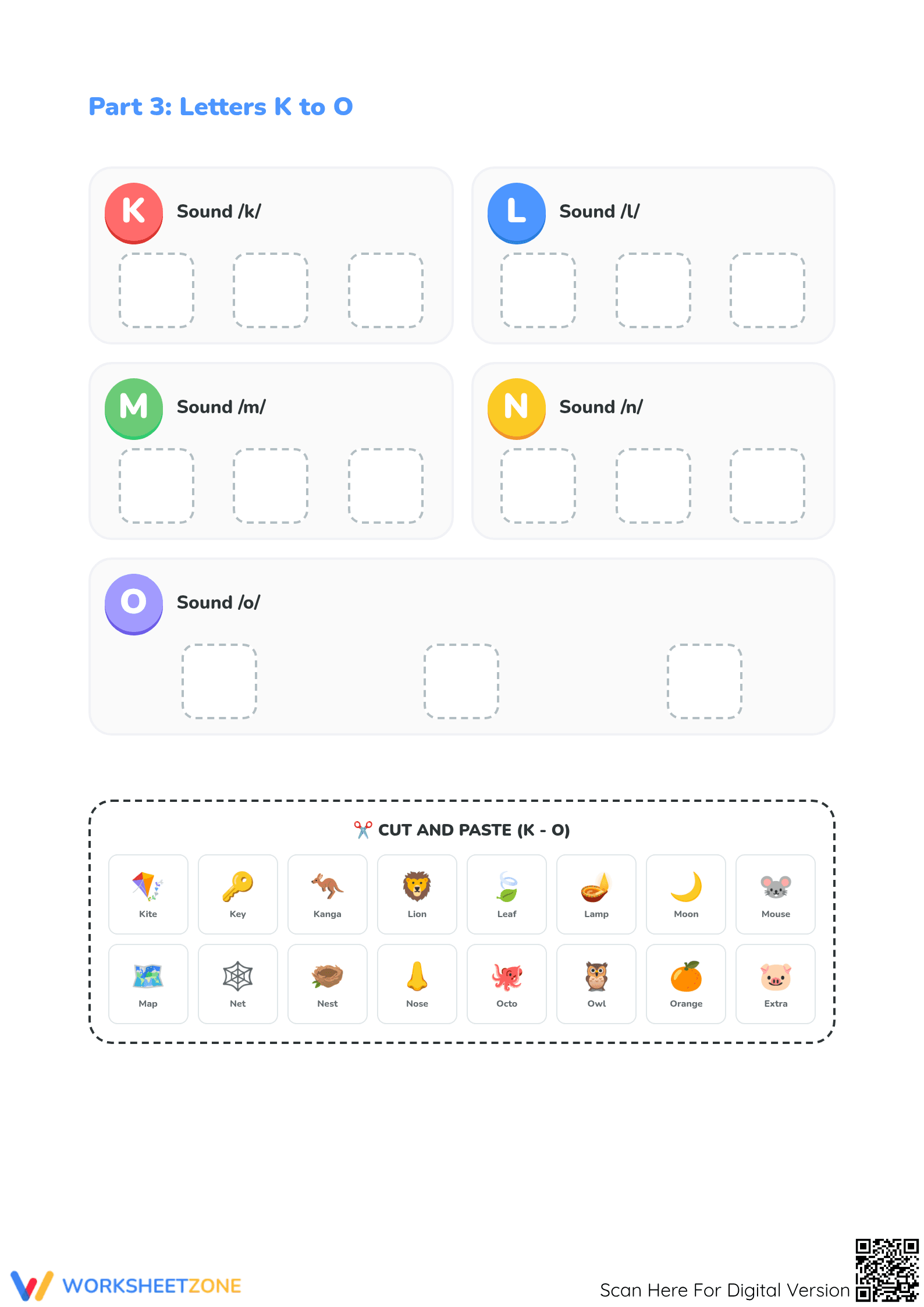
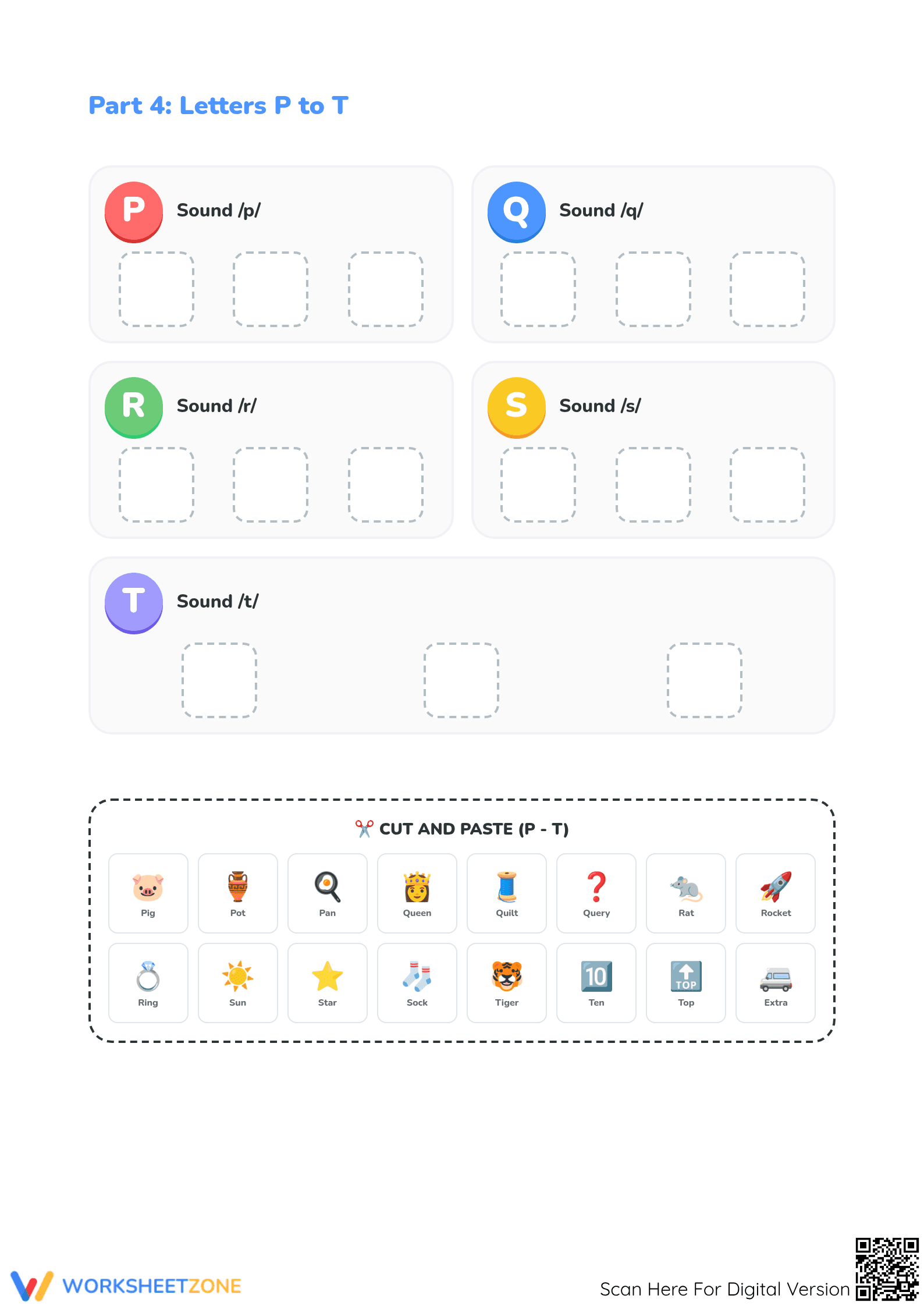
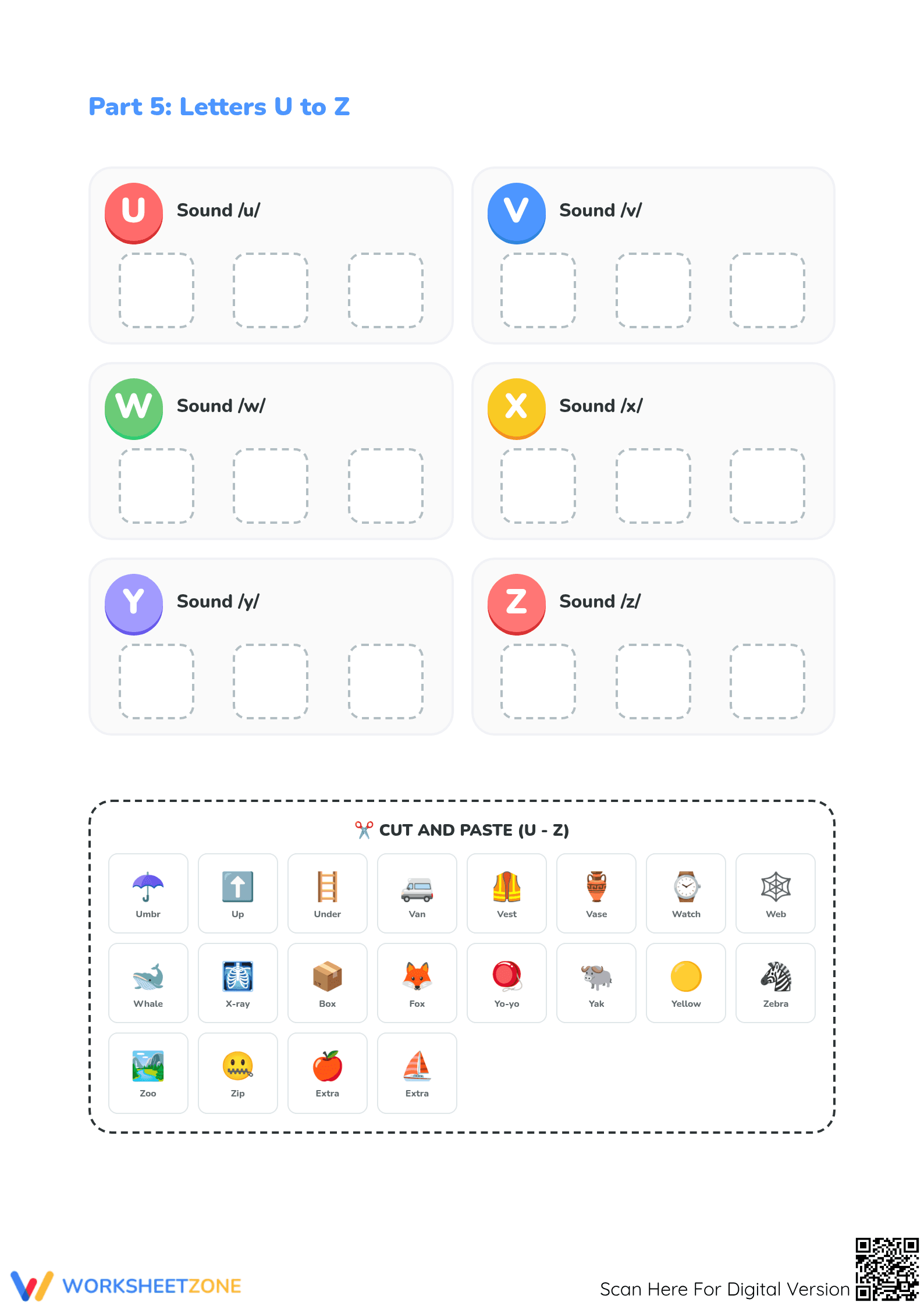

Beginning Sounds Cut and Paste Worksheet | Essential Phonics
Paste this activity's link or code into your existing LMS (Google Classroom, Canvas, Teams, Schoology, Moodle, etc.).
Students can open and work on the activity right away, with no student login required.
You'll still be able to track student progress and results from your teacher account.
This Grade K-2 beginning sounds worksheet provides students with a hands-on way to master initial letter-sound correspondences. By engaging in tactile cut-and-paste activities, learners strengthen their phonemic awareness and fine motor skills simultaneously. It is an effective tool for building the foundational literacy skills required for early reading success.
At a Glance
- Grade: K-2 · Subject: ELA Phonics
- Standard:
CCSS.ELA-LITERACY.RF.K.3.A— Demonstrate basic knowledge of one-to-one letter-sound correspondences for each consonant.- Skill Focus: Initial Phoneme Identification
- Format: 5 pages · 78 problems · Answer key included · PDF
- Best For: Independent literacy centers and morning work
- Time: 15–20 minutes
This comprehensive 5-page PDF covers the entire alphabet from A to Z. Each page features 5 or 6 target letters with three dedicated sorting slots per sound. Students are provided with a bank of high-quality illustrations to cut, sort, and glue. The set includes a full answer key and "extra" distractor images to challenge student accuracy and prevent simple guessing during the sorting process.
Zero-Prep Workflow
- Print: Select the specific letter groups you are currently teaching and print the required pages for your class (30 seconds).
- Distribute: Hand out the sheets along with scissors and glue sticks for an immediate start (1 minute).
- Review: Use the provided answer key for rapid visual grading or student self-correction at a station (30 seconds).
This streamlined process makes the resource an ideal choice for emergency sub plans or transition periods.
Standards Alignment
This resource aligns with CCSS.ELA-LITERACY.RF.K.3.A, which requires students to demonstrate basic knowledge of one-to-one letter-sound correspondences. It also supports RF.1.2.C by helping students isolate and pronounce initial sounds in spoken single-syllable words. Both standard codes can be copied directly into lesson plans, IEP goals, or district curriculum mapping tools.
How to Use It
Use this worksheet during the independent practice phase of a lesson after introducing a group of letter sounds. It serves as an excellent formative assessment; observe students as they sort to identify those struggling with specific phonemes like /b/ versus /d/. Expected completion typically takes 15 to 20 minutes depending on student scissor proficiency and familiarity with the vocabulary.
Who It's For
This activity is designed for Kindergarten and 1st-grade students, as well as 2nd-grade learners requiring phonics intervention. It pairs naturally with alphabet anchor charts or pocket chart sorting activities. The visual nature of the tasks makes it highly accessible for English Language Learners (ELLs) building basic Tier 1 vocabulary alongside their phonics skills.
Research from Fisher & Frey (2014) emphasizes the importance of tactile engagement in the gradual release of responsibility framework, particularly for foundational literacy. This 5-page resource targets CCSS.ELA-LITERACY.RF.K.3.A by requiring students to isolate initial phonemes and map them to their corresponding graphemes. By providing 78 distinct sorting opportunities across the full alphabet, the worksheet ensures high-repetition practice necessary for neural mapping of letter-sound relationships. The inclusion of distractor images aligns with evidence-based practices for cognitive challenge, moving beyond simple matching to true phonological discrimination. This structured approach is supported by NAEP data suggesting that early mastery of phonemic isolation is a primary predictor of later reading fluency. Educators can reliably use this tool to document student progress toward foundational reading standards in early childhood settings.


