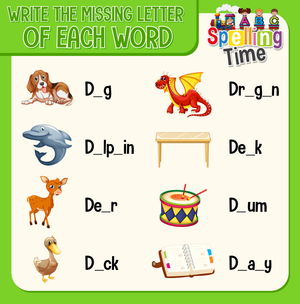
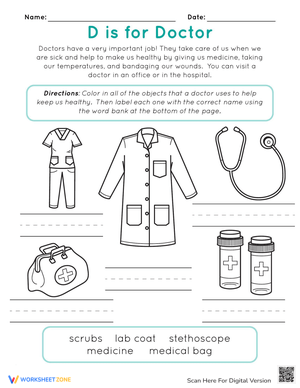
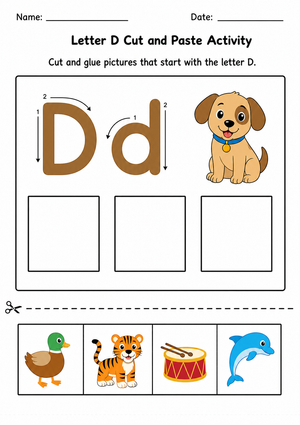
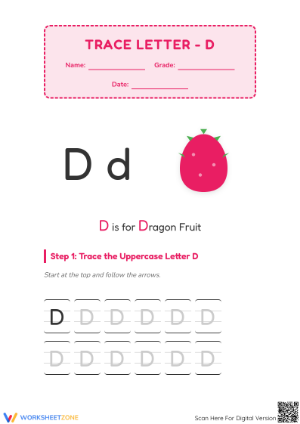
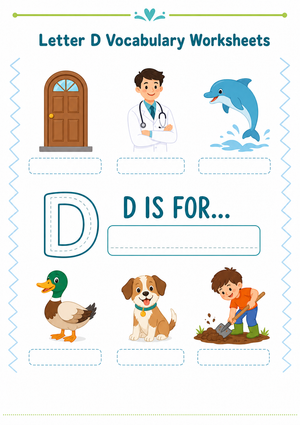
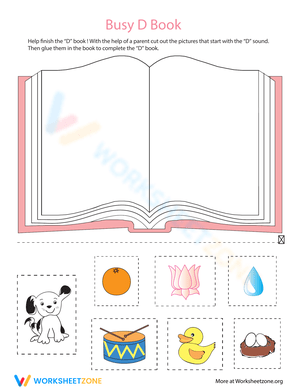
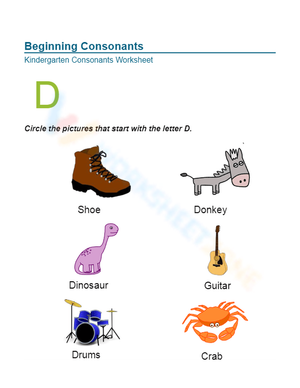
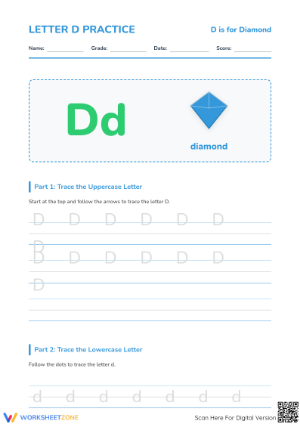
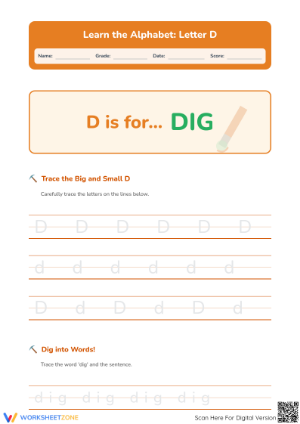
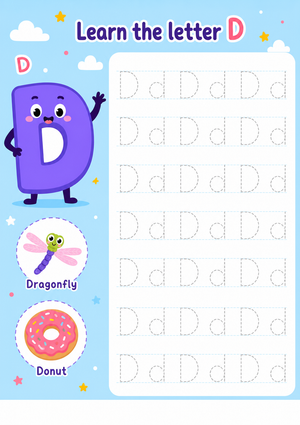
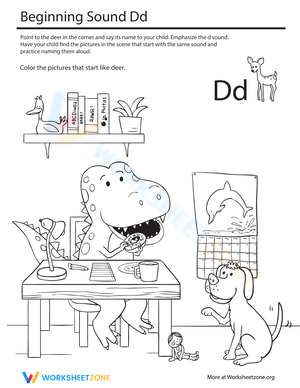
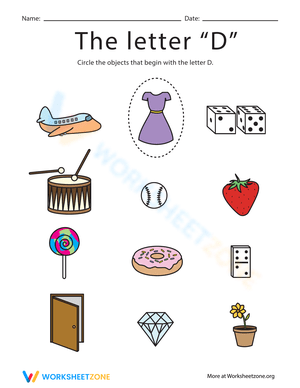
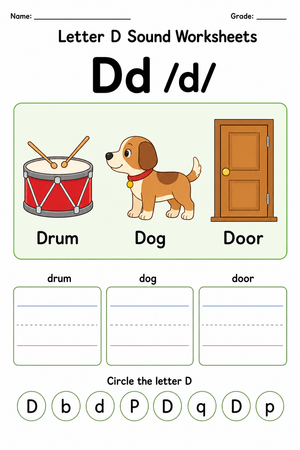
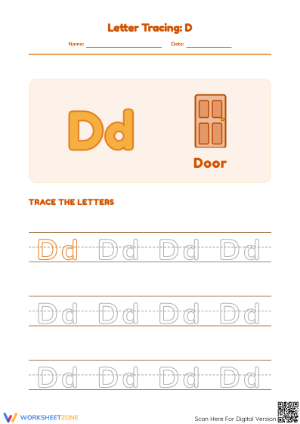
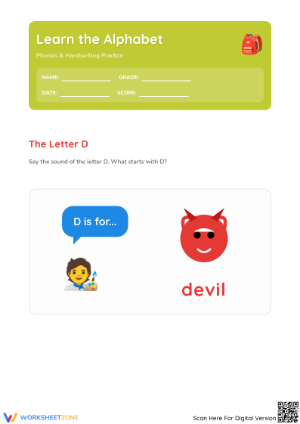
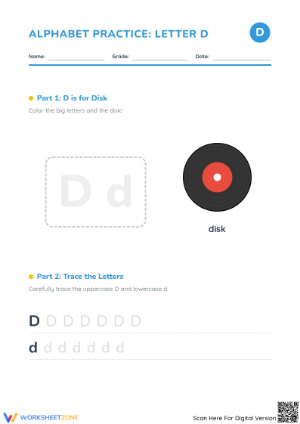
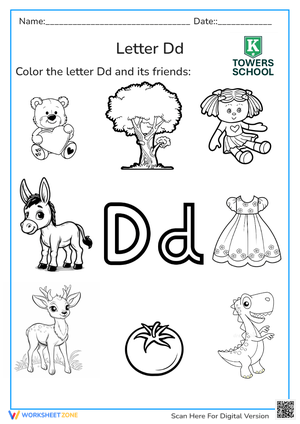
Letter d beginning sound worksheets typically ask students to identify whether a pictured word starts with /d/, circle or color pictures that begin with the sound, sort images into d versus not-d categories, or trace and write the letter D next to matching pictures. Each format targets a slightly different layer of the skill: recognition, discrimination, and production. Rotating through these formats across a week keeps practice fresh while reinforcing the same underlying sound-letter link.
It helps to remember that beginning sound isolation is a phonemic awareness skill first and a print skill second. Students should be able to hear that dog starts with /d/ before they are asked to connect that sound to the printed letter. Worksheets work best as the print-based follow-up to oral practice, not as the first exposure to the sound.
Building an Oral-to-Print Routine
Start each session with a quick oral warm-up: say three or four words aloud and have students give a thumbs-up when they hear one that begins with /d/. This takes less than two minutes and primes students to attend to the sound before they see any print. Once students can consistently isolate /d/ by ear, hand out the worksheet as independent or partner practice. This sequence matters because letter-sound knowledge is considered one of the most reliable predictors of later reading success, and rushing straight to the worksheet without the oral step can mask students who are guessing from picture context rather than truly hearing the sound.
For a literacy center rotation, pair the worksheet with a small set of picture cards or objects that start with /d/ so students can do a hands-on sort before or after the paper task. This gives you a natural way to differentiate: stronger students can work independently on the worksheet while you pull a small group for guided oral practice.
Classroom Implementation
To get the most out of letter d beginning sound worksheets in a real classroom setting, consider the following approach.
- Use the worksheet as the second step in a lesson, after two to three minutes of oral sound isolation practice, not as the first exposure to the /d/ sound.
- Keep a simple tracking sheet for small groups so you can note which students show /d/-/t/ confusion versus b/d letter reversal, since these require different follow-up activities.
- Rotate between picture-sort, circle-the-picture, and trace-and-write formats across the week so students practice recognition, discrimination, and production of the same sound.
- Save one worksheet per student each week as a light-touch progress record you can reference during parent conferences or intervention planning meetings.
- Pair the worksheet with a short list of /d/ words on a word wall or center table so students have a visual anchor beyond the worksheet itself.
Frequently Asked Questions
1. What age or grade level are letter D beginning sound worksheets appropriate for?
These worksheets are typically used with pre-K and kindergarten students, and they remain useful for early first-grade students who need extra phonics support. The right grade level depends less on age and more on where a student sits in the letter-sound learning progression.
2. How can teachers tell if a student has truly mastered the /d/ beginning sound versus just letter naming?
Ask the student to say the sound a word starts with without showing them the letter first, then separately ask them to name the letter D and give its sound out of context. A student who can only do the second task has letter-name knowledge but not true sound mastery, which is the gap the research on kindergarten entry skills points to directly.
3. How should these worksheets fit into a daily or weekly phonics lesson plan?
Use a short oral warm-up first, then the worksheet as guided or independent practice, and finally a quick check of a few items to gauge whether the class is ready to move forward. Repeating this three-part structure across several days for one target sound tends to work better than a single one-off worksheet.
4. What common confusions should teachers watch for when using these worksheets?
Watch for /d/-/t/ mix-ups, which are usually an auditory discrimination issue, and b/d letter reversals, which are usually a visual or motor issue. Separating these two problems in your notes will help you plan the right follow-up activity for each student.
5. How can these worksheets be adapted for small-group reading intervention?
In a small group, walk through each worksheet item aloud with students before they mark an answer, and use their responses to identify specific error patterns in real time. This turns a simple worksheet into a diagnostic tool you can use to plan the next several days of targeted practice.