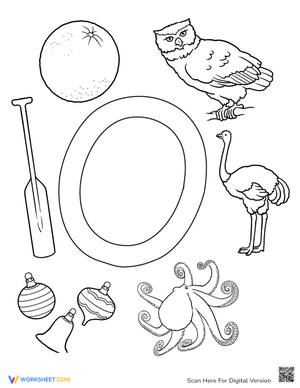
If you teach a letter-of-the-week rotation, the week you land on O usually brings a small classroom debate: is O a beginning sound like B or M, or is it a vowel that behaves differently? Letter O beginning sound worksheets answer that question in practice. They ask students to isolate the /o/ sound at the start of words such as octopus, ostrich, olive, and otter, which builds the same skill as initial-consonant practice while quietly introducing vowel awareness. That dual purpose is exactly why this set of worksheets earns a spot early in your phonics scope and sequence rather than being treated as an afterthought once consonants are done.
Beginning-sound work is typically sequenced before medial and final sound isolation because initial phonemes are the easiest position for young readers to hear and produce. Placing letter O practice alongside other beginning-sound letters keeps your pacing consistent, and it gives students a low-stakes entry point into vowel sounds before you ask them to blend or segment full CVC words.
What CCSS RF.K.2.d Asks Kindergartners To Do With Initial Sounds
CCSS RF.K.2 requires kindergartners to demonstrate understanding of spoken words, syllables, and sounds, and RF.K.2.d narrows that further: students must isolate and pronounce the initial, medial vowel, and final sounds in three-phoneme, or CVC, words. Letter O beginning sound worksheets target the initial-sound portion of that standard directly, but because short o is itself a vowel, they also lay groundwork for the medial-vowel piece of RF.K.2.d that students will need once they move into full CVC decoding.
This overlap is worth flagging for planning purposes: short o beginning-sound tasks are one of the few beginning-sound activities that simultaneously rehearse a medial-vowel skill, since the same phoneme students isolate at the start of octopus is the vowel sound they will later hear in the middle of words like hop, mop, and dot. Teachers who recognize this can treat letter O week as a bridge unit rather than an isolated stop on the alphabet.
Picture-Sort and Circle-the-Picture Formats for Short O
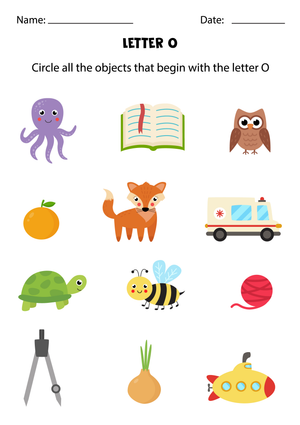
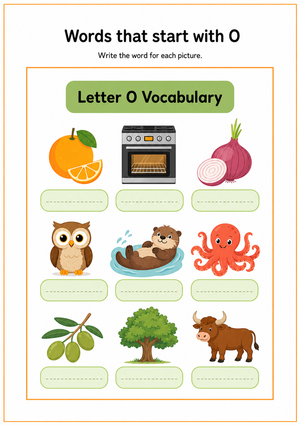
Most letter O beginning sound worksheets use one of two formats. In a circle-the-picture task, students see a row of images and circle only the ones that start with /o/, filtering out distractors like apple or umbrella. In a picture-sort task, students cut or draw lines to sort images into a short o column and a not-short-o column. Both formats work well because they do not require reading; students respond to pictures, which keeps the task focused purely on listening for the initial phoneme.
- Use circle-the-picture worksheets for quick whole-group warm-ups at the start of a phonics block.
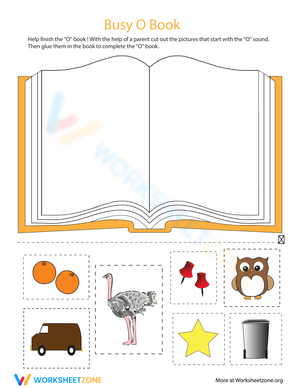
- Use picture-sort worksheets during centers, since sorting naturally supports independent or partner work.
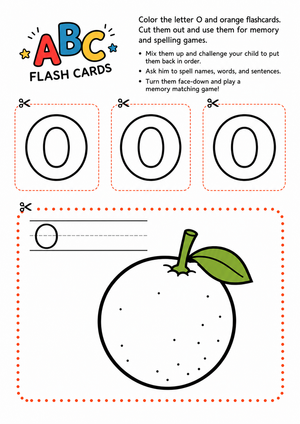
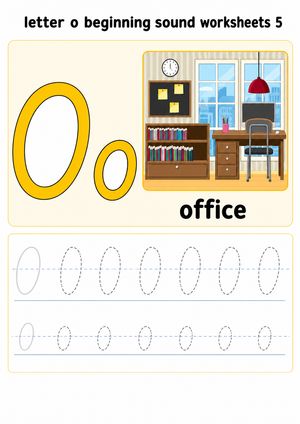
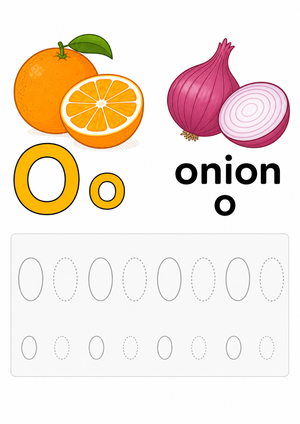
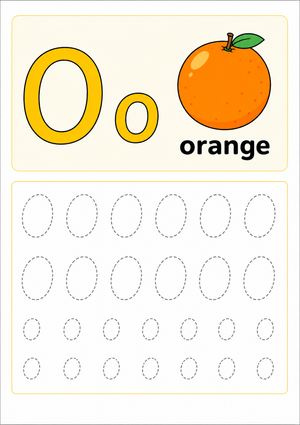
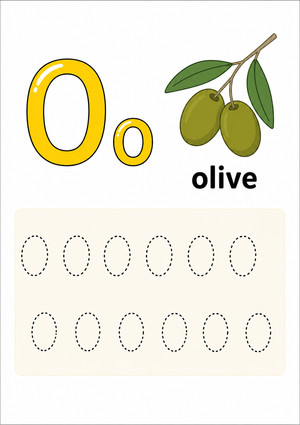
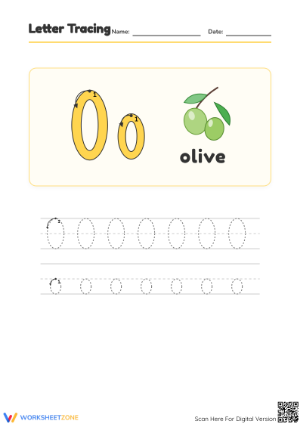
- Rotate in a trace-and-say version where students trace the letter O while saying words that begin with the sound, linking the visual, motor, and auditory pieces together.
Whichever format you choose, keep the picture bank consistent for a few days in a row. Repetition with the same core word set such as octopus, olive, ostrich, and otter helps students build automaticity before you introduce novel words on an assessment.
Connecting Beginning Sounds to CVC Word Work
Because short o is a vowel, beginning-sound practice with letter O naturally overlaps with CVC word work far more than beginning-sound practice with a consonant letter does. A worksheet built around octopus or otter is training the same ear that will later need to hear the o in hop or dot. Sequencing your instruction so that letter O beginning-sound worksheets appear shortly before or alongside your first short o CVC unit lets students transfer the skill instead of relearning it from scratch.
Some worksheets on the market blur this line by mixing initial-sound tasks with full CVC decoding on the same page. That can work for higher students but often overwhelms a student who is still isolating sounds. Keep beginning-sound worksheets and CVC decoding worksheets as separate tools during the introduction phase, then combine them once most students are isolating the sound reliably.
Classroom Implementation
To get consistent results from letter O beginning-sound worksheets, build them into a short, predictable routine rather than a one-off activity.
- Pacing: Plan two to three short sessions across letter O week rather than one long session, since phoneme isolation improves with spaced practice.
- Materials: Keep a consistent picture set on hand (octopus, olive, ostrich, otter) so students are practicing the skill, not relearning new vocabulary each session.
- Whole group versus small group: Use circle-the-picture worksheets whole group as a quick check, then pull a small group for picture-sort or contrastive-drill practice based on who struggled.
- Differentiation: For students who master beginning sounds quickly, layer in a short o CVC word worksheet the same day rather than repeating beginning-sound tasks they have already mastered.
Teachers who track results across a letter O beginning-sound worksheet and a short a beginning-sound worksheet from the same week often find that error patterns cluster on the same handful of students, which makes it efficient to pull one small group for combined a and o vowel discrimination rather than running two separate reteach sessions.
Frequently Asked Questions
1. What grade level are letter O beginning sound worksheets appropriate for
These worksheets are designed primarily for kindergarten, where CCSS RF.K.2.d requires initial-sound isolation. They also work well for early first-grade review or for kindergarten intervention groups that need extra practice with the skill.
2. How do teachers introduce the short o sound alongside letter recognition
Most teachers pair the visual letter O with a small set of consistent picture words such as octopus and olive, then move from tracing and naming the letter to circling pictures that begin with the sound, so recognition and phoneme isolation build together.
3. What is the difference between beginning-sound and CVC word worksheets for the letter O
Beginning-sound worksheets only ask students to identify the initial /o/ sound in a spoken word, usually using pictures. CVC word worksheets go further, asking students to decode or spell whole three-phoneme words like hop or dot, which requires isolating initial, medial, and final sounds together.
4. How can teachers use these worksheets for informal phonemic awareness assessment
Because the worksheets require no reading, a quick circle-the-picture task can serve as an informal check of RF.K.2.d mastery. A student who correctly identifies four or five out of five short o pictures is likely ready to move into short o CVC word work.
5. What common confusions do students have between short o and other vowel sounds
Short o is most often confused with short a, and occasionally with short u. Both mix-ups usually show up as hesitation or an incorrect pointing response on a picture task, which is a signal for a short contrastive small-group drill rather than more whole-group repetition.