


























Views
Downloads

Beginning Sounds Worksheet | Preschool ELA Printable
Paste this activity's link or code into your existing LMS (Google Classroom, Canvas, Teams, Schoology, Moodle, etc.).
Students can open and work on the activity right away, with no student login required.
You'll still be able to track student progress and results from your teacher account.
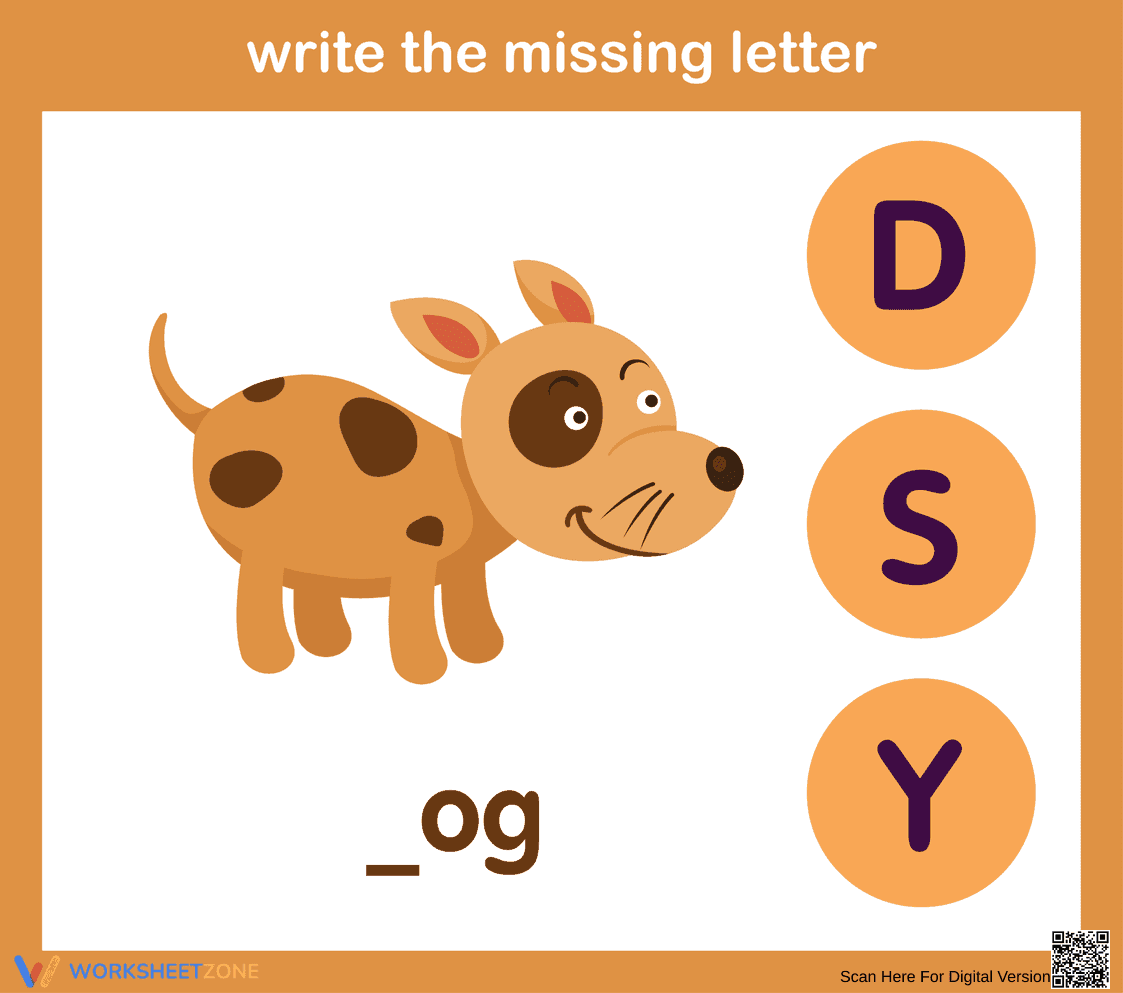
This Preschool beginning sounds worksheet helps early learners master initial consonant identification through visual cues. By connecting the image of a dog to the word fragment, students develop the phonological awareness necessary for early reading success. It provides a clear, focused environment for practicing one-to-one letter-sound correspondence.
At a Glance
- Grade: Preschool · Subject: ELA Phonics
- Standard:
CCSS.ELA-LITERACY.RF.K.3.A— Demonstrate basic knowledge of one-to-one letter-sound correspondences by producing the primary sound- Skill Focus: Initial Consonant Identification
- Format: 1 page · 1 task · Answer key included · PDF
- Best For: Early literacy centers and phonics introduction
- Time: 5–10 minutes
Inside this resource, you will find a high-quality illustration of a familiar animal paired with a word completion task. The worksheet features three clear letter choices (D, S, and Y) in large, accessible fonts. This layout reduces cognitive load, allowing the student to focus entirely on the phonetic relationship between the spoken word and the written symbol.
Skill Progression
- Guided Practice: Students engage by naming the object aloud to hear the initial phoneme with teacher support.
- Supported Practice: Learners compare the three provided letter options against the sound they produced to find a match.
- Independent Practice: The student writes the correct letter in the blank space to complete the word independently.
This gradual-release approach ensures students build confidence before moving to more complex phonics tasks.
Standards Alignment
This resource aligns with `CCSS.ELA-LITERACY.RF.K.3.A`, which requires students to demonstrate basic knowledge of one-to-one letter-sound correspondences. It specifically targets the ability to produce the primary sound for consonants. Both standard codes can be copied directly into lesson plans, IEP goals, or district curriculum mapping tools.
How to Use It
Use this worksheet during small-group instruction after introducing the letter 'D'. It serves as an excellent formative assessment; observe if the student attempts to sound out all three options or immediately recognizes the correct match. It typically takes 5 to 10 minutes to complete, making it ideal for a quick exit ticket or morning work activity.
Who It's For
This printable is designed for preschool students and early kindergarteners who are beginning their phonics journey. It is particularly helpful for English Language Learners who need visual support to connect vocabulary with spelling. Pair this with a physical alphabet manipulative or a beginning sounds anchor chart for a multi-sensory learning experience.
According to Fisher & Frey (2014), the use of visual scaffolds in early literacy instruction is vital for developing phonological awareness. This worksheet targets CCSS.ELA-LITERACY.RF.K.3.A by requiring students to isolate the initial sound in a CVC-pattern word and map it to the correct grapheme. Research indicates that explicit instruction in letter-sound correspondence is a primary predictor of later reading fluency. By providing a limited set of choices, the worksheet prevents frustration while reinforcing the "D" sound in the context of a familiar word like "dog." This targeted practice ensures that 100% of the student's effort is directed toward the specific phonemic goal. Educators can use this data to track progress toward foundational reading milestones. This resource provides a structured, evidence-based method for transitioning from oral language to written literacy in early childhood settings.


