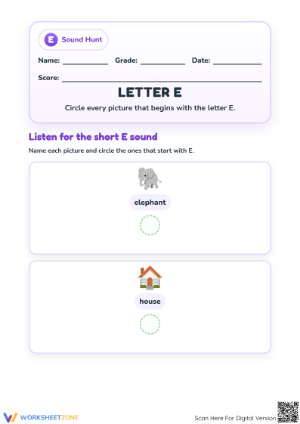
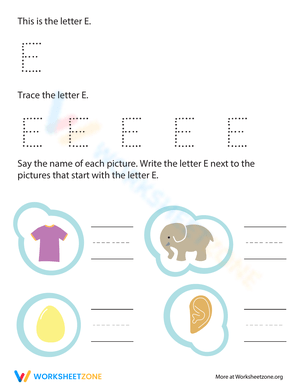
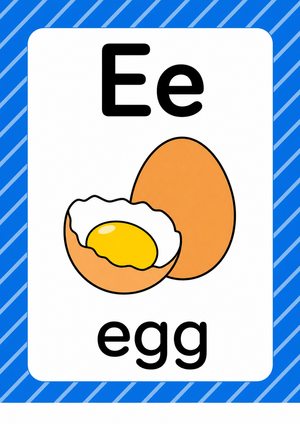
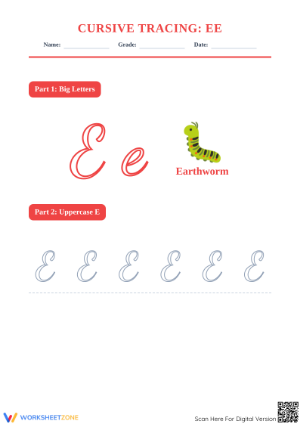
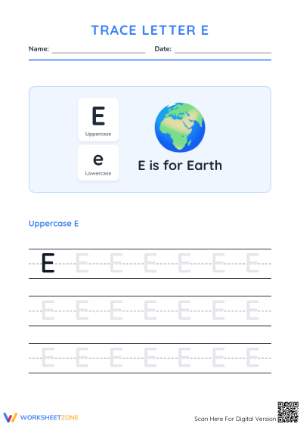
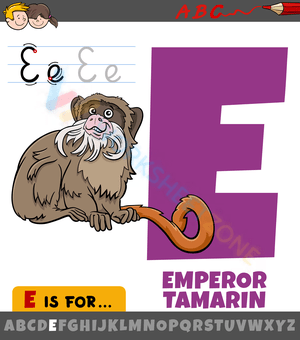
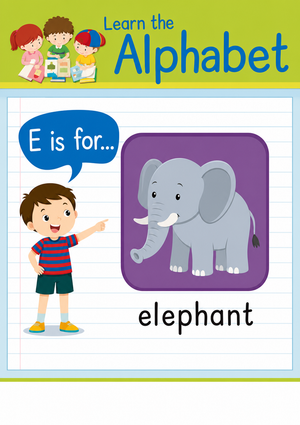
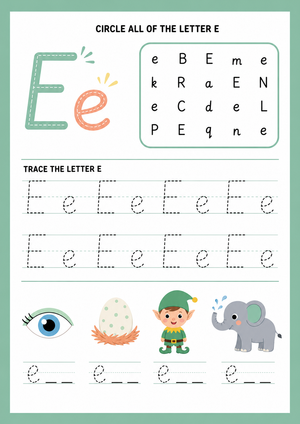
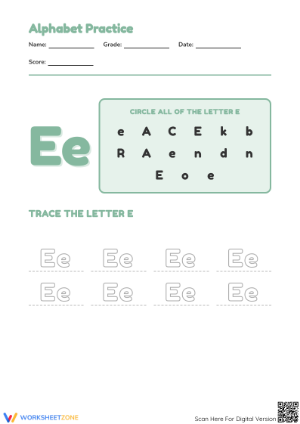
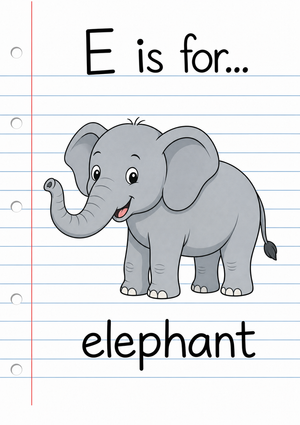
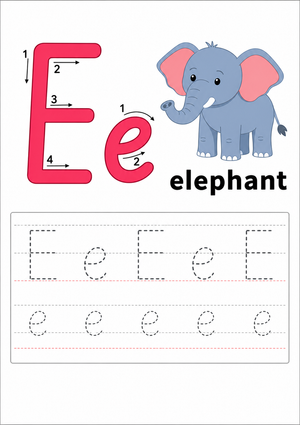
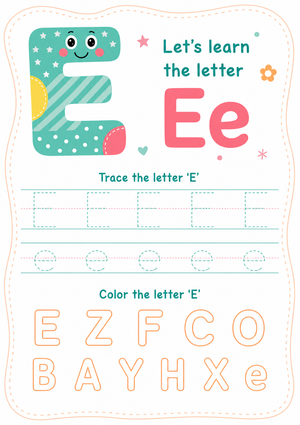
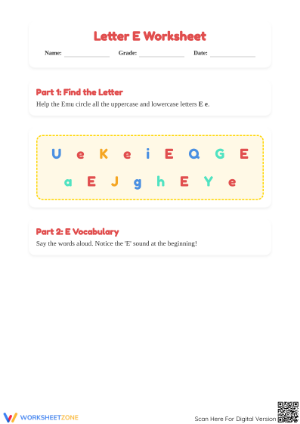
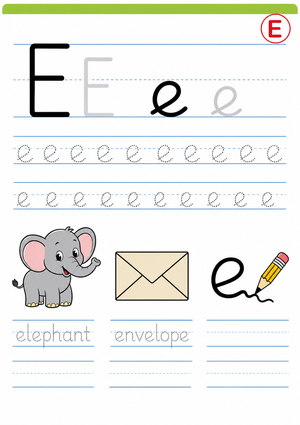
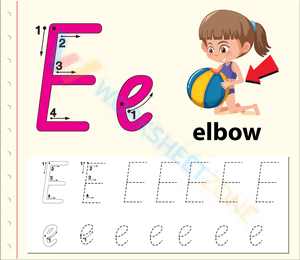
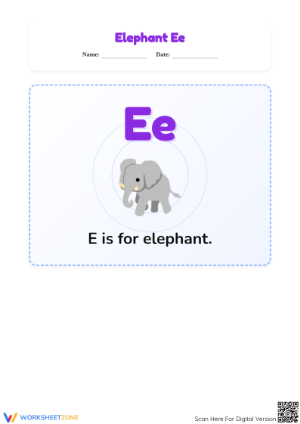
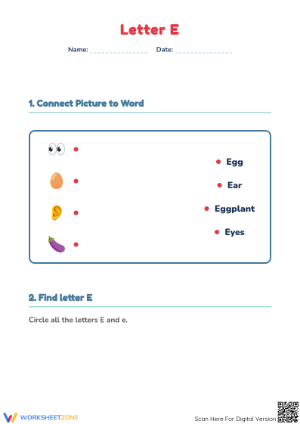
Letter e beginning sound worksheets give students focused practice pulling the initial short e phoneme away from the rest of a CVC word, which is a prerequisite skill rather than a nice-to-have extra. If a student cannot isolate the beginning sound in egg or elephant, asking them to blend a full three-phoneme word is asking them to skip a step. These worksheets slow the process down so the isolation skill gets built on its own, without the added demand of decoding or writing.
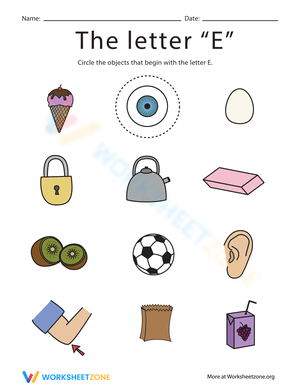
CCSS.ELA-LITERACY.RF.K.2.D specifically calls for isolating and pronouncing the initial, medial vowel, and final sounds in three-phoneme words, and this standard is often where phonemic awareness instruction stalls because teachers move to spelling before isolation is automatic. A worksheet that only asks a child to circle the picture that starts with e, with no writing required, is a cleaner formative check of that isolation skill than a spelling task would be.
Sequencing Letter E After Short I to Address a Common Mix-Up
Short e and short i are among the vowel sounds most often confused by early readers, largely because both sounds are produced with a similar tongue and mouth position. Many kindergarten and early first-grade scope and sequence documents introduce these two vowels close together, which can compound the confusion if there is not a deliberate isolation and contrast step in between. Sequencing letter e beginning sound worksheets right after short i practice, rather than before it, gives students a fresh point of comparison while the short i sound is still fairly recent in memory.
A simple way to build in that contrast is to alternate practice sets: one day focused only on e words like edge and exit, the next day mixing e and i words on the same page so students have to actively discriminate rather than guess from pattern or position. This mixed-set format turns a single-sound worksheet into a built-in assessment of whether the two vowels are truly distinct in a student's ear, not just in isolation.
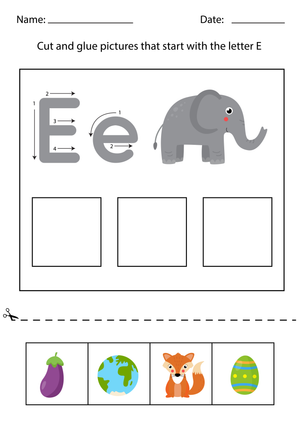
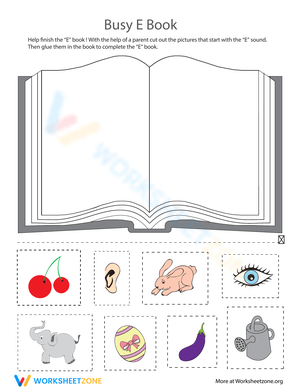
Picture-Sort and Circle-the-Picture Formats That Do Not Require Writing
Because RF.K.3.b asks students to associate long and short sounds with common spellings for the five major vowels, it is tempting to jump straight to writing the letter e next to a picture. For students who are not yet writing fluently, though, a picture-sort or circle-the-picture worksheet removes the fine motor and spelling demand and isolates the phonemic awareness skill you actually want to measure. Common short e words that show up reliably in early literacy materials, such as egg, elephant, envelope, exit, and edge, work well in these formats because they are easy to represent with clear, unambiguous images.
A picture-sort worksheet with two columns, one labeled with an e and one with a distractor vowel, lets a teacher watch a student's sorting logic in real time during small-group instruction. Circle-the-picture worksheets work well as quieter independent practice once a student has shown some initial success in a small-group setting, since they do not require the same level of teacher observation to check accuracy.
Pairing Worksheets With Oral Segmenting Routines
A worksheet alone will not build phonemic awareness if it is not paired with oral practice, since RF.K.2.d is fundamentally about spoken language skills before it becomes a paper-and-pencil task. Before handing out a letter e beginning sound worksheet, spend two or three minutes on an oral warm-up: say a short e word slowly, stretching out each sound, and have students echo it back segment by segment. This oral rehearsal primes students to hear the initial sound clearly before they are asked to apply that skill to a picture-based task.
Once the worksheet is complete, a quick oral check-in, such as asking a student to say the beginning sound out loud for two or three items they circled, closes the loop between the spoken and printed practice. This pairing keeps the worksheet grounded in the oral language skill it is meant to reinforce, rather than letting it become a purely visual matching exercise.
Classroom Implementation
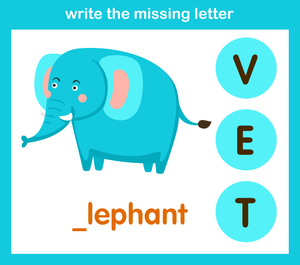
Start with a short whole-group introduction using two or three anchor words, egg and elephant work well because both images are unambiguous and instantly recognizable to young students. Model the isolation process out loud: say the word slowly, ask what sound you hear first, and confirm the answer before moving to independent or small-group practice.
- Introduce short e worksheets in the same week as a short i review, not as a completely separate unit, so the contrast stays active
- Use picture-sort formats for initial teaching and circle-the-picture formats for independent practice once accuracy is established
- Keep small-group intervention sessions to five to eight minutes, repeated two to three times per week for students showing e and i confusion
- Pair every worksheet with a brief oral segmenting warm-up so the skill stays tied to spoken language
- Use the same worksheet format as a recurring exit ticket to track isolation mastery over several weeks
For students who finish early, a quick oral extension, generating another short e word on the spot, keeps engagement high without adding another worksheet to grade.
Frequently Asked Questions
1. What age or grade level are letter e beginning sound worksheets appropriate for
These worksheets are designed primarily for kindergarten and early first-grade students who are working on phoneme isolation as described in RF.K.2.d. Some first-grade classrooms use them as a quick review at the start of the year for students who need additional reinforcement.
2. How can teachers tell if a student is confusing short e with short i
Watch for a pattern where a student consistently mislabels e words with an i sound or vice versa across multiple items, rather than an occasional random error. A minimal-pair listening task, such as comparing bed and bid, makes this confusion easier to confirm than a worksheet alone.
3. How many practice sessions are typically needed before a student masters initial phoneme isolation for e
This varies by student, but consistent short sessions, five to eight minutes, two to three times a week, tend to show measurable progress within two to three weeks for most students. Students with a persistent e and i confusion may need a longer intervention window with the minimal-pair routine included.
4. Should letter e worksheets be introduced before or after short i in a phonics scope and sequence
Introducing letter e worksheets shortly after short i practice, rather than before it, gives students a recent point of contrast and helps surface any confusion between the two sounds while it is still easy to address directly.
5. How do these worksheets align with kindergarten reading standards
They support CCSS.ELA-LITERACY.RF.K.2, which requires kindergartners to demonstrate understanding of spoken words, syllables, and phonemes, and specifically RF.K.2.d, which calls for isolating and pronouncing the initial, medial vowel, and final sounds in three-phoneme words.