


























Views
Downloads

Letter D Trace and Find Worksheet | Essential Phonics
Paste this activity's link or code into your existing LMS (Google Classroom, Canvas, Teams, Schoology, Moodle, etc.).
Students can open and work on the activity right away, with no student login required.
You'll still be able to track student progress and results from your teacher account.
This comprehensive Letter D worksheet provides foundational phonics practice for early learners. By combining tactile tracing exercises with visual discrimination tasks, students develop the muscle memory and recognition skills necessary for reading readiness. This resource ensures students can confidently identify and produce the uppercase and lowercase forms of the letter D while connecting the letter to its initial sound.
At a Glance
- Grade: Kindergarten · Subject: ELA Phonics
- Standard:
CCSS.ELA-LITERACY.RF.K.1.D— Recognize and name all upper- and lowercase letters of the alphabet- Skill Focus: Letter D formation and identification
- Format: 3 pages · 45 tasks · Answer key included · PDF
- Best For: Daily morning work or literacy centers
- Time: 15–20 minutes
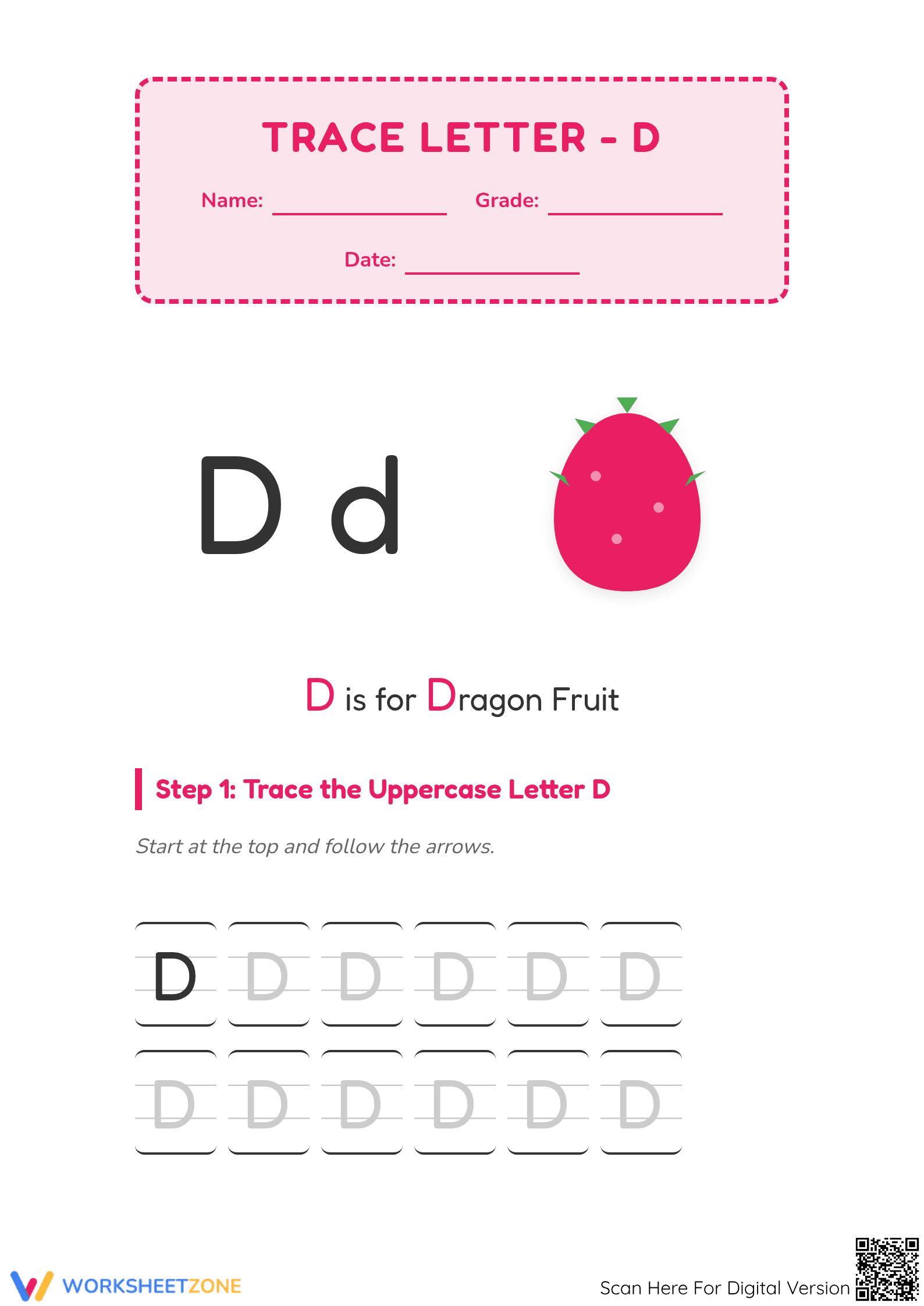
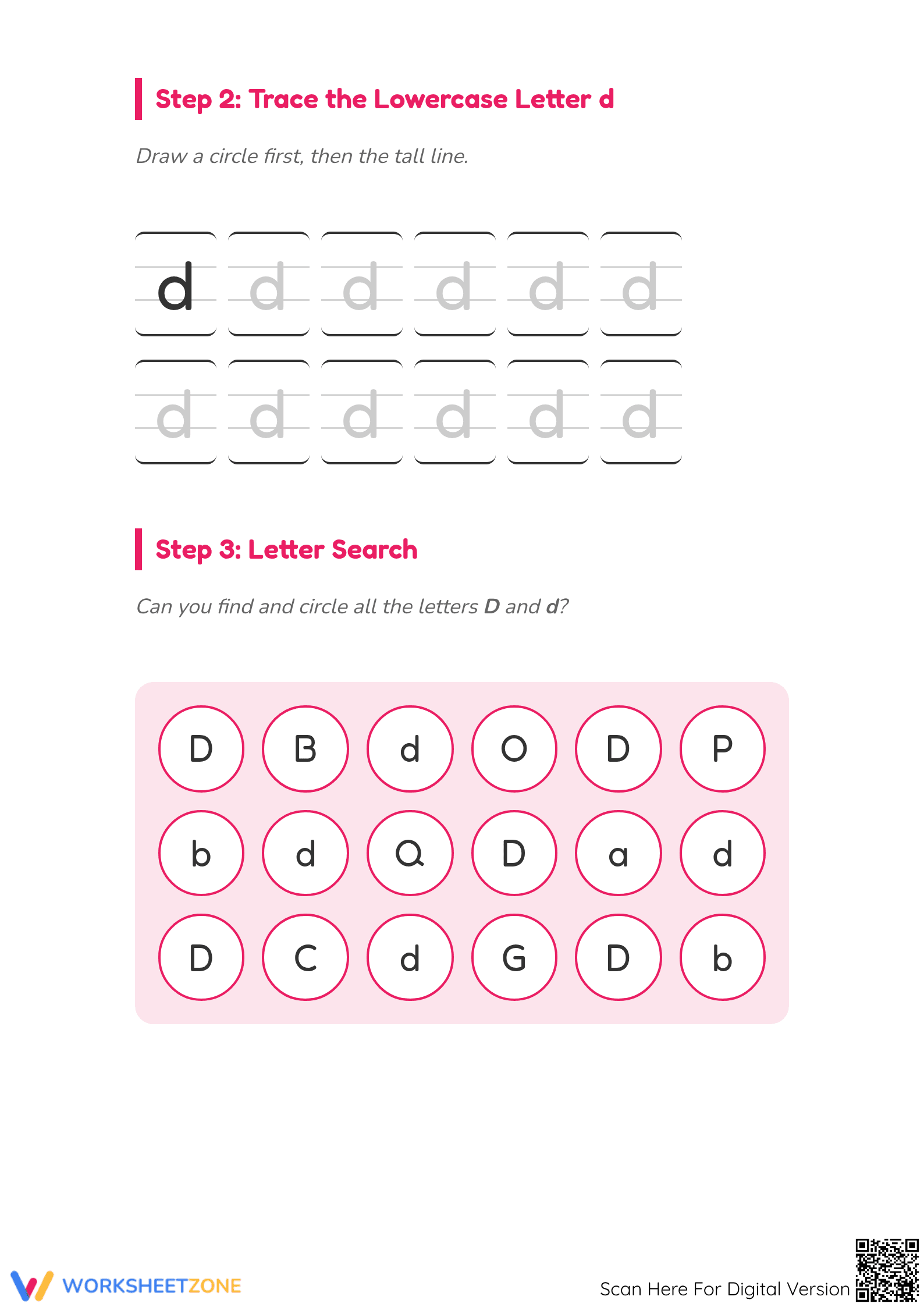
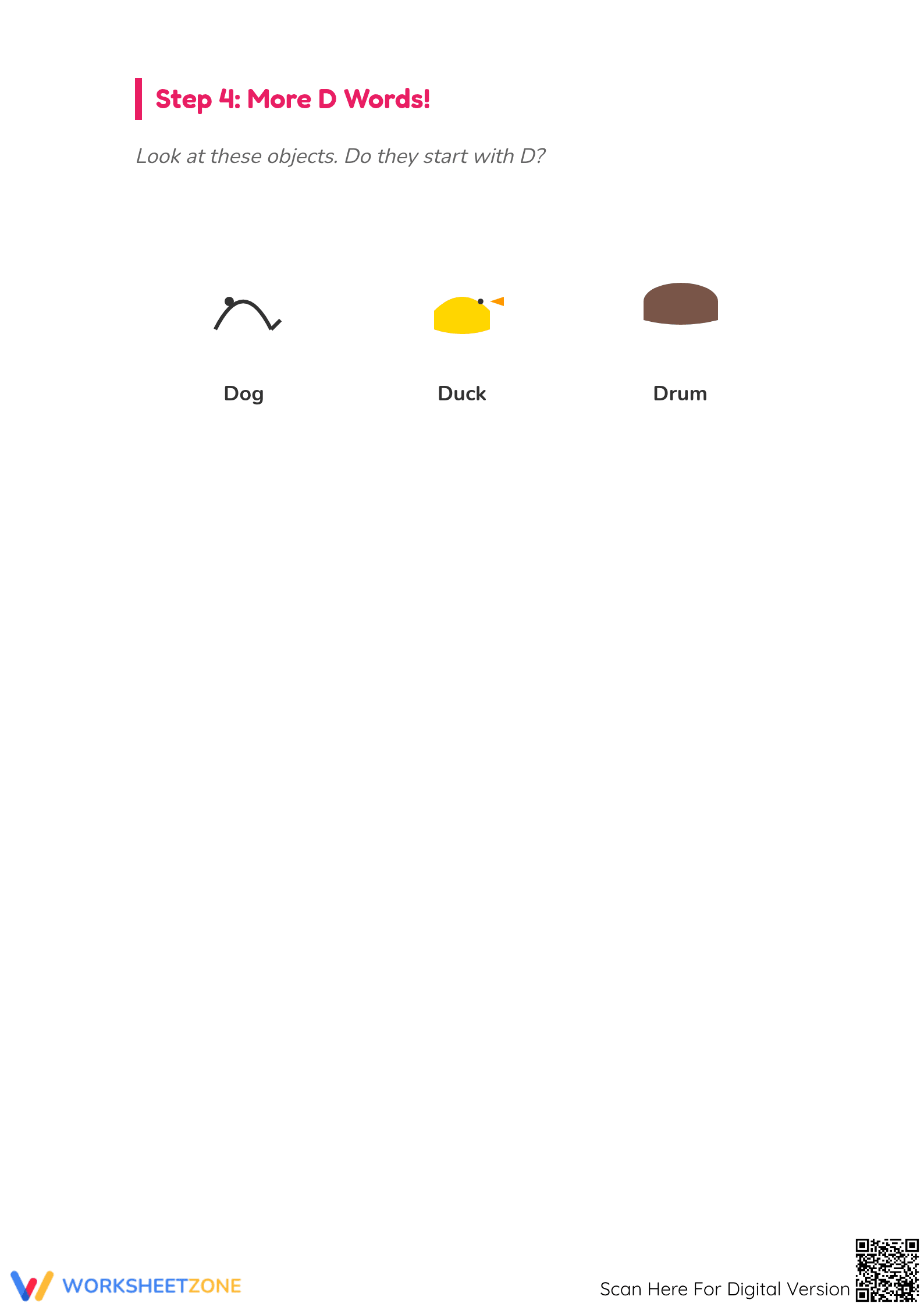
The packet contains three distinct pages of instructional content. Page one focuses on uppercase D formation with directional arrows. Page two introduces lowercase d tracing and a "Letter Search" grid containing 18 different characters to sharpen visual discrimination. Page three reinforces phonemic awareness by presenting high-frequency vocabulary words like dog, duck, and drum. A full answer key is provided for every section.
Skill Progression
- Guided practice: Students begin with large-scale tracing of uppercase D, using directional cues to establish correct stroke order for 12 specific instances.
- Supported practice: The letter search grid requires students to distinguish D and d from similar-looking letters like B, P, and b, providing 18 opportunities for recognition.
- Independent practice: The final page asks students to identify objects that begin with the /d/ sound, moving from mechanical writing to conceptual phonemic application.
This structured approach follows a gradual-release model to build student confidence before they work entirely on their own.
Standards Alignment
This resource is primarily aligned with CCSS.ELA-LITERACY.RF.K.1.D, which requires students to recognize and name all upper- and lowercase letters of the alphabet. Additionally, it supports RF.K.3.A by linking the letter shape to its corresponding phoneme through visual examples. Both standard codes can be copied directly into lesson plans, IEP goals, or district curriculum mapping tools.
How to Use It
Assign this worksheet during your literacy block as a quiet-time activity or as part of a rotating phonics station. For a formative assessment, observe students during the letter search task to see if they confuse 'd' with 'b' or 'p'. This 3-page set typically takes 15 to 20 minutes to complete depending on the student's fine motor proficiency.
Who It's For
This resource is designed for Kindergarten students, though it serves as an excellent intervention tool for Grade 1 students needing remedial support. It pairs naturally with an alphabet anchor chart or a direct instruction lesson on the /d/ sound.
Research by Fisher & Frey (2014) emphasizes that the gradual release of responsibility is vital for early literacy, particularly when students are mastering the 26 characters of the English alphabet. This worksheet implements that research by transitioning students from guided tracing to independent phonemic identification. By providing 45 specific tasks across three pages, the resource offers the repetitive exposure required for long-term retention of letter-sound correspondences. According to the NAEP, early mastery of letter recognition is one of the strongest predictors of future reading achievement. This printable packet addresses CCSS.ELA-LITERACY.RF.K.1.D by ensuring students can distinguish between uppercase and lowercase forms while building the fine motor skills necessary for legible handwriting. The inclusion of a letter search grid specifically targets visual discrimination, a sub-skill often overlooked in basic tracing sheets but essential for preventing common letter reversals.


