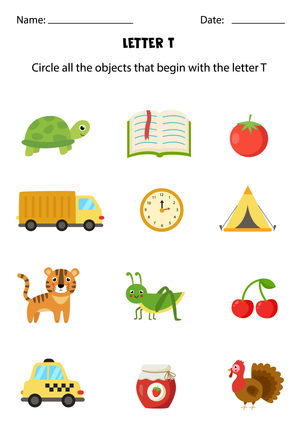
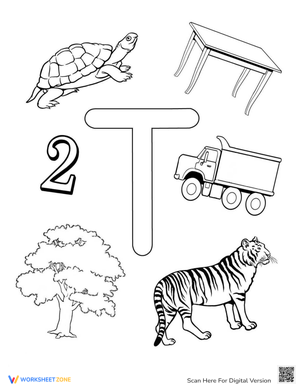
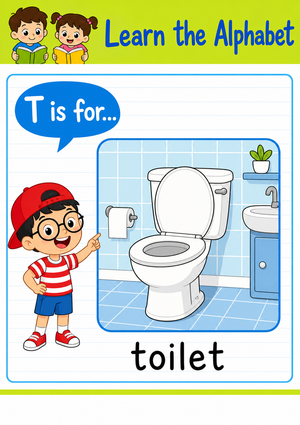
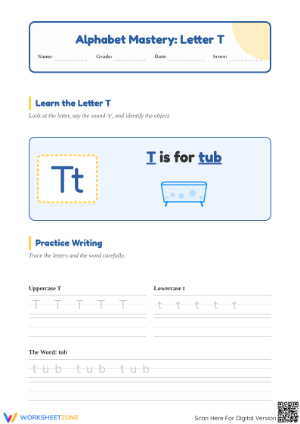
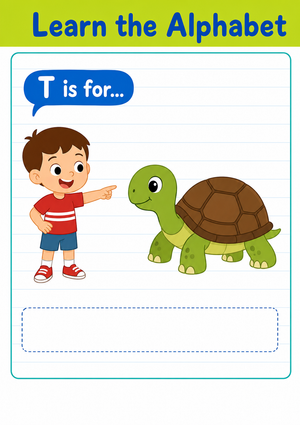
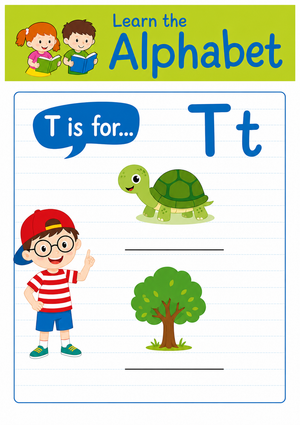
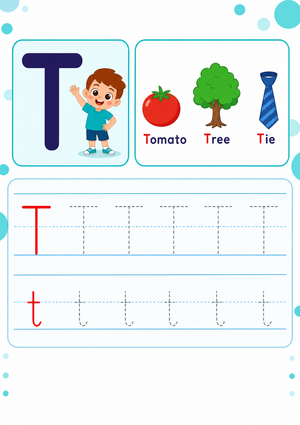
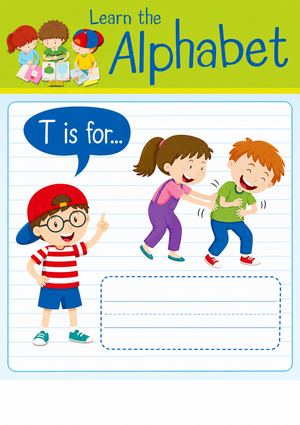
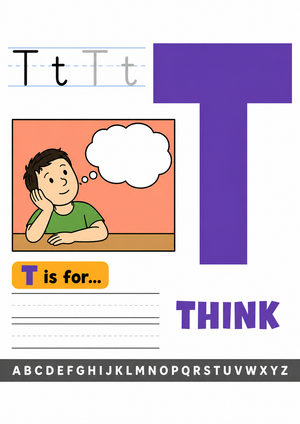
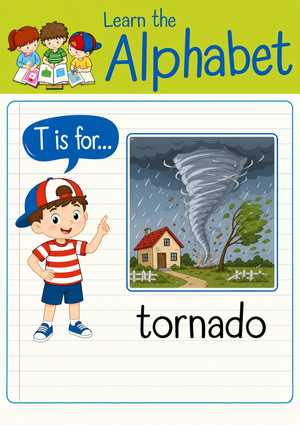
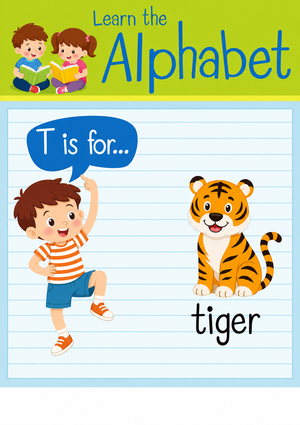
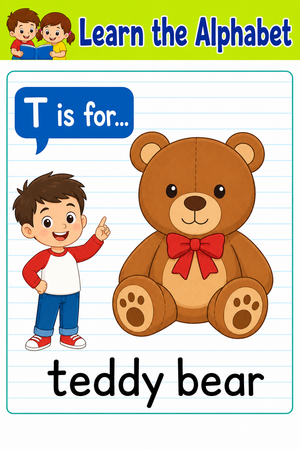
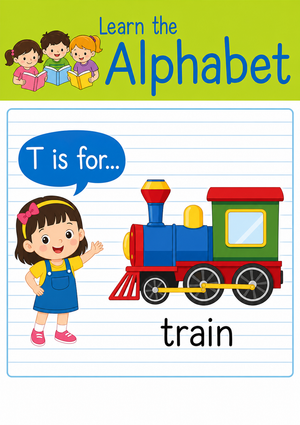
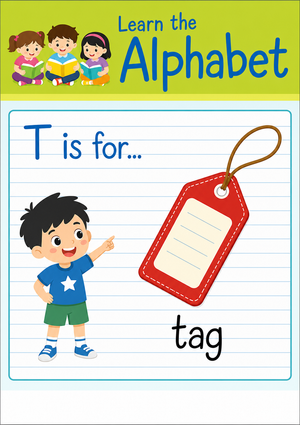
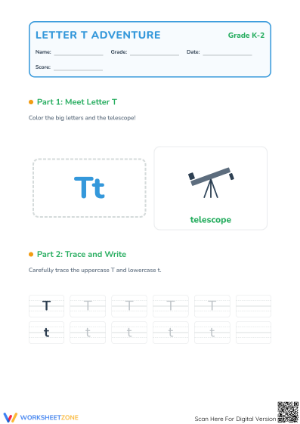
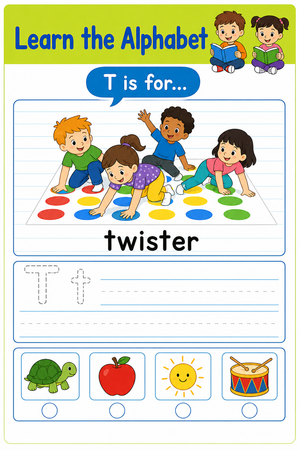
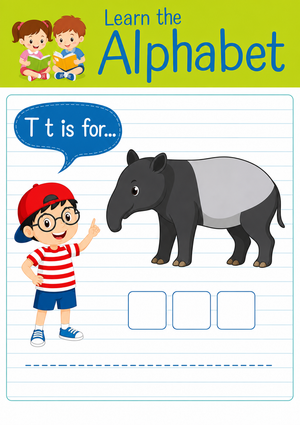
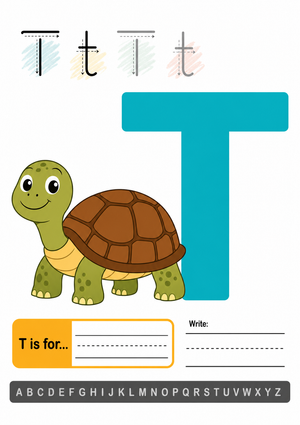
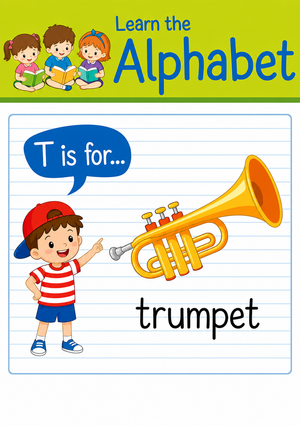
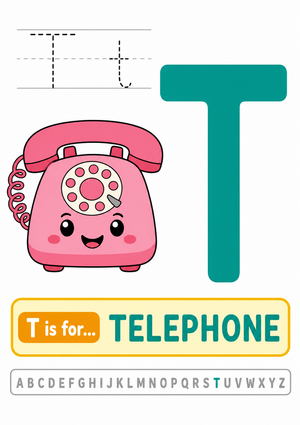
When a pre-K or kindergarten student works with letter t beginning sound worksheets, they are practicing one of the earliest phonemic awareness skills: isolating the first sound in a spoken word. Before children can blend or segment words, they need to reliably hear and produce /t/ at the start of words like turtle, tiger, and truck.
The National Reading Panel's meta-analysis of 52 studies found that phonemic awareness instruction was nearly twice as effective when letters were presented alongside their sounds, rather than teaching sounds in isolation. Pairing the printed letter T with its /t/ sound on every worksheet, rather than drilling the sound orally alone, is instructional design that produces measurably stronger outcomes.
Using Picture-Sound Matching Before Spelling Practice
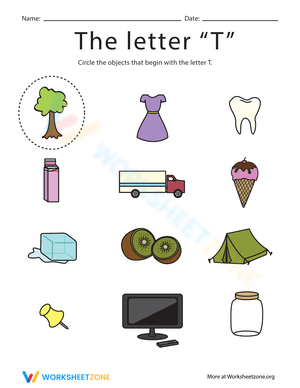
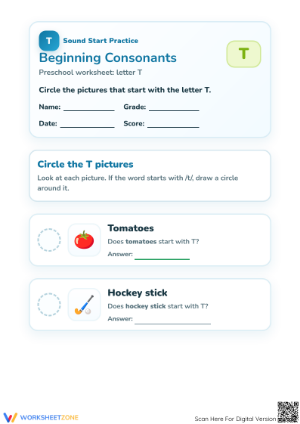
Picture-sound matching worksheets efficiently layer letter shapes, letter names, and explicit letter-sound relationships. Start with a worksheet where students circle pictures that begin with /t/ among a mixed set (turtle, tiger, truck alongside sun or dog). This isolates the auditory skill without requiring writing.
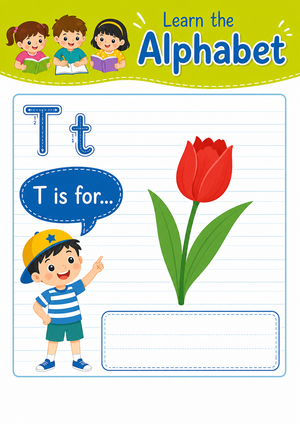
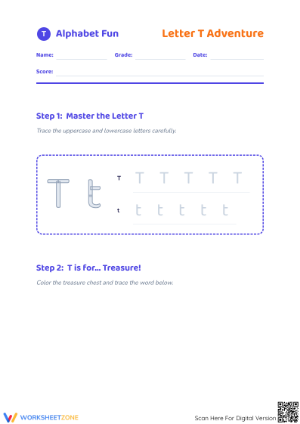
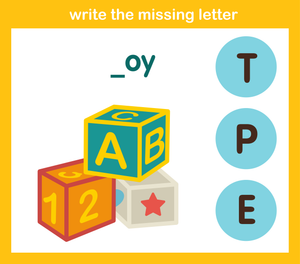
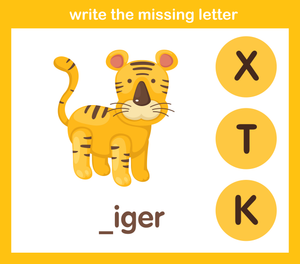
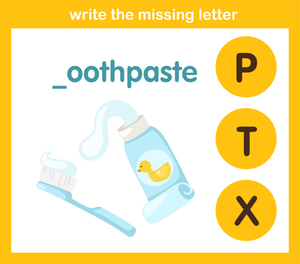
Once picture-sound matching is solid, move to worksheets that ask students to trace the letter T while saying the sound, then to worksheets that combine picture identification with a simple write-the-letter task. This progression separates auditory skill from motor and orthographic skill, so you can pinpoint which one needs support.
Multisensory Reinforcement to Pair with Worksheet Practice
Worksheets work best layered with multisensory input. Before or during a letter T worksheet, have students trace the letter in sand, shaving cream, or on a textured card while saying /t/ aloud. Add a tapping cue, tapping a finger to the table each time they hear /t/ at the start of a word read aloud, so auditory, tactile, and kinesthetic channels reinforce the same skill.
Articulation cues also help. Explicitly naming the mouth position for /t/, tongue tapping the ridge behind the top teeth, gives students a concrete physical target. This is especially useful for English learners and students with speech-language needs, who benefit from a visible or felt reference point alongside the worksheet.
Classroom Implementation
For whole-group instruction, introduce letter T with a short multisensory routine (trace, say, tap) before handing out worksheets, so students have an anchor before independent work. Use the picture-sound matching worksheet as guided practice with think-alouds, modeling how you listen for the first sound in a word before circling.
For small-group intervention, group students by their specific error pattern rather than by general reading level. A student confusing /t/ and /d/ needs different practice than a student who has the sound solid but struggles to write T. Rotate a short letter T worksheet into each group's session as a two- to three-minute formative check, and use results to decide whether to stay on beginning sounds or move toward blending with T words.
For pre-K classrooms, focus almost entirely on oral sound isolation and picture matching, saving letter formation for kindergarten. For first-grade intervention groups working below grade level, letter T worksheets serve as a quick diagnostic to confirm whether a foundational gap exists before moving into more complex decoding.
Teacher Tips
Keep worksheet vocabulary concrete and familiar; students cannot isolate a sound in a word they don't already know. Rotate which letter appears as the distractor in mixed picture sets so students are not memorizing a fixed pattern. When a student gets a worksheet item wrong, ask them to say the word slowly before revealing the answer; this often reveals whether the error is auditory, articulatory, or simply inattention. Finally, keep a running note of which students consistently confuse /t/ with /d/ or other sounds, since this pattern often persists across multiple letters and warrants a broader phonemic awareness check.
Frequently Asked Questions
1. How should teachers introduce the letter T beginning sound to pre-K or kindergarten students?
Start with oral sound isolation using a consistent picture anchor like turtle, paired with a multisensory routine such as tracing and tapping, before introducing a worksheet. This sequencing lets students build the auditory skill first and apply it to print once the sound is familiar.
2. What are signs a student needs more practice with the /t/ beginning sound?
Watch for consistent confusion with /d/ words, inconsistent answers on repeated versions of the same worksheet, or an inability to isolate the sound without a picture cue. Any of these patterns suggests the skill is not yet automatic and needs continued small-group support.
3. How can letter T worksheets fit into a small-group or intervention rotation?
Use a short, single-skill worksheet as a two- to three-minute formative check at the start or end of a small-group session. Group students by their specific error pattern, such as /t/-/d/ confusion versus letter formation difficulty, so each group's practice targets its actual gap.
4. How do beginning-sound worksheets connect to later blending and decoding skills?
Beginning-sound isolation is a prerequisite for blending and segmenting, since students must identify individual sounds before combining or breaking them apart. Solid performance on letter T worksheets signals a student is ready to begin blending simple T words.