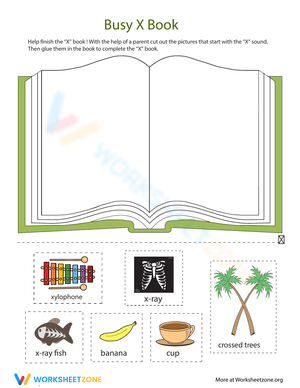
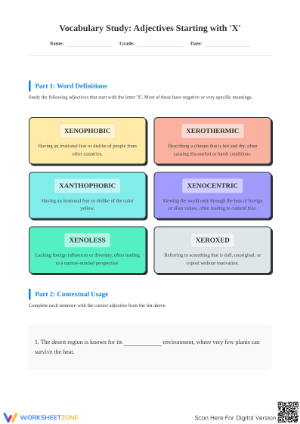
If you have run a letter-of-the-week program in Pre-K or Kindergarten, you already know that letter X does not behave like the other 25 letters. Most consonants and vowels have a long list of common, kid-friendly words that start with their sound. X has almost none. That mismatch is exactly why so many teachers end up frustrated when they search for letter x beginning sound worksheets and find pages that do not hold up to a closer phonics look.
Very few English words begin with the letter X, and the ones that do, including xylophone, x-ray, and xenon, mostly produce a z or ks sound rather than a true beginning x sound. That single fact should change how you plan this unit. Instead of forcing a full week of beginning-sound-only activities, treat letter X as a two-part lesson: a short, honest look at real beginning words, paired with stronger practice on the ks sound at the end of familiar words.
A Short, Vetted Word List for This Unit
Because true beginning-x words are scarce, keep your word list intentionally small and accurate rather than padded with words that only sound like they belong.
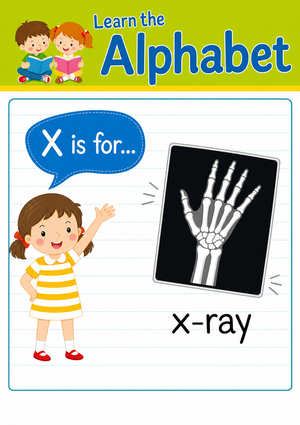
- X-ray: a strong beginning-sound anchor word, familiar to most students from doctor visits or books
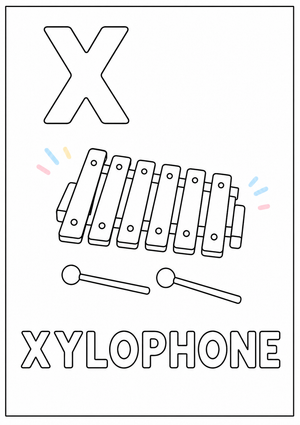
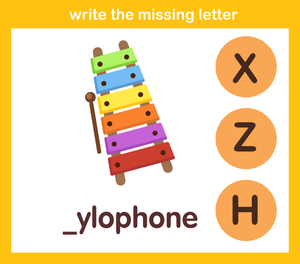
- Xylophone: useful only as a discussion word for the z-sound exception, not as a beginning ks-sound example
- Box, fox, fix, mix, ax: your core ending-sound practice set
- Six, tax, wax: additional ending-sound words for stronger readers or extra practice rounds
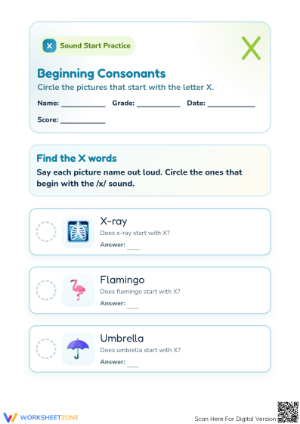
X-ray is one of the few widely usable beginning-x words teachers can pair with a beginning sounds worksheet since it is familiar and starts with a clear ks-adjacent sound. Anchor your beginning-sound page around x-ray specifically, rather than trying to stretch the lesson across four or five beginning-x words that do not exist in everyday classroom vocabulary.
Rebuilding the Worksheet Set Around Two Goals
Once you accept that letter X needs a different structure than letter B or letter S, the worksheet planning gets easier. Aim for two clearly labeled goals across your practice pages rather than one broad beginning-sounds goal.
The first goal is recognition: can a student point to x-ray, name the letter, and connect it to the ks-adjacent starting sound? The second goal is production: can a student hear box, fox, or mix and correctly identify the ending letter as X, then write it? Because true beginning-x words are scarce, many published letter-sound worksheets default to xylophone, which teacher literacy blogs flag as misleading for early phonics instruction. Splitting your materials into these two labeled goals sidesteps that trap entirely and gives you a defensible, standards-honest reason for the structure when a coach or parent asks about it.
Classroom Implementation
Plan letter X across two short sessions instead of one full week, since the sound content is thinner than most other letters.
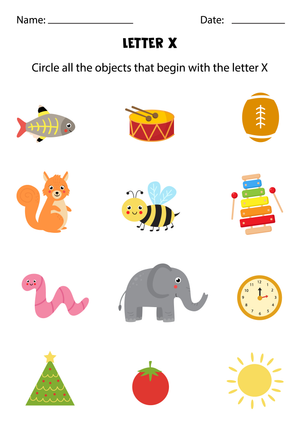
- Session one: introduce x-ray as the beginning-sound anchor. Use a beginning sounds worksheet limited to x-ray and two or three distractor pictures that do not start with X, so students practice discrimination rather than memorization.
- Session two: shift fully to ending sounds. Use a picture-and-word matching worksheet with box, fox, fix, and mix, asking students to circle or write the final letter.
- Small-group intervention: pull students who consistently confuse X with K or Z during dictation. Have them sort picture cards into ends with x and does not end with x piles before moving to independent worksheets.
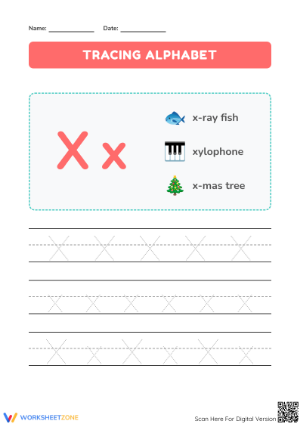
- Center rotation: pair a letter X tracing page with an oral sorting game using the five core ending-sound words, so writing practice and sound discrimination happen in the same rotation.
This structure also makes differentiation simple. Students who are ready for more challenge can add six, tax, and wax to their ending-sound set, while students who need more repetition can stay with the original four words across multiple days.
Frequently Asked Questions
1. Are there real words that start with the letter x beginning sound
Yes, but very few, and most of them do not produce a clean ks sound at the start. X-ray is the most classroom-friendly option since it is familiar and starts with a clear ks-adjacent sound, while xylophone actually starts with a z sound rather than the expected x sound.
2. Why do so many alphabet materials use xylophone for letter x
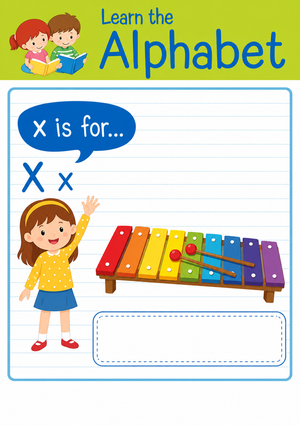
Xylophone is visually distinctive and easy to illustrate, which is likely why it became the default picture on alphabet materials. However, in the word xylophone, X represents the z sound, making it a misleading choice for beginning-sound instruction specifically.
3. Should kindergarten teachers focus on beginning or ending x sounds first
Because so few usable beginning-x words exist, most literacy specialists recommend leading with ending-sound words like box, fox, fix, and mix, then introducing x-ray as a short, separate beginning-sound activity.
4. How can teachers use x-ray effectively in a beginning sounds worksheet
Use x-ray as the single anchor word rather than one of several examples. Pair it with two or three clear non-examples so students practice discriminating the sound instead of memorizing one isolated word.
5. What is the best way to differentiate letter x worksheets for struggling readers
Keep struggling readers on a smaller ending-sound set, such as box, fox, and mix, with extra oral sorting practice before moving to independent writing tasks. Students who are ready for more can add six, tax, and wax to build broader ks-sound recognition.