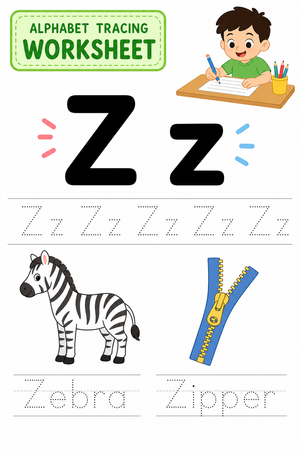
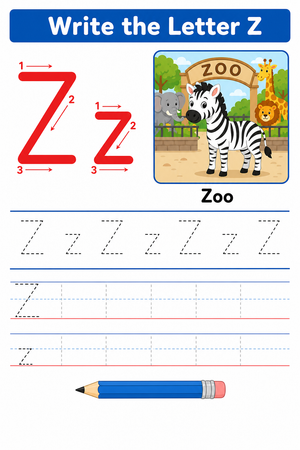
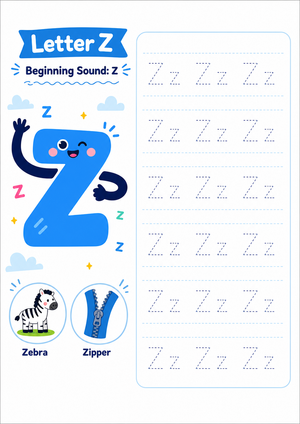
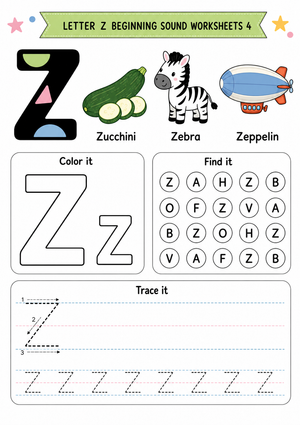
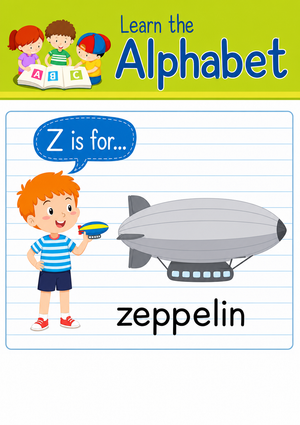
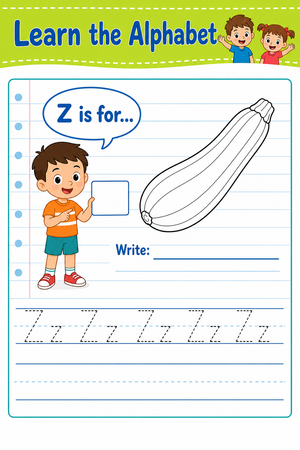
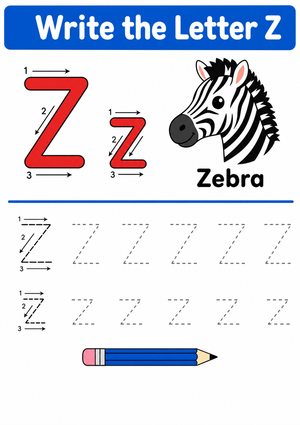
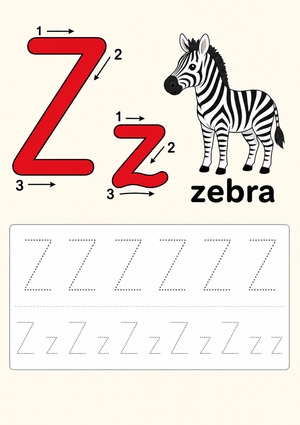
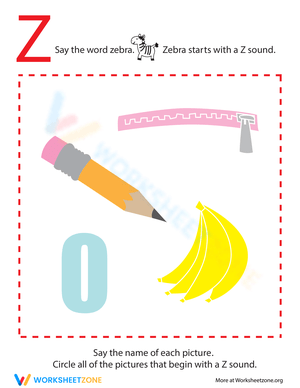
The /z/ phoneme is a fricative, which means it is produced by narrowing the airway to create a steady, buzzing stream of air, the same family as /f/, /s/, and /v/. Because /z/ and /s/ use nearly identical mouth shapes, students who are still building phonemic awareness often substitute one for the other when they speak or spell. That confusion is exactly why beginning sound practice for Z needs to start with listening and speaking, not with a pencil.
Kindergarten children who receive systematic phonics instruction are better at reading and spelling words than those who do not receive systematic instruction, which means the sequence a teacher uses for letter Z matters as much as the worksheet itself.
Sequencing a Letter Z Lesson Before the Worksheet
Start instruction with speech before print. Say a short list of words that begin with /z/, such as zero, zipper, zebra, zoo, and zucchini, and ask students to repeat each one while noticing what their mouth is doing. This step connects new letter-sound knowledge to language the child already has, rather than asking them to decode a symbol they have never linked to sound.
- Oral warm-up: say and repeat /z/ words as a group.
- Sound isolation: ask students to name only the first sound they hear.
- Letter-sound matching: show the letter Z and connect it to the /z/ sound they just practiced.
- Worksheet practice: move to print only after the first three steps are solid.
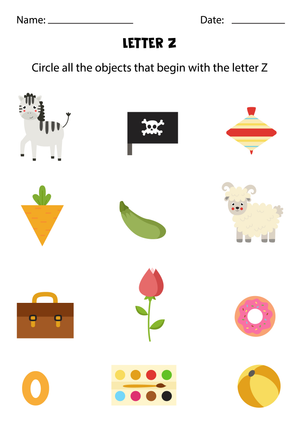
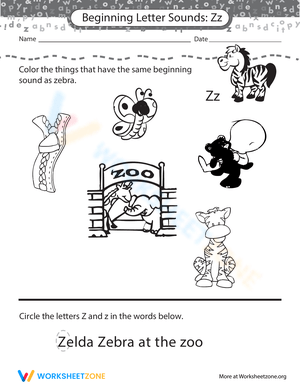
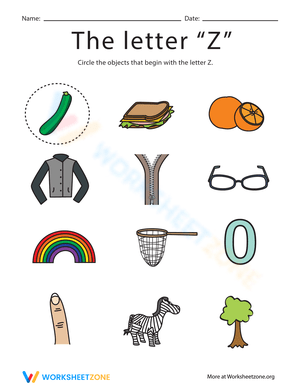
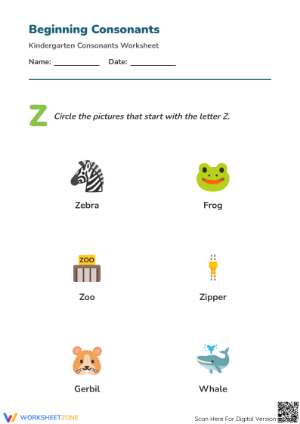
Skipping straight to a worksheet with pictures to circle or trace often produces students who can complete the page without actually hearing the sound. The oral steps are what make the printed practice meaningful.
Strengthening Retention With Phonemic Substitution
Explicit, direct instruction is the most effective type of phonics instruction, especially for children at risk for reading difficulties, and phoneme substitution is one of the most direct ways to deliver it. Try changing the first sound in sip to /z/ and asking students what new word results. This kind of substitution activity forces students to isolate the initial phoneme actively rather than passively recognizing it, and it builds the same skill they will need when spelling unfamiliar words later.
Pair this oral substitution work with a worksheet that asks students to sort pictures by beginning sound, including a few /s/ items as distractors. That contrast is what actually tests whether a student has mastered /z/ rather than simply memorized which pictures go with the letter Z.
Formative Assessment for the Z Beginning Sound
A quick, reliable check is to say four words aloud, only one of which begins with /z/, and ask the student to identify it without seeing any print. This isolates the phonemic awareness skill from letter recognition, which matters because a student can sometimes get a worksheet item right by guessing at the picture rather than by hearing the sound.
Follow the oral check with a one-minute written task: give students five pictures and ask them to write Z next to the ones that start with the /z/ sound. Comparing performance on the oral check against the written task tells a teacher whether a gap is in phonemic awareness, letter-sound correspondence, or both, which then determines whether the next lesson needs more listening practice or more print practice.
Classroom Implementation
Build letter Z worksheets into a full phonics center rotation rather than using them as a single stand-alone activity. One practical rotation: a teacher-led group for oral isolation and substitution, an independent worksheet station for sorting and tracing, and a partner station where students quiz each other with picture cards. This spreads the practice across modalities so students are not just filling in a page.
Keep a running note of which students still confuse /z/ and /s/ after two weeks of practice, since this pattern is common enough to plan for. Those students likely need a dedicated five-minute daily drill contrasting the two sounds before they move on to new letter-sound content, rather than being folded into whole-group review at the same pace as their peers.
Frequently Asked Questions
1. What age or grade level is appropriate for introducing the letter Z beginning sound?
Pre-K classrooms can introduce letter Z for simple exposure and recognition, while kindergarten is the grade level where mastery of the /z/ sound and its correspondence to the letter Z is expected under standard phonics scope and sequence.
2. How can teachers tell if a student has mastered the /z/ beginning sound versus just memorized the letter shape?
Use an oral-only check where students identify the /z/ word from a spoken list without any picture or print support. A student who can only succeed with a picture cue has likely memorized an association rather than internalized the sound itself.
3. What are effective classroom activities to pair with letter Z beginning sound worksheets?
Phonemic substitution drills, such as changing the first sound in sip to /z/, and sorting activities that mix /z/ and /s/ items both strengthen the specific distinction students struggle with most.
4. How does teaching /z/ fit into a broader systematic phonics scope and sequence?
Letter Z is usually one of the last single consonants introduced, since it appears less often in early vocabulary. By this point students typically have strong phonemic awareness skills already, so instruction can move faster than it did for earlier, higher-frequency letters.