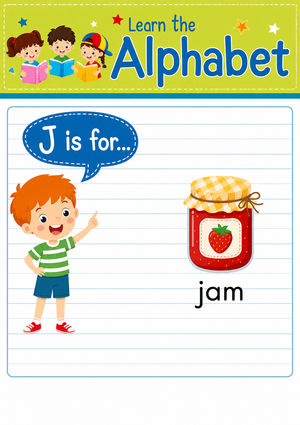
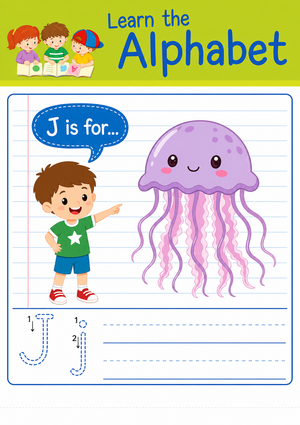
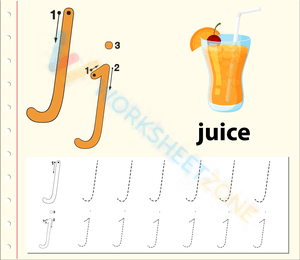
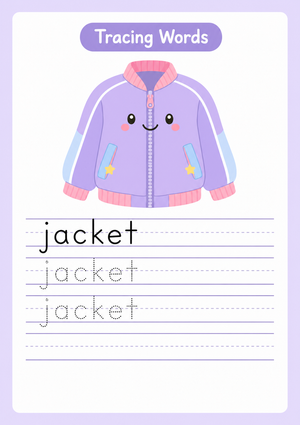
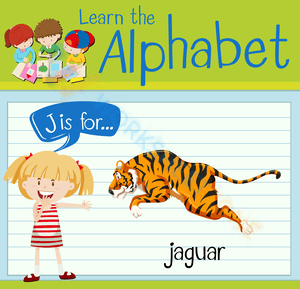
If a chunk of your kindergarten or early first grade class still hesitates on /j/, you are not imagining a gap. Letter j beginning sound worksheets earn a steady spot in phonics folders because this sound is genuinely one of the harder ones for young students to lock in during the first months of school.
A kindergarten-entry letter-sound knowledge study found that beginning sounds for a, c, e, g, i, j, k, o, and u are less likely to be known at kindergarten entry than other letter sounds. That means j is not an outlier weakness in one classroom; it is part of a predictable cluster of harder-to-learn sounds, so building in extra practice time from week one is a reasonable, evidence-based move rather than overcorrection.
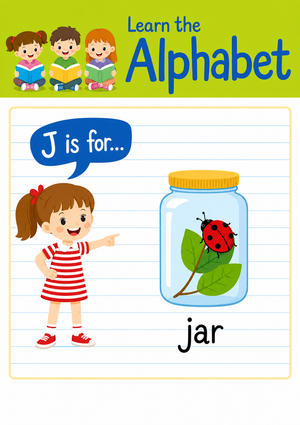
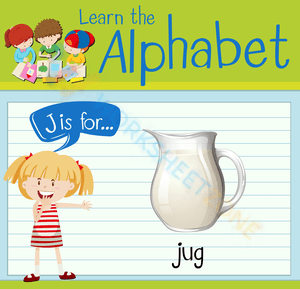
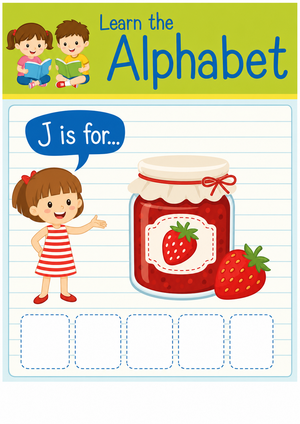
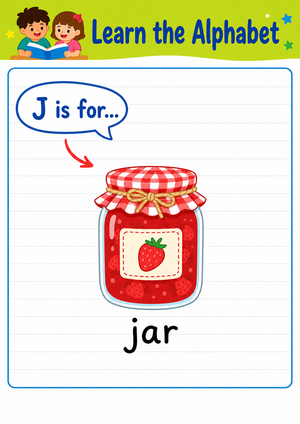
Part of the difficulty comes from how j is introduced in everyday materials. Alphabet books and teaching tools sometimes present inconsistent or unexplained keyword examples for j, which can slow mastery if a teacher does not step in with a single, consistent keyword image. Picking one anchor word and sticking with it across the unit removes that confusion.
A Simple Lesson Flow for Teaching the Letter J Sound
Beginning sound instruction works best when students first practice isolating sounds in spoken words before matching them to the printed letter. A dependable four-step flow for a mini-lesson looks like this:
- Oral sound isolation: say word pairs aloud and have students give a thumbs up when they hear /j/ at the start, using words like jump, jacket, and jelly next to non-examples like sun or gate.
- Picture sort: students sort picture cards into a j pile and a not-j pile before ever touching a pencil.
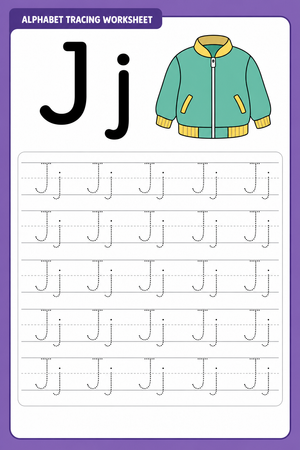
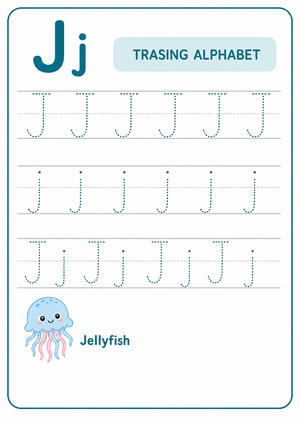
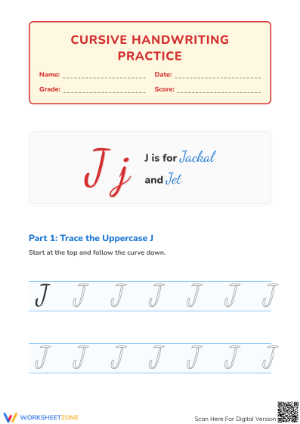
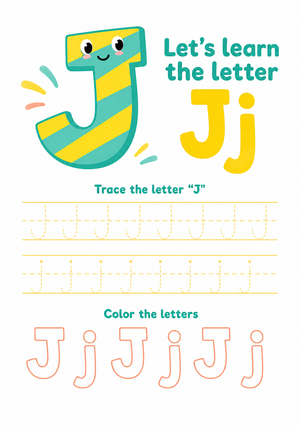
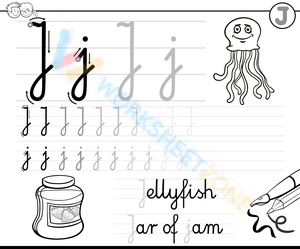
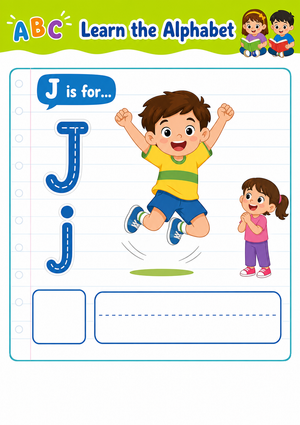
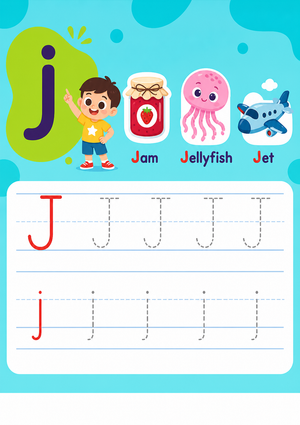
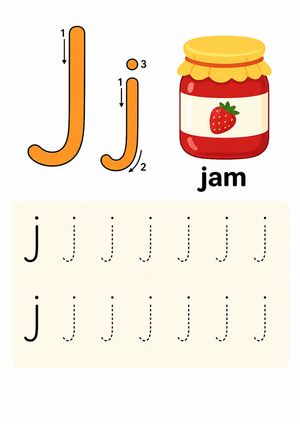
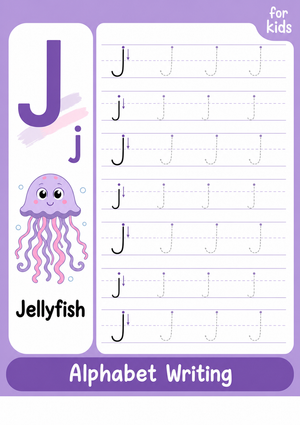
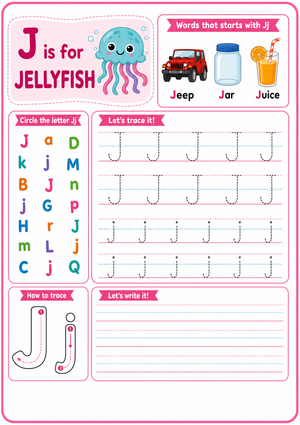
- Letter formation: model writing the uppercase and lowercase j with a clear starting point, then have students trace and copy.
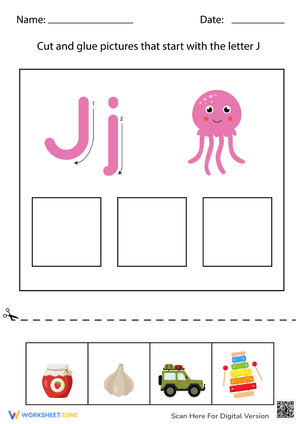
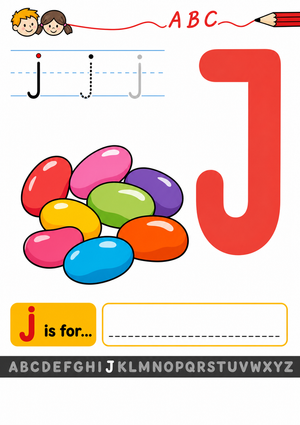
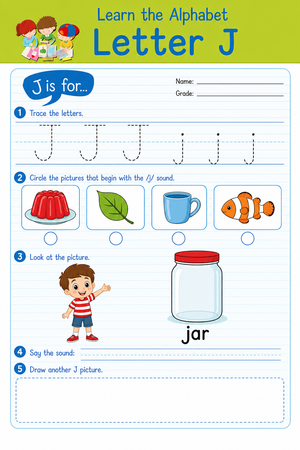
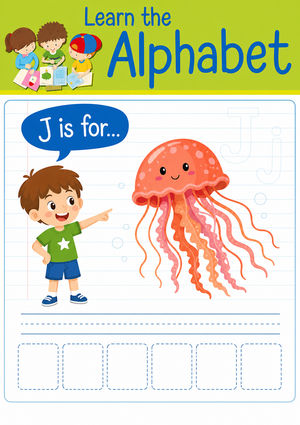
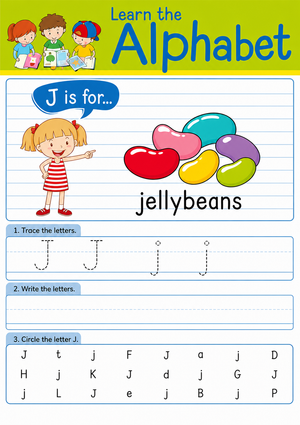
- Independent worksheet practice: students circle, color, or trace pictures that begin with /j/ on a letter j beginning sound worksheet to close the lesson.
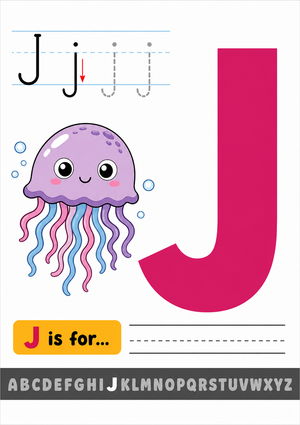
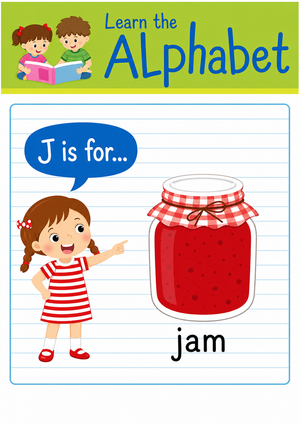
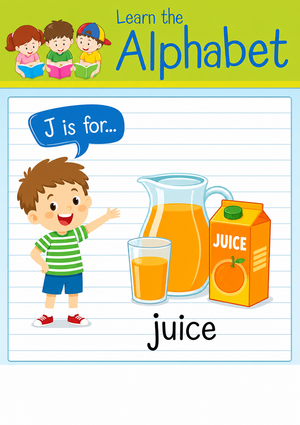
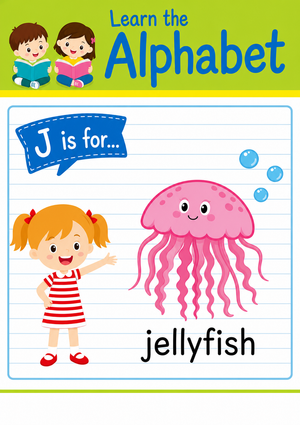
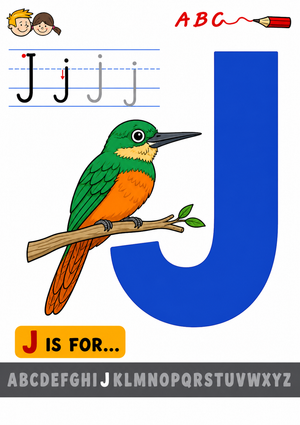
Common effective practice pairs the letter j with a keyword image and mnemonic, such as jellyfish or jacket, plus a hands-on letter formation step. Keeping the same keyword image across the picture sort, the handwriting practice, and the worksheet gives students one consistent mental anchor instead of three competing pictures to remember.
Teacher Tips
A few practical notes from classroom use of letter j beginning sound worksheets:
- One letter sound per week with cycles of review and letter comparison, such as contrasting j with g, is a widely used pacing approach in kindergarten phonics scope and sequence, and it applies well to j given how often it gets confused with its visually similar neighbor.
- Send a short version of the worksheet home as review rather than new instruction, since families are more likely to complete a five-minute task than a full lesson.
- Store completed worksheets in a simple sound-by-sound folder so you can flip back and compare a student's j work from week one against week four during conferences.
- Rotate keyword images sparingly. Introducing a new mnemonic mid-unit undoes the consistency that helped students lock in the sound the first time.
Frequently Asked Questions
1. What grade level are letter j beginning sound worksheets appropriate for?
These worksheets fit kindergarten phonics instruction most directly, with continued use in early first grade for students who need additional review of initial consonant sounds.
2. Why do students often struggle with the letter j sound specifically?
Research on kindergarten-entry letter-sound knowledge places j among a group of beginning sounds, including a, c, e, g, i, k, o, and u, that are less likely to be known when students start school, so extra practice time is a predictable need rather than a sign of an unusual gap.
3. How can teachers use these worksheets in a small-group intervention setting?
Pair a quick oral sound drill with a guided worksheet completed alongside the teacher, then follow with an independent worksheet of similar format to check whether the student can apply the skill without support.
4. How many practice sessions are typically needed before mastery?
This varies by student, but a common classroom pattern is one focused week of instruction followed by short review touches across the following two to three weeks, especially when j is compared directly against g.
5. How can teachers assess whether a student has mastered the beginning j sound?
Track accuracy across two or three independent worksheet checks rather than a single attempt, and watch specifically for confusion between j and g, which is the most common error pattern at this stage.