When you are planning a phonics block for kindergarten or early first grade, the /w/ sound often gets less attention than trickier letters like s or m. But isolating and identifying beginning sounds is one of the strongest predictors of later reading achievement, and letter-sound knowledge itself is considered one of the strongest predictors of reading readiness at kindergarten entry. Letter W beginning sound worksheets give you a low-prep way to build that foundation while you observe exactly which students are ready to move on and which ones need more oral practice first.
Unlike sounds that are easy to see on the mouth, /w/ is produced with a distinct, rounded lip shape that students can actually feel. That makes it a great candidate for a multisensory introduction before you ever hand out a worksheet.
Modeling the /w/ Sound Before Students Touch a Pencil
Effective /w/ instruction starts with modeling the tight, rounded lip position needed to produce the sound, then having students place a hand near their own mouth or watch a small mirror while they repeat it. Ask students to say wagon, watermelon, and web slowly, exaggerating the lip rounding on the first sound. Have them describe what their lips are doing in their own words. This step matters because many students can name the letter W without being able to isolate its sound inside a spoken word, and worksheets alone will not close that gap.
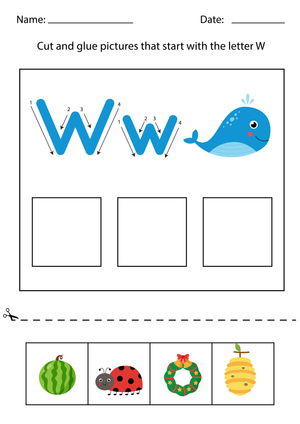
Research on early letter-sound instruction has found that embedded keyword pictures, meaning images displayed within the letter shape itself rather than beside it, improve both acquisition and retention of letter-sound correspondences compared to pictures placed apart from the letter. If your letter W beginning sound worksheets use a worm or wagon drawn inside the shape of the W, you are leaning on a design choice with real instructional backing, not just a decorative flourish.
Sequencing Oral Practice Before Print
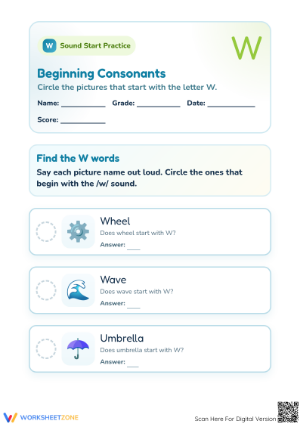
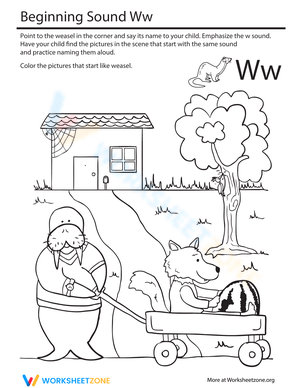
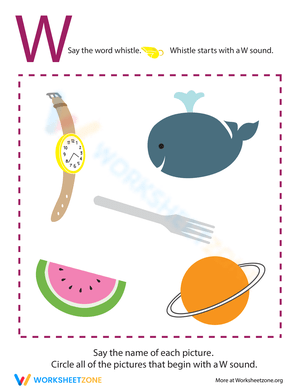
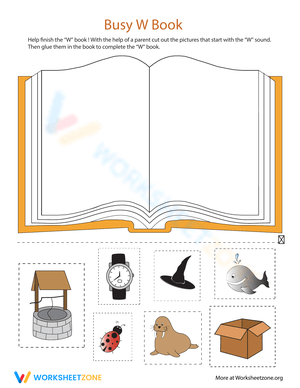
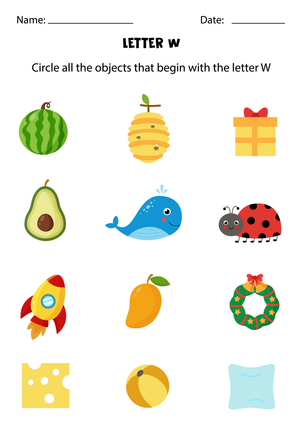
Initial letter-sound instruction typically combines three elements: letter naming, auditory phonemic isolation tasks, and picture-based sound association. Try sequencing your lesson this way: first, review the letter name and shape. Second, play an oral game where you say a list of words and students give a thumbs up only when a word starts with /w/, mixing in near-sound distractors like van or rug. Third, move to a worksheet where students circle or color pictures that begin with the /w/ sound. Saving the worksheet for last means it becomes a check of understanding rather than the only teaching moment in the lesson.
Classroom Implementation
Keep a simple rotation in mind so the worksheet does real instructional work instead of becoming busywork. Start with a two-minute oral drill using real classroom objects or picture cards that begin with /w/, such as window, wagon, or watch. Move students into a whole-group or partner practice where they say each word slowly and isolate the first sound before touching a worksheet. Hand out the worksheet only after this oral step, and circulate to listen for students who mark an answer correctly but cannot say the sound aloud when asked directly. Use a completed worksheet plus a quick one-on-one check, such as asking a student to name three words that start with /w/, as your combined mastery evidence rather than relying on the worksheet alone.
Frequently Asked Questions
1. What grade level are letter W beginning sound worksheets appropriate for?
These worksheets fit pre-K exposure, kindergarten instruction and mastery, and first-grade review for students who still need support with foundational letter-sound correspondences. The same worksheet can serve different purposes depending on how much oral scaffolding you provide beforehand.
2. How can teachers tell if a student has mastered the /w/ beginning sound versus just letter recognition?
Ask the student to name the letter W first, then separately ask them to generate or identify words that start with the /w/ sound without seeing the letter. A student who can name the letter but cannot isolate the sound in spoken words has letter recognition without full letter-sound mastery, and needs more oral phonemic isolation practice before more worksheet repetition will help.
3. What classroom activities pair well with letter W beginning sound worksheets?
Oral sound-isolation games, picture sorts, and simple mirror or hand-on-mouth activities that let students feel the rounded lip shape of /w/ all pair well. These activities give students the auditory and physical practice that a worksheet by itself cannot provide.
4. How many practice sessions are typically needed before a student secures a new letter-sound correspondence?
This varies by student, but most kindergartners need multiple short sessions across several days, combining oral practice with visual and worksheet-based reinforcement, rather than a single exposure. Students receiving small-group intervention often need more repeated, distributed practice than students in whole-group instruction alone.