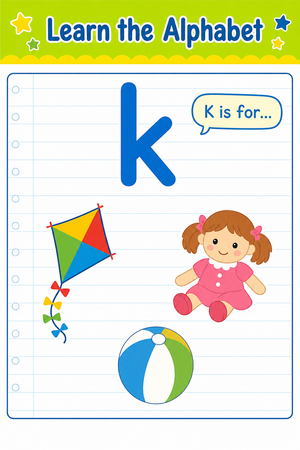
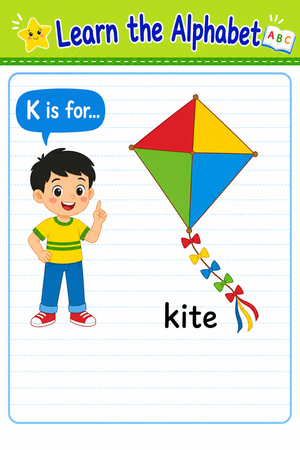
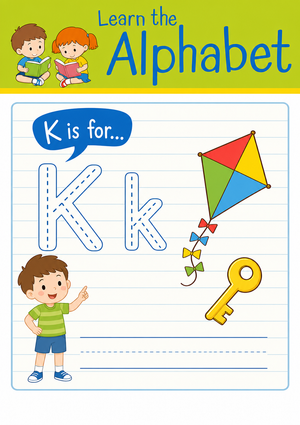
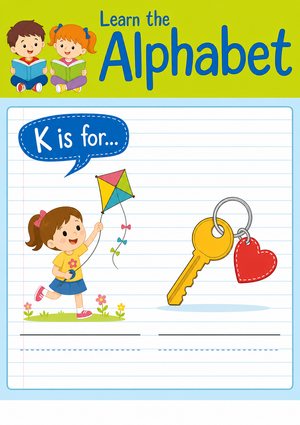
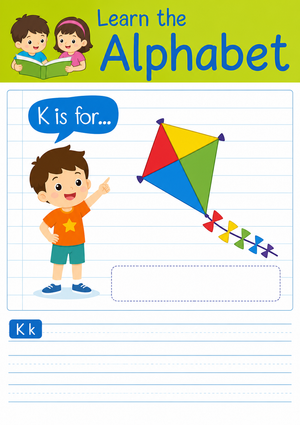
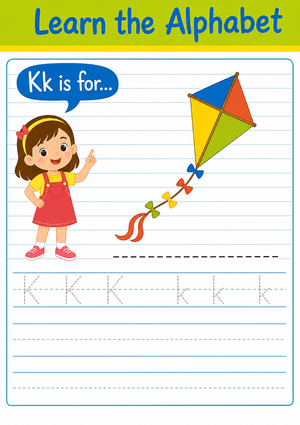
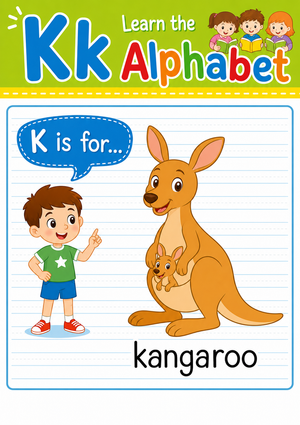
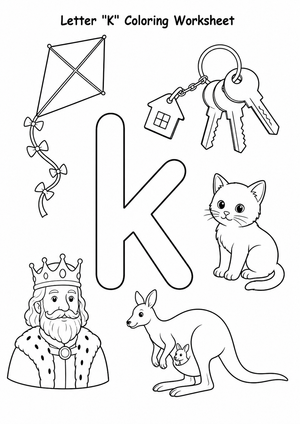
Isolating the first sound in a word is a foundational phonological awareness skill, and letter K carries an extra challenge because it shares its sound with letter C in many common words. Students who have only practiced letter-name recognition often stall when asked to isolate a beginning sound orally and then match it to a letter on paper. A dedicated letter K worksheet forces that transfer from listening to symbol, which is exactly the skill early readers need before they can decode CVC words with any consistency.
Letter-sound knowledge at kindergarten entry is one of the strongest predictors of later reading success, according to research summarized on ScienceDirect in An investigation of factors associated with letter-sound knowledge at kindergarten entry. That finding is a useful reminder for teachers planning September and October phonics routines: early, explicit letter-sound work is not filler activity, it is a leverage point for the whole school year.
Aligning Practice with CCSS.ELA-Literacy.RF.K.2.d
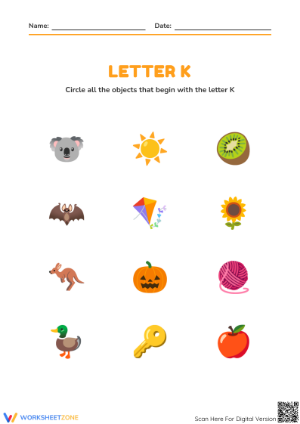
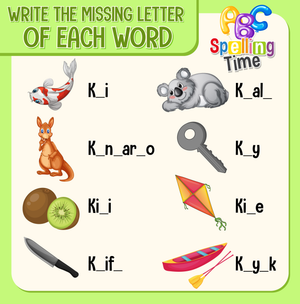
CCSS.ELA-Literacy.RF.K.2.d specifically requires students to isolate and pronounce the initial sound in three-phoneme, or CVC, spoken words. A letter K beginning sound worksheet that pairs a picture with several letter choices gives teachers a quick, low-stakes way to check this standard in action. Students say the picture name aloud, isolate the first sound, then circle or color the matching letter. That sequence mirrors exactly what RF.K.2.d asks students to do, which makes the worksheet useful both for instruction and for informal progress monitoring.
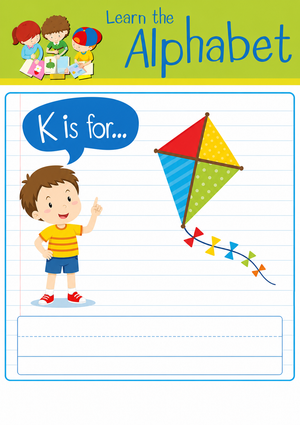
Teachers building a phonics scope and sequence can use these worksheets as a checkpoint before moving students into blending practice. If a student cannot reliably isolate /k/ at the start of words like kite, kangaroo, or king, that student is not yet ready to blend K-initial CVC words independently, and small-group reteaching should come before whole-group blending work.
Using Worksheets for Small-Group and RTI Intervention
Letter K worksheets are also useful outside of core instruction. Reading interventionists working with students who consistently confuse letter K and letter C can use a beginning sound sorting worksheet as a diagnostic starting point. Because K and C often represent the same sound, students need direct practice distinguishing when each letter is conventionally used, alongside auditory isolation practice. A worksheet that isolates letter K in contrast with a mix of other letters, rather than only C, helps avoid building a habit of guessing between just two options.
For Tier 2 or Tier 3 groups, teachers can shorten the worksheet to fewer items and pair it with a verbal warm-up where students repeat and segment each word before marking an answer. This keeps the task manageable for students who need more processing time without changing the underlying skill being assessed.
Pairing Worksheets with Multisensory Practice
Systematic phonics instruction produces the strongest reading achievement gains when it is introduced early, including in kindergarten and first grade, compared to less structured approaches. Worksheets alone rarely deliver that systematic quality on their own. Pairing a letter K beginning sound worksheet with short multisensory activities strengthens the same skill through a different channel. Options that work well in a 15 to 20 minute center rotation include:
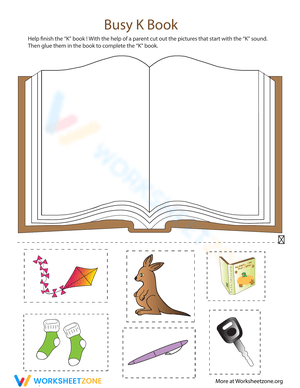
- Sorting picture cards into K and not-K piles before completing the matching worksheet
- Tracing the letter K while saying words that start with /k/
- Oral segmenting practice, tapping out each sound in words like cat, kit, and king
Layering these activities around the worksheet gives students repeated exposure to the same skill in listening, speaking, and writing modes, which tends to support stronger retention than a single paper task.
Frequently Asked Questions
1. What is the best way to introduce the letter K beginning sound to kindergartners?
Start with oral practice before paper practice. Say a small set of K words aloud, have students repeat them, and ask them to isolate the first sound before showing them the letter K worksheet. This builds the listening skill first so the worksheet becomes reinforcement rather than the first exposure.
2. How do beginning sound worksheets support the CCSS RF.K.2.d standard?
RF.K.2.d requires students to isolate and pronounce the initial sound in three-phoneme spoken words. A picture-matching beginning sound worksheet asks students to do exactly that: say the word, isolate the first sound, and select the matching letter, which makes it a direct practice and check tool for this standard.
3. How can teachers help students stop confusing letter K and letter C sounds?
Use worksheets that mix letter K with several letters, not only letter C, so students cannot rely on a simple two-choice guess. Combine this with oral sorting activities where students physically separate K words from C words while saying each one aloud.
4. How often should beginning sound worksheets be used in a phonics rotation?
One to two times per week during letter K instruction is generally enough, paired with daily oral practice. Using the worksheet too frequently without oral rehearsal can turn it into a guessing task rather than genuine sound isolation practice.
5. How can these worksheets be adapted for small-group intervention versus whole-class instruction?
For whole-class instruction, use the full worksheet after a shared oral warm-up. For small-group or RTI use, shorten the worksheet to fewer items, add verbal segmenting support for each word, and track which students need continued reteaching on K versus C confusion.