


























Views
Downloads

Letter D Beginning Sound Worksheet | Grade K Essential
Paste this activity's link or code into your existing LMS (Google Classroom, Canvas, Teams, Schoology, Moodle, etc.).
Students can open and work on the activity right away, with no student login required.
You'll still be able to track student progress and results from your teacher account.
This Kindergarten Letter D worksheet provides foundational phonics practice to help students master letter recognition and formation. By connecting the letter D to the familiar dog anchor image, learners build strong phonemic awareness while developing the fine motor skills necessary for writing and early literacy success.
At a Glance
- Grade: Kindergarten · Subject: ELA
- Standard:
CCSS.ELA-LITERACY.RF.K.1.D— Recognize and name all upper- and lowercase letters of the alphabet- Skill Focus: Letter D recognition and formation
- Format: 2 pages · 4 tasks · Answer key included · PDF
- Best For: Morning work or initial phonics instruction
- Time: 10–15 minutes
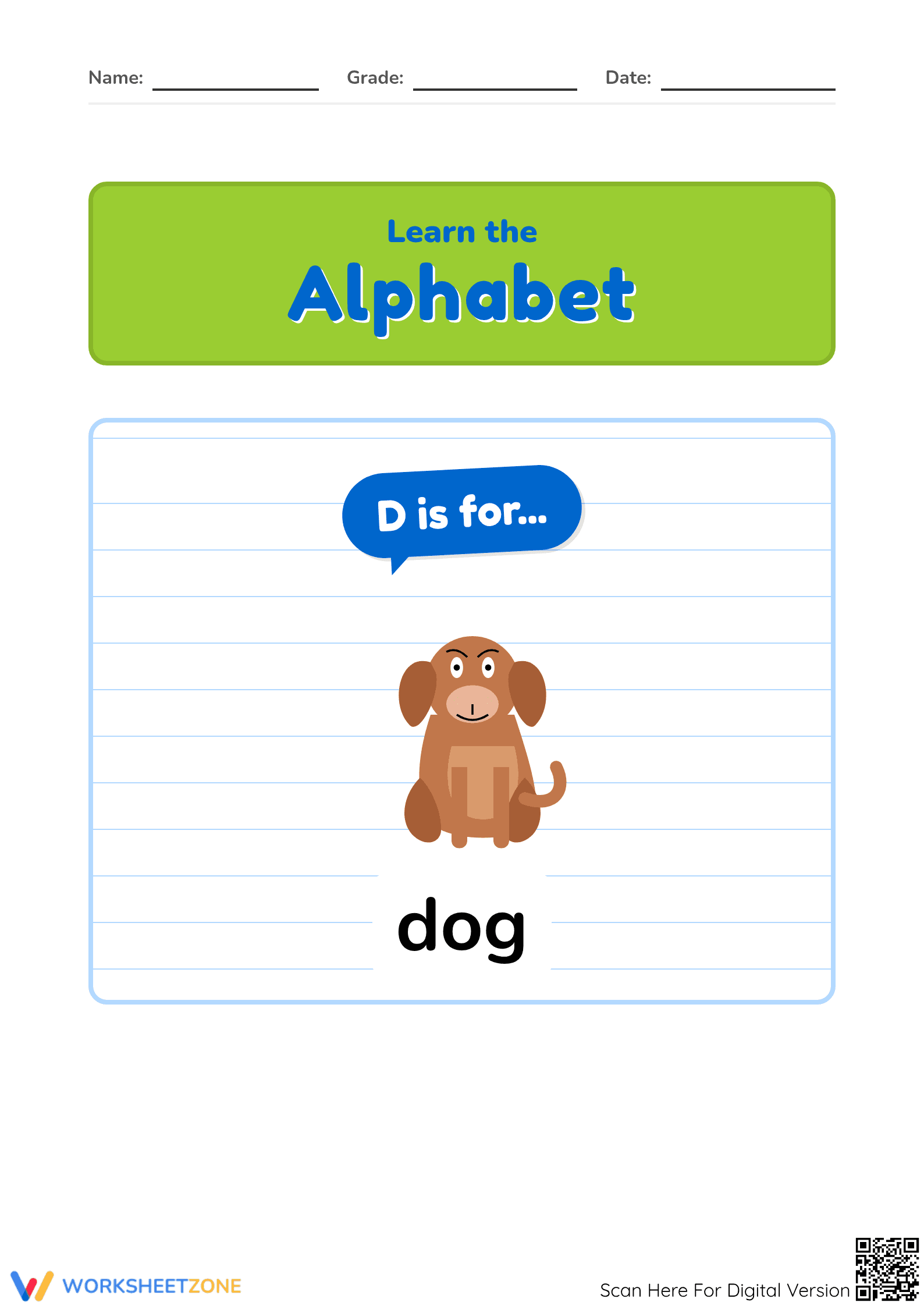
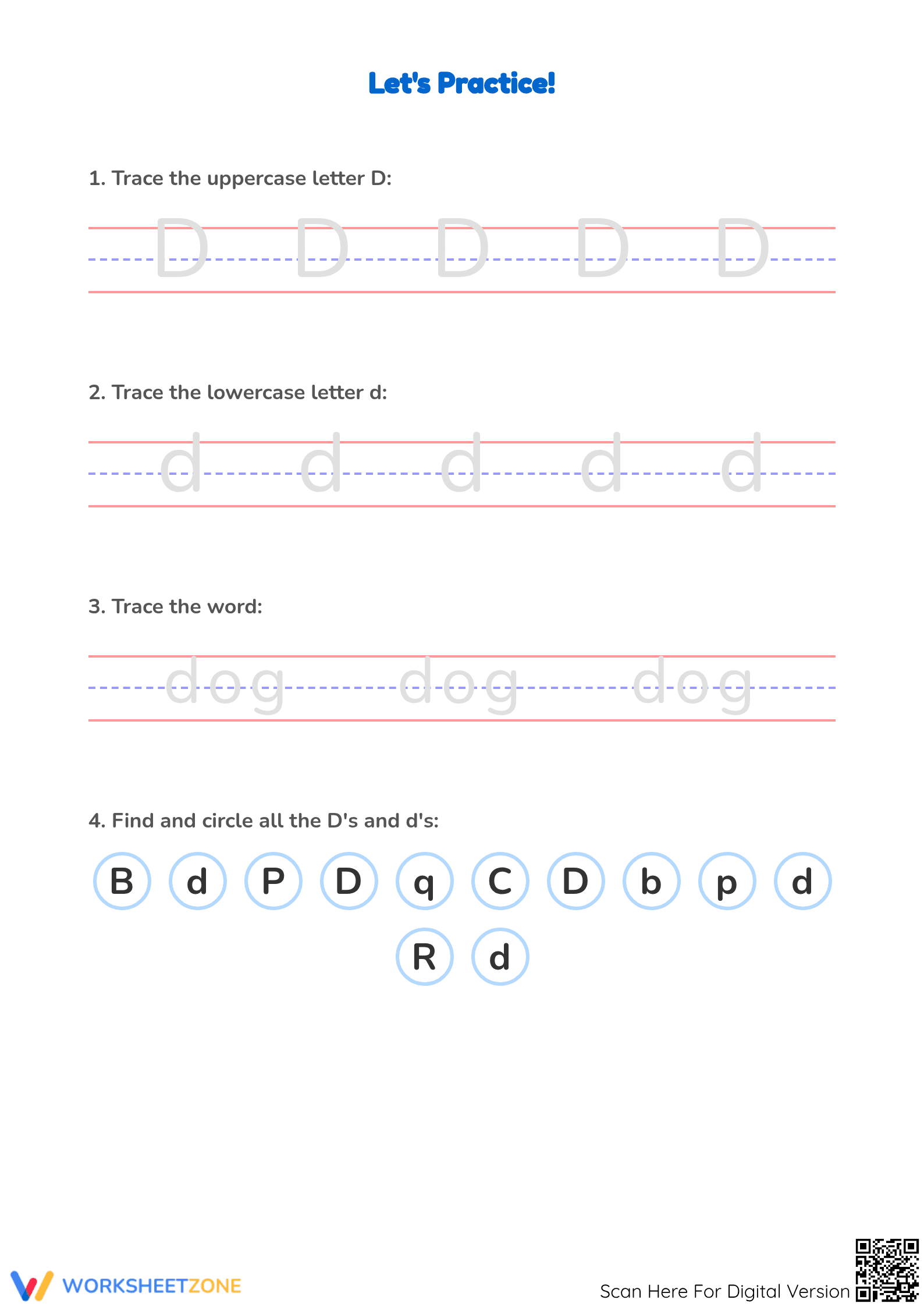
The packet includes two high-quality pages designed for early learners. The first page serves as a visual anchor featuring a large D is for dog graphic to establish the letter-sound connection. The second page contains four structured tasks: uppercase tracing, lowercase tracing, word tracing for dog, and a letter discrimination grid where students must find and circle specific characters among distractors.
Zero-Prep Workflow
- Print: Generate copies of the 2-page PDF in seconds for your entire class.
- Distribute: Hand out during literacy centers or as a quiet morning work activity.
- Review: Use the letter discrimination task for a quick 1-minute check for understanding.
Total teacher preparation time is under 2 minutes, making it an ideal choice for sub plans or busy morning transitions.
Standards Alignment
The primary focus is `CCSS.ELA-LITERACY.RF.K.1.D`, which requires students to recognize and name all upper- and lowercase letters of the alphabet. Additionally, it supports RF.K.3.A by linking the letter to its most common sound through visual association. Both standard codes can be copied directly into lesson plans, IEP goals, or district curriculum mapping tools.
How to Use It
Use this during the independent practice phase of a lesson after introducing the letter D sound. It also functions as a formative assessment; observe students during the find and circle task to identify those struggling with letter reversals like b and d. Expected completion typically takes 10 to 15 minutes depending on student fine motor proficiency.
Who It's For
This is tailored for Kindergarten students beginning their literacy journey, though it serves as excellent remediation for Grade 1 students. It pairs naturally with an alphabet anchor chart or a read-aloud book featuring animals to reinforce the dog connection. The clear layout is also beneficial for English Language Learners (ELL) building basic vocabulary.
This Letter D worksheet aligns with the CCSS.ELA-LITERACY.RF.K.1.D standard, focusing on the essential skill of recognizing and naming upper- and lowercase letters. Research from Fisher & Frey (2014) emphasizes that integrated tracing and visual discrimination tasks are vital for developing orthographic mapping in early readers. By providing 4 distinct tasks that move from guided tracing to independent identification, the worksheet supports the cognitive load requirements of five-year-old learners. According to the RAND AIRS 2024 report on early literacy, consistent exposure to letter-sound correspondences through multi-sensory activities—such as the tracing and circling found here—significantly improves long-term phonemic retention. This resource provides a structured, evidence-based approach to early alphabet mastery, ensuring students meet foundational benchmarks required for subsequent reading fluency and writing development in primary education settings.


