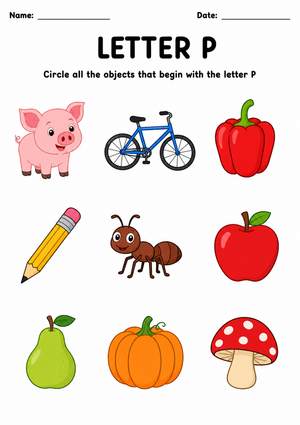
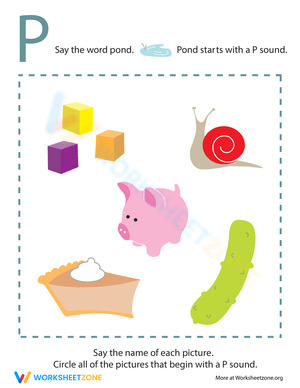
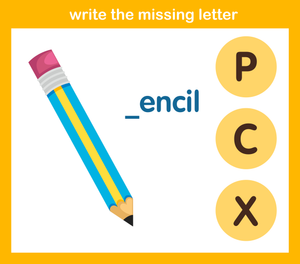
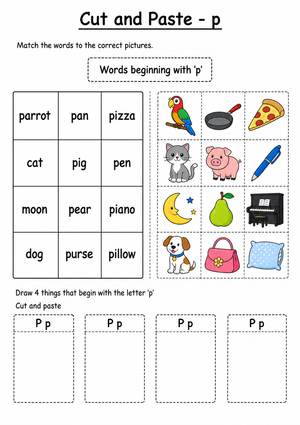
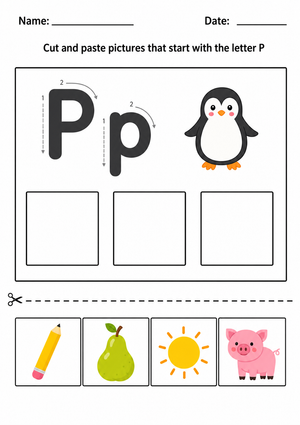
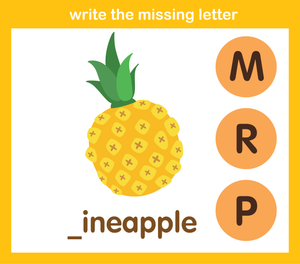
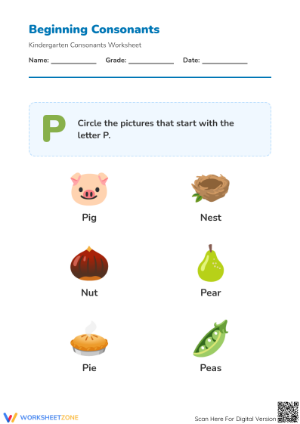
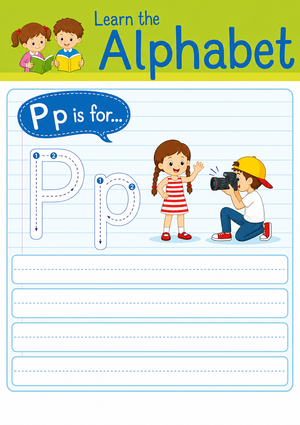
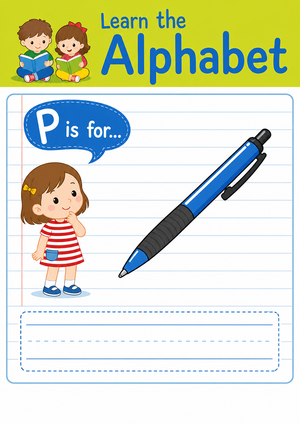
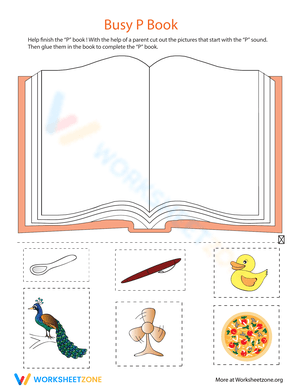
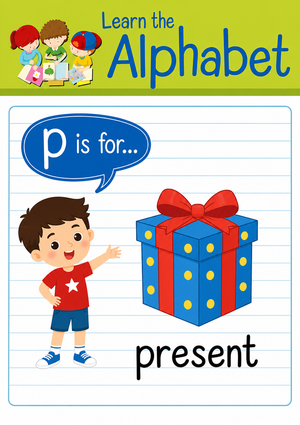
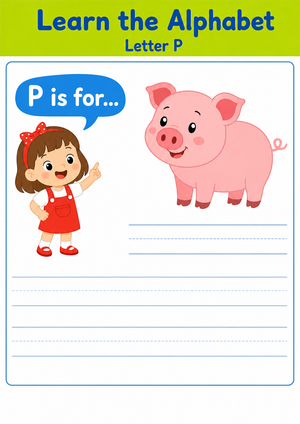
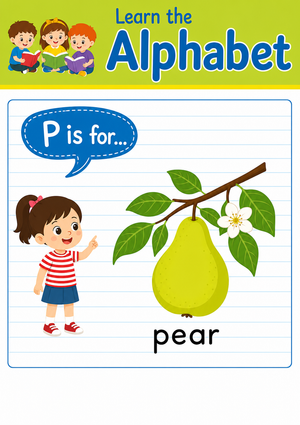
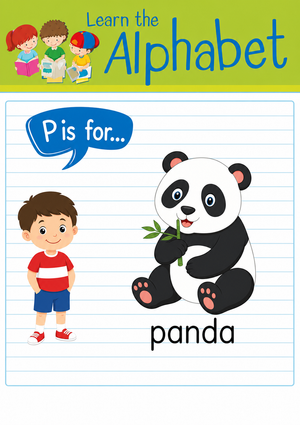
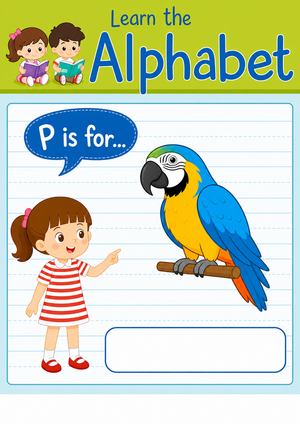
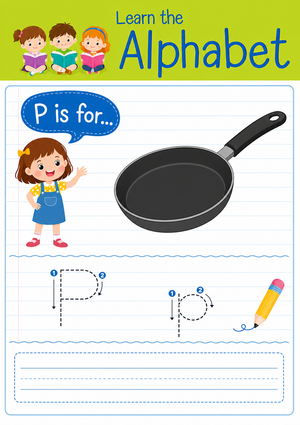
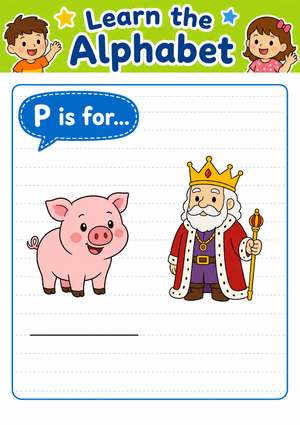
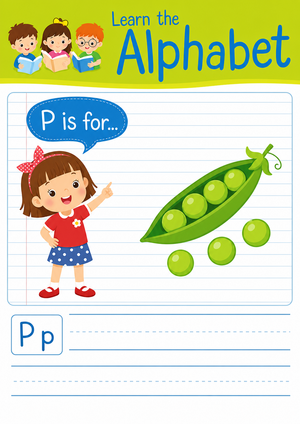
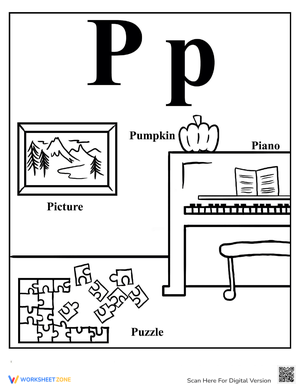
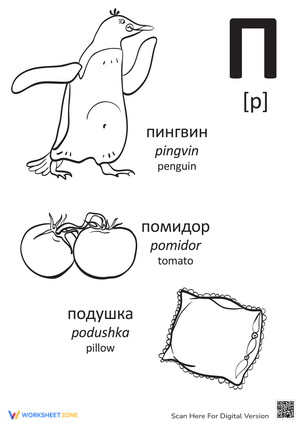
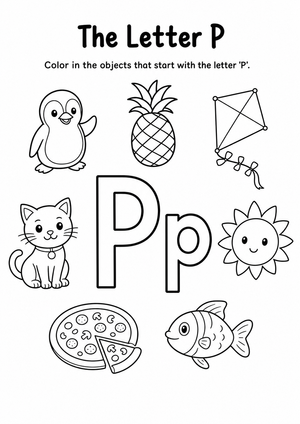
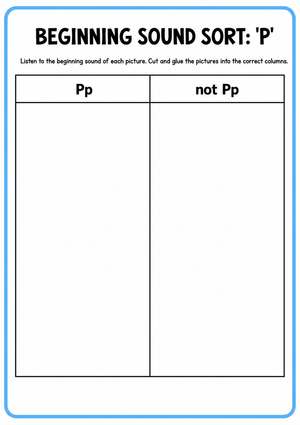
Across US classrooms, three worksheet formats show up again and again for beginning-sound practice. Trace-and-say word cards pair a traceable uppercase and lowercase P with a picture and word, so students say the word aloud while forming the letter. Color-the-picture-that-starts-with-P activities present a grid of images, some starting with /p/ and some not, asking students to identify and color only the matching pictures. Picture-sound matching sheets go a step further, asking students to draw a line from a printed letter P to every picture in a row whose name begins with that sound.
Each format targets a slightly different part of the skill. Tracing supports fine motor formation and print awareness. Coloring and sorting build the discrimination skill of separating /p/ words from non-examples like cat or sun. Matching activities push students toward independent application, which is useful once a student has moved past guided practice.
How These Worksheets Align with Phonics Standards
Beginning-sound worksheets are not just a filler activity between calendar time and recess. CCSS.ELA-LITERACY.RF.K.1.D asks Kindergarten students to recognize and name all upper- and lowercase letters, which is the print half of letter P practice. CCSS.ELA-LITERACY.RF.K.2.D asks students to isolate and pronounce the initial, medial vowel, and final sounds in three-phoneme, or CVC, words, which is the phonemic awareness half. A letter P worksheet that asks students to say pig, pan, or pen aloud and identify the first sound is direct practice for this second standard.
A strong letter P set typically rotates through seven high-frequency words: pig, pan, pen, pizza, pumpkin, penguin, and pencil. That range matters because it gives students enough exposure to hear the /p/ sound across different vowel contexts and syllable lengths, from a one-syllable CVC word like pan to a three-syllable word like pumpkin, without overloading a single practice session with more than a class can retain.
CCSS.ELA-LITERACY.RF.K.2.D states that Kindergarten students should isolate and pronounce the initial, medial vowel, and final sounds in three-phoneme (CVC) words. This single standard anchors nearly every beginning-sound worksheet used in US Kindergarten classrooms, including letter P practice built around words like pan and pig.
Sequencing Letter P Practice Within a Letter-of-the-Week Unit
Inside a typical letter-of-the-week structure, letter P worksheets work best when they are not the first exposure to the sound. Start the week with an oral routine: say a short list of words and ask students to give a thumbs up when they hear /p/ at the start. Once students can do this reliably without print in front of them, introduce the trace-and-say worksheet so they connect the sound they already recognize to the printed letter. Save the sorting and matching worksheets for the middle to end of the week, once students have had several days of oral and tracing practice.
This sequencing matters because a worksheet handed out before any oral practice tends to measure guessing rather than phoneme isolation. Teachers who move straight to a matching sheet on day one often see students relying on picture familiarity rather than the sound itself, which limits how useful the worksheet is as a checkpoint.
Classroom Implementation
A few practical routines make letter P beginning sound worksheets more effective across whole-class, small-group, and center settings.
- Model the target word aloud before handing out the worksheet, exaggerating the initial /p/ sound so students hear it clearly.
- Use the same worksheet as a listening center activity, with an adult or recorded voice reading each word aloud so independent work does not rely on students reading unfamiliar words themselves.
- Pair the worksheet with a short oral check-in, asking each student to say one /p/ word before they turn it in.
- Revisit letter P practice briefly during the following week's review cycle rather than treating it as a single, one-time task, since phoneme isolation for struggling readers typically needs multiple exposures across several days to stick.
- Keep a simple checklist noting which students isolated the sound correctly versus which needed prompting, so the worksheet doubles as a light formative record.
Frequently Asked Questions
1. What grade level are letter P beginning sound worksheets appropriate for?
They fit best in Pre-K and Kindergarten classrooms, with additional use in Grade 1 small-group or RTI settings for students still building phoneme isolation skills.
2. How do these worksheets align with CCSS phonics standards?
They support CCSS.ELA-LITERACY.RF.K.1.D for letter naming and CCSS.ELA-LITERACY.RF.K.2.D for isolating and pronouncing initial sounds in CVC words.
3. How can teachers use this worksheet in a small-group intervention setting?
Have each student say the word aloud and segment its sounds before marking an answer, which lets the teacher pinpoint whether the gap is in sound isolation or letter-sound matching.
4. What common words should students practice for the /p/ beginning sound?
Typical vocabulary includes pig, pan, pen, pizza, pumpkin, penguin, and pencil, which spans short and multisyllabic words for varied practice.
5. How often should teachers revisit beginning-sound practice for struggling readers?
Struggling readers generally benefit from short, repeated exposure across several days rather than a single worksheet, so folding a quick review into the following week's routine helps the skill stick.