


























Views
Downloads

Letter P Beginning Sound Printable Worksheet | Grade K
Paste this activity's link or code into your existing LMS (Google Classroom, Canvas, Teams, Schoology, Moodle, etc.).
Students can open and work on the activity right away, with no student login required.
You'll still be able to track student progress and results from your teacher account.
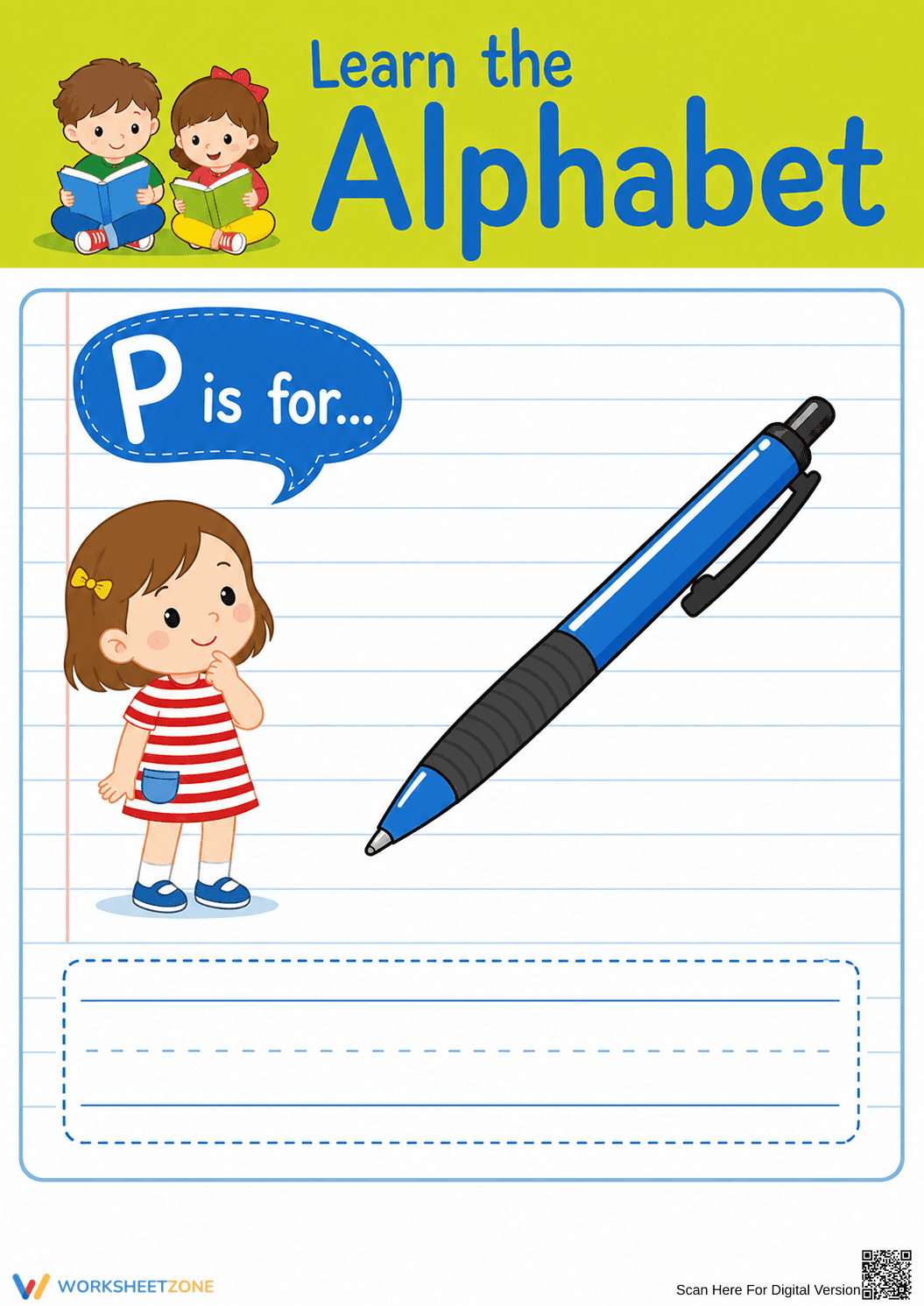
This foundational phonics worksheet helps early learners master the letter P beginning sound while practicing basic handwriting skills. By connecting the visual cue of a pen to the spoken sound, students develop essential phonemic awareness. This single-page resource provides a focused, distraction-free environment for young readers to build confidence in their alphabet knowledge.
At a Glance
- Grade: K · Subject: ELA
- Standard:
CCSS.ELA-LITERACY.RF.K.3.A— Produce primary sounds for consonants- Skill Focus: Letter P Beginning Sound
- Format: 1 page · 1 problem · No answer key needed · PDF
- Best For: Independent phonics practice
- Time: 5–10 minutes
This printable PDF provides a single-page activity designed for early childhood literacy. It features a clear "P is for..." prompt alongside a recognizable illustration of a pen to anchor the phonetic concept. Below the visual elements, standard primary handwriting lines offer students a dedicated space to practice writing the letter P or spelling the word "pen". The layout is intentionally clean to prevent cognitive overload.
Zero-Prep Workflow
This resource requires under two minutes of total teacher preparation time.
- Print (1 minute): Download the PDF and print. The high-contrast design works well in grayscale.
- Distribute (1 minute): Hand out the sheets with pencils. The self-explanatory visual prompt lets students begin immediately.
- Review (Ongoing): Circulate the room to observe pencil grip and phonetic pronunciation as students work.
Because it requires no complex setup or specialized materials, this activity is an excellent addition to any emergency sub plan or morning work routine.
Standards Alignment
This activity aligns with CCSS.ELA-LITERACY.RF.K.3.A, requiring students to demonstrate basic knowledge of one-to-one letter-sound correspondences by producing the primary sound for each consonant. By linking the visual symbol of the letter P to the familiar image of a pen, students reinforce this critical decoding skill. Both standard codes can be copied directly into lesson plans, IEP goals, or district curriculum mapping tools.
How to Use It
This worksheet serves as an ideal follow-up activity after direct instruction on the letter P. Teachers can use it during morning work, literacy centers, or as a quick formative assessment. While students complete the handwriting portion, teachers should listen for correct /p/ sound articulation, ensuring no extra vowel sound is added. The expected completion time is 5 to 10 minutes, keeping young learners engaged without causing fatigue.
Who It's For
This resource is primarily designed for kindergarten students, though it serves as excellent remedial practice for first graders who need additional phonics support. The clear visual cues make it highly accessible for English Language Learners (ELLs) who are building their foundational English vocabulary. For a comprehensive lesson, pair this worksheet with a tactile alphabet anchor chart or a read-aloud book that heavily features words starting with the letter P.
Mastering initial consonant sounds is a critical milestone in early literacy development. According to a 2024 report by EdReports, explicit and systematic phonics instruction that directly links visual letters to their corresponding phonemes significantly improves long-term reading fluency. This activity targets CCSS.ELA-LITERACY.RF.K.3.A, requiring students to produce primary sounds for consonants. By isolating the letter P beginning sound and pairing it with a concrete visual representation, educators can reduce cognitive load and facilitate stronger memory retention. The inclusion of handwriting practice further solidifies this learning, as the motor movement of forming the letter creates a multisensory pathway in the developing brain. Providing targeted, brief practice opportunities like this ensures that foundational decoding skills are firmly established before students progress to more complex blending and segmenting tasks.


