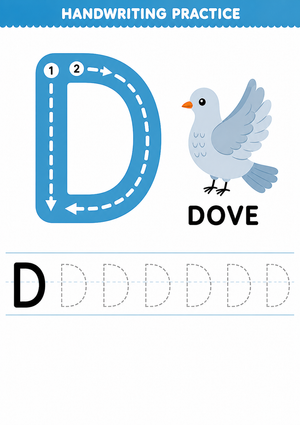
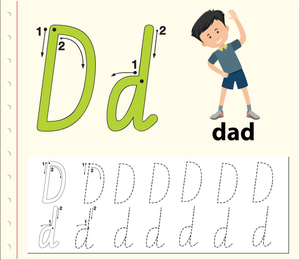
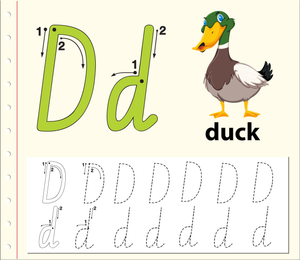
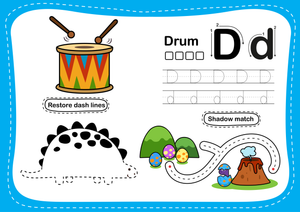
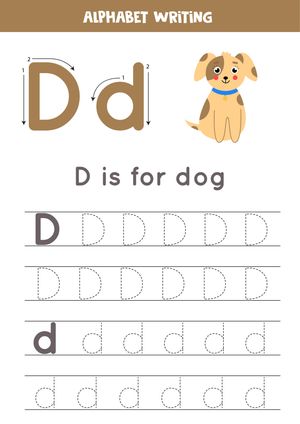
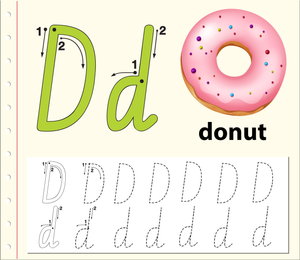
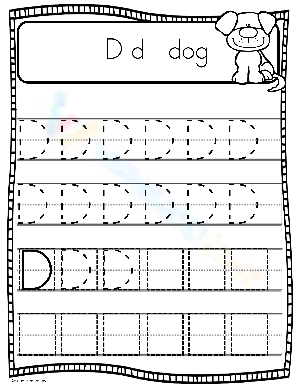
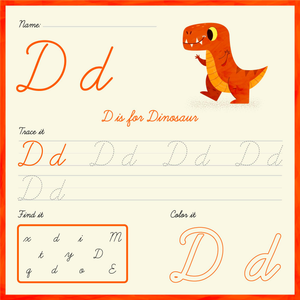
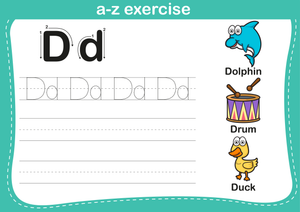
Letter D tracing worksheets give pre-K and kindergarten teachers a focused, repeatable tool for one of early handwriting's more deceptive challenges — a letter that looks simple but requires two completely different stroke sequences for its uppercase and lowercase forms. This set covers both, with guided tracing that gradually reduces visual support as students build independent motor control.
Why the Letter D Catches Students Off Guard
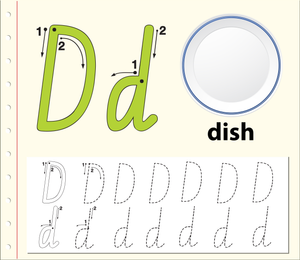
The uppercase D is actually the easier of the two forms. Students start with a straight downward stroke — something they've already practiced with lines, numbers, and other letters — then add a sweeping curve that returns to the top. The starting position matters: students who begin the curve from the center of the vertical stroke rather than the top end up with a letter that looks more like a rounded P, and it doesn't hold its shape when writing speed increases.
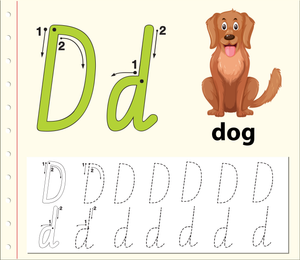
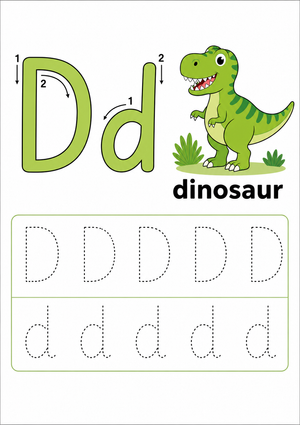
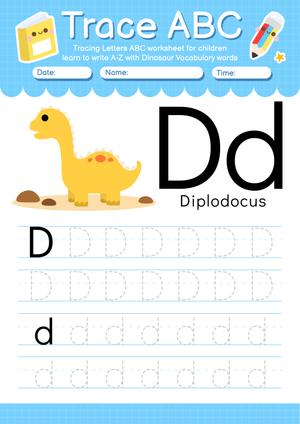
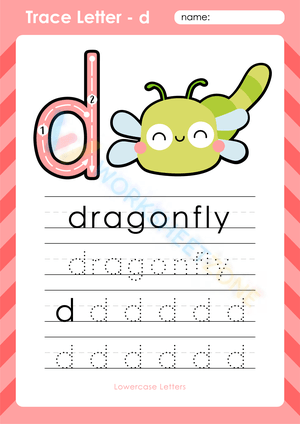
Lowercase d is where the real trouble begins, and where the b-d reversal that frustrates first-grade teachers actually takes root. The letter opens as a counterclockwise c-shape, then rises into a tall stem. Students who learn it this way — c first, then stem — almost never confuse it with b, because the opening direction of the circle gives their hand a distinct starting cue that moves opposite to the letter b. Students who learn it as a stick with a bump attached are building a motor habit that could become either letter with a small adjustment. These letter D tracing worksheets use the c-first sequence throughout, with arrow cues reinforcing the counterclockwise opening on every row.
What Students Practice
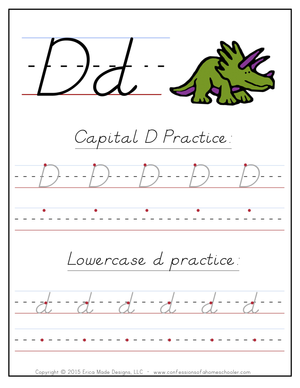
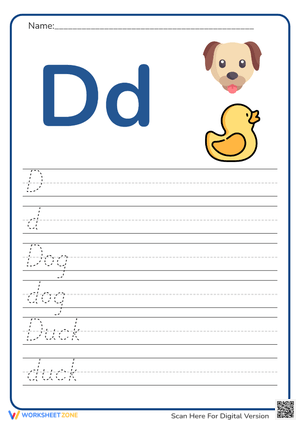
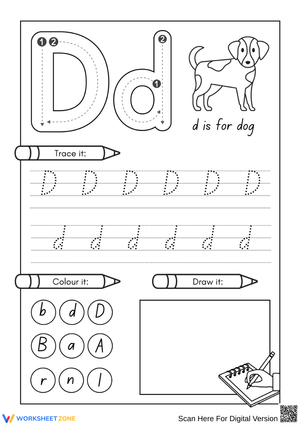
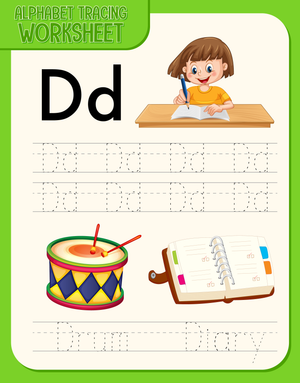
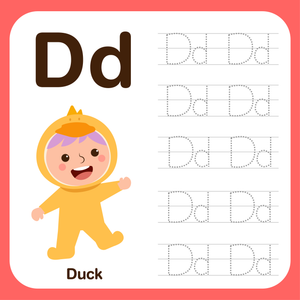
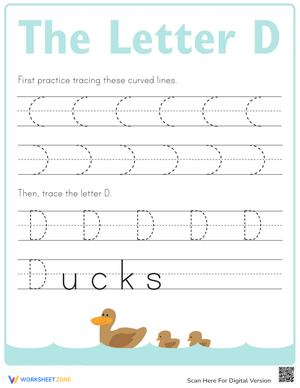
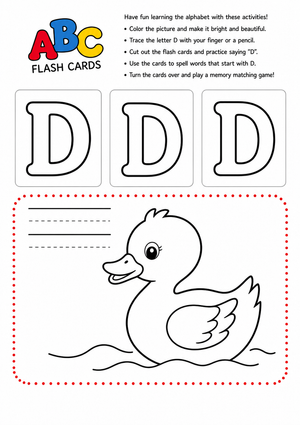
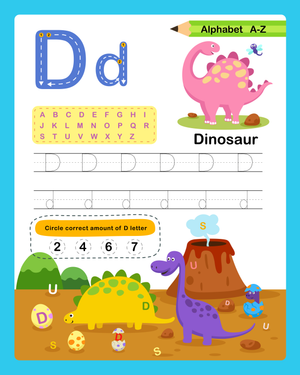
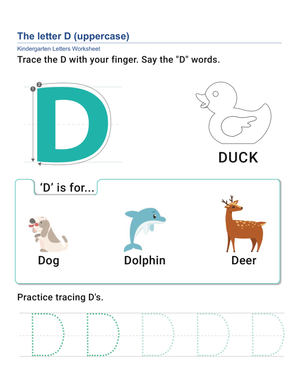
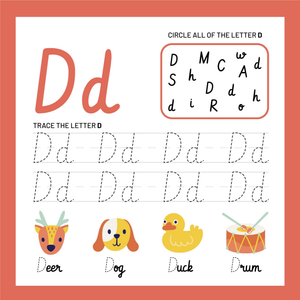
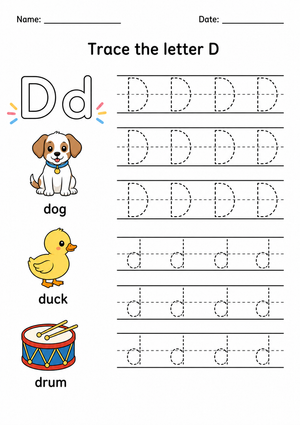
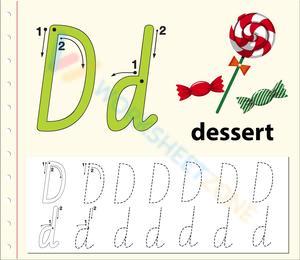
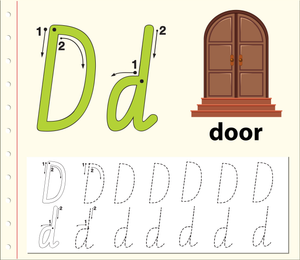
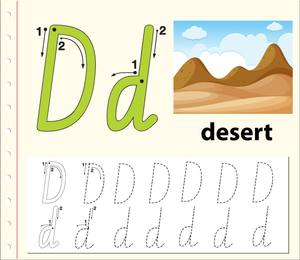
Each worksheet focuses on one specific aspect of formation rather than mixing uppercase and lowercase on the same task. Students trace uppercase D with numbered arrows showing stroke direction, then progress to versions with only a starting dot, then to open lines. Lowercase d follows the same sequence: full dotted-line tracing, faded guides, open-line practice. Several worksheets pair the letter with simple images — a drum, a dog, a door — not as decoration but as a prompt for producing the /d/ sound while writing, which links the motor action to the phoneme from the start. There are also worksheets targeting letter size and baseline placement, since many kindergartners who can form the letter in isolation still let it drift above the writing line.
Errors Worth Catching in the First Week
The most consistent uppercase D error is a starting-position problem. Students glance at the finished letter shape rather than the starting dot, and begin the curve from the center of the vertical stroke. The result reads as rounded on the left but flat and wide on the right — nearly unrecognizable at standard writing size. Catching it in sessions one and two prevents a month of remediation later.
The lowercase reversal is common enough that some teachers treat it as inevitable, but it isn't. The issue is almost always motor rather than visual: the student isn't confused about what the letter looks like; they just haven't committed a starting direction. Pointing to anchor charts or repeating "remember, d not b" does not build the motor pattern. What works in classrooms is large-muscle priming — three slow air-traces of a c-shape with the full arm before every pencil attempt, done consistently for about two weeks. That rehearsal step is what actually corrects the reversal.
Building These Worksheets Into Your Lesson Plans
Letter D tracing worksheets fit into several practical spots in the school day: the five minutes after morning meeting before centers open, a Monday warm-up following a weekend away from writing, or independent seatwork during small-group reading rotations. One worksheet per session is the right amount — more than that and hand fatigue sets in, which produces imprecise work that reinforces poor formation rather than correcting it.
A practical sequence for introducing these: begin with two minutes of whole-class air-writing while narrating the strokes aloud ("curve around, then up tall, then straight down"). Distribute a worksheet and circulate for the first few minutes watching grip and starting position. Students forming the letter correctly continue independently. Students who aren't get a brief one-on-one redirect before you move on. That's a built-in formative check that takes no additional planning time.
Adjusting the Set Across Ability Levels
Students still developing basic pencil control do best with worksheets that have wider tracing paths and bold guides. Placing a worksheet inside a plastic sleeve and handing the student a dry-erase marker lets them repeat the same exercise multiple times without using additional paper — practical for students who need fifteen or more repetitions before a motor pattern settles in.
Students who are past the tracing stage find open-line worksheets more useful, especially those giving space to write the letter inside simple words: dog, dad, dig. Seeing the letter in context rather than always in isolation is a meaningful shift for these writers. On the other end, students with limited hand strength benefit from a brief pre-activity before sitting down — clay pinching, tweezers work, or a minute of squeezing a stress ball. Letter D tracing worksheets produce better results for these students when hand muscles are warm and not fighting the pencil grip from the start.
Frequently Asked Questions
When are children developmentally ready for letter tracing?
Most children are ready between ages 4 and 5, but readiness varies considerably. The more reliable indicator than age is pre-writing shape control: if a child can trace a circle and copy a horizontal and vertical line, they're ready for letter formation work. Children who can't yet manage those shapes will find letter-specific tracing more frustrating than instructive, and practice on pre-writing strokes is the better use of their time first.
My students keep writing d as b. What actually fixes it?
Large-motor rehearsal of the starting movement is more effective than visual mnemonics. Before each writing attempt, have the student draw three large c-shapes in the air with the full arm. The "bed" image — where b and d form the headboard and footboard — is useful for letter recognition, for helping a child identify which letter is which on a printed page, but it doesn't resolve the motor problem. Only consistent repetition of the correct starting movement does that, and it takes roughly two weeks of daily practice to stabilize.
How long should a single tracing session run?
Ten to fifteen minutes is a reasonable upper limit for most kindergartners. Past that, hand fatigue shows up as increasing shakiness and loss of stroke control. If a student fatigues before ten minutes, shorter and more frequent sessions — five minutes twice a day rather than one longer block — tend to produce better formation outcomes over time.
Should I introduce uppercase D or lowercase d first?
Uppercase first. The strokes are simpler, the shape is more visually distinct, and students aren't yet navigating the b-d confusion that lowercase introduces. Once uppercase D is formed consistently, bring in lowercase d with explicit attention to the c-first starting direction — that connection, made early, prevents the reversal pattern from ever getting established.