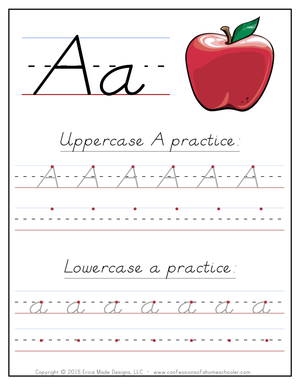
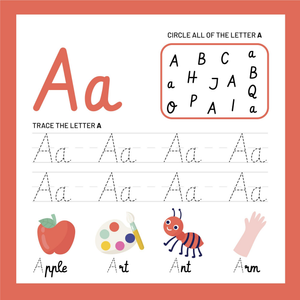
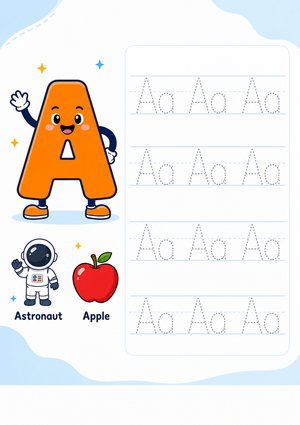
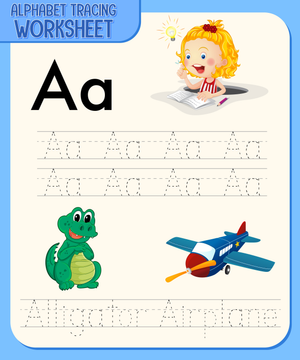
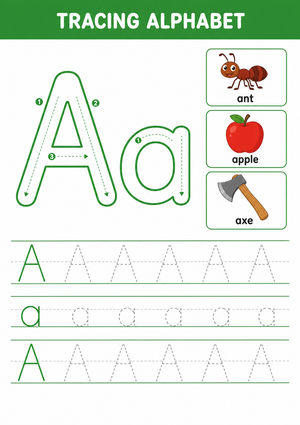
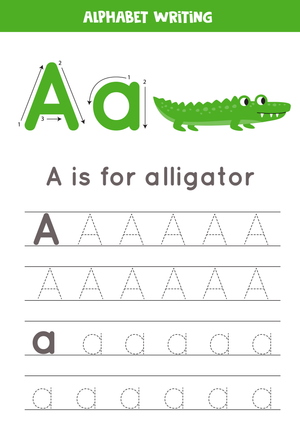
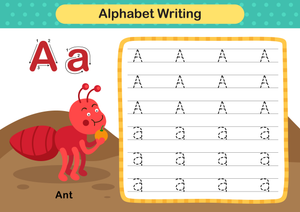
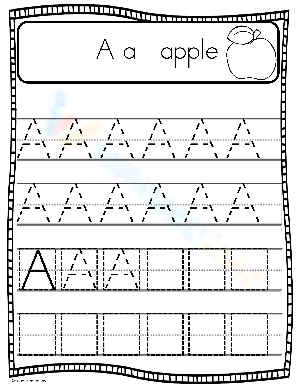
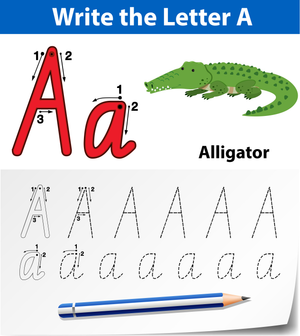
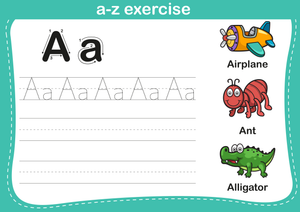
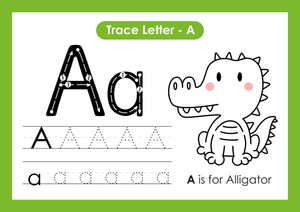
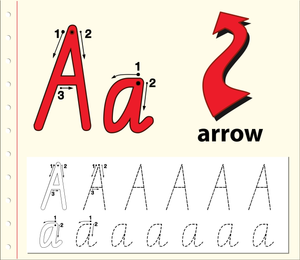
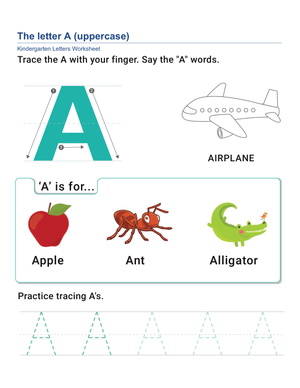
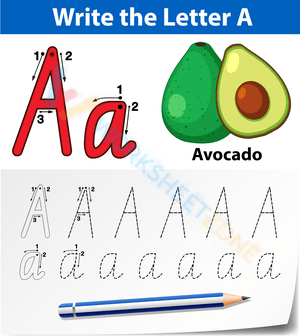
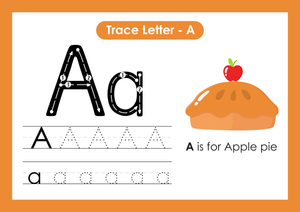
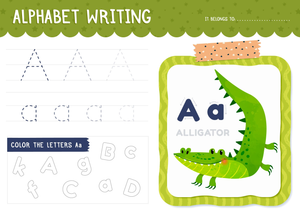
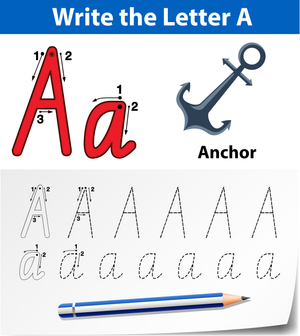
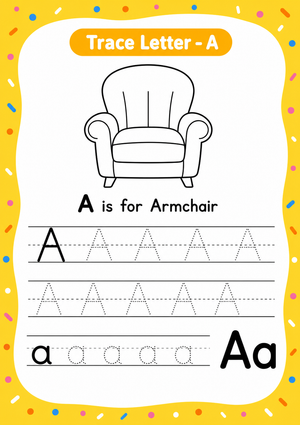
These letter A tracing worksheets give pre-K and kindergarten teachers a focused, formation-specific set of resources for the first letter students encounter — both the uppercase and lowercase versions — while building the stroke direction habits that carry forward through the entire alphabet. Each worksheet targets one layer of practice, from wide-path dotted tracing for beginners to tighter guides that move students toward independent writing.
What These Worksheets Build
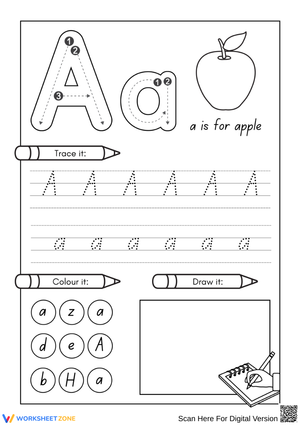
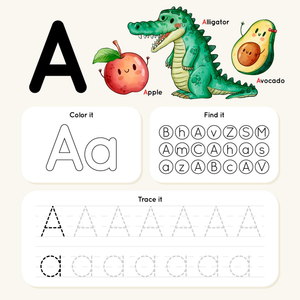
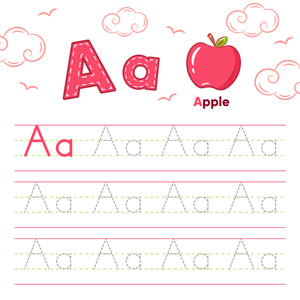
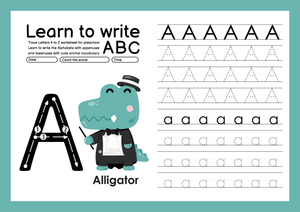
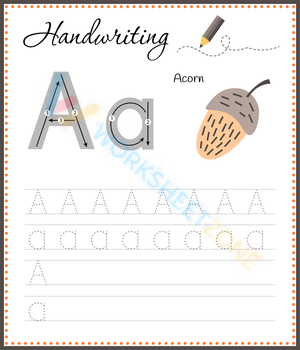
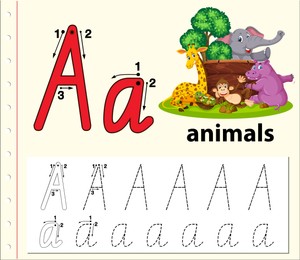
Uppercase A presents three distinct stroke challenges: two diagonal lines that converge at a peak, then a horizontal crossbar that has to land at roughly mid-height — not near the top, not near the baseline. That crossbar is what gives young writers the most trouble, and it's what separates a recognizable A from a tall triangle. Lowercase print a, as it appears in most school handwriting fonts, combines a curved bowl with a descending right stroke, which feels entirely different from the uppercase despite representing the same sound. Both forms get full treatment across the set.
Each worksheet includes several built-in supports:
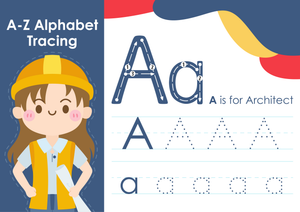
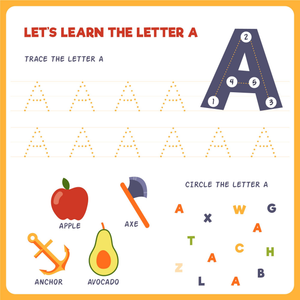
- Stroke-order arrows embedded directly in the tracing path, so students know where to start before they touch the paper
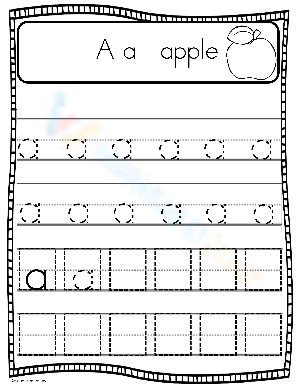
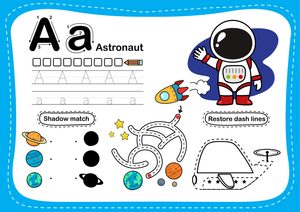
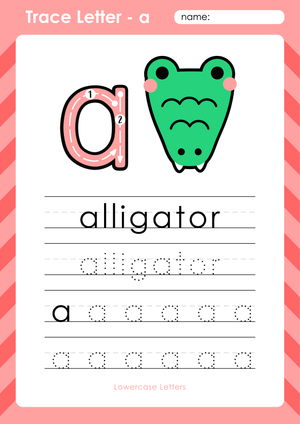
- Dotted-line paths in two widths — wider for first attempts, narrower for follow-up practice
- An anchor image (apple or ant) that pairs the letter with its most common sound
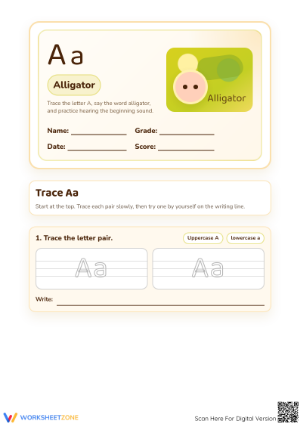
- A row of blank writing lines at the bottom of most worksheets, where the transition from tracing to independent writing actually begins
Formation Errors That Surface Early and How to Catch Them
The most consistently missed feature on uppercase A is the crossbar. Students draw the two diagonals successfully, then place the horizontal bar too high — right below the peak — so the letter reads as a narrow triangle with a line near the top. Or they skip it entirely. This isn't inattention; it's working memory. Forming two converging diagonal strokes already taxes a four-year-old's attention and grip. Adding a third, separately directed stroke while maintaining pencil pressure is genuinely hard, and worksheets that include a mid-height dotted guide line across the interior give students a visual anchor that reliably reduces this error.
Stroke direction is the other predictable issue. Most beginning writers draw the diagonals from the bottom up, not top-down, because downward pulling strokes are learned behavior, not instinct. Students who trace correctly on a worksheet can still revert to bottom-up formation the moment they try to write freely. Watching a student write during the blank-line section — not just the traced portion — tells you far more about whether the directional habit has actually transferred.
Fitting These Worksheets Into Your Weekly Literacy Block
The most productive placement for letter A tracing worksheets in the weekly schedule is during the opening minutes of a small-group rotation, before pencil fatigue sets in. Using them as a warm-up rather than a wrap-up activity changes what you observe: you're watching students form the letter fresh. Five to eight minutes is enough. If a student can produce three correct uppercase A's in a row — correct crossbar placement, top-down stroke direction — within that window, the skill is consolidating.
Laminating two or three worksheets for dry-erase use extends the set considerably and lowers the stakes for students who tense up around permanent pencil marks. Rainbow tracing — having students trace the same letter multiple times in different colors — adds repetition without monotony. The slight grip adjustment required when switching crayons reinforces muscle memory in a way that mechanically repeating the same stroke does not.
Standard Alignment
CCSS.ELA-LITERACY.L.K.1a requires kindergartners to print many upper- and lowercase letters. The letter A typically appears in the first instructional quarter, making it one of the earliest points where teachers have a formation-practice record to reference during progress monitoring. The completed worksheets produce a written sample documenting stroke accuracy, line control, and letter proportion — details that matter when a student's handwriting is being reviewed for occupational therapy referral or literacy support conversations.
Adjusting the Set for a Range of Fine Motor Starting Points
Letter A tracing worksheets that offer two path widths — wider guides for first attempts, narrower dotted lines for follow-up — give teachers the flexibility to match the resource to where a student actually is. For a child who already draws with control and can copy a diagonal line on request, the wide-path version adds no value; start with the narrower worksheet, or go straight to the blank writing lines at the bottom. For a student still developing wrist stability, printing at 125% enlargement buys considerably more room for directionally correct but imprecise attempts, which is what early-stage tracing actually looks like.
When a student consistently struggles with diagonal strokes regardless of path width, the useful prior work is not more letter tracing — it's isolated diagonal line practice. Addressing those component strokes on a separate pre-writing worksheet before returning to the A prevents the frustration of repeatedly failing at the full letter before the underlying movements are stable.
Frequently Asked Questions
At what age should students begin tracing letters?
Age is less reliable than readiness markers. If a student can hold a crayon with a recognizable grip, draw a circle on request, and copy a diagonal line, they're ready to try letter tracing. Most children reach that threshold somewhere between ages 3 and 4 1/2, but some four-year-olds aren't there yet and some three-year-olds are ahead.
Should uppercase or lowercase A be introduced first?
Uppercase A is typically introduced first because all three strokes are straight lines, which most students find easier to control than the curved bowl of lowercase print a. That said, lowercase letters dominate the reading text students encounter daily, so both forms should appear within the same instructional unit. Showing them side-by-side on one worksheet — with the note that both represent the same sound — helps students treat them as related rather than unconnected shapes.
What do I do when a student traces accurately but still cannot write the letter independently?
This is a predictable middle stage, not a warning sign. Tracing is a tracking task; independent writing is a recall and motor-execution task. Bridge that gap by fading the visual support in steps: solid dotted path, then a lightly dotted path, then a start-dot with no path, then a blank line. The letter A tracing worksheets in this set include multiple faded-guide options within each worksheet, so teachers don't need to construct that progression from separate materials.
Can these worksheets go home for family practice?
The PDF format makes home distribution easy. One thing worth communicating to families: send a stroke-order reference — a printed image or a brief handwritten note — alongside the worksheet so parents reinforce top-down formation at home rather than inadvertently working against the habits built in class. A student who traces correctly at school and bottom-up at home is getting contradictory input, and the less practiced direction will tend to win.