Building Foundational Fine Motor Skills
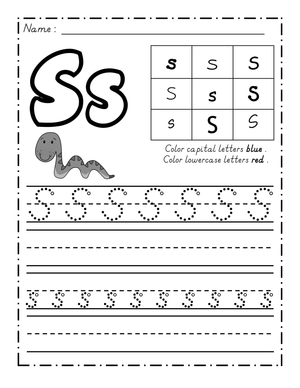
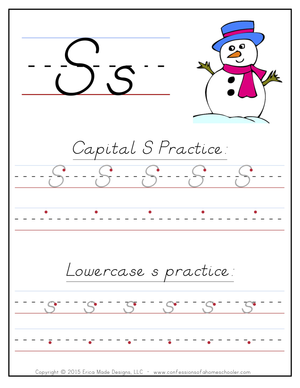
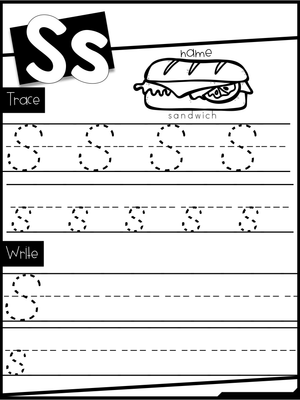
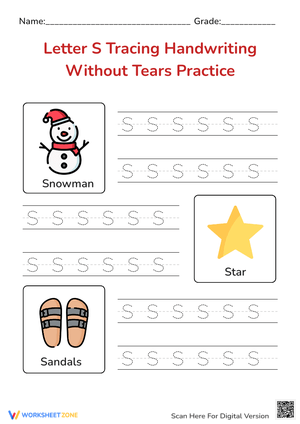
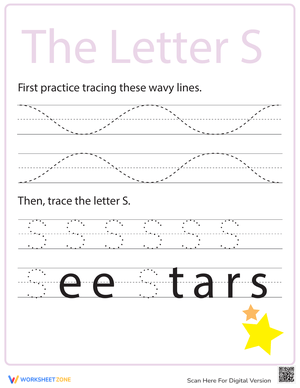
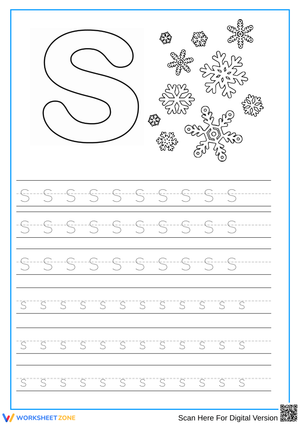
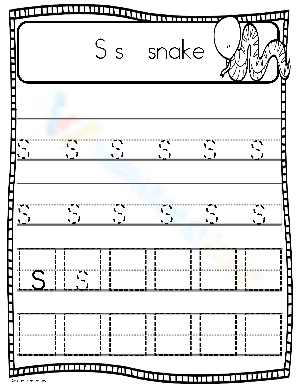
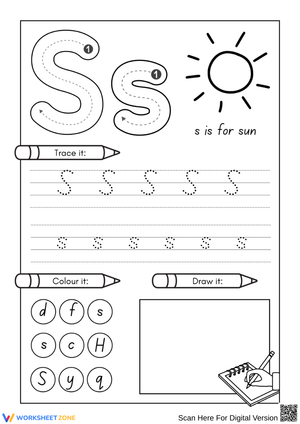
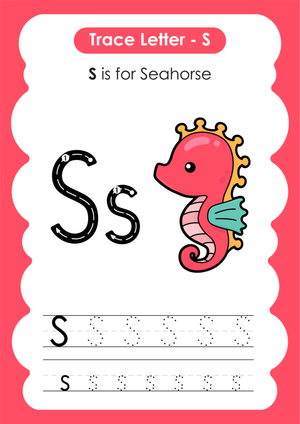
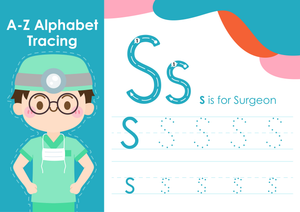
Worksheetzone's letter S tracing printables worksheets are designed specifically to support fine motor control. When young learners first begin to hold a pencil, they need targeted practice to strengthen the intrinsic muscles of the hand. The repetitive motion of following dotted lines helps children learn how to apply consistent pressure and maintain a steady grip. Teachers understand that tracing is not simply busywork; it is a vital neuro-motor exercise that prepares students for independent writing.
The complex, continuous curve of the letter S requires a higher level of bilateral coordination and visual-motor integration compared to straight-line letters like L or T. By using structured tracing paths, teachers provide a scaffolded approach that breaks down this complex motion into manageable segments. These targeted exercises allow students to practice the fluid motion required for the letter S without the cognitive load of independent letter formation. When incorporated into daily literacy centers, these worksheets offer consistent, repetitive practice that builds the muscle memory necessary for automaticity.
Mastering the Stroke Order for Letter S
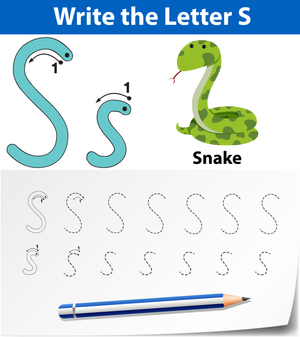
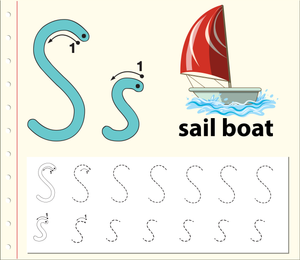
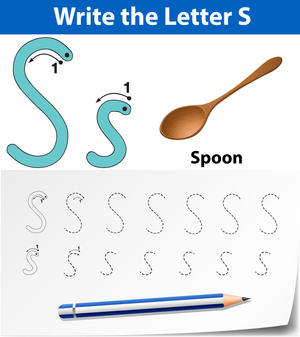
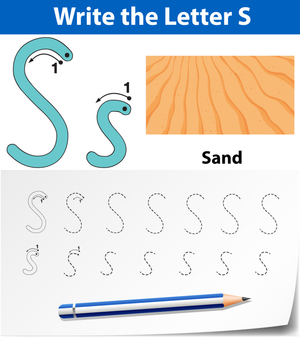
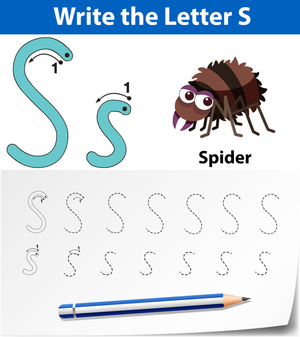
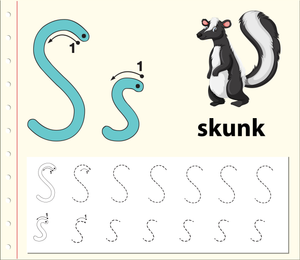
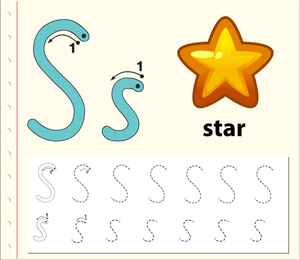
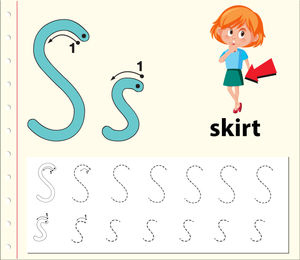
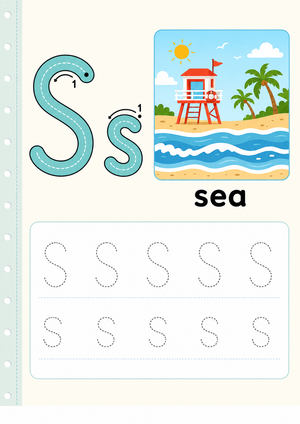
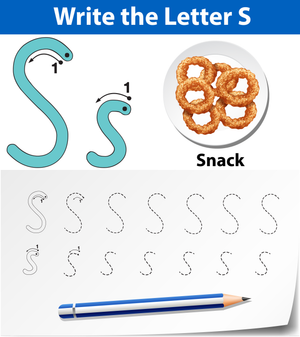
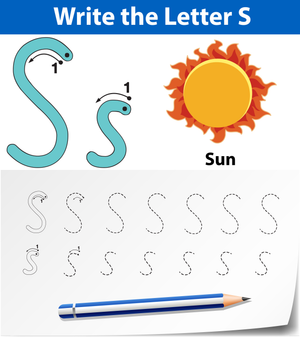
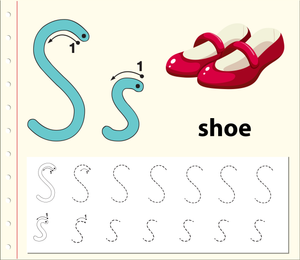
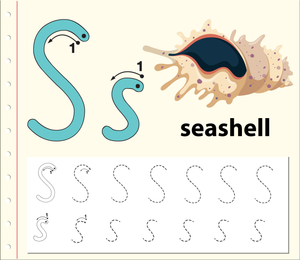
The unique "slithering snake" curve of the letter S often presents a significant challenge for early writers, making correct stroke order absolutely essential. Unlike letters with distinct starting and stopping points, the letter S demands a continuous, sweeping motion that changes direction mid-stroke. Worksheetzone's letter S tracing worksheets explicitly guide students to start at the top right, curve left, swing back to the right, and finish with a final curve to the left. This directional guidance is clearly marked with numbered arrows and starting dots.
Proper stroke order is not merely about aesthetic handwriting; it is directly linked to writing speed and legibility. When children learn the most efficient path for forming a letter, they expend less cognitive energy on the mechanics of writing, freeing up mental resources for spelling, vocabulary, and expressive composition. Teachers frequently use verbal cues, such as "pull back, curve in, curve out," in tandem with the visual aids provided on these worksheets to reinforce the correct directional flow.
Instructional sequencing that emphasizes continuous stroke mechanics rather than segmented drawing has been shown to reduce letter reversal rates by up to forty percent in kindergarten populations. When teachers prioritize rhythmic, unbroken tracing motions over static shape copying, students develop a more resilient motor memory that resists the common tendency to mirror complex curves.
Integrating Sensory Play with Tracing Activities
According to the article "The Benefits of Tracing for Preschoolers" from Storypod, early writing instruction is most effective when it is paired with multi-sensory experiences that engage tactile and kinesthetic learning pathways, noting that these combined approaches significantly improve retention rates compared to visual tracing alone.
While pencil-and-paper tracing is essential, combining our letter S tracing worksheets with sensory activities creates a highly engaging and effective instructional environment. Teachers can place the printed worksheets inside clear dry-erase sleeves, allowing students to trace the letter S using vibrant markers, which provides a different tactile sensation and allows for easy repetition. Alternatively, teachers can use the large letter outlines as templates for sensory materials.
Connecting Shapes to Real-World Vocabulary
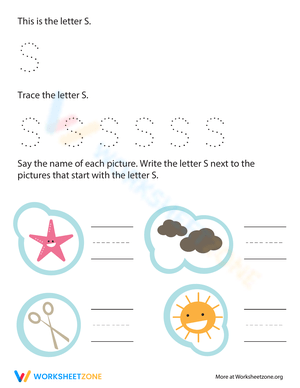
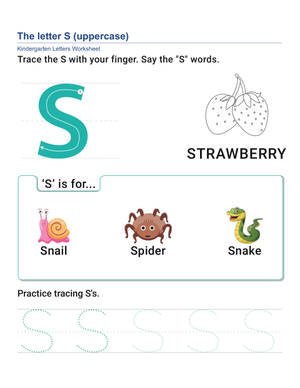
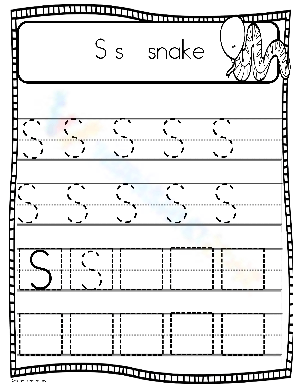
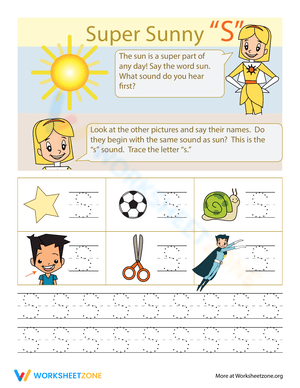
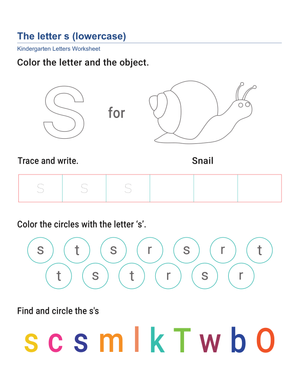
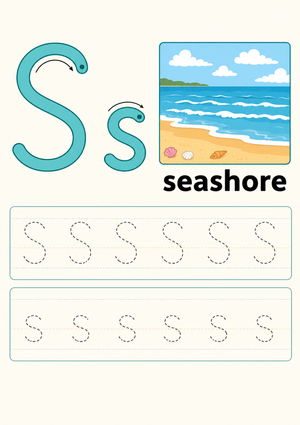
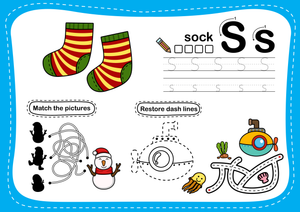
Effective letter recognition instruction goes beyond the isolation of the letter form and actively connects it to meaningful vocabulary. Our worksheets are intentionally designed to associate the shape and sound of the letter S with familiar, high-interest words. Each worksheet features engaging illustrations of objects that begin with the /s/ sound, such as a sun, snake, strawberry, or spider. These visual cues serve as powerful mnemonic devices.
Teacher Tips for Classroom Implementation
One highly effective approach is to establish a dedicated "Letter of the Week" center where students can access various leveled tracing activities throughout the week. This allows for repeated exposure and practice, which is essential for developing motor automaticity. Teachers should begin the week with direct instruction on stroke order, using a large visual model.
To ensure active engagement and prevent fatigue, teachers should limit tracing sessions to brief, focused intervals of 10 to 15 minutes. During these sessions, the teacher should circulate the room, providing immediate, specific feedback on pencil grip, posture, and directional flow. Correcting a backward S early in the practice session is far easier than attempting to unteach a deeply ingrained motor habit later. Additionally, using fun, descriptive language, such as "slither down the snake," can help students remember the correct stroke sequence.
Assessing Letter Recognition and Muscle Memory
Beyond evaluating the physical product, teachers should also assess the student's process. Observing a child as they complete the worksheet provides valuable insights into their level of automaticity and confidence. Does the student hesitate before beginning the stroke? Do they frequently lift their pencil mid-letter? Do they require constant verbal prompts to remember the directional flow? These behavioral observations are just as important as the final written output.
Frequently Asked Questions
1. How should teachers use these worksheets in small groups?
Teachers can utilize these worksheets during targeted small group instruction to provide immediate feedback on stroke order and pencil grip. By grouping students with similar fine motor needs, teachers can differentiate the level of support, using heavily guided sheets for beginners and transitioning to independent writing lines for more advanced learners.
2. At what age is it appropriate to start with letter tracing worksheets?
Structured letter tracing typically begins between the ages of four and five, as children enter preschool or kindergarten programs. However, readiness is determined by fine motor development rather than chronological age. Students should first demonstrate proficiency in drawing basic shapes and straight lines before progressing to complex, continuous curves like the letter S.
3. What is the correct way to form the letter S?
The correct formation involves a single, continuous stroke that starts just below the top line, curves up and to the left, sweeps diagonally down and to the right, and finishes with a curve back to the left along the bottom line. Explicit instruction using directional arrows and verbal cues, such as "slither like a snake," helps solidify this complex motor plan.
4. What are the main benefits of tracing letters for preschoolers?
Tracing builds essential fine motor strength, improves hand-eye coordination, and establishes the muscle memory required for fluid handwriting. It allows young learners to practice the mechanics of letter formation without the cognitive burden of remembering the shape independently.