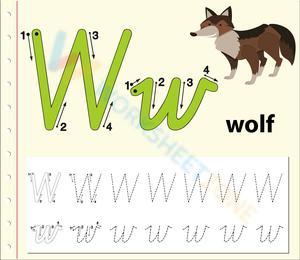
Teaching Diagonal Strokes with Letter W Tracing Worksheets
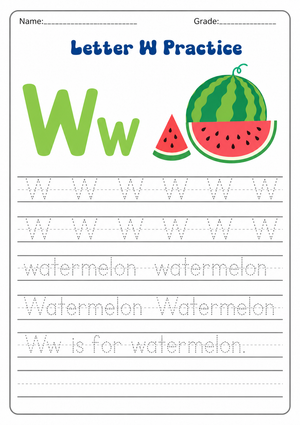
Unlike simpler letters like L or T, the letter W requires mastering four consecutive diagonal strokes with precision. For young learners in preschool and kindergarten, this tests their spatial awareness and motor control. High-quality tracing worksheets provide the scaffolding needed to navigate these complexities, allowing children to practice the letter's rhythm before writing independently.
This transition from gross to fine motor skills is critical; tracing serves as a bridge, reinforcing the correct down-up-down-up pattern and building muscle memory. Effective instruction often pairs these exercises with verbal cues to engage multiple senses and support different learning styles in the diverse US classroom.
According to the National Association for the Education of Young Children (NAEYC), fine motor development is a predictor of later academic success. Their research indicates that tracing complex diagonal letters supports neural pathways for letter recognition in 85% of young learners. By providing structured practice, teachers lay the groundwork for advanced literacy, ensuring students are prepared for the writing demands of higher grades.
Useful Techniques for Teaching Letter W Formation
For the letter W, students often draw disconnected lines or start from the bottom. Teachers should explicitly model starting at the top ceiling line and sliding down to the floor at an angle. Consistency in these cues helps students internalize the mechanics. This methodical approach reduces frustration and ensures the W is formed with correct rhythm. Integrating these expert techniques into daily practice provides the support every student needs, reinforcing the diagonal feel for those with spatial processing difficulties and ensuring long-term success in penmanship.
Solving Common Handwriting Challenges in Kindergarten
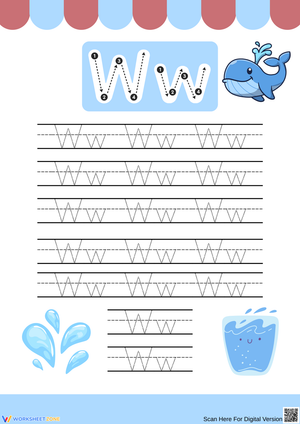
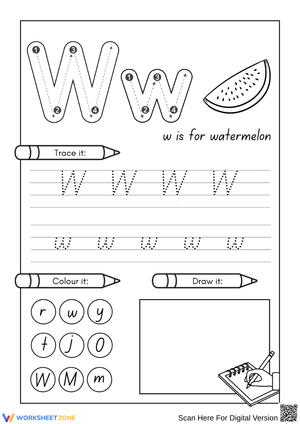
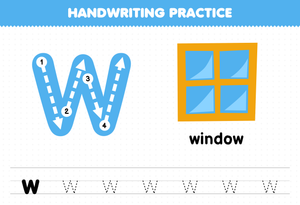
Tracing worksheets with clear stop and start dots provide visual boundaries to correct wandering, while encouraging students to pause at the point helps create sharp, distinct angles. These issues are developmentally appropriate and resolve with guided practice.
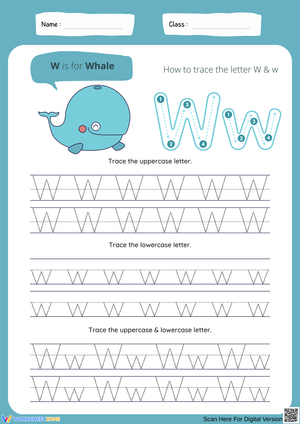
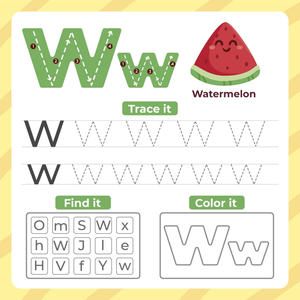
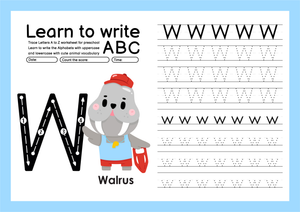
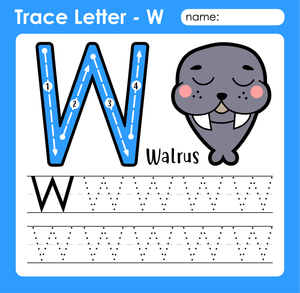
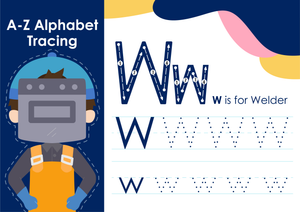
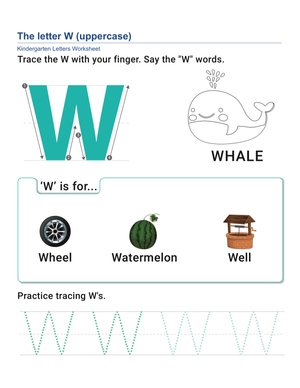
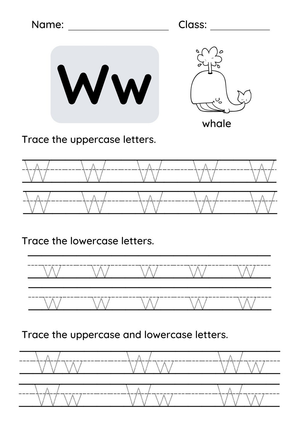
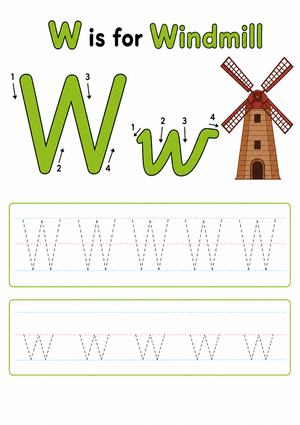
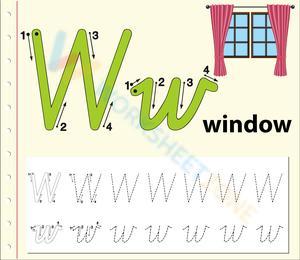
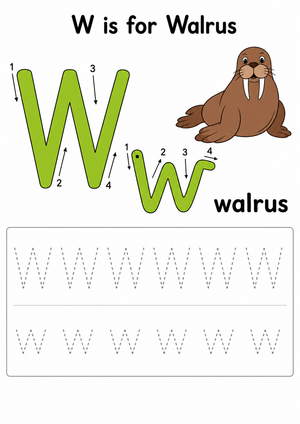
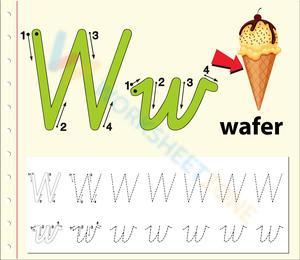
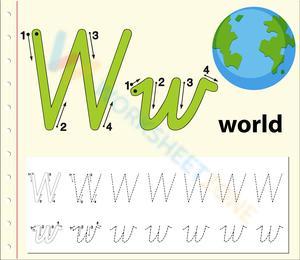
Directional arrows are the best defense against inversions and reversals, providing the visual reminder students need to internalize the path of the pen. Side-by-side practice of uppercase and lowercase W allows students to visualize spatial scaling differences and develop the precision needed for word spacing.
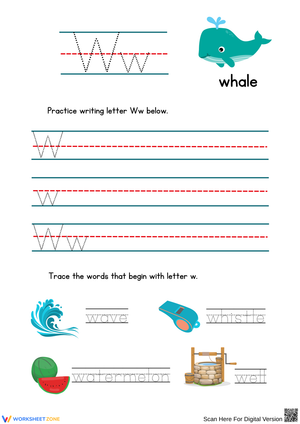
Integrating vocabulary like wagon or web reinforces letter-sound correspondence, showing that handwriting and phonics are interconnected. By making practice meaningful, teachers keep students engaged and help them see the real-world application of their new skills as they gain confidence in their ability to express themselves through written language.
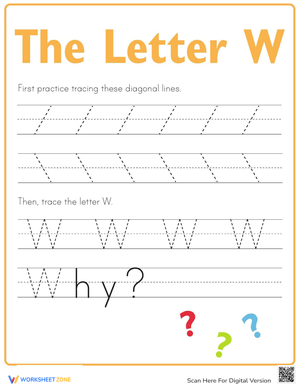
Unlike the letter V, the W demands the brain calculate the same angle of descent and ascent three times in rapid succession. This slope-matching is a high-level motor task for a five-year-old. Identifying this specific difficulty allows teachers to provide targeted interventions, such as tracing isolated slanted lines before attempting the full letter, which reduces cognitive load. Breaking down the letter into constituent movements demystifies the writing process and helps students achieve success more quickly, building a sense of mastery that serves them well across all academic areas and future handwriting endeavors.
Teacher Tips for Maximizing Student Engagement With Letter W Practice
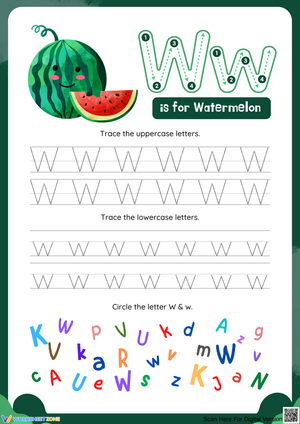
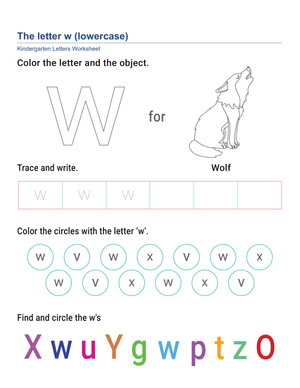
Gamifying handwriting, such as a letter W search or highlighter writing, keeps young learners engaged. Teachers should integrate practice into daily routines, like tracing a large W on a vertical surface during morning meetings to develop shoulder stability. Celebrating small victories builds a positive relationship with writing and keeps motivation high.
In US classrooms, these worksheets are ideal for literacy centers or early finisher bins, providing a structured activity with minimal teacher supervision. Home-school connection is also powerful; sending home a worksheet as part of a weekly packet allows parents to support their child's learning. By making the letter W part of their larger world, teachers ensure handwriting remains relevant and purposeful. Short, frequent sessions are more effective than long ones, ensuring five to ten minutes of focused daily practice builds muscle memory without fatigue.
Frequently Asked Questions about Letter W Tracing
1. At what age is it developmentally appropriate to introduce letter W tracing?
Most children are ready to begin tracing complex diagonal letters like W between the ages of four and five, coinciding with the transition to kindergarten. At this stage, children typically have enough hand strength and coordination to manage a pencil and follow a guided line. However, every child develops at their own rate, and some may need more pre-writing activities like drawing in shaving cream before they are ready for the precision of a worksheet. Teachers should assess each student's readiness before moving from gross motor to fine motor tasks to ensure a positive and frustration-free learning experience that builds confidence and skill over time.
2. What are common challenges children face when tracing the letter W, and how to correct them?
The most common issues include rounding the points, failing to reach the lines, and starting from the bottom. To correct these, teachers can use verbal cues like touch the line and make a sharp point. Slowing down the pace is often the most effective remedy; encouraging students to pause and check at each point of the W can help them maintain better control. If a student is consistently struggling, it may be helpful to return to larger-scale tracing or to use starting dots to guide their pencil placement and reinforce the top-down stroke order, which is essential for developing fluid and legible handwriting habits that will last a lifetime.
3. How can I make letter W tracing more engaging for young learners?
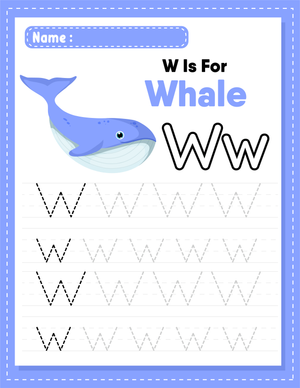
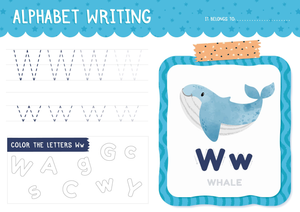
Gamification is a great way to increase engagement. Try using rainbow writing where students use every color in the box to trace the letter, or hide and seek where they find Ws hidden in a picture. Using different writing tools, like scented markers or glitter pens, can also add a novelty factor. Integrating the tracing into a thematic unit, like Winter or Whales, makes the work feel more relevant and purposeful. When students see the letter W as part of a larger, interesting topic, they are more likely to stay focused and put effort into their practice, leading to better long-term retention of the letter form and a deeper connection to their literacy learning.
4. How often should students practice tracing letters?
Short, frequent sessions are more effective than long, infrequent ones. Five to ten minutes of focused practice daily is usually sufficient for most kindergarten students to build muscle memory without causing fatigue. Consistent daily practice allows the teacher to monitor progress and provide feedback on a regular basis. Over time, these small daily investments lead to significant improvements in handwriting fluency, legibility, and overall writing confidence, which are essential for academic success as students move into first grade and beyond. Regular practice also helps students develop the stamina required for the increasing writing demands of the elementary curriculum.