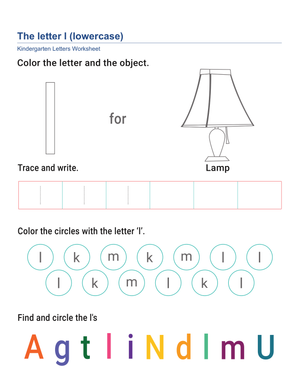
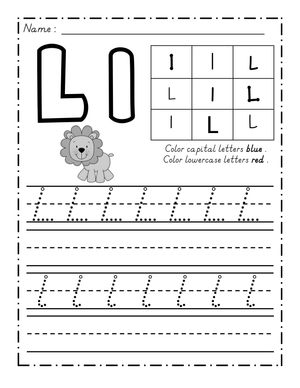
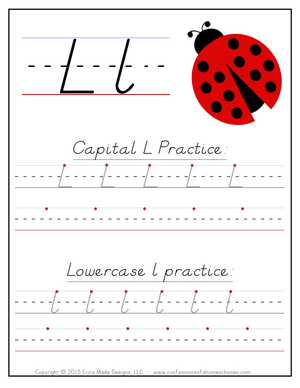
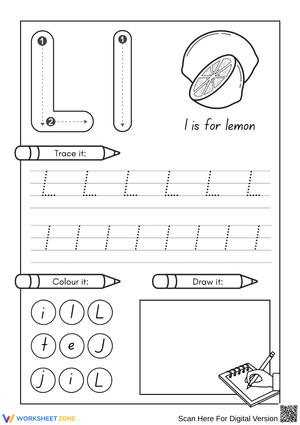
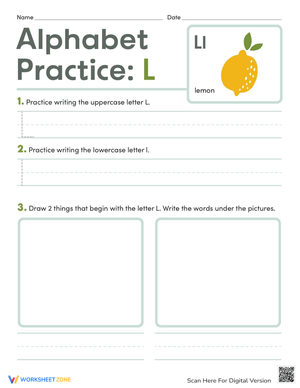
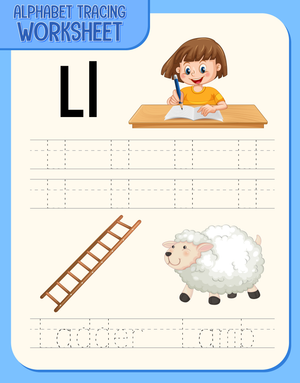
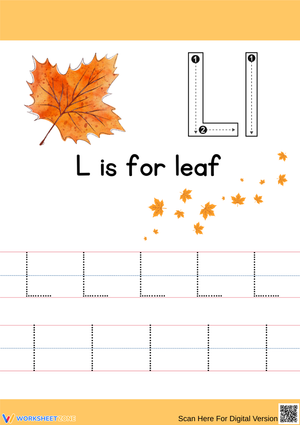
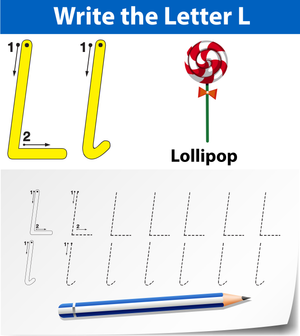
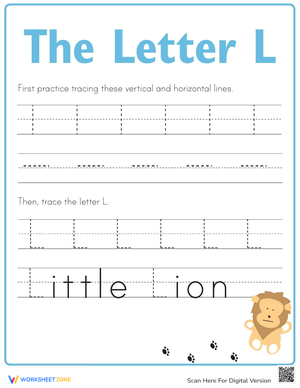
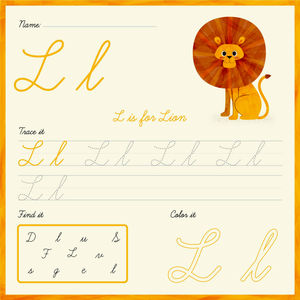
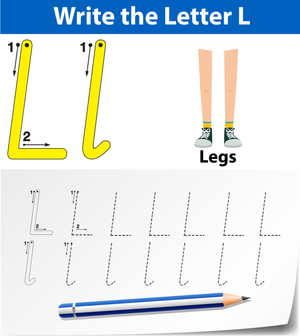
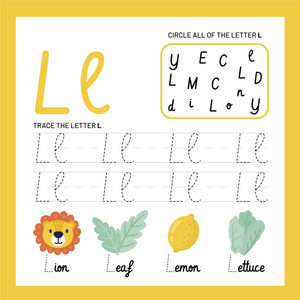
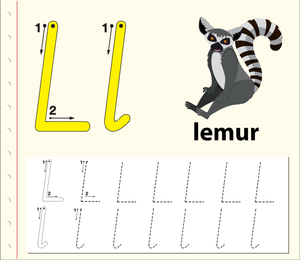
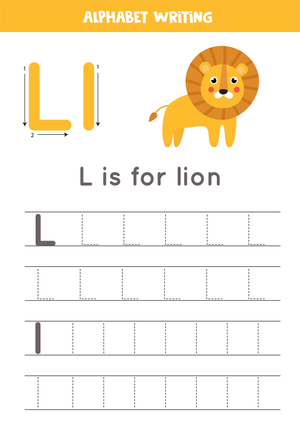
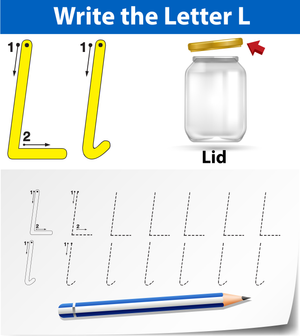
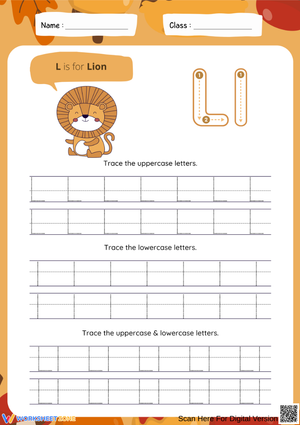
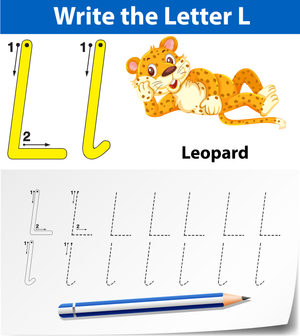
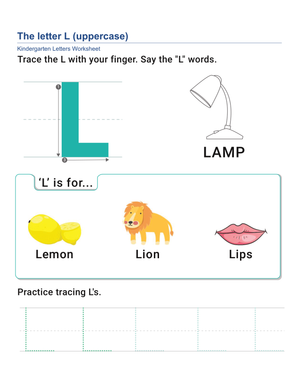
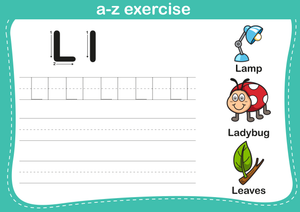
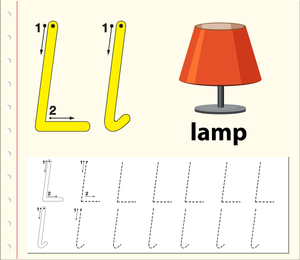
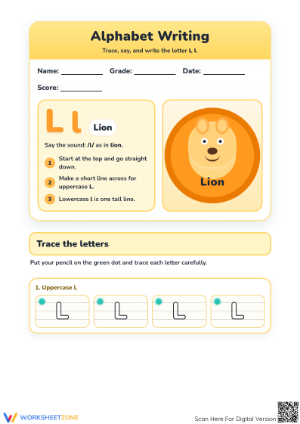
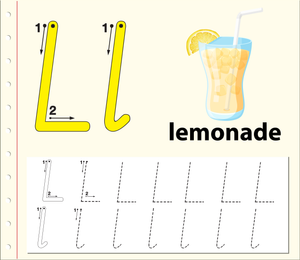
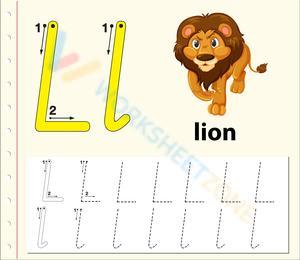
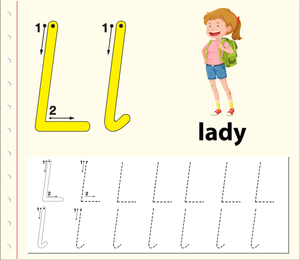
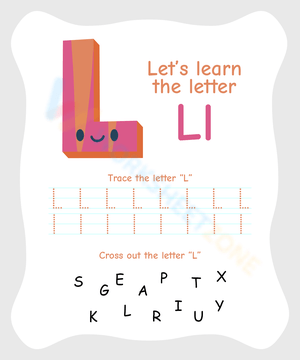
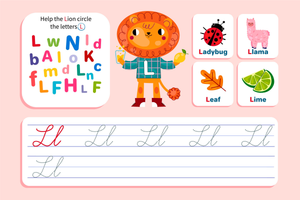
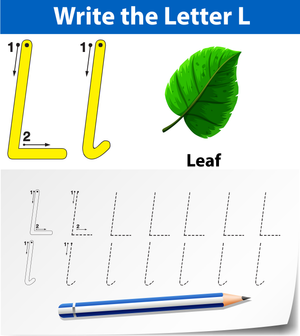
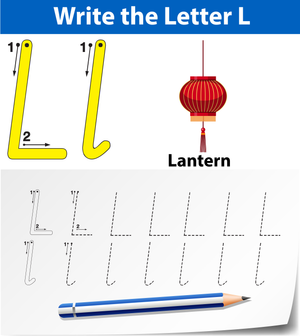
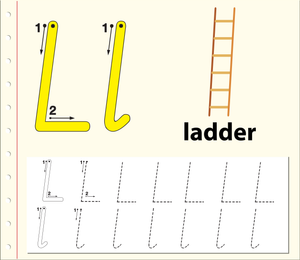
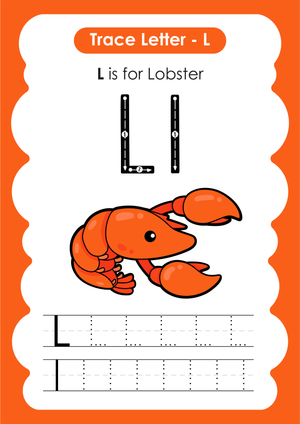
These letter L tracing worksheets give pre-K and kindergarten teachers a focused handwriting resource built around one of the most developmentally accessible letters in the early writing sequence. Each worksheet targets either the uppercase two-stroke formation or the single-stroke lowercase l, with starting dots and directional arrows that help students self-check as they work rather than waiting for teacher confirmation.
The Specific Skills These Worksheets Build
The uppercase L uses only two strokes: a vertical line from top to bottom, then a short horizontal line moving right. That two-direction mechanic matters more than it looks. Students who can reliably execute "down, then across" are building the same control they'll need for F, E, and eventually diagonal letters like A and K. Mastering straight perpendicular strokes early reduces the cognitive load on those later letters — the hand already knows the individual movements; combining them becomes the new challenge, not the basic direction of each stroke.
The lowercase l strips everything down to a single top-to-bottom stroke, which makes it a natural built-in success point within the same practice session. Each worksheet also pairs tracing with L words — images of objects like leaf, lion, and lamp — connecting the letter form to its sound in the same activity. Students trace, say the sound, identify the picture. That three-part sequence reinforces letter-sound correspondence without requiring a separate phonics component bolted on afterward.
Fitting These Worksheets Into Your Weekly Routine
The literacy center block is the most natural slot, but letter L tracing worksheets work just as well as a Monday warm-up or as the short activity that bridges morning meeting and the first lesson of the day. Five focused minutes of tracing builds more lasting muscle memory than a single 20-minute block — frequency matters more than duration at this age.
One setup worth trying: laminate a copy of each worksheet and keep dry-erase markers in the center bin. Students can practice the same worksheet repeatedly across the week without reprinting, and the smoother marker surface provides noticeably different tactile feedback than a pencil on paper, which keeps the task from feeling repetitive. For paper copies, have students date their work and drop it into a folder. A month's worth of dated worksheets is more useful at a parent conference than any rubric score — you can point to exactly where the horizontal stroke straightened out.
Once students have worked through a worksheet independently at least once, peer-assisted practice is worth building in. A student who has internalized the stroke sequence can say "start at the top, come straight down, stop, then go across flat" while their partner traces. That verbal production deepens the speaker's encoding just as much as it supports the listener.
Mistakes Students Make That These Worksheets Help You Catch
The most consistent error on the uppercase L is a horizontal stroke that angles slightly upward — students move left-to-right and unconsciously lift the pencil as they go, producing a stroke that looks closer to a tilted V than a flat base. The wrist doesn't reset between the vertical and horizontal movements; the hand keeps traveling in the same arc. Naming this explicitly before practice — "when we get to the bottom, we stop completely, then go straight across like a table" — reduces the error more reliably than correcting it after the fact.
Lowercase l creates a different problem. Students who have already worked on b, d, or p carry over a "straight line plus something" template and add a small curve or hook at the bottom. On worksheets, this shows up as a lowercase l that curls right at the base — the b-influence bleeding into a different letter. Marking those curves with a small X and immediately retracing is more effective than telling the student the line should be straight; they usually know, but the motor habit overrides the knowledge.
Adapting These Worksheets for a Range of Learners
For students whose fine motor control is still developing, start with worksheets that use wider dotted-line paths. A thin tracing line frustrates students with an unstable grip — they miss the path, register the error, and often stop trying. Wider guidelines give those students an accurate success experience while still reinforcing correct stroke direction. A standard pencil grip or a slightly heavier pencil reduces hand fatigue during longer center rotations and keeps these students working through the full worksheet rather than rushing to finish.
Students who trace accurately on the first attempt need something beyond repetition. Move them to worksheets that include L words — tracing lamp, lemon, or ladder rather than isolated letters. That keeps the same stroke active while introducing the idea that letters connect into words. A useful extension: after tracing, ask the student to write one L word from memory on the blank back of the worksheet before looking back at the guide. That recall step is harder than tracing and reveals whether the letter form is genuinely internalized or just followed.
Standard Alignment
These letter L tracing worksheets align with CCSS.ELA-LITERACY.L.K.1a, which requires kindergartners to print many upper- and lowercase letters. In the K writing sequence, this standard typically appears in the first quarter, and letter L is a common entry point precisely because its straight-line strokes are within reach for most students entering kindergarten. Pre-K teachers working toward school-readiness benchmarks will find these worksheets consistent with Head Start literacy frameworks and most state pre-K guidelines addressing print concepts and foundational fine motor development.
Frequently Asked Questions
When is a student ready to begin letter tracing?
Most students show readiness between ages 3 and 5 — specifically when they can hold a writing tool with some intentionality and show interest in making controlled marks. The right entry point is the worksheet with the widest tracing path, not the smallest. Correct stroke direction is the goal at this stage; tight, precise strokes come later when grip strength and hand stability have developed further.
Should I teach uppercase or lowercase L first?
Most kindergarten teachers introduce uppercase first because the two-stroke structure is visually distinct and easier to anchor in memory. The lowercase l is so minimal that students sometimes doubt whether it's really a letter. Introducing uppercase first, then showing that lowercase is "just the first stroke," tends to stick. A worksheet that places both forms side by side helps students see the relationship directly rather than treating them as two unrelated symbols.
What if a student traces correctly but can't reproduce the letter without guidance?
This gap is more common than teachers expect and usually signals that the student has learned to follow a visual path rather than internalize a movement sequence. The fix is straightforward: after tracing, immediately cover the guide and ask the student to reproduce the letter in the blank space on the same worksheet before looking back. That immediate recall step, done right after tracing, builds motor memory in a way that tracing alone doesn't guarantee.
Are these worksheets appropriate for older students receiving writing intervention?
Yes. The uncluttered layout makes letter L tracing worksheets workable for first- or second-graders who still need to solidify letter formation. The framing matters — "let's sharpen how your letters look" lands differently than any language that signals remediation. Used in a small-group or one-on-one setting, these worksheets carry far less stigma than a teacher might anticipate.