Teaching Early Literacy with Letter Y Tracing Worksheets
As teachers, we recognize that handwriting is not merely mechanical but a cognitive process bridging phonemic awareness and written expression. Dedicated letter Y tracing worksheets provide a structured environment where students explore the unique geometry of this letter while refining fine motor control. The diagonal lines and specific stroke orders associated with the letter Y can be challenging, making repetitive, scaffolded practice essential for mastery.
racing worksheets serve as a bridge, allowing students to follow guided paths before attempting freehand writing. This reduces cognitive load, letting them focus on pencil grip and line orientation. When students use these resources, they are building neural pathways required for automaticity. This automaticity eventually allows them to focus on higher-level composition as they progress. Our collection is designed to meet diverse classroom needs, ensuring every student succeeds with the letter Y.
The Anatomy of Letter Y: Stroke Order and Formation Guide
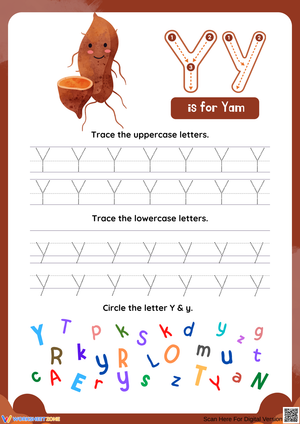
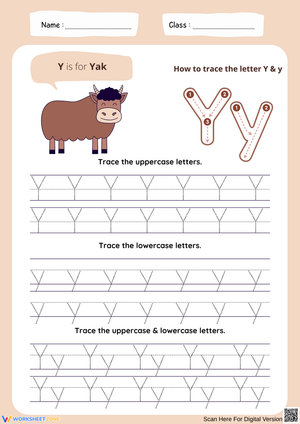
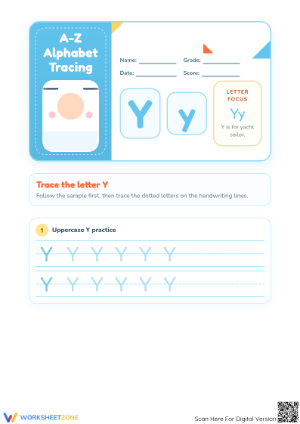
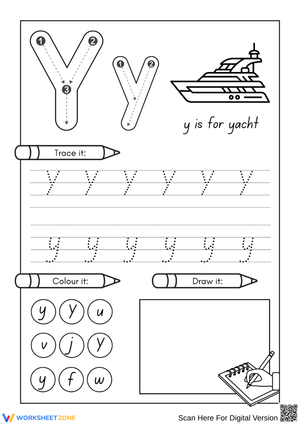
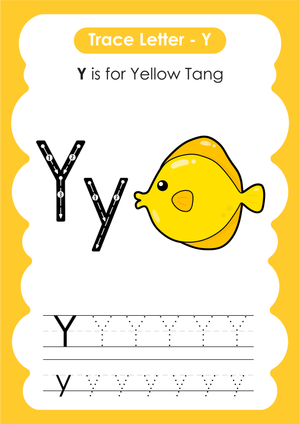
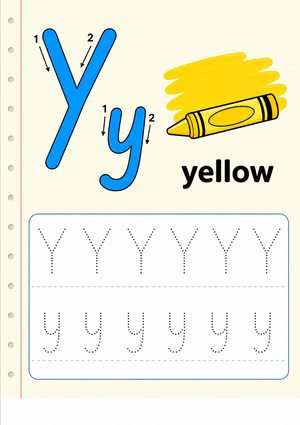
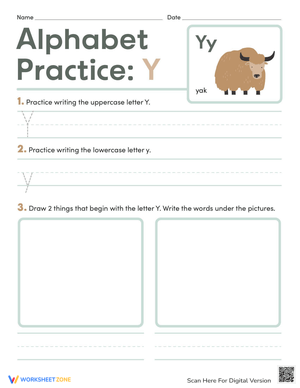
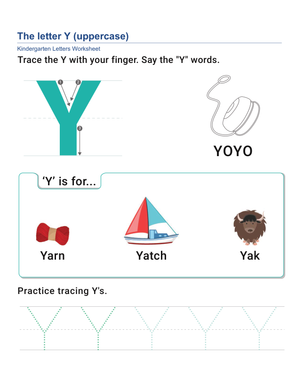
For uppercase Y, instruction focuses on a three-stroke process. Start at the top left, making a short diagonal line down to the midline. Next, move to the top right and draw a matching diagonal line meeting the first at the midline, forming a small 'v'. Finally, draw a vertical line straight down to the baseline. This progression helps students understand symmetry and prevents common mistakes.
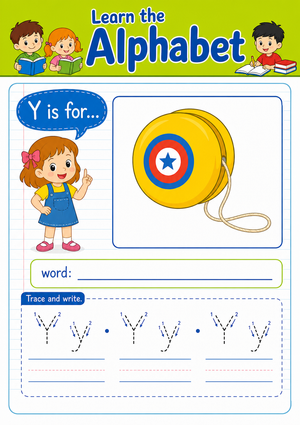
Lowercase y presents different challenges as a descender letter. It is formed using two strokes. The first is a short diagonal from the midline to the baseline. The second is a longer diagonal starting back at the midline, sliding past the baseline into the descender space. Emphasizing the 'slide' motion helps students grasp the continuous nature of the stroke. Using worksheets with numbered arrows or color-coded paths enhances a student's ability to follow these steps accurately during independent practice.
Why Letter Tracing is Essential for Fine Motor Development
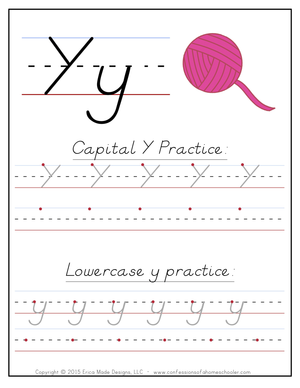
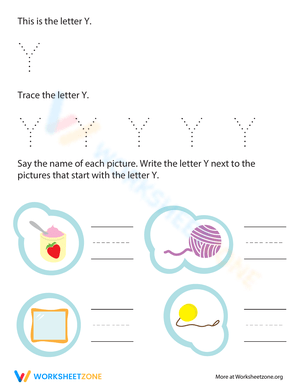
Fine motor development is a prerequisite for good handwriting, and tracing activities are pivotal. When children engage with letter Y tracing worksheets, they perform a coordinated task requiring hand-eye coordination and finger strength. Keeping a tool within dotted boundaries demands precise control over small hand muscles, built through repeated exercise. As students navigate diagonals, they learn to modulate pressure and coordinate wrist movements.
The transition to fine motor precision is often supported by crossing the midline. The diagonal strokes of the letter Y encourage students to cross their visual and physical midline, a critical developmental milestone correlating with improved reading fluency and cognitive integration. Furthermore, repetitive tracing builds muscle memory. Once the hand 'knows' the path, the brain is freed to focus on content rather than mechanics. In a busy classroom, varied letter sizes allow teachers to differentiate instruction based on motor development.
Classroom Implementation: Combining Letter Y With Your Phonics Plan
A 'Letter of the Week' approach is effective in many US classrooms. During 'Y Week,' the letter should be visible everywhere—on word walls and in morning messages. Tracing worksheets can be used as quiet, focused activities during independent work, providing a calm counterpoint to active games. This variety keeps students engaged and caters to different learning styles.
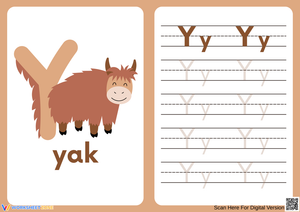
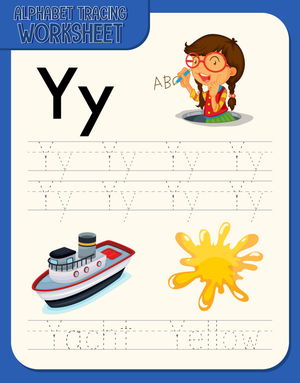
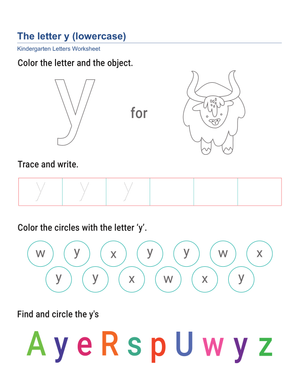
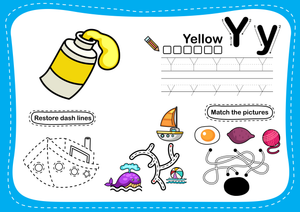
To maximize impact, use familiar anchor words like 'Yak,' 'Yo-yo,' and 'Yellow.' You might have students color a picture of a yellow yak on the same page they are tracing. This reinforces the 'Y is for...' connection and makes the worksheet visually appealing. Teachers can also create 'Y-word' collages, embedding the letter into vocabulary. The more contexts a student encounters the letter Y, the more likely they are to retain its shape and sound. Lamination allows for endless practice with dry-erase markers and immediate feedback.
Multi-sensory Strategies to Complement Letter Y Tracing Sessions
Pairing tracing worksheets with multi-sensory activities enhances early graders' learning. Multi-sensory learning triggers visual, auditory, and kinesthetic senses. For the letter Y, start with 'air writing,' using the entire arm to draw the letter while saying strokes aloud. This gross motor activity prepares students for finer movements on worksheets and is great for transitions.
Have students 'write' the letter Y in sand, salt, or shaving cream for kinesthetic feedback. After practicing in sand, students move to worksheets to apply what they've learned. Another idea is using playdough to 'build' the letter Y, reinforcing structure in three dimensions. Auditory reinforcement, like catchy rhymes or songs, can also be used while students work, creating a positive, focused atmosphere. These hands-on activities make learning feel like play, maintaining engagement and ensuring deeper understanding of the letter's form.
Frequently Asked Questions About Letter Y Tracing
1. At what age should a child start tracing the letter Y?
Most children are ready for basic letter tracing between ages 3 and 5. At this stage, they have developed enough coordination and motor control to hold a tool and follow a path. Look for signs of 'writing readiness,' such as drawing circles, before pushing for formal tracing. Every child is different, so follow their lead and keep activities fun.
2. Should I teach uppercase or lowercase Y first?
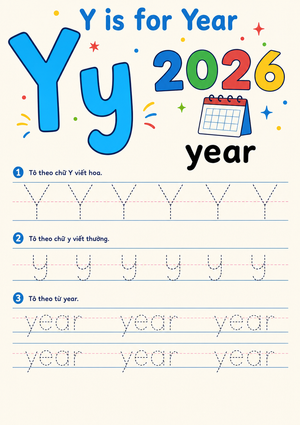
In many US classrooms, uppercase letters are taught first because they use simpler strokes. However, since lowercase letters make up most text, some programs advocate for teaching them early. A balanced approach involves introducing both together, showing how 'big Y' and 'little y' are related. Using worksheets with both on the same page reinforces this relationship.
3. How can I make letter tracing more engaging for my students?
Engagement increases by turning tracing into a multi-sensory experience. Try 'rainbow tracing' with many colors or tracing in the air. Incorporating interesting anchor words like 'yak' or 'yoga' sparks curiosity. Offering variety, such as using markers or tracing in sand, keeps the activity fresh. Small rewards, like a 'Y-themed' sticker, provide simple but effective motivation.
4. Why does my child struggle with the lowercase y?
The lowercase y is difficult because it involves diagonal lines and a descender. Children often struggle with the spatial awareness needed to know where to start the second stroke. They may also be hesitant to draw below the line. Providing worksheets with clear visual boundaries and using metaphors like 'the tail goes into the dirt' can help overcome these hurdles.
5. What are effective strategies for teaching descender letters like lowercase y?
Effective strategies include using color-coded paper where the descender space is a different color and providing guided tracing opportunities. Use verbal cues like 'slide down past the line.' Comparing lowercase y to other letters with tails, like 'g', helps students see patterns. Consistent modeling and low-stakes practice will eventually help the student feel comfortable with the layout.