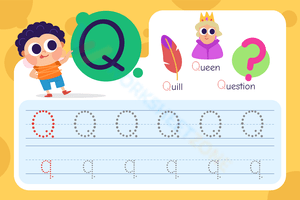
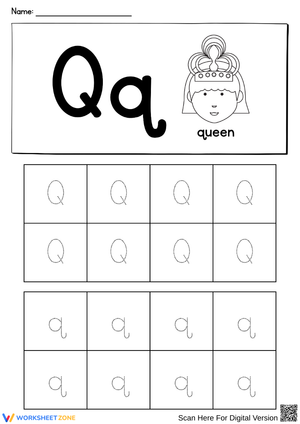
Effective Strategies for Teaching Letter Q Formation
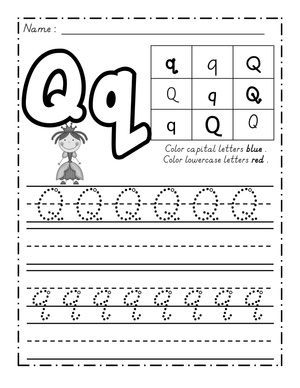
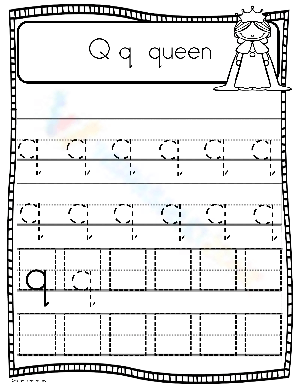
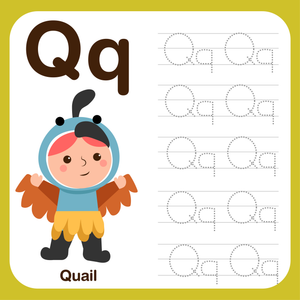
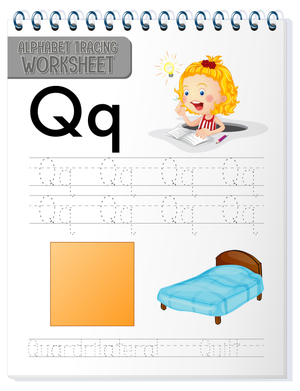
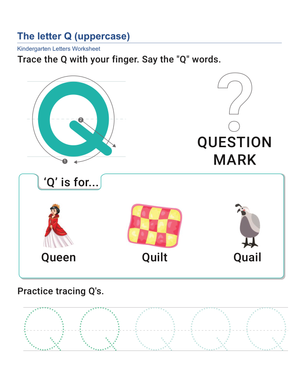
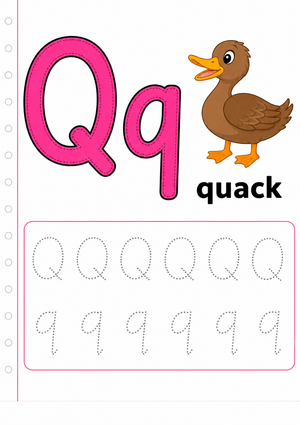
While letter Q may not be the most frequent letter, its formation requires specific motor control and spatial orientation. Teachers often find that children struggle with the distinct tail of the uppercase Q or the descending hook of the lowercase q. By using targeted letter Q tracing worksheets, teachers can provide the structured practice necessary to bridge the gap between recognition and fluid handwriting. These resources help students master the circular motion followed by the precise placement of the descender, ensuring that the letter is legible and consistent with standard expectations.
When introducing the letter Q, it is helpful to start with large-scale movements before moving to the fine motor demands of a worksheet. Air writing or using sand trays allows students to internalize the stroke order without the pressure of precision. Once they are ready for paper-based tasks, the letter Q tracing worksheets format provides a consistent tool for daily practice. Consistency is the primary factor in developing muscle memory, and providing students with multiple opportunities to trace the letter in different contexts helps reinforce the correct path. Teachers should emphasize the 'circle first, tail second' approach for the uppercase letter to prevent confusion with the letter O.
The Role of Fine Motor Skills in Handwriting
Handwriting is a complex task that integrates visual perception, motor planning, and tactile feedback. For young learners, holding a pencil and following a specific line requires significant effort. Tracing worksheets serve as a scaffold, providing a clear path for the child's hand to follow while they develop the strength needed for independent writing. The letter Q, with its rounded curves and sharp tails, is an excellent exercise for refining these skills. As students trace, they are training their brains and hands to work together in a synchronized manner that leads to more complex writing tasks.
In a classroom setting, these worksheets can be used as part of a literacy center. They offer a low-stakes way for students to practice a skill that can often feel frustrating. Teachers can monitor progress by observing the fluidity of the student's strokes. Are they starting at the top? Are they maintaining steady pressure? These observations allow for immediate intervention and correction, preventing the development of poor habits. By integrating these tracing activities into a broader curriculum, teachers ensure that students are building a strong foundation for future academic success.
Classroom Implementation and Teacher Tips
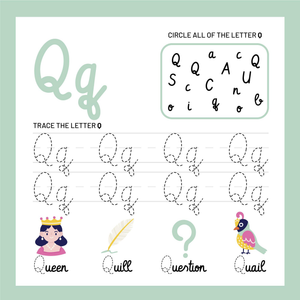
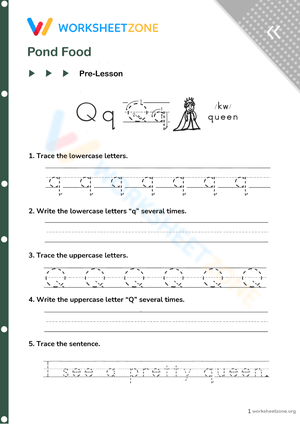
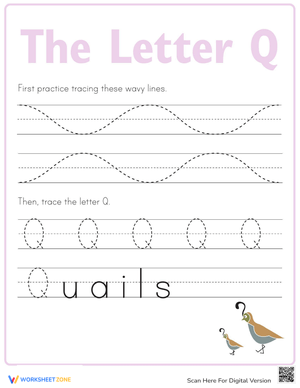
One of the most effective ways to teach the letter Q is to link it immediately with its frequent partner, the letter U. In English, Q is almost always followed by U, creating a unique phonemic unit that students must learn to recognize. Tracing worksheets that feature both letters together help solidify this relationship. This approach transforms a simple handwriting drill into a comprehensive literacy lesson. As students trace the 'qu' pair, teachers can lead discussions about words like 'queen' and 'quick,' helping students connect the visual representation of the letters with their sounds.
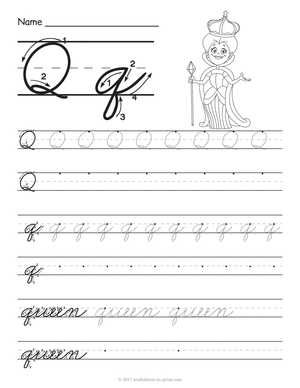
Another useful tip is to incorporate verbal cues during the tracing process. For uppercase Q, a teacher might say, 'Round like an O, then give it a tail.' For lowercase q, the cue could be, 'Make a circle, go down, and add a hook.' These verbal triggers help students internalize the sequence of movements and provide a consistent framework for self-correction. Encouraging students to check their work by comparing their traced letters to a model also promotes self-awareness and attention to detail. These small adjustments in delivery can significantly enhance the learning outcomes of a standard tracing activity.
Addressing Common Handwriting Challenges
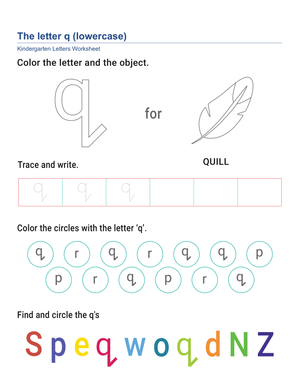
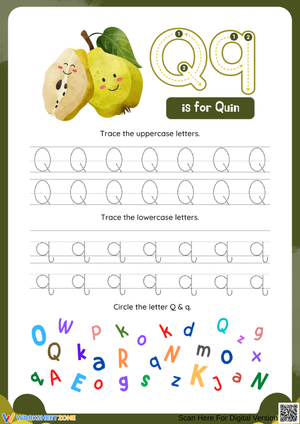
Many students encounter specific difficulties when learning to write the letter Q. One common issue is the direction of the tail or hook. Students may confuse the lowercase q with the lowercase p or g due to their similar shapes. To address this, teachers can use visual aids that highlight the differences. Focused tracing practice that emphasizes the specific direction of the q-hook is essential for overcoming these reversals. Tracing helps the hand remember the correct direction through repetitive motion, which is often more effective than verbal instruction alone.
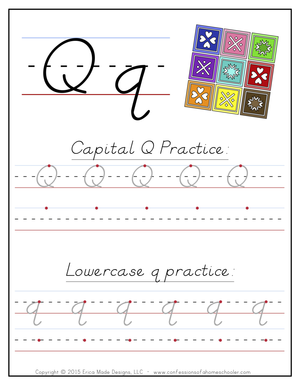
Handwriting experts note that the uppercase Q is one of the few letters that requires a 'lift-and-reset' motion for the tail, which can disrupt the flow of writing for students who are used to continuous-stroke letters. This break in momentum requires a higher level of motor planning. By using worksheets that provide a clear starting point for the tail, teachers can help students navigate this transition without losing their place on the line. Understanding the cognitive load associated with different letter forms allows teachers to provide more effective support for their students.
Conclusion
The journey to literacy is built on small, consistent steps. Mastering a single letter like Q represents a significant milestone in a child's development. Each time a student successfully traces a letter, they gain confidence in their ability to communicate through writing. The use of high-quality resources like the letter Q tracing worksheets ensures that this practice is productive and aligned with best practices. By providing the right tools, teachers can help every student achieve their potential and encourage a lifelong love for learning.
Frequently Asked Questions
1. What is the best way to teach proper stroke order for letter Q?
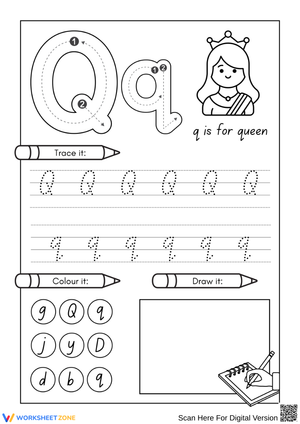
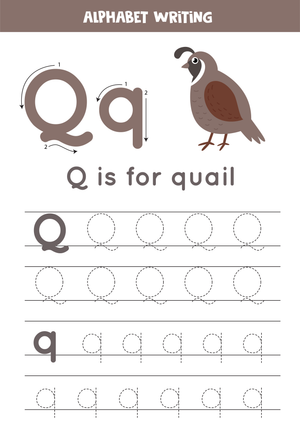
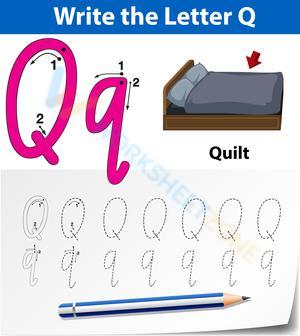
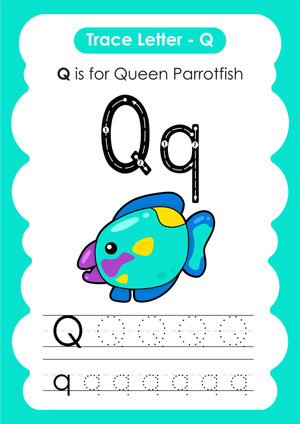
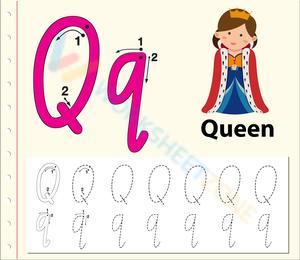
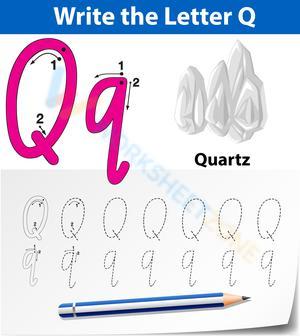
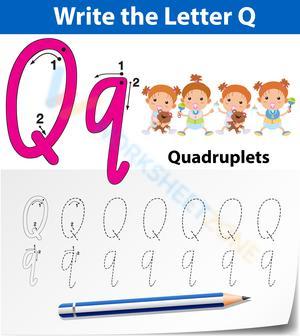
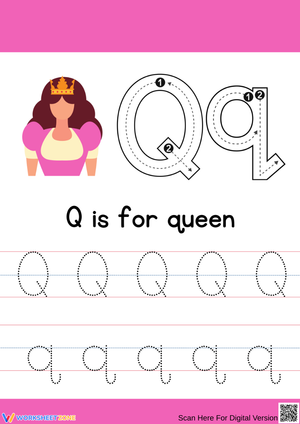
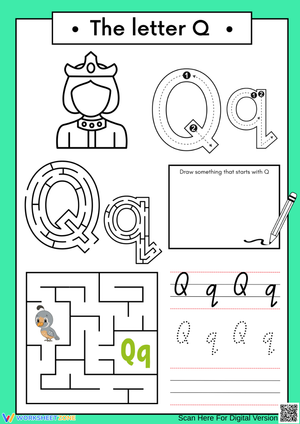
The most effective way to teach stroke order is through modeling and the use of verbal cues. For the uppercase Q, emphasize drawing a full circle starting from the top and then lifting the pencil to add the tail. For the lowercase q, teach the 'c' shape first, then the vertical line down, and finally the hook. Using letter Q tracing worksheets that include numbered arrows can also provide a visual guide for students to follow independently.
2. Why do children struggle with writing the letter Q?
Children often struggle with Q because of its unique features, such as the tail on the uppercase version and the potential for confusion with other letters like p, g, or O. The 'lift-and-reset' required for the uppercase tail and the specific direction of the lowercase hook require more advanced motor planning. Consistent practice with letter Q tracing worksheets helps students overcome these hurdles by building specific muscle memory for these movements.
3. Should children practice uppercase or lowercase Q first?
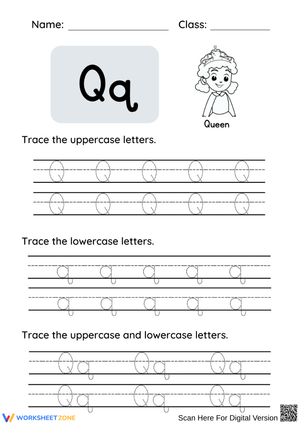
Most teachers recommend introducing uppercase letters first because they are generally easier to distinguish. However, since lowercase letters are more common in reading, it is important to transition to lowercase q practice relatively quickly. Many tracing worksheets provide both versions on the same page, allowing students to see the relationship between the two forms while practicing them concurrently.
4. How can tracing worksheets improve a child's overall handwriting?
Tracing worksheets provide a structured environment for students to develop fine motor control and spatial awareness. By following a predetermined path, students learn to control the pressure and direction of their pencil strokes. This guided practice builds the muscle memory necessary for fluid, legible handwriting. Furthermore, tracing helps students learn the correct proportions and placement of letters on the line, which is essential for overall writing organization.