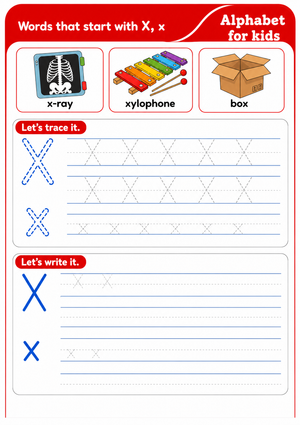
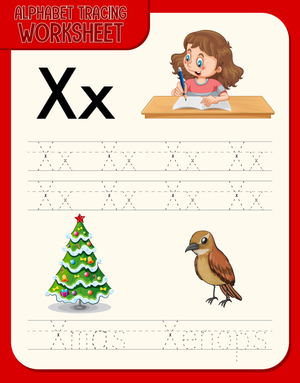
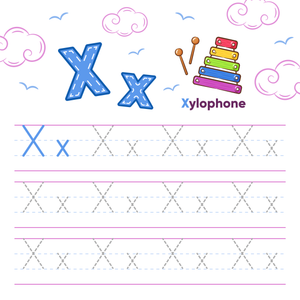
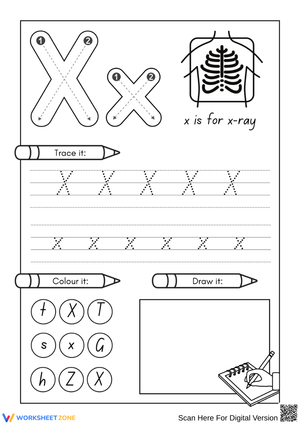
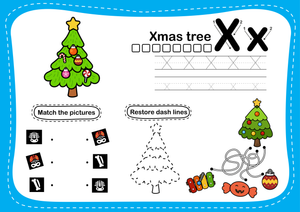
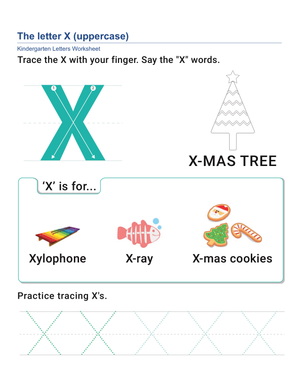
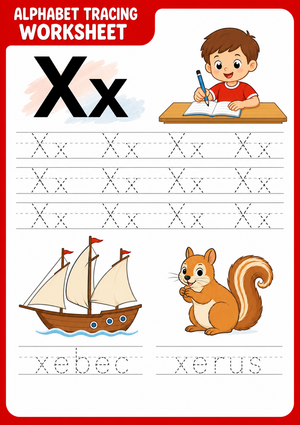
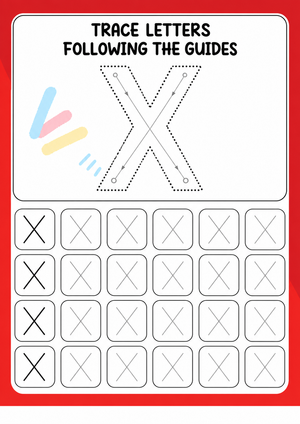
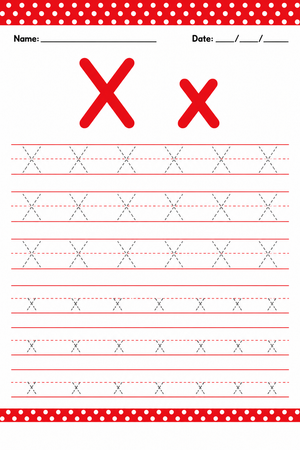
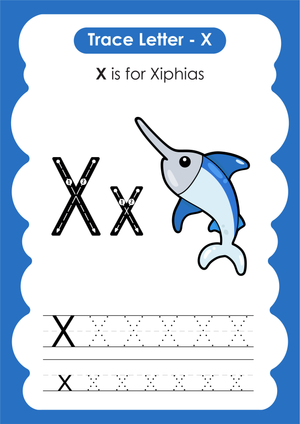
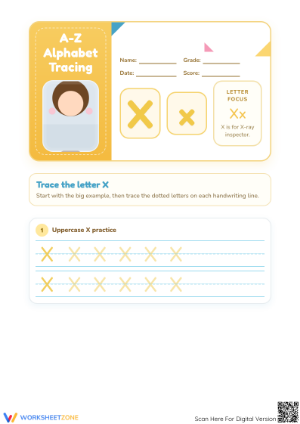
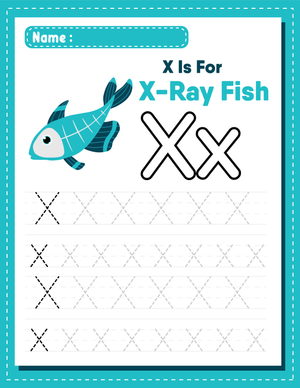
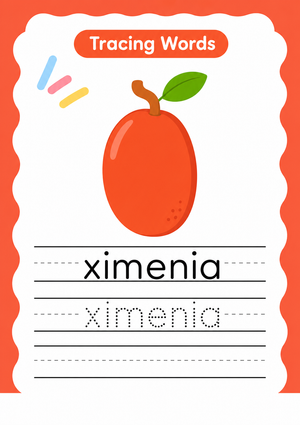
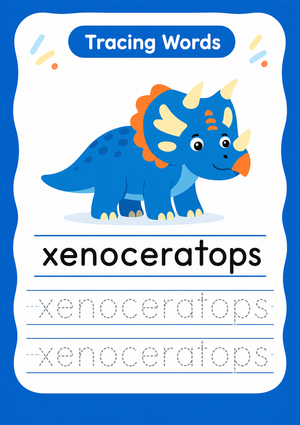
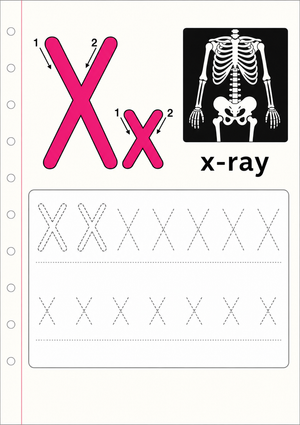
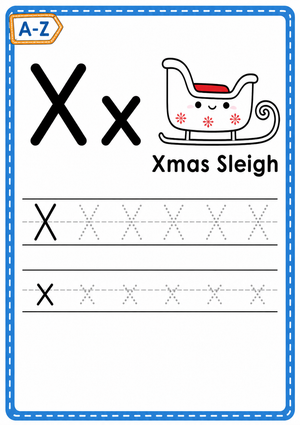
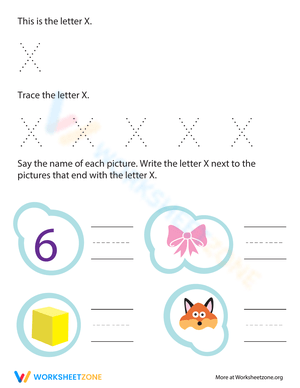
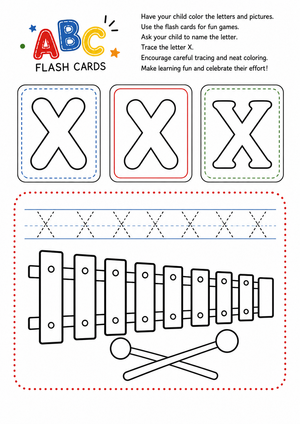
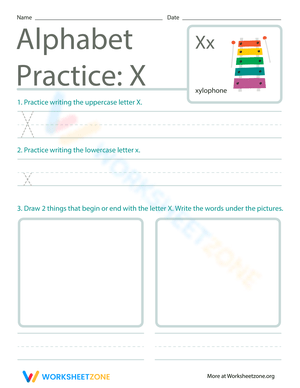
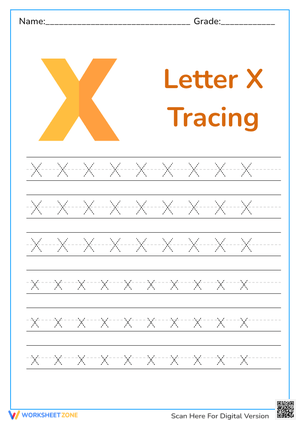
In a busy classroom environment, having a no-prep resource ready for literacy centers or morning work is time-saving. These worksheets are designed to transition students from large, sensory-based movements to the refined pencil control required for standard handwriting. By focusing on the specific needs of the letter X—namely, the intersection of two diagonal lines—teachers can address a common stumbling block before it becomes a habit.
Introduction to Practice and Learn How To Trace the Letter X
While letters like L or T use simple vertical and horizontal lines, the letter X introduces another challenge: the diagonal. For many students in Worksheetzone's researched kindergarten or preschool classrooms, this is where students' pencil control skill is truly tested. Providing high-quality letter X tracing sheets ensures that students have a consistent, structured way to practice this unique intersection. It is not just about handwriting; it is about visual-motor integration.This guide and ready-to-print library from Worksheetzone explains how teachers can use the resources to build confidence and accuracy in early writers, ensuring that every student can trace and write the strokes of the letter X with precision.
For students who struggle with the intersection of the X, it might not be a lack of effort but a lack of neurological readiness. You can support these learners by integrating more gross motor activities that encourage crossing the midline before returning to the letter X tracing worksheets. Activities like reaching across the body to grab a beanbag or drawing large infinity loops on a whiteboard can prime the brain for the refined task of tracing a small letter X.
Teacher Tips for Stroke Order Success
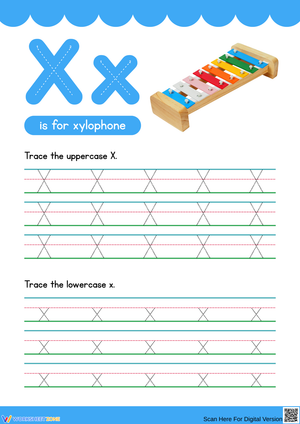
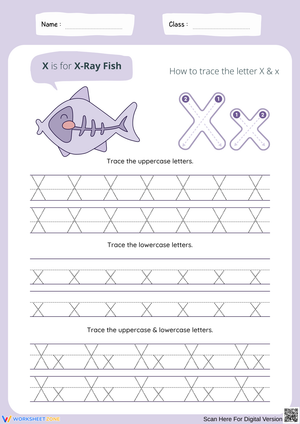
For the uppercase X, teachers should emphasize starting at the top left and drawing a long diagonal line down to the bottom right. The second stroke begins at the top right and crosses down to the bottom left. Consistency in this 'top-down' approach prevents students from developing inefficient habits that could slow down their writing speed in later grades. Many students will try to start from the bottom or create two separate V-shapes that meet in the middle. Gently correcting these patterns early on through guided practice with a letter X tracing worksheets is one of the most effective ways to build proper muscle memory.
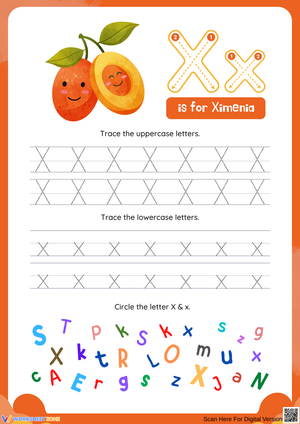
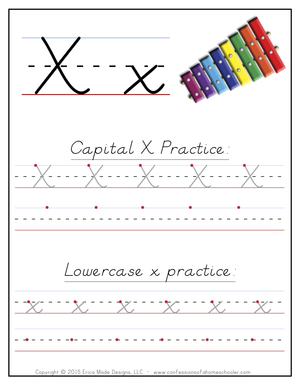
Lowercase x follows the same diagonal pattern but is contained within the midline and baseline of the primary grid. This transition from large to small can be difficult for students who are still mastering spatial awareness. To help them, use worksheets that provide clear starting points, often marked with a dot or a star.
Verbal cues are also incredibly helpful in the classroom. Repeating phrases like 'Slide down one way, jump back, and slide the other way' can provide a rhythmic cadence that helps students internalize the movement. When students practice on the letter X tracing worksheets, encourage them to say the strokes out loud as they draw, which reinforces the motor pattern through auditory feedback.
Benefit of a Ready-to-print Letter X Tracing Worksheet
As teachers, your time is your most valuable asset. Having a library of letter-specific tracing sheets means you can quickly pivot during a lesson if you notice a particular student or group is struggling with the letter X. You can immediately provide them with extra practice without having to search for a new workbook or hand-draw examples. Furthermore, the clean, professional layout of a high-quality PDF reduces visual clutter, which is particularly beneficial for students with sensory processing needs or those who are easily distracted by busy page designs.
Recommended Classroom Implementation and Phonics Integration
To make the letter X tracing lessons more meaningful, teachers should focus on ending sounds. Words like box, fox, six, and wax are much more representative of the phonetic value /ks/ that students need to learn. Combining these images into your tracing practice helps students build a stronger connection between the physical act of writing and the sound the letter represents. This multisensory approach—seeing the letter, hearing the sound in a word, and feeling the stroke—is the gold standard for early literacy instruction.
Challenge your students to look through their favorite books or classroom posters to find the letter X. When they find it, they can return to their worksheet and practice tracing it again, solidifying the recognition-to-production loop that is so vital for reading and writing development. Using the letter X tracing worksheets as a springboard for a class 'Word Wall' hunt is another effective way to integrate writing with environmental print. This process makes the transition from tracing to independent writing much smoother for the entire class.
Frequently Asked Questions about Letter X Handwriting
1. At what age should a child start tracing the letter X?
Most children are developmentally ready to begin tracing the letter X between the ages of four and five. This is because the letter requires the ability to cross the midline and manage diagonal strokes. If a student is younger than four and struggling, focus on gross motor activities that encourage crossing the body first.
2. Why might a child struggle with the intersection of the X?
The intersection is the hardest part because it requires precise spatial awareness. A child must understand where the two lines meet in the middle. Try using a 'target dot' on your letter X tracing worksheets to give them a visual goal for the crossing point, helping them visualize the two separate strokes as a unified shape.
3. What are some 'X' words for kids beyond X-ray?
Since few words start with the X sound, focus on ending sounds. Words like box, fox, six, wax, and mix are excellent examples. Using these words helps students understand the phonetic value of X (/ks/) and shows them how the letter is used in common, everyday language.
4. How can tracing be made more engaging for children?
Turn tracing into a game. Use 'Rainbow Tracing' where students use multiple colors, or frame the worksheet as a 'Treasure Hunt' where 'X marks the spot'. Incorporating movement and color keeps students excited about learning and helps them associate handwriting with positive classroom experiences.
5. How do I know if a student is ready for independent writing?
A student is ready once they can consistently follow the correct stroke order and maintain the symmetry of the letter X without tracing lines. Gradually move from heavy support to pages with only a starting dot. Once they produce a clear, recognizable X on a blank line, they have mastered the foundational skill.