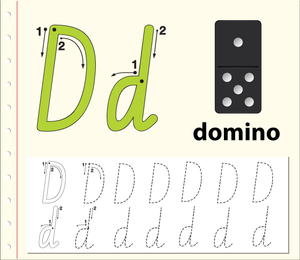
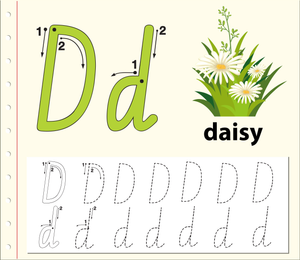
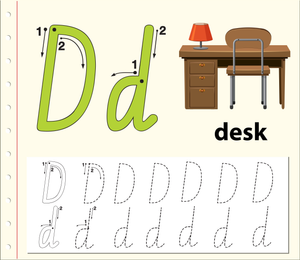
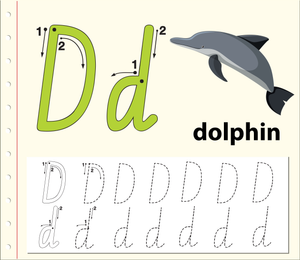
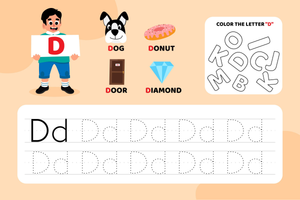
Letter D shows up early in most grade 1 scope and sequence charts because it combines a straight vertical line with a curved stroke, which makes it a useful bridge letter between simple forms like L and more complex curved letters like B or P. When you hand a student a letter D handwriting worksheet, you are not just filling time between subjects. You are building the specific motor pathway that lets a child produce that straight-then-curve motion automatically, without stopping to think about it mid-sentence.
How Much Time Should Grade 1 Teachers Spend on Letter D Practice
Handwriting does not need a long daily slot to be effective. Research-backed guidance suggests K-3 handwriting instruction should total roughly 50-100 minutes per week, taught in short, frequent sessions rather than long blocks, and just 10-15 minutes of daily practice has been shown to boost writing fluency in early elementary students. That means a single letter D worksheet, used for about ten minutes at the start of a literacy rotation, can be enough if it happens consistently across the week rather than once in a rushed burst.
Teachers who front-load handwriting into five-day blocks per letter often see faster automaticity than those who spend one long session per letter and then move on. Spreading practice out lets the motor memory settle before students are asked to apply the letter in words.
Sequencing a Letter D Lesson: Model, Trace, Write
A reliable sequence for a letter D worksheet session looks like this:
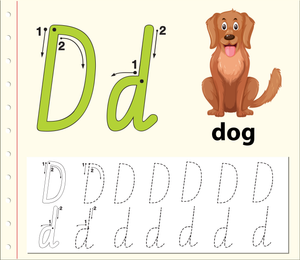
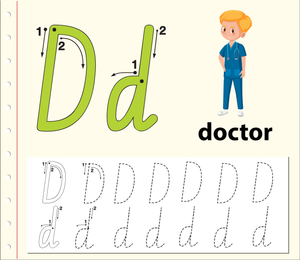
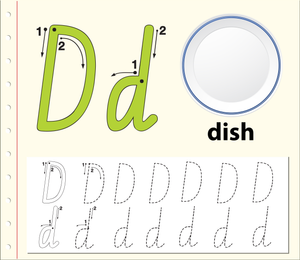
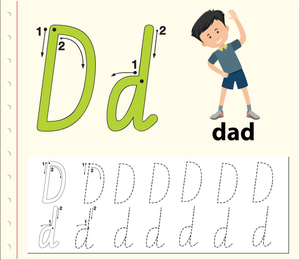
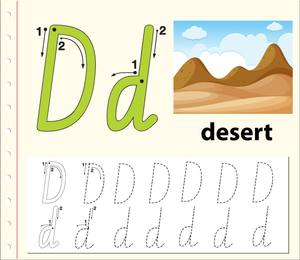
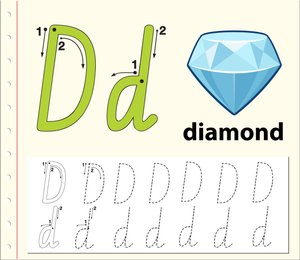
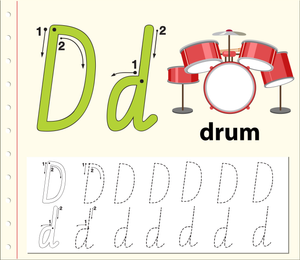
- Teacher models uppercase D and lowercase d on a whiteboard, narrating the stroke order out loud (down, curve, close)
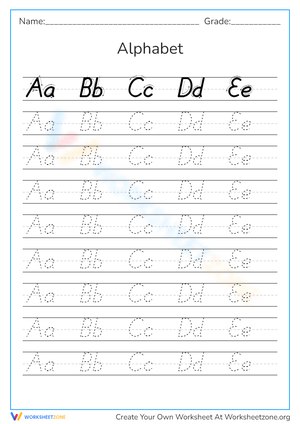
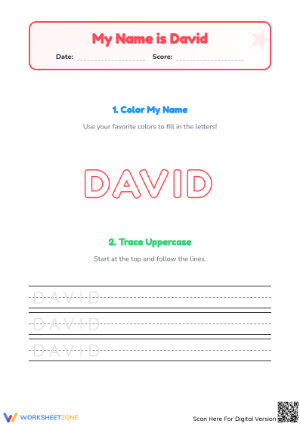
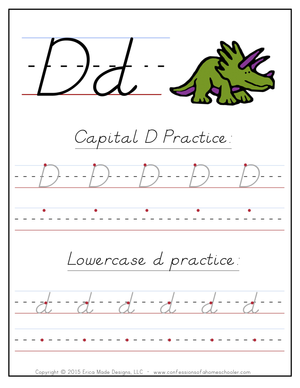
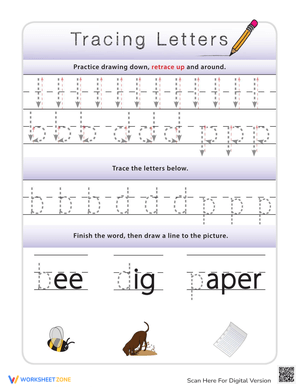
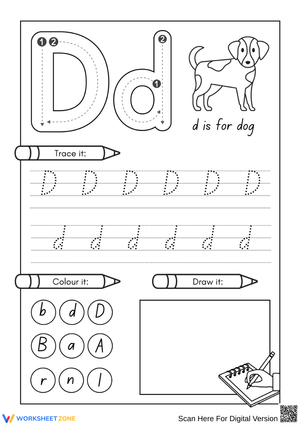
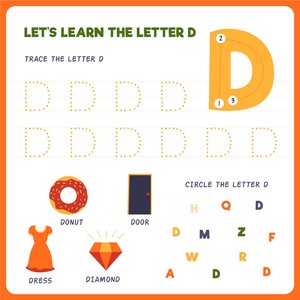
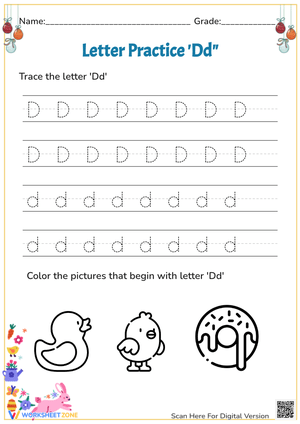
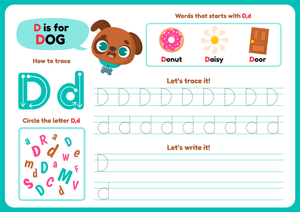
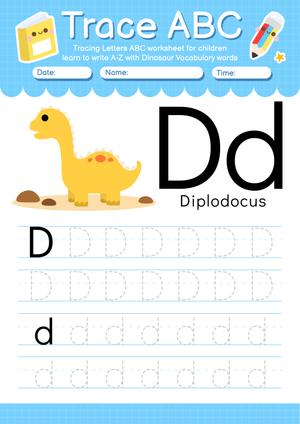
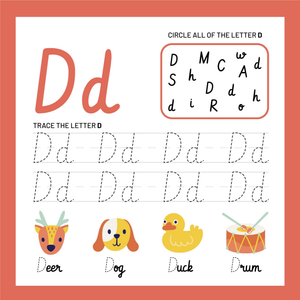
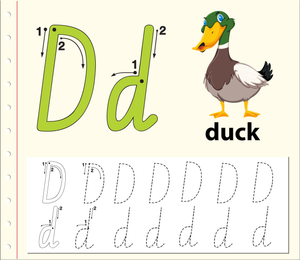
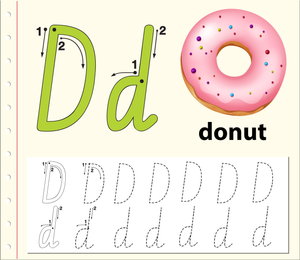
- Students trace dotted or dashed letter D models on the worksheet while saying the stroke directions aloud
- Students copy the letter independently in a blank row, checking their own formation against the model
- Students write the letter from memory in a final row without a visual guide
This model-trace-copy-recall progression gives students a scaffold that gradually fades, which matches how early writers actually build automatic letter formation rather than relying on constant visual cues.
Connecting Letter D Formation to Letter-Sound Recognition
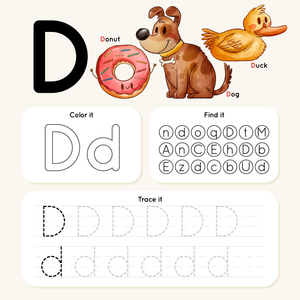
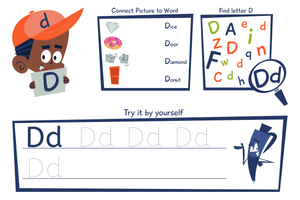
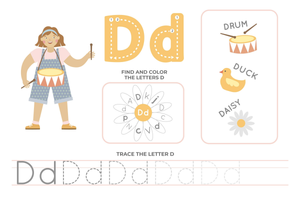
Grade 1 is also when many students are solidifying letter-sound correspondence, so a strong letter D worksheet does double duty. Pairing the tracing rows with small picture cues, such as a dog, duck, or door, reinforces that the shape a student is forming corresponds to a sound they will use in decoding and spelling. Asking students to say the sound each time they trace the letter turns a purely motor task into a literacy task.
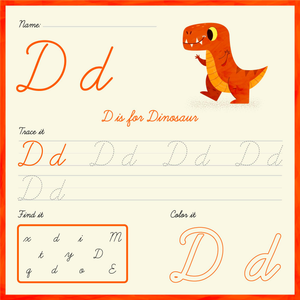
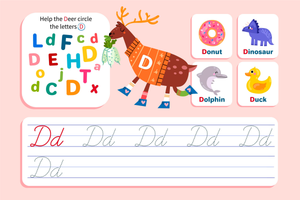
Some worksheets extend this by asking students to circle pictures that start with the letter D sound after finishing their tracing rows. This keeps the practice from feeling repetitive while still targeting the same formation skill.
Fine Motor and Pencil Grip Considerations for Letter D
Uppercase D requires a firm straight downstroke followed by a controlled curve back to the baseline, which can be tricky for students who are still building hand strength. Lowercase d asks for an even more precise motion: a small circle followed by a tall straight line that must connect cleanly at the top.
Watch for these common struggles during letter D practice:
- Reversing the direction of the curve, making the D face the wrong way
- Starting the lowercase d stroke from the wrong point, which breaks the circle-then-line motion
- Pressing too hard or too lightly, which usually signals a grip issue rather than a letter-knowledge issue
A quick grip check before starting the worksheet, along with a reminder to keep the non-writing hand steadying the paper, often resolves formation issues faster than repeated correction after the fact.
Classroom Implementation
To put this into practice this week, try the following plan:
- Day 1 to 2: Model uppercase and lowercase D, then use tracing-heavy worksheets during a 10-minute warm-up
- Day 3: Shift to copying practice with less visual support, adding letter-sound picture matching
- Day 4: Introduce word-level practice for students ready to extend, while others continue tracing with tactile support
- Day 5: Quick formative check, asking each student to write uppercase and lowercase D from memory on a small whiteboard or exit slip
Keep a simple checklist during the Day 5 check: correct stroke direction, correct starting point, and a letter that sits properly on the baseline. This gives you a fast, low-pressure way to see who needs another round of letter D worksheets next week versus who is ready to move on to letter E.
Frequently Asked Questions
1. How much class time should grade 1 teachers spend on letter D handwriting practice?
Aim for about 10-15 minutes of focused practice per session, repeated across several days that week, rather than one long single session. This matches broader guidance suggesting 50-100 minutes of handwriting instruction per week works best when spread out.
2. What is the best way to teach uppercase versus lowercase D formation?
Model each form separately, since uppercase D uses a straight line and single curve while lowercase d uses a circle and a tall connecting line. Narrate the stroke order aloud each time so students hear the pattern as they watch and trace.
3. How many practice repetitions do first graders typically need to master letter D?
Most students need somewhere between five and ten varied practice opportunities, such as tracing, copying, and tactile activities, before the letter form becomes automatic. Some students will need more, especially if they are prone to reversals.
4. How can teachers use letter D worksheets to support struggling writers in small groups?
Pull a short small group for extra modeling and tactile practice, such as sand tray tracing or large whiteboard writing, before returning to the paper worksheet. This gives struggling writers more sensory input without slowing down the rest of the class.
5. How does letter D handwriting practice connect to reading and spelling skills?
Practicing letter D formation alongside its sound and example words reinforces the same letter-sound knowledge students need for decoding and spelling. Studies link stronger handwriting in early grades to stronger overall reading and writing outcomes later on.