


























Views
Downloads
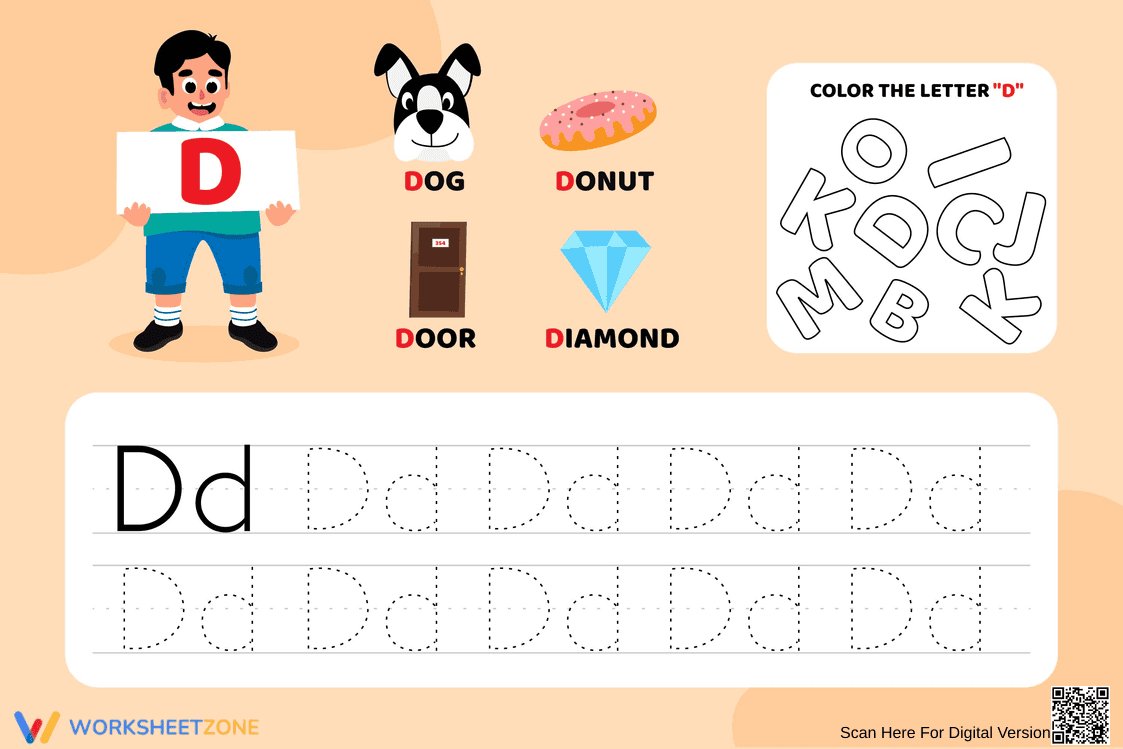

Grade K Letter D — Printable No-Prep Worksheet
Paste this activity's link or code into your existing LMS (Google Classroom, Canvas, Teams, Schoology, Moodle, etc.).
Students can open and work on the activity right away, with no student login required.
You'll still be able to track student progress and results from your teacher account.
This foundational Letter D worksheet helps early learners master alphabet recognition and basic handwriting skills. Students practice identifying, coloring, and tracing both uppercase and lowercase D, building essential fine motor control and print awareness. Perfect for introducing the alphabet in a structured, engaging format.
At a Glance
- Grade: Kindergarten · Subject: ELA
- Standard:
CCSS.ELA-LITERACY.L.K.1.A— Print many upper- and lowercase letters- Skill Focus: Letter Recognition and Tracing
- Format: 1 page · 10 tracing tasks · No answer key needed · PDF
- Best For: Morning work or literacy centers
- Time: 10–15 minutes
This single-page resource features three distinct activity zones to reinforce letter mastery. The top section introduces four visual vocabulary words (dog, donut, door, diamond) to build phonetic connections. Next, a visual discrimination task asks students to find and color the letter D hidden among other letters. Finally, the bottom section provides two guided lines with ten pairs of dotted uppercase and lowercase Dd characters for targeted handwriting practice.
Zero-Prep Workflow
This resource is designed for immediate classroom implementation with minimal teacher setup:
- Print (1 minute): Simply download the PDF and print a class set. The clear, high-contrast design ensures excellent grayscale reproduction.
- Distribute (1 minute): Hand out the sheets along with crayons and pencils. The visual instructions make it easy for young learners to understand the tasks independently.
- Review (3 minutes): Quickly circulate to check pencil grip and letter formation.
With under two minutes of total prep time, this worksheet is an ideal addition to emergency sub plans or busy morning routines.
Standards Alignment
This activity is directly aligned to CCSS.ELA-LITERACY.L.K.1.A, requiring students to print many upper- and lowercase letters. It also supports foundational reading skills by helping students recognize and name letters of the alphabet. Both standard codes can be copied directly into lesson plans, IEP goals, or district curriculum mapping tools.
How to Use It
Deploy this worksheet during morning work to establish a calm, focused start to the day. It also functions perfectly as an independent literacy center activity after direct instruction on the letter D. While students are tracing, teachers can conduct quick formative assessments by observing pencil grip and stroke direction. Expect students to complete the entire page in 10 to 15 minutes.
Who It's For
This resource is primarily designed for Kindergarten and Preschool students developing early literacy and fine motor skills. The clear visual cues and dotted tracing lines provide built-in scaffolding for learners who need extra support with letter formation. Pair this worksheet with a read-aloud book featuring D-words or a classroom alphabet anchor chart to reinforce phonetic connections.
Mastering early handwriting and letter recognition is a critical stepping stone for future reading fluency. This resource targets CCSS.ELA-LITERACY.L.K.1.A, ensuring students can accurately print many upper- and lowercase letters. According to a comprehensive EdReports 2024 analysis, explicit and systematic instruction in foundational print concepts significantly improves long-term literacy outcomes in early childhood education. By combining visual discrimination tasks with guided tracing practice, this worksheet provides the repetitive, structured engagement necessary for cognitive retention. The integration of vocabulary images alongside handwriting exercises helps bridge the gap between physical letter formation and phonetic awareness. Providing young learners with consistent, high-quality practice materials builds the automaticity required for more complex writing tasks later in their academic journey, making this an essential tool for early childhood educators.


