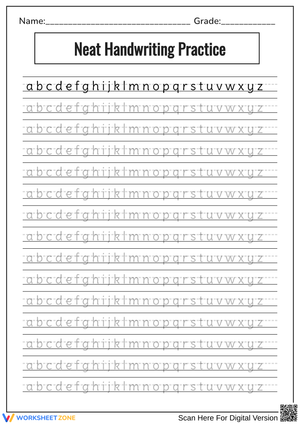
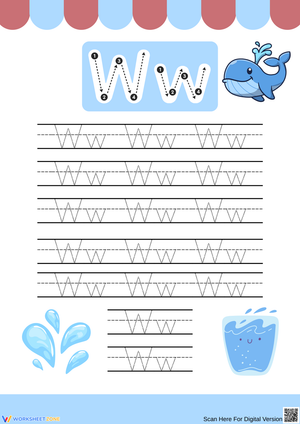
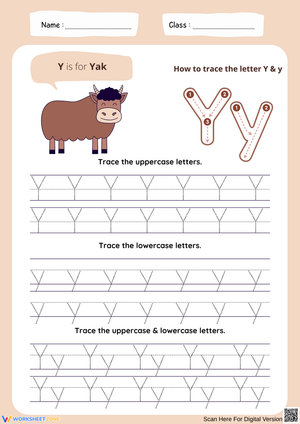
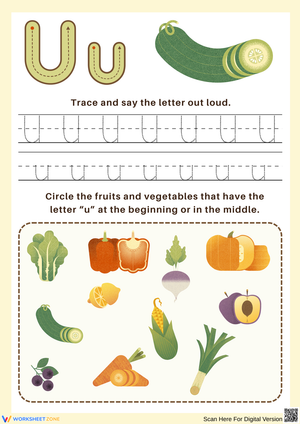
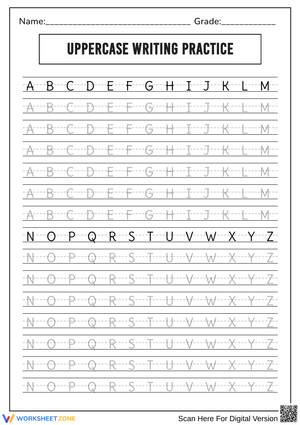
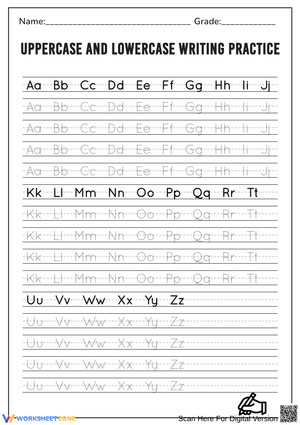
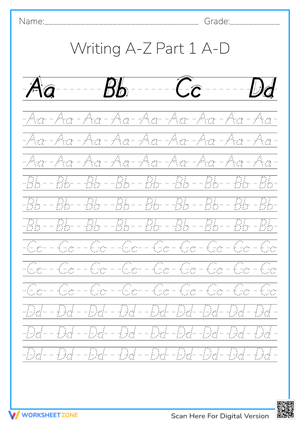
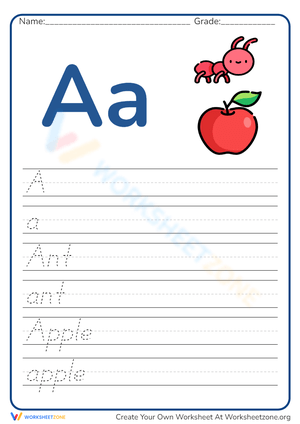
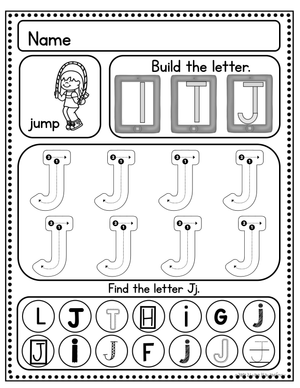
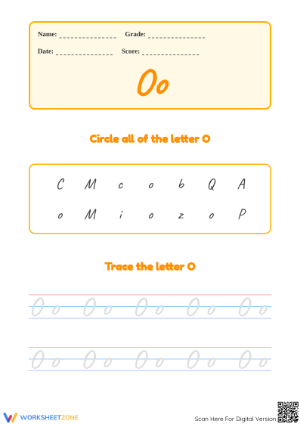
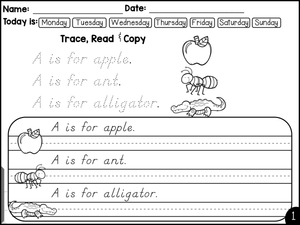
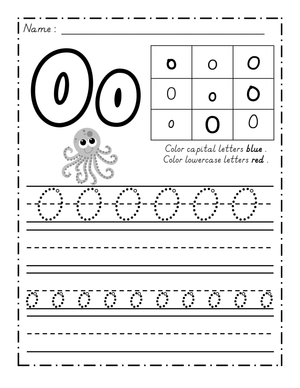
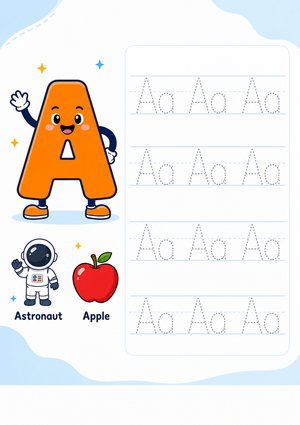
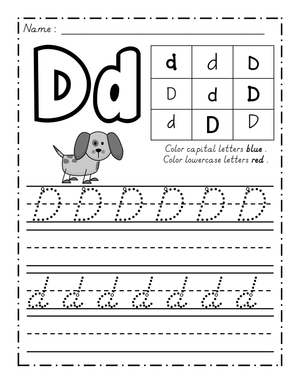
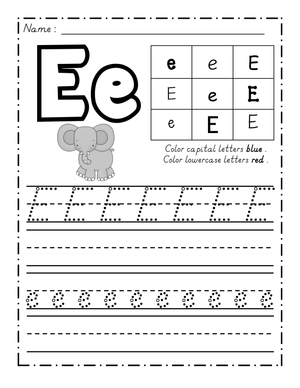
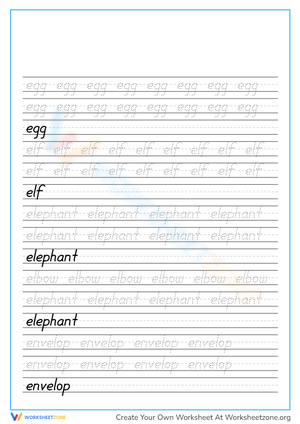
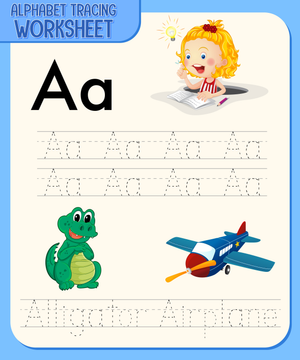
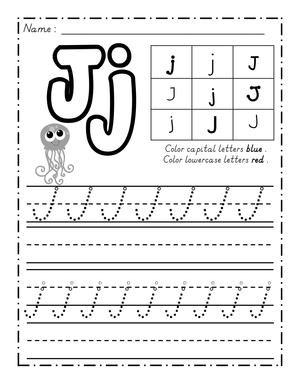
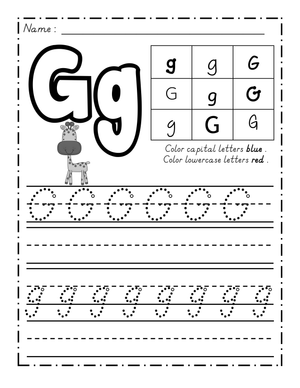
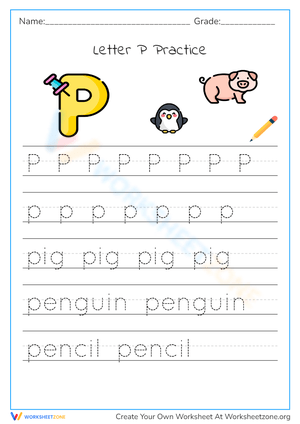
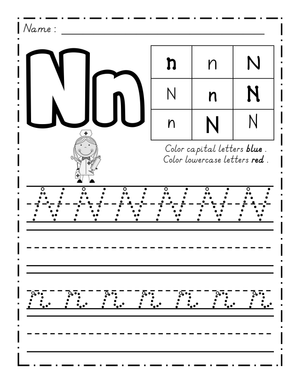
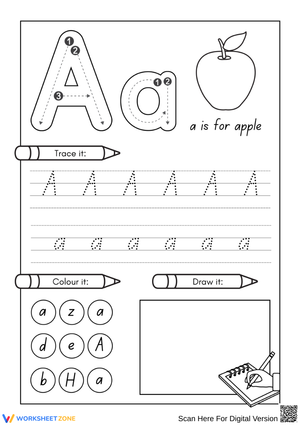
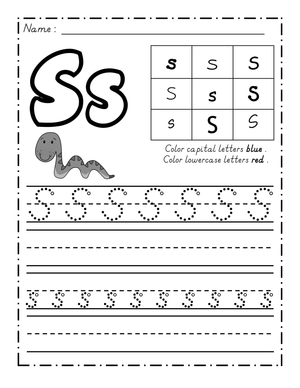
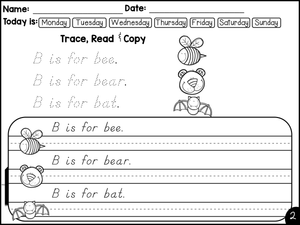
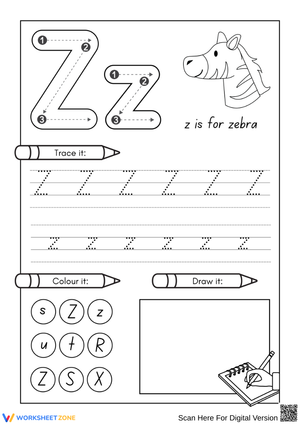
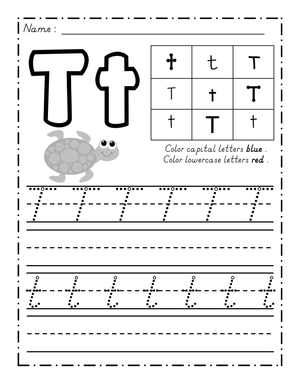
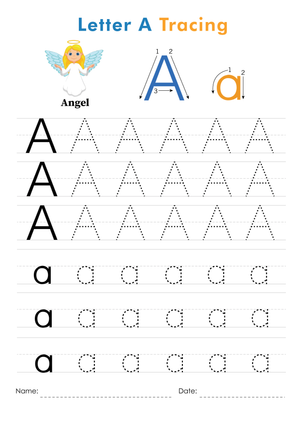
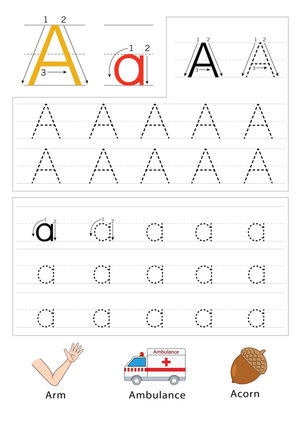
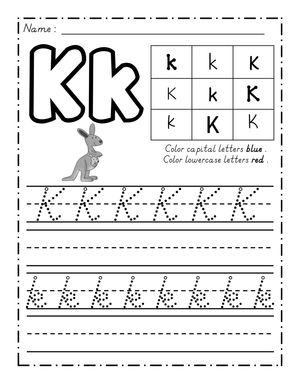
These letter tracing handwriting worksheets for 1st grade cover all 26 uppercase and lowercase letters with directional arrows, numbered stroke sequences, starting dots, and a clear progression from traced to independent writing on each worksheet. Teachers get a print-and-use set that fits morning arrival, literacy centers, small-group intervention, and homework packets without any additional preparation.
What's Inside the Set
The worksheets are arranged by formation family rather than alphabetical order — a deliberate sequencing choice based on how letter strokes transfer from one letter to the next. The c-curve family (c, a, d, g, q) appears as a group so students apply the counterclockwise curve motion they just practiced on c directly to a. The tall-letter group (l, i, t, j) follows the same logic. Students who practice in this order make fewer second-letter formation errors than students who encounter the alphabet in strict A-to-Z sequence, because each new letter arrives with carry-over muscle memory from the one before it.
Each worksheet in the set shares the following structural elements:
- Directional arrows and numbered strokes that show where the pencil enters and which way it travels — stopping the backward s and the bottom-up l from becoming entrenched habits
- A starting dot at the entry point of each letter, which matters more for ambiguous entries like e and k than for visually obvious ones like o
- Three-line guides — top line, midline, and baseline — making it visually clear where tall letters reach their full height, where short letters cap out, and where descenders like g and y drop below the line
- Dotted letter guides for multiple tracing repetitions, followed by open lines for independent attempts without any guide at all
- Uppercase and lowercase letters paired on the same worksheet so students practice both forms simultaneously and build the visual connection between B and b
Smart Ways to Work These Worksheets Into Your Week
Morning arrival is the most consistent slot for letter tracing practice. Placing a worksheet on each desk before students walk in gives them an immediate, low-stakes task during the five or six minutes before morning meeting begins — a window that otherwise tends to fragment into social noise. Students who finish the tracing rows can use the independent writing space as a quick formative check, giving you something to scan while taking attendance.
Literacy centers are the second most reliable placement. A handwriting station stocked with letter tracing handwriting worksheets for 1st grade stays genuinely independent while you pull small groups across the room. Pairing the worksheet with a sand tray or textured surface adds a tactile layer that research on early handwriting acquisition consistently supports — students who trace a letter on sandpaper before moving to pencil and paper internalize stroke direction more quickly than students working on paper alone.
For homework, the PDF format makes weekly packets easy to send home. Three or four worksheets covering the week's target formation families give families a structured practice routine that requires nothing beyond a pencil. Keep homework worksheets slightly below the classroom level of challenge — students working independently at home benefit from practice they can complete with confidence rather than tasks that require the immediate correction only a teacher can provide.
Errors Students Make That These Worksheets Help You Catch
The most common first-grade letter formation error is an incorrect starting point. Students who receive direct modeling pick up the correct entry stroke; students who attempt a letter on their own tend to start wherever seems intuitive — which for e often means the middle horizontal bar and for s usually means the bottom curve. The starting dots and directional arrows on these worksheets interrupt that guesswork by making the correct entry visible on every practice line. During small-group sessions, watching where a student places the pencil before the first stroke tells you more about their formation habits than examining the finished letter.
The b/d reversal is a formation issue before it becomes a visual discrimination issue. Students who learn to form b as a tall vertical line followed by a bump to the right — and who build that motor sequence through repeated tracing — rarely confuse it with d, which begins with the c-curve. When the two letters appear in separate formation families, the muscle memory for each remains distinct. Students who are still reversing after sustained practice need extended isolation work on one letter before the other is reintroduced, rather than continued side-by-side exposure that reinforces the confusion.
Standard Alignment
These worksheets address Common Core Language standard L.1.1a, which requires first graders to print all uppercase and lowercase letters. In classroom terms, that standard spans the full year: students typically arrive in September able to write their name and a handful of familiar letters, and exit in June expected to produce the entire alphabet legibly from memory. Letter tracing handwriting worksheets for 1st grade cover the early-to-mid phase of that arc — the structured practice period when motor habits either solidify into correct patterns or calcify into errors that become harder to undo at every subsequent grade level. The independent writing space on each worksheet doubles as a quick formative record: dated and kept in a folder, it documents progression on L.1.1a over time without requiring a separate assessment instrument.
Adjusting the Worksheets for a Range of Learners
Students who arrive in first grade already printing most letters accurately do not need full tracing sequences. For those students, skip directly to the independent writing space or move to worksheets that combine letter formation with short word copying — writing dog after tracing d reinforces the letter-sound connection alongside the motor skill and keeps the practice relevant for students who find basic tracing under-stimulating.
Students with fine motor delays need a different adjustment entirely: larger letter guides and more tracing repetitions, not fewer. A version with one-inch letter height rather than the standard half-inch reduces the precision demand while still building correct stroke direction. A triangular-barrel primary pencil reduces grip compensation and makes extended tracing less physically fatiguing — a practical accommodation that requires no change to the worksheet format itself.
For English learners building letter knowledge at the same time as phonemic awareness, using letter tracing handwriting worksheets for 1st grade alongside a visual cue card — a picture of a dog next to the d practice rows, for instance — connects the motor task to a sound and a meaning. That phonemic anchor makes each tracing session productive on two levels at once, which matters when instructional time is shared across several language skills simultaneously.
Frequently Asked Questions
Should uppercase or lowercase letters be taught first?
Most structured handwriting programs prioritize lowercase because those forms appear far more frequently in both reading and writing. This set pairs the uppercase and lowercase letter on the same worksheet, which addresses both without doubling instructional time. Students see and practice A and a together, reinforcing the visual pairing more efficiently than treating each case as a separate instructional unit.
How can I tell when a student is ready to move from tracing to freehand writing?
Look for two things: smooth, continuous tracing without lifting the pencil mid-stroke, and accurate reproduction in the open writing space without reversals or significant size inconsistency. Readiness rarely arrives uniformly across all 26 letters — a student may write o, c, and l confidently freehand while still needing the dotted guide for k and z, which appear infrequently enough that muscle memory for them takes longer to consolidate.
How much daily practice time produces the best results?
Five to ten minutes daily produces better outcomes than a thirty-minute block once or twice a week. Spaced repetition — brief, frequent exposures — consistently outperforms massed practice for motor skill development. That is the core reason building a short tracing routine into morning arrival or a literacy center rotation works better than treating handwriting as a standalone subject period reserved for one afternoon a week.