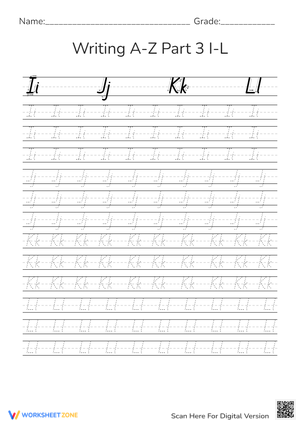
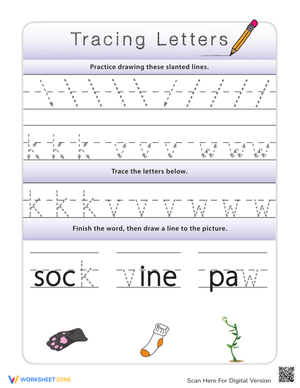
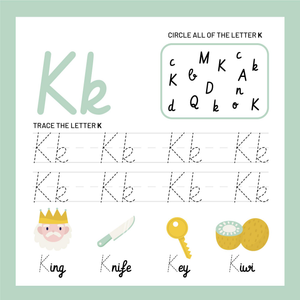
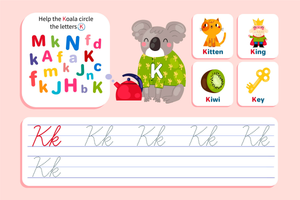
Letter K trips up more first graders than teachers expect. The diagonal strokes that meet at a single point on the vertical line ask young writers to coordinate direction, angle, and pencil pressure all at once. Unlike round letters or simple verticals, K has no forgiving curve to fall back on, so students often produce a shape that looks close but is technically incorrect. A worksheet set built specifically around letter K gives you a focused way to isolate that challenge instead of folding it into generic alphabet review.
Grade 1 is also the year when handwriting instruction shifts from simple imitation toward independent, automatic formation. Kids are expected to write K in journal entries, labels, and short sentences without a model in front of them. Worksheets that combine tracing, copying, and independent writing prompts help move students from copying what they see to recalling the motor pattern on their own.
Correct Stroke Order for Uppercase and Lowercase K
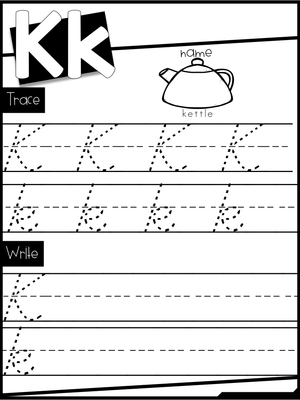
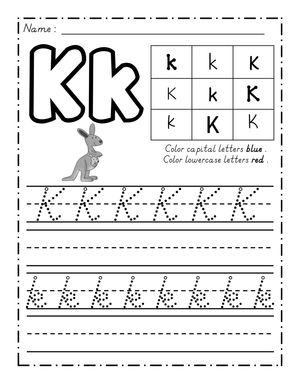
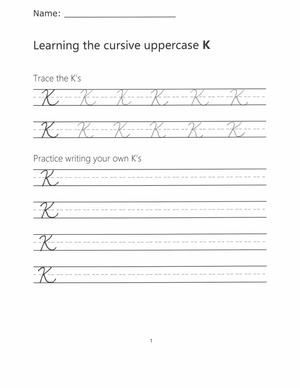
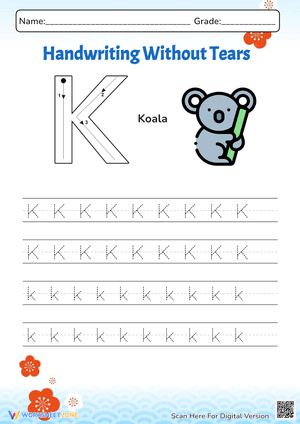
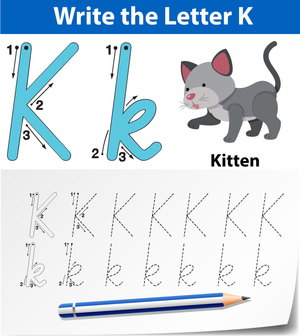
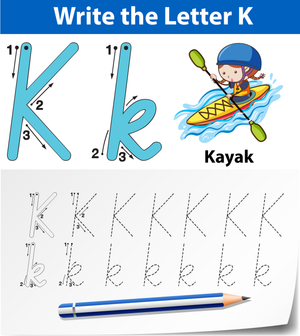
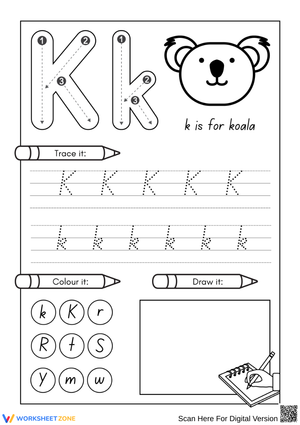
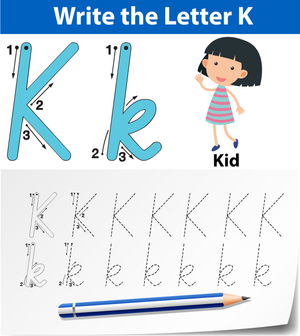
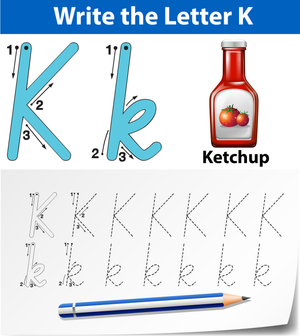
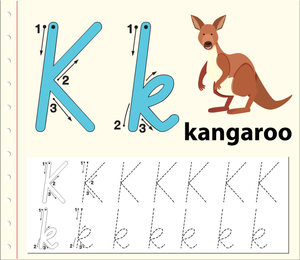
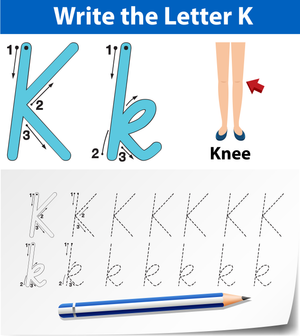
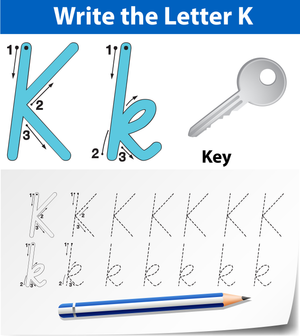
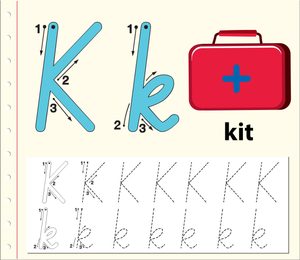
Uppercase K starts with a top-to-bottom vertical line. The second stroke begins near the middle of that line and angles up to the top right corner. The third stroke starts at the same middle point and angles down to the bottom right corner. Lowercase k follows a similar logic: a tall vertical line from the top, then a small diagonal stroke into the middle, and a diagonal stroke out to the lower right that mirrors a small kick.
Worksheets that number each stroke with arrows remove guesswork for students who are still learning left-to-right, top-to-bottom habits. When a sheet only shows the finished letter, kids tend to build the shape out of order, which creates shaky, inconsistent K's later on. Numbered stroke sequences are one of the simplest features to check for when selecting or building a letter K page for your classroom.
Building Letter K into a Daily Handwriting Routine
Short, frequent sessions beat occasional long ones for letter formation. Rather than a single 30 minute handwriting block once a week, first grade classrooms get better results from brief daily practice woven into morning work, transitions, or literacy centers.
Guidance from Keys to Literacy notes that kindergarten and grade 1 classrooms typically benefit from about 10 to 15 minutes of direct letter formation instruction each day, with weekly totals in the 50 to 100 minute range spread across short sessions rather than one long block. That framing matters for lesson planning: a two-minute letter K warm-up repeated daily across a week does more for automatic recall than a single extended practice period.
A workable weekly sequence might look like this:
- Day 1: Model uppercase K stroke by stroke, then guided tracing
- Day 2: Independent tracing plus first unaided attempts
- Day 3: Lowercase k formation with the same stroke-by-stroke model
- Day 4: Mixed uppercase and lowercase practice within short words
- Day 5: Quick dictation check and self-correction
Classroom Implementation
Keep a simple system for tracking which students have moved from guided tracing to independent writing on letter K. A basic checklist with three stages, guided, supported, and independent, lets you regroup students quickly for a short reteach without redesigning your whole schedule. Students who need more repetitions can rotate through the same worksheet format at a center while the rest of the class moves ahead to new letters.
Store completed letter K worksheets in a simple writing folder so you and families can see formation quality change over the course of the unit. Comparing a worksheet from week one against week three gives concrete evidence of progress and makes report card or conference conversations about handwriting far more specific than a general comment about neatness.
Build in a brief self-check step at the end of each session. Ask students to circle their best-formed K on the page and put a small dot beside one they think needs more work. This kind of light reflection takes under a minute but builds the habit of noticing letter quality, which carries over to independent writing tasks well beyond the K unit.
Frequently Asked Questions
1. How much time should grade 1 teachers spend on letter K handwriting practice each day
Plan for roughly 10 to 15 minutes of direct, focused practice on letter K within your daily handwriting block. Short daily sessions build stronger retention than one long weekly practice period.
2. What is the correct stroke order for writing uppercase and lowercase K
Uppercase K begins with a top-to-bottom vertical line, followed by a diagonal from the midpoint to the top right, then a diagonal from the midpoint to the bottom right. Lowercase k follows the same basic pattern at a smaller scale.
3. How many practice repetitions do first graders typically need to master a new letter
Most first graders need at least 5 to 10 repeated practice opportunities with a new letter, spread across tracing, copying, and independent writing formats, before the shape becomes automatic.
4. How can teachers use letter K worksheets for quick formative assessment of handwriting progress
Collect a single completed worksheet and scan for stroke order accuracy, letter proportion, and consistency across repetitions. This gives a fast snapshot of who needs another guided session on K.
5. What multisensory activities pair well with letter K handwriting worksheets
Tracing K in sand or shaving cream, air-writing the letter with a full arm motion, and forming it with pipe cleaners all reinforce the same stroke pattern taught on the worksheet.