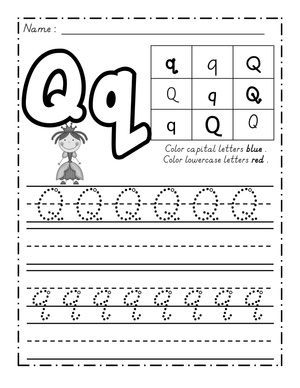
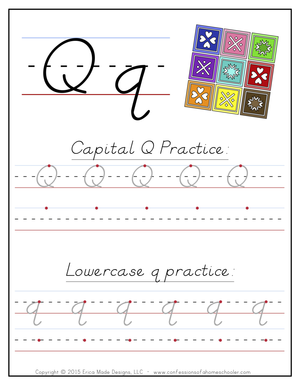
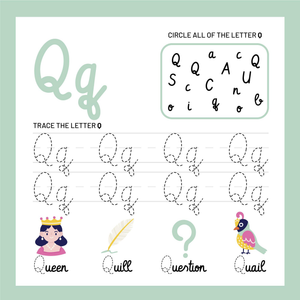
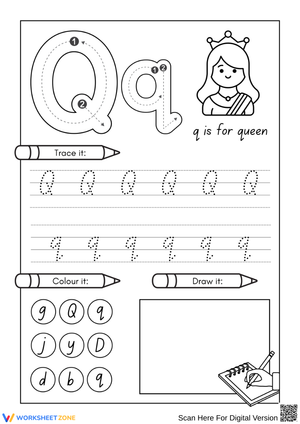
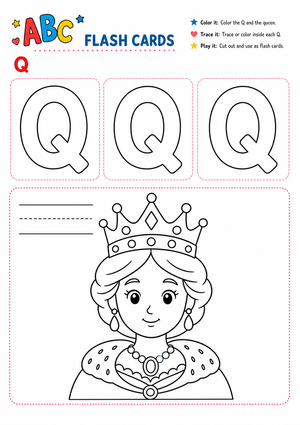
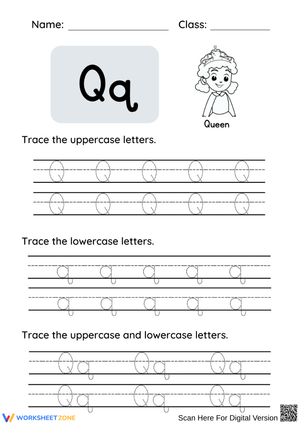
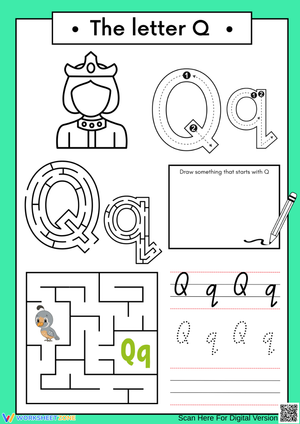
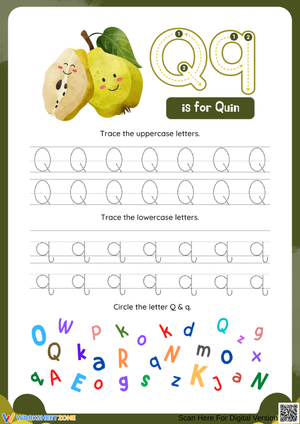
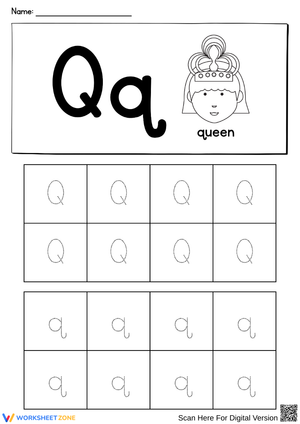
Letter Q rarely gets the same repetition as letters like A, E, or T during early reading and writing tasks. Because Q shows up far less often in the words first graders encounter, students get less incidental exposure to its shape, and that means less automatic motor memory for how to form it. A dedicated letter Q handwriting worksheet gives grade 1 students the focused repetition they would otherwise miss during regular reading practice, which matters most for students who are still building consistent pencil control.
Grade 1 writing expectations commonly call for students to produce uppercase and lowercase manuscript letters from memory with correct formation, not just recognize them. Q, with its circular body and small diagonal tail, asks students to combine a curved motion with a short straight stroke, a combination that trips up many early writers who are used to letters built from simpler, single-direction strokes.
Correct Stroke Order for Uppercase Q and Lowercase q
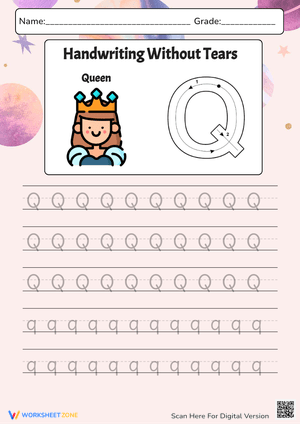
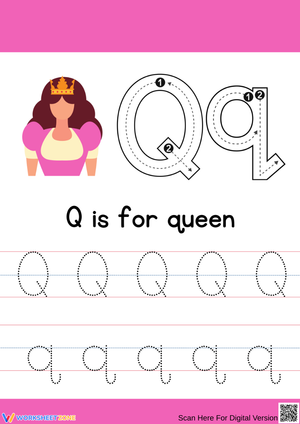
Uppercase Q starts the same way as uppercase O: a continuous counterclockwise curve that begins near the top, circles around, and closes near the starting point. The difference comes at the end, when a short diagonal line is added at the bottom right of the circle, extending slightly outside the round body. Lowercase q follows a similar logic but sits mostly within the lower writing space, with a small circle followed by a straight line that drops below the baseline, similar in feel to lowercase g but without the curved tail.
A simple verbal mnemonic that works well with six and seven year olds is big curve, little line. Saying this phrase while modeling the letter gives students a verbal anchor to pair with the motor pattern, which is especially useful for students who process instructions better through hearing than through watching alone.
Building a Grade 1 Handwriting Lesson Around Letter Q
A dependable lesson sequence for any tricky letter follows four steps: model, trace, copy, and independent write. The teacher first demonstrates the letter on a whiteboard or chart paper while narrating the stroke order out loud. Students then trace guided letter Q worksheets that include start-point dots and directional arrows, which reduce guesswork about where to begin each stroke. After tracing, students copy the letter next to a printed model without the tracing guide, and finally they write it independently on blank or lightly lined space.
Short, frequent practice blocks outperform occasional long ones for building handwriting fluency. A five to eight minute letter Q session repeated across three or four days in a week tends to produce steadier formation gains than a single fifteen minute session, because motor learning depends on spaced repetition rather than one long exposure. Teachers who rotate letter Q into short daily warm-ups alongside other review letters often see fewer reversals by the end of the week than those who treat it as a one-time worksheet assignment.
Teacher Tips for Letter Q Handwriting Practice
- Keep sessions short: five to eight minutes of focused Q practice works better than a long, single worksheet session.
- Say the stroke order out loud every time you model the letter, not just the first time.
- Use start-point dots and directional arrows on early practice sheets, then remove them as students gain confidence.
- Pair Q practice with the /kw/ phonics pattern so the letter connects to meaningful words, not isolated shapes.
- Check tail placement specifically, since a floating or misplaced tail is one of the most common Q errors in grade 1 writing samples.
- Rotate Q back into review across several weeks rather than practicing it once and moving on, since it gets little natural repetition elsewhere in daily reading and writing.
Frequently Asked Questions
1. How many practice sessions does a first grader typically need to master letter Q formation?
Most students show noticeably steadier formation after three to five short practice sessions spread across a week or two, though students with more general handwriting difficulty may need ongoing review across several weeks.
2. What is the correct stroke order for writing uppercase Q and lowercase q?
Uppercase Q begins with a counterclockwise circular stroke like an O, followed by a short diagonal line added at the bottom right of the circle. Lowercase q follows a similar circular start with a straight line dropping below the baseline.
3. How should teachers correct common letter Q mistakes like a floating tail or reversed curve?
Point out the specific error, then have the student retrace just that one letter while saying the stroke order out loud, connecting the verbal cue directly to the motor correction rather than simply redoing the whole worksheet.
4. Can letter Q worksheets be used for small-group handwriting review?
Yes. A single Q worksheet works well as a quick, targeted review during a small group session, especially for students who need extra repetition on letters they see less often in daily reading and writing.
5. How does letter Q formation practice connect to phonics instruction for the /kw/ sound?
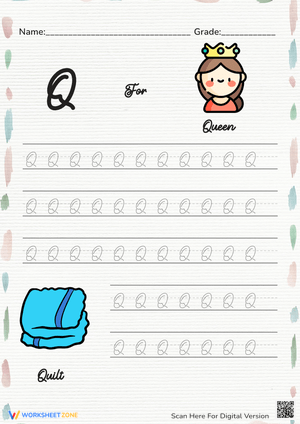
Since Q is almost always paired with u in English spelling, practicing the letter alongside qu words like quilt or queen reinforces both the written shape and its sound pattern in the same lesson, strengthening the connection between formation and meaning.