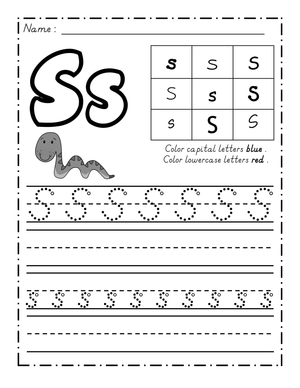
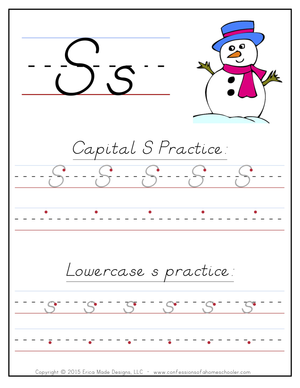
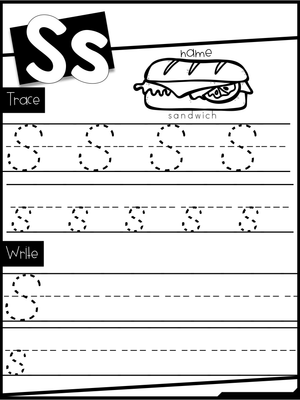
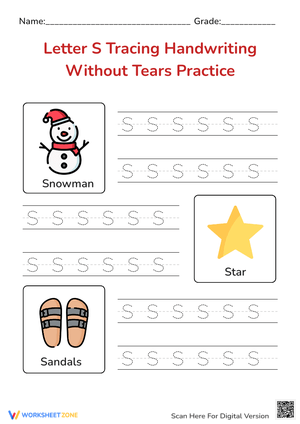
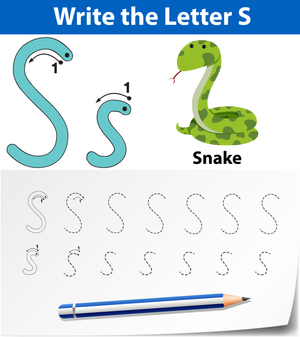
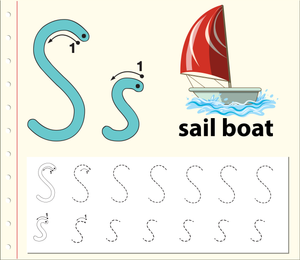
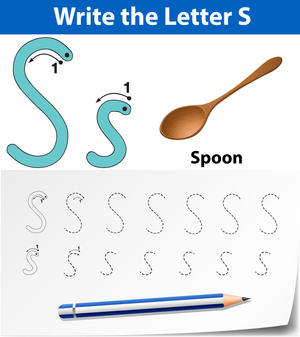
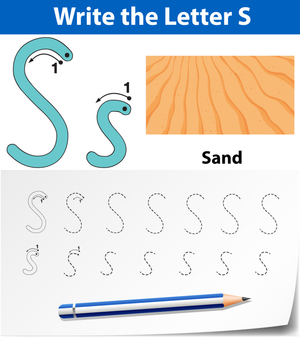
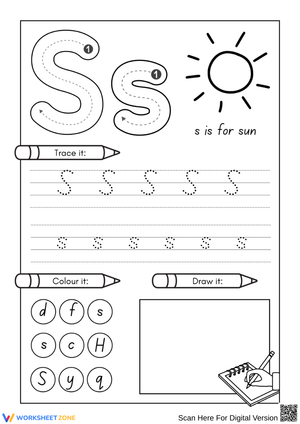
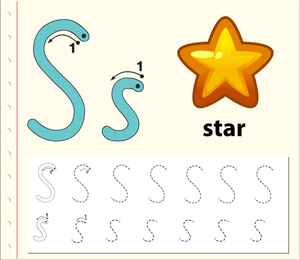
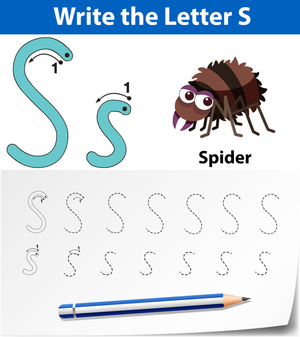
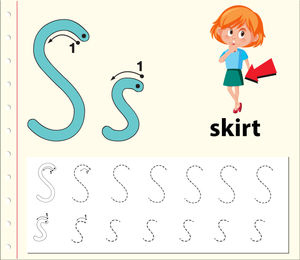
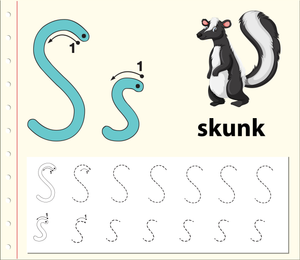
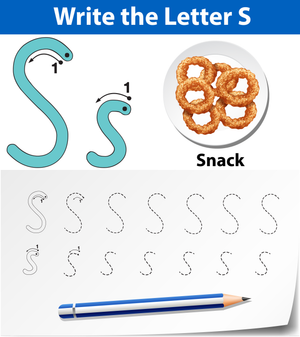
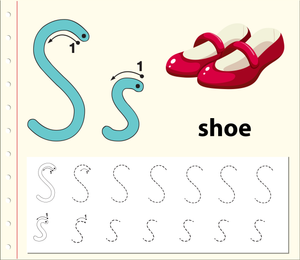
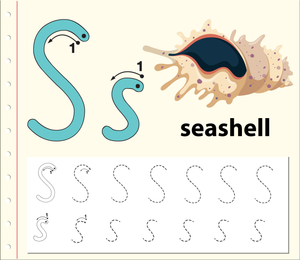
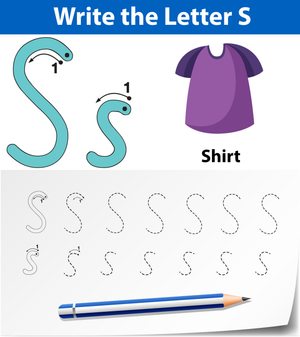
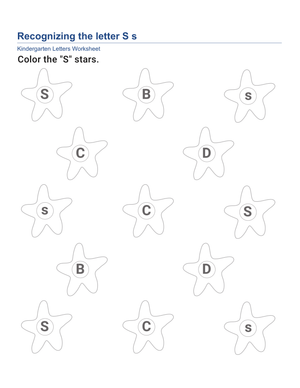
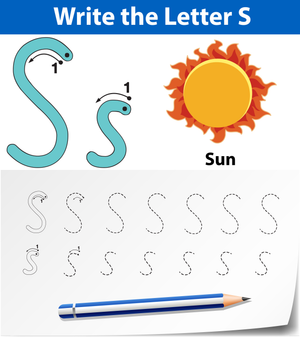
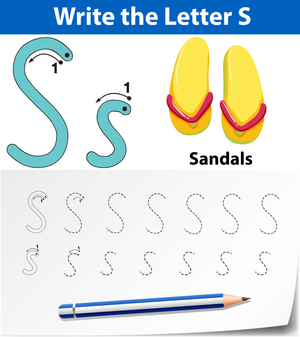
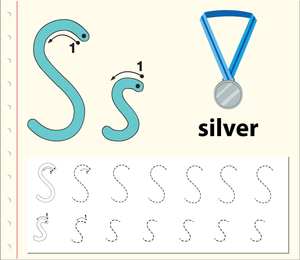
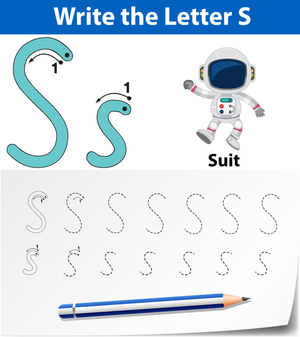
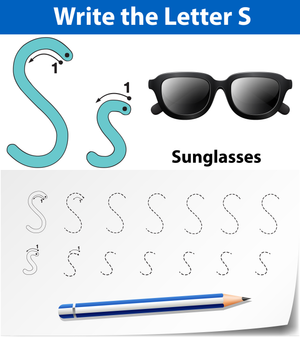
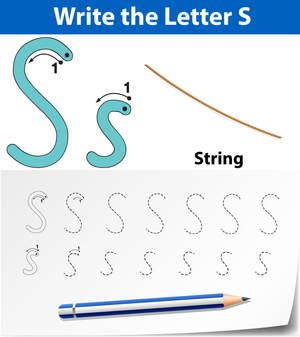
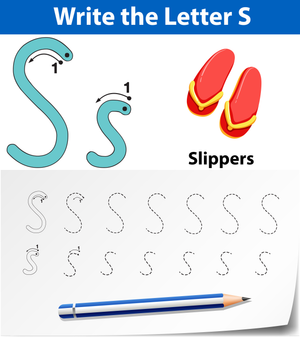
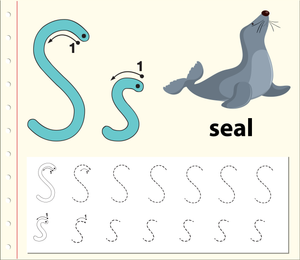
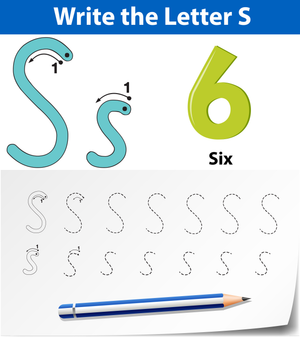
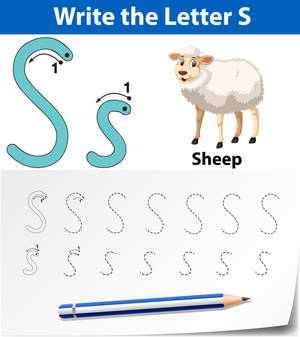
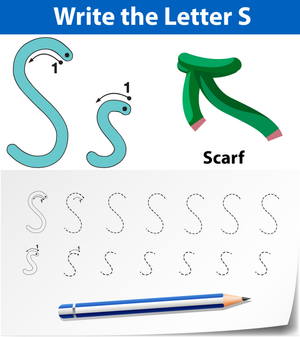
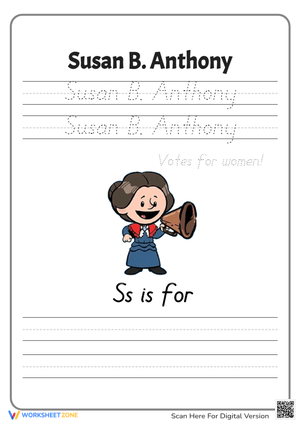
The letter S is one of the harder single strokes for six- and seven-year-olds. It has no straight lines, no clear start-and-stop corner, and its curve reverses direction halfway through. That reversal is exactly where first graders stall, add a loop, or flip the letter backward. Good letter S worksheets for grade 1 give students a repeatable path for that curve so the motion becomes automatic instead of guessed at each time.
When you plan handwriting for a single target letter, the goal is not one long practice block. It is a short, predictable routine that students can run several times across a week, with enough repetitions to move the stroke into motor memory.
Sequence the Practice: Trace, Copy, Recall
The strongest formation routine follows a clear arc. Start with a traced model that includes directional arrows so students see where the curve begins. Move to guided copying, where students write next to a printed model. Then close with a memory-retrieval step: students write S once with no model in front of them.
That final no-model step is the part teachers most often skip, and it is the part that matters most. Formation memory is built by retrieval, not by tracing over an existing line. When a first grader reproduces the S curve from memory and then checks it against the model, the correction is stored far more durably than a page of perfect tracing. Build one memory-recall box into every letter S worksheet you use.
Pair the retrieval step with immediate feedback. A quick thumbs-up or a circled best attempt tells the student which S to repeat, which keeps them practicing the correct shape instead of drilling an error.
Classroom Implementation
Here is a five-minute daily routine that fits whole-class time or a literacy center. First, model the S on the board while narrating the stroke: "start at the top, curve back, then swing forward." Second, students air-write the letter three times with you. Third, they complete the tracing and guided-copy rows on the worksheet. Fourth, they write one S from memory in a blank box. Fifth, they circle their best attempt for self-evaluation.
For small-group intervention, slow the same sequence down and add a tactile step before the worksheet, such as tracing S in a sand tray. For early finishers, extend the page by having them write short /s/ words or list picture words that start with S. This keeps one worksheet flexible across your whole range of writers without printing separate materials.
Effective first-grade handwriting instruction consistently includes adult modeling, steady visual and verbal cues, repeated practice with immediate feedback, peer modeling, and student self-evaluation. The routine above hits each of those in five minutes.
Use a Completed Worksheet as a Quick Check
A finished letter S page is a fast formative assessment. Scan the independent-writing box, not the traced rows, since that is where you see what a student can do without support. Look for three things: correct starting point, a single clean curve without loops, and consistent size on the line.
Sort completed pages into a quick two-pile check. One pile shows a legible, correctly formed S from memory and is ready to move on. The other shows reversals, extra loops, or an unclear start, and those students go into tomorrow's small group. This takes about a minute per class set and tells you exactly who needs another round of practice.
Frequently Asked Questions
1. How much classroom time should first-grade teachers spend on letter S practice each week?
Plan short, frequent sessions rather than one long block. Research recommends 50 to 100 minutes of weekly handwriting across grades K-3, and most first-grade teachers report about two hours per week overall. For a single letter like S, five to ten minutes a day is plenty.
2. What is the most effective way to teach correct letter S formation?
Combine directional arrow cues with a memory-recall step. Students trace, then copy, then write S once with no model and check it against the printed example. That retrieval-plus-feedback loop builds formation memory far better than tracing alone.
3. How can letter S worksheets be used for both instruction and quick assessment?
Use the same page twice. During instruction, students trace and copy with support. Afterward, use the independent-writing box as a one-minute legibility check, looking at the starting point, the curve, and size on the line to decide who needs reteaching.
4. What multisensory activities pair well with letter S handwriting worksheets?
Sand or shaving cream tracing, air writing, and textured tactile letters all reinforce the reversing S curve. Add these before or alongside the worksheet so students feel the motion, aiming for five to ten varied practice attempts per letter.
5. How do letter-writing worksheets like letter S support early reading?
There is a measurable link between letter-naming fluency and letter-writing fluency. When students say the /s/ sound and name picture cues while writing, the handwriting routine also strengthens the sound-symbol knowledge they use to decode during reading.