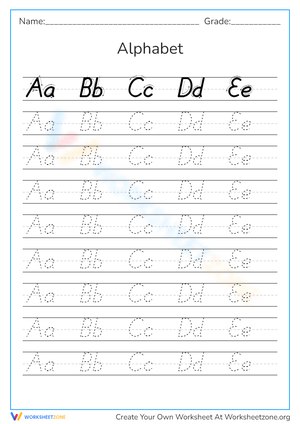
These 1st grade letter b handwriting printable worksheets give first graders structured, repeated exposure to one of the most visually confusing letters in the lowercase alphabet. Each worksheet focuses on a specific layer of formation — stroke sequence, letter height, or beginning-sound connection — so teachers can assign based on where a student is actually struggling rather than moving the whole class through a single sequence at the same rate.
What Each Worksheet Covers
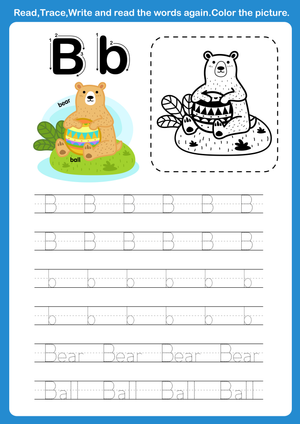
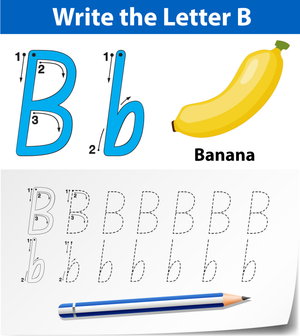
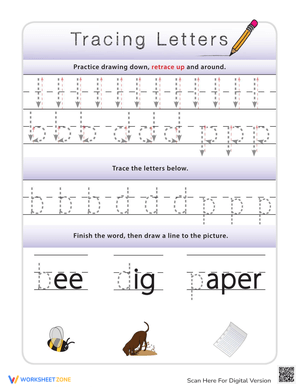
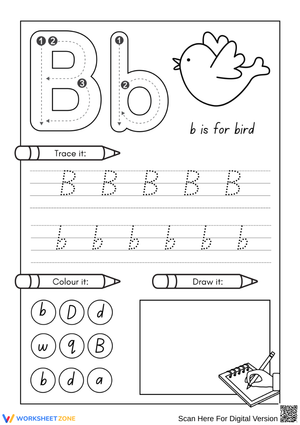
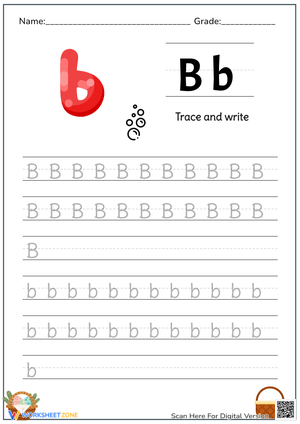
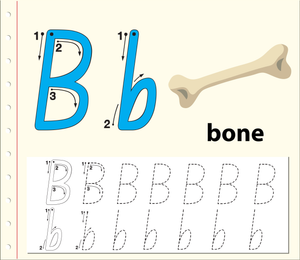
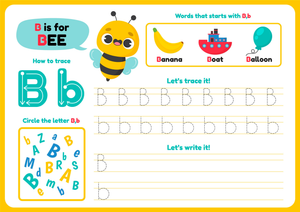
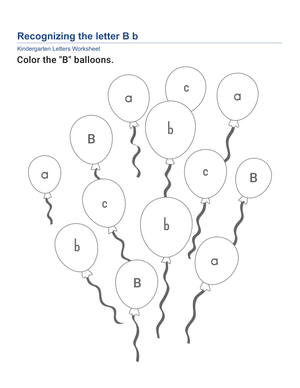
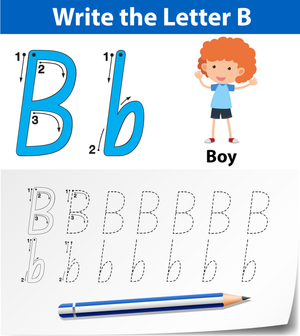
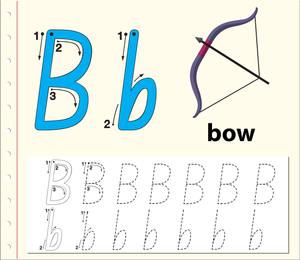
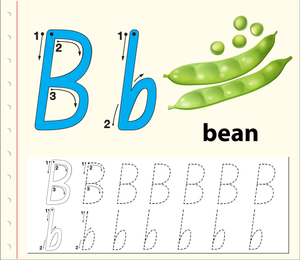
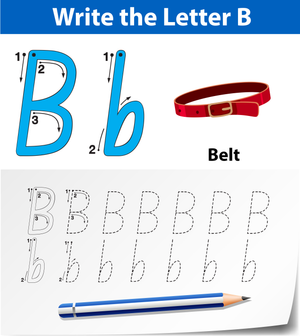
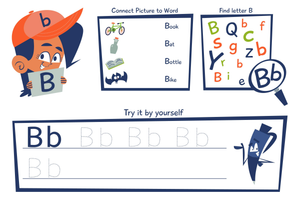
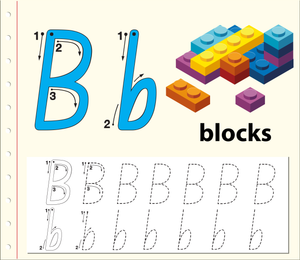
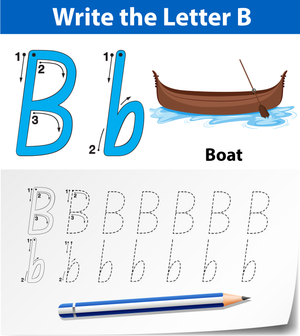
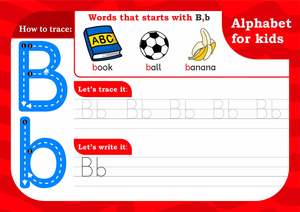
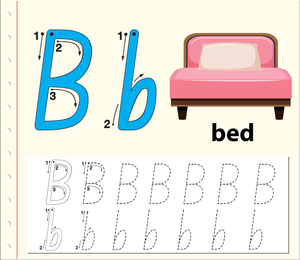
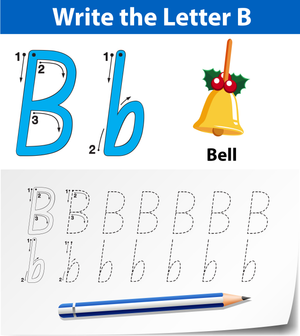
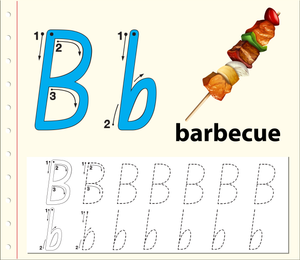
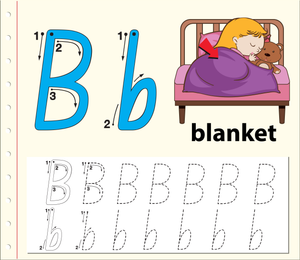
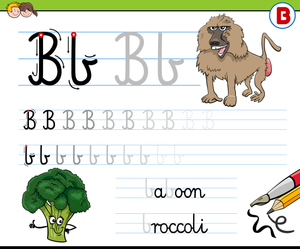
The 1st grade letter b handwriting printable worksheets in this set move through formation in a deliberate order. Worksheets that introduce isolated letter practice use starting dots and directional arrows to make the two-stage stroke explicit: a tall vertical line pulled from the headline to the baseline, followed immediately by a forward-facing bump that closes at the baseline. Later worksheets layer in beginning-sound application — students write the letter beside pictures of a boat, a bear, or a bus — which connects the motor practice to phonics rather than letting it function as a purely mechanical exercise. A dedicated group of discrimination worksheets places b alongside d, p, and q in varied arrangements and asks students to identify, circle, or sort only the b, an exercise that demands visual-spatial attention in a way that isolated formation practice cannot.
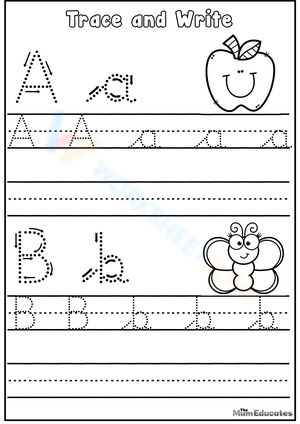
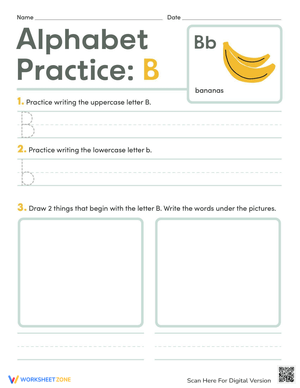
- Trace-and-copy rows for both uppercase and lowercase b, introduced in separate worksheets
- Starting-dot and directional-arrow guides on every formation line
- Initial-sound picture pages connecting /b/ to written letter form
- Sentence-completion lines using high-frequency b words (big, but, by, bus)
- b/d/p/q discrimination and sorting activities
Frequent Student Errors Worth Watching For and Correcting
The reversal problem is the one teachers brace for, but the error pattern underneath it is worth naming precisely. Most students who write d when they mean b are not randomly flipping the letter — they are drawing the circle first and then attaching the vertical line. The finished shape comes out as a d because the bump ended up on the left side of the stick. The fix is not more tracing; it is changing the motor plan entirely. Students who internalize that b always begins with a top-to-bottom vertical stroke, every single time, almost never produce a reversal. The bump is always added after the line, and the line always starts at the top. When teachers observe a student drawing the circle before the stick during independent practice, that is the moment to redirect — not after the page is finished and the habit has been reinforced six more times.
A second error pattern appears in letter size. Students who attach the bump too high — above the midline rather than between the midline and baseline — produce a shape that reads visually as an elongated loop rather than a recognizable b. Worksheets with clearly printed midlines and baselines make this error immediately visible and give students a concrete boundary to work within rather than estimating placement by eye.
Why the Continuous Stroke Matters at This Age
First graders are still building the fine motor control required to place a pencil accurately on a specific line, pause, reposition, and resume — all while holding a letter form in working memory. When a student lifts the pencil between the vertical stroke and the bump, working memory must carry both the unfinished letter and the instruction about where to continue. That is a heavier cognitive load than it appears on the surface. Forming the letter in a single continuous movement — down the tall line, back up to the midline, then forward and around to close at the baseline — reduces the number of mid-letter decisions the hand has to make. Once that movement becomes automatic, a student's attention shifts to word-level and sentence-level thinking, which is where first-grade composition actually lives.
How to Work These Worksheets Into Your Lesson Plans
These 1st grade letter b handwriting printable worksheets fit naturally into three distinct moments in the school day. The first is the ten-minute transition after morning meeting, when students need a low-stakes task that settles their attention before the reading block begins. A single row of isolated letter formation — not the full worksheet — takes about four minutes and provides a clean bridge into phonics instruction. The second is small-group rotation time, where the discrimination worksheets work especially well as a targeted intervention. Pulling four or five students who share the b/d confusion and working through one discrimination worksheet together is more efficient than re-teaching the full class and directly reaches the students who need it most.
The third use is the Friday review block, when spaced retrieval has more instructional value than introducing new content. Asking students to complete a sentence-level b worksheet at the end of the week — after b was introduced on Monday and practiced midweek — takes advantage of the spacing effect in a way that massed practice on a single day cannot replicate. The difference in retention is visible in the following week's writing samples.
Adjusting the Worksheets Across Ability Levels
Students who freeze before a pencil touches paper need a different entry point than the trace-and-copy row. Before they attempt any written work, have them stand and air-write the letter using their whole arm, crossing the body's midline. A small sand tray or a thin layer of shaving cream on a tray provides tactile feedback that paper cannot offer and removes the performance pressure of producing a permanent mark. Once the gross motor movement is consistent, the step down to a lined worksheet feels far less threatening, and the stroke they bring to the paper is usually cleaner than anything achieved by starting at the pencil-on-paper stage.
For students who have already internalized basic formation, the 1st grade letter b handwriting printable worksheets include sentence-completion and discrimination tasks that embed the letter in authentic reading and writing contexts. These students do not need more trace-and-copy lines. Connecting their practice to decodable texts that feature b-initial and b-blend words keeps them engaged and reinforces the sound-symbol work happening in phonics at the same time, rather than treating handwriting as a subject disconnected from everything else in the literacy block.
Standard Alignment
These worksheets address CCSS.ELA-LITERACY.L.1.1, which requires first graders to print all upper- and lowercase letters with legibility. In classroom terms, this standard sits at the intersection of foundational literacy and written language production — it is typically addressed not in a standalone handwriting period but woven through the daily writing block. Teachers who embed these worksheets into phonics instruction and independent writing rotations see the standard reinforced across multiple contexts each day. The discrimination and sentence-level worksheets also support early decoding application, since students must form b correctly to write the high-frequency and decodable words that anchor their beginning reading instruction.
Frequently Asked Questions
Why does my student keep writing d instead of b even after practicing many times?
Watch the student write in real time rather than reviewing the finished page after the fact. If they are drawing the oval first and attaching the vertical line afterward, the letter will almost always come out as a d — regardless of how accurately they can identify b on a flashcard or word wall. Redirect to the top-down vertical stroke as the non-negotiable first move, using a consistent verbal cue like "bat first, then ball," and reversals typically resolve within one to two weeks of in-the-moment correction during actual writing.
Should uppercase B and lowercase b be introduced in the same lesson?
Separate introduction is strongly recommended. The motor plans differ in a meaningful way: uppercase B requires two bumps on the right side of a vertical line and involves intentional pencil lifts, while lowercase b is formed in a single continuous swing with no lift at all. Teaching both forms in the same session raises the likelihood that students blend them or carry the wrong movement pattern into whichever form they practice second. Once both have been explicitly taught and practiced in isolation, a combined worksheet asking students to write each form and use both in a sentence helps them understand when each belongs in real writing.
How much daily practice does a first grader actually need to build letter automaticity?
Ten to twelve minutes of focused, observed practice produces stronger results than twenty minutes of unsupervised copying. Muscle memory builds from quality repetitions, not sheer volume. A student who forms six correct b letters while a teacher watches and gives immediate, specific feedback — "your bump is starting above the dotted line, try again from here" — will internalize the stroke far more reliably than a student who fills two rows alone while a flawed pattern goes unnoticed and gets cemented into habit.