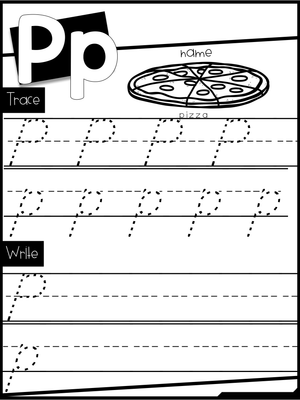
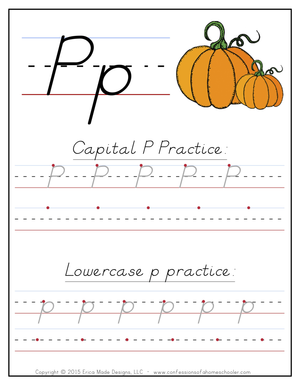
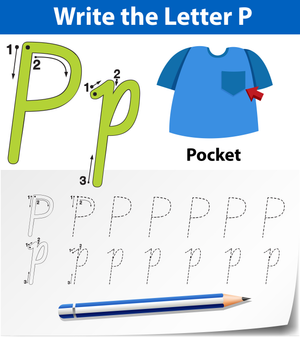
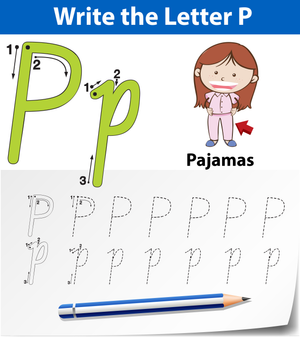
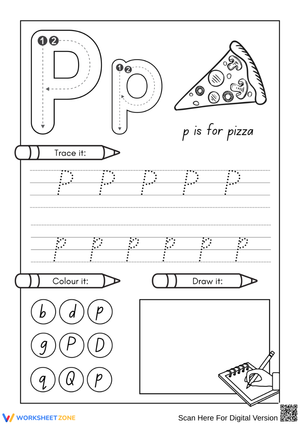
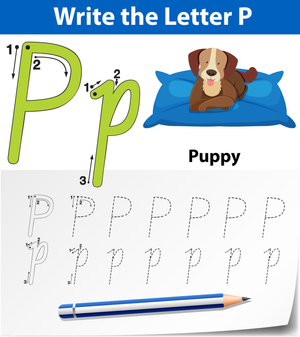
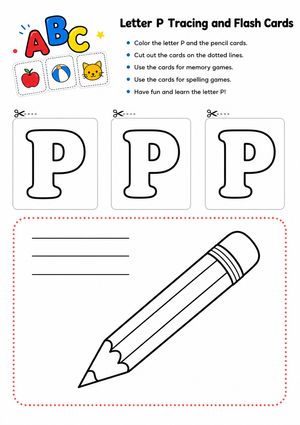
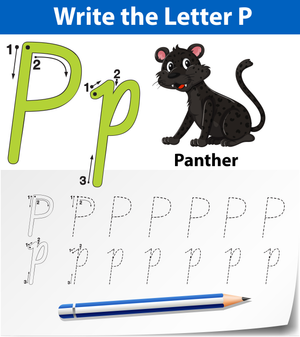
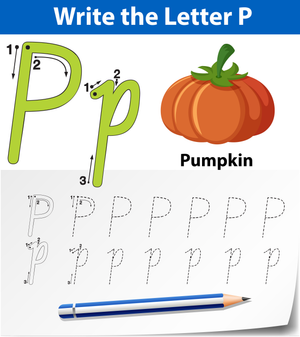
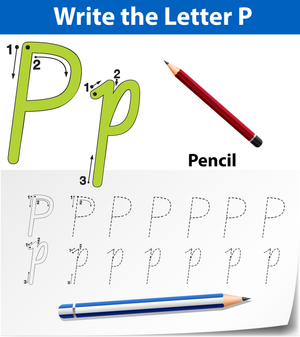
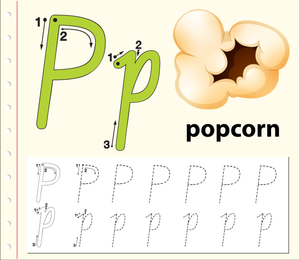
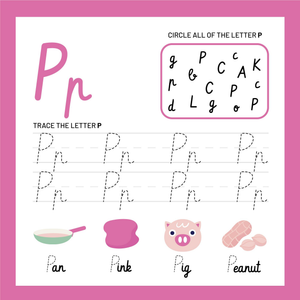
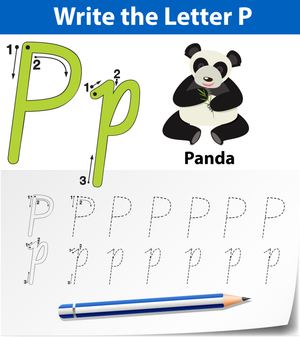
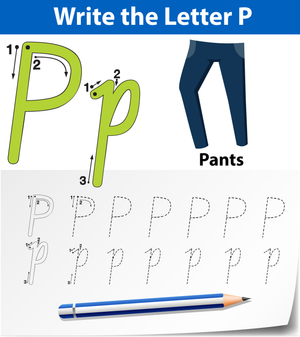
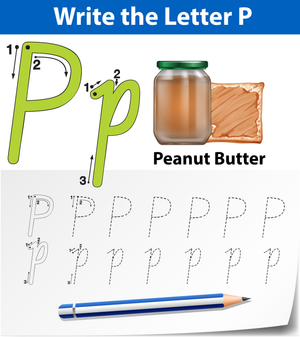
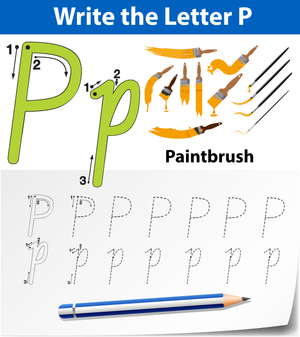
These 1st grade letter p handwriting worksheets give teachers a targeted set of practice materials for one of the genuinely tricky letters in the primary alphabet. Lowercase p is a descender — it drops below the baseline — and that spatial relationship is new territory for most first graders coming out of kindergarten. The set covers both uppercase and lowercase formation, letter discrimination against b, d, and q, and phonics-integrated writing tasks that connect the stroke to the sound.
The Specific Skills Targeted Across the Set
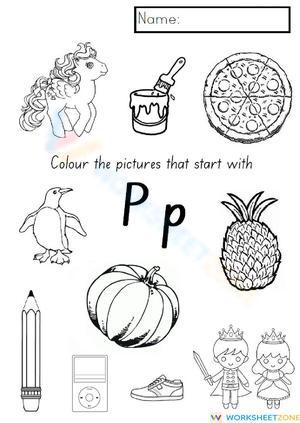
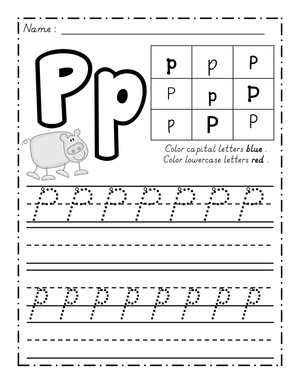
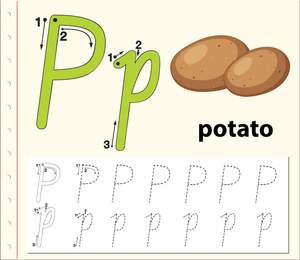
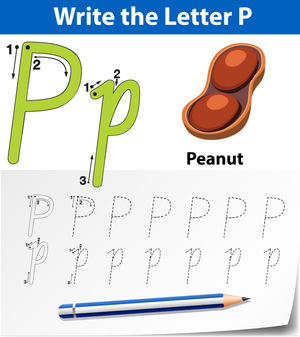
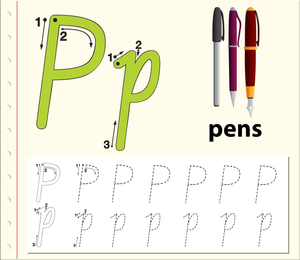
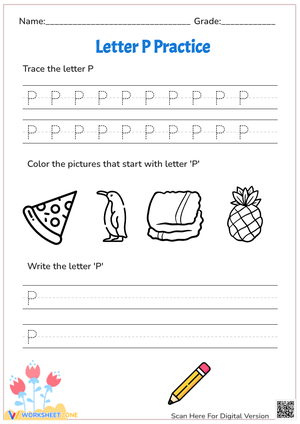
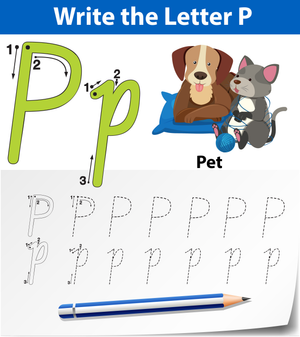
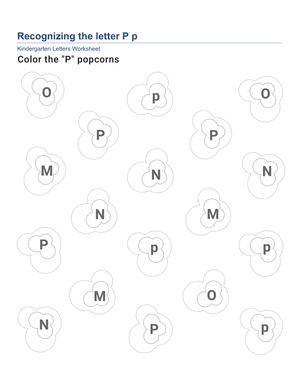
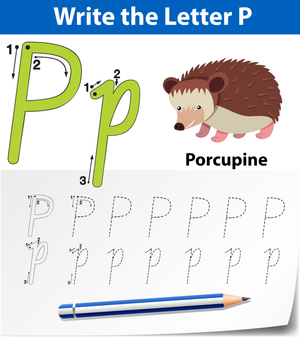
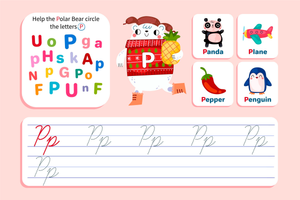
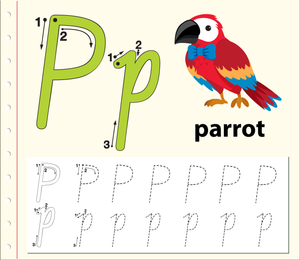
Each worksheet addresses a distinct part of letter P formation. Some worksheets focus on uppercase P — two strokes, a vertical pull-down from the top line and a bump that stops exactly at the midline — while others work exclusively on the lowercase form, where the stroke sequence demands that students begin at the midline, pull past the baseline into the descender space, retrace the line back up, then curve right to close at the baseline. Several worksheets pair tracing rows with open practice lines, so students move from guided repetition to independent production within a single sitting. A handful target letter discrimination: students circle, mark, or sort the letter p from among visually similar letters — b, d, and q — which directly addresses the most common confusion pattern in first-grade writing. Phonics-integrated worksheets ask students to write p beside pictures of words like pig, pumpkin, and pencil, connecting the physical stroke to the /p/ sound in a way that supports early spelling alongside handwriting.
Common Errors to Anticipate and Correct
The b/d/p/q confusion persists through first grade because all four letters share the same two visual parts: a vertical line and a round bump. Students who write b correctly on Monday morning will still produce a d or q when their attention shifts to what a word says rather than the form of the letter they are writing. With p specifically, the most frequent error is starting the stroke at the baseline instead of the midline — students pull the line down, form the bump, and end up with a shape that looks plausible until you measure it against the ruling. The second pattern: students draw the bump as a separate stroke rather than retracing the descender back up, which produces a shape that reads as b on quick visual inspection. A close look at student papers reveals which error is happening because the bump placement differs — b's bump sits above the baseline while p's bump sits on it. These 1st grade letter p handwriting worksheets include discrimination activities specifically because catching that distinction visually is a prerequisite to producing it reliably with a pencil.
Why Stroke Sequence Matters More Than Visual Outcome
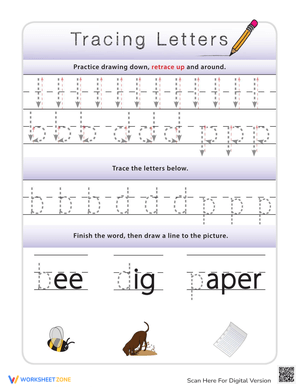
First graders are still building the motor memory that will carry their handwriting for years. When students learn an incorrect stroke order, they write slowly and inconsistently — and errors compound as writing tasks grow longer and cognitive load increases, leaving less attention available for individual letter formation. With lowercase p, the case for teaching the retrace method — pulling down past the baseline, tracing back up the same path, then curving right to close — is that it trains a continuous hand movement rather than a lift-and-reposition habit. Students who learn the lift method frequently produce inconsistently sized bumps because they reestablish pencil contact at a slightly different angle each time, which creates the visual ambiguity that makes p look like b or q under casual inspection. Directional arrows on each tracing row reinforce the correct sequence at the moment students need it, before an incorrect habit forms.
Building These Worksheets Into Your Lesson Plans
The most reliable use pattern is as a brief daily warm-up — six to eight minutes at the start of the literacy block, before whole-group instruction begins. That window is enough for one focused tracing row and one independent practice row; it preserves instructional time while building the spaced repetition that cements motor learning faster than a single long session ever does. Teachers running literacy centers can post one worksheet as an independent station alongside phonics sorts or word-work activities, since the format requires no teacher explanation once students have received direct instruction on stroke order. For classrooms where morning meeting runs directly into writing workshop, these worksheets work as the transition activity — students settle, pick up pencils, and the motor task moves them into writing mode without a separate launch sequence. The 1st grade letter p handwriting worksheets also travel well as take-home support for families who ask how to reinforce handwriting; the directional arrows and labeled reference letters make each worksheet self-explanatory without any coaching from a teacher.
Standard Alignment
These worksheets address CCSS ELA-Literacy L.1.1.a, which requires first graders to print all upper- and lowercase letters. In classroom terms, that standard lives in handwriting instruction during the first half of the year, when most teachers move systematically through the alphabet with direct modeling, guided practice, and independent application. Letter p fits that sequence after students have encountered other bump letters — b and d especially — so the discrimination work built into several worksheets arrives at exactly the moment when confusion between those letters is peaking, not as remediation but as timely reinforcement. Meeting L.1.1.a on letter p also matters for phonics fluency in the same standards strand, since students cannot write CVC words with p in any position efficiently if the letter's form is still uncertain.
Differentiating Across the Range of Learners in the Room
For students still developing fine motor control, the tracing rows carry enough structure to build accuracy without requiring unsupported production. Teachers can direct these students to complete only the tracing rows during independent work and save the open practice lines for side-by-side guided sessions. Students who have already internalized the basic letterform move naturally to the discrimination and phonics-integrated worksheets, which shift the demand from mechanical repetition to visual attention and letter-sound application. For students well ahead in motor development, the extension is writing p inside short word families — pan, pet, pit, pod, pup — which appear in the phonics worksheets and move the challenge from isolated letter formation to letter formation inside running word production, where maintaining consistent form is genuinely harder.
Frequently Asked Questions
Why does my student keep reversing p and b even after repeated practice?
Reversals between p, b, d, and q are developmentally normal through first grade and persist into second for some students. The issue is usually retrieval, not effort — when a student is thinking about what a word means, the brain reaches for a visual image of the letter rather than running the stroke sequence, and if that image is imprecise, any of the four similar letters can surface. The most effective correction is to anchor attention to stroke direction rather than final appearance: p goes down first, b starts at the top and bumps right. Concrete memory phrases help — "p has a tail in the basement" is specific enough to stick. Consistent practice with the discrimination activities in the 1st grade letter p handwriting worksheets gives students repeated side-by-side exposure to p and its look-alikes, which sharpens that retrieval image in a way that tracing rows alone do not.
What is the difference between Zaner-Bloser and D'Nealian lowercase p?
In Zaner-Bloser, the lowercase p uses a straight vertical stroke and a round, closed bump that rests directly on the baseline — clean and upright. In D'Nealian, the letter carries a slight forward slant and the bump exits with a small connecting tail, anticipating the linked strokes students will use in cursive. The core stroke sequence — down past the baseline, retrace up, curve right — is the same in both styles. These worksheets support the directional understanding and spatial placement required by either program; the primary visual difference is the slant, which teachers can address verbally when modeling.
How many worksheets should a student complete before moving on to the next letter?
There is no fixed number. The benchmark is consistent, independent production of a lowercase p that sits correctly on and below the baseline, with the bump closed on the right. For most first graders, that takes several days of short practice — typically four to six separate sittings rather than six worksheets in one afternoon. Massed practice in a single session produces less durable retention than distributed practice across days. The signal that a student is ready to move on is usually visible: they stop glancing at the model before writing, and their letter placement within the ruling is steady across a full row.