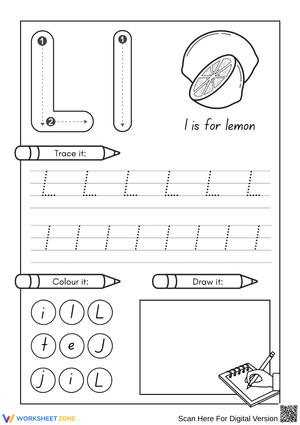
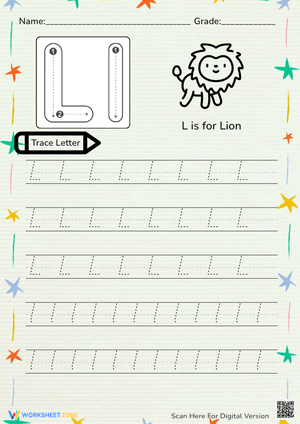
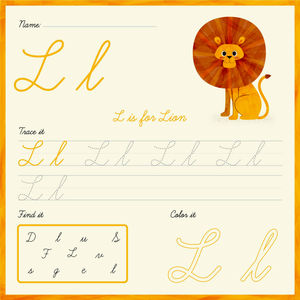
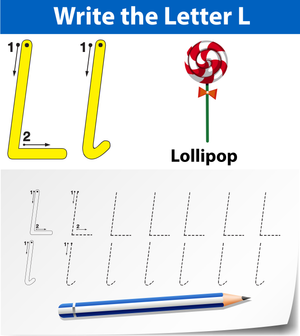
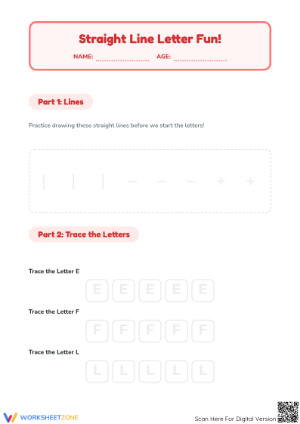
Letter L looks simple on paper, but it's often where first graders reveal shaky pencil control and inconsistent line placement. The tall vertical stroke and the short horizontal base require two distinct motor movements in one letter, which makes it a useful diagnostic letter for teachers checking baseline handwriting skills early in the year. Worksheets built around uppercase L and lowercase l give you a low-prep way to spot which students are still reversing strokes or floating letters above the baseline before those habits become harder to correct.
Grade 1 is also the point where handwriting instruction shifts from broad shape-making to precise, repeatable letter formation tied to writing fluency. Students who build accurate motor patterns for letters like L now tend to write with less fatigue and better legibility later, which matters once sentence writing and journaling ramp up in the spring semester.
Correct Stroke Order for Uppercase L and Lowercase l
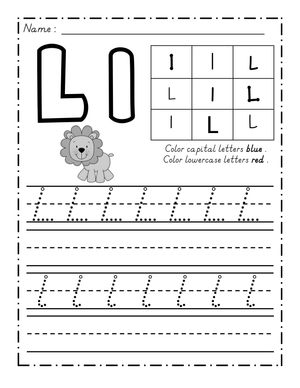
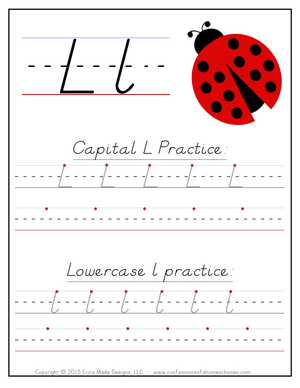
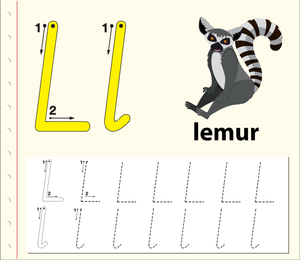
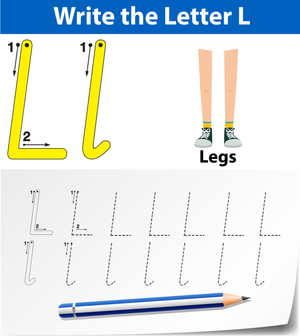
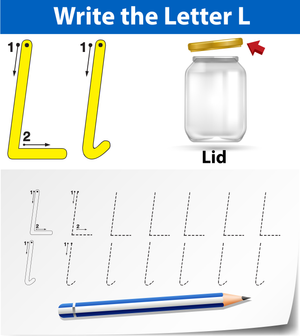
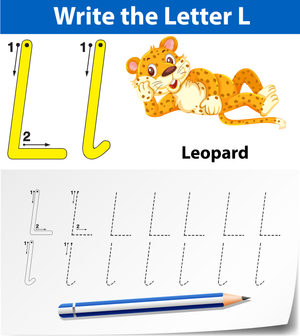
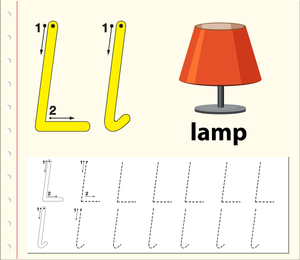
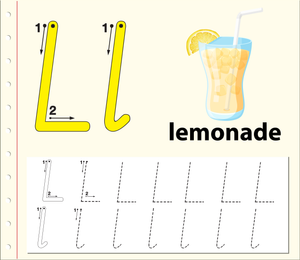
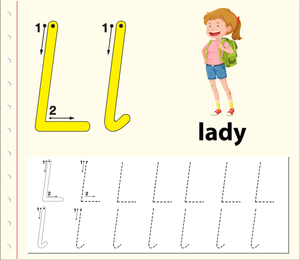
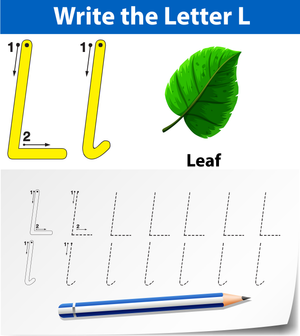
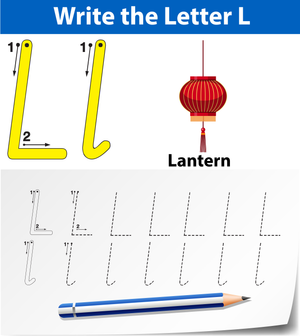
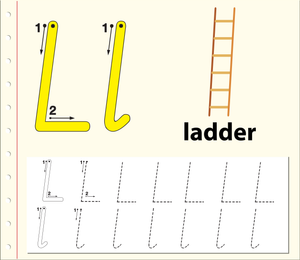
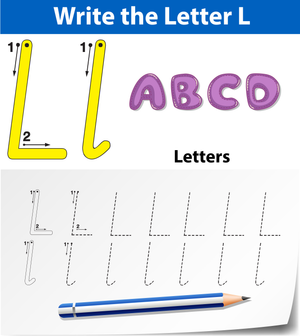
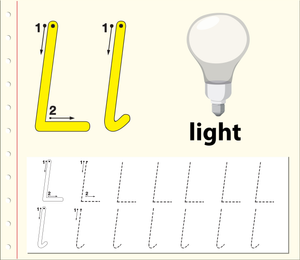
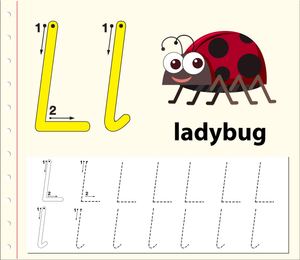
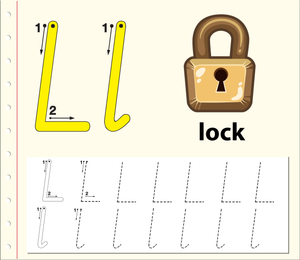
Uppercase L is formed with one continuous path: start at the top line, pull straight down to the baseline, then without lifting the pencil, pull right to form the base. Lowercase l is a single tall stroke from the top line straight down to the baseline, with no lift and no added base. Naming the strokes out loud as students write, such as saying 'down, then across' for the capital, gives them a verbal anchor they can repeat independently once the worksheet support is removed.
Common Grade 1 errors include a base stroke that slants upward instead of staying flat, a lowercase l that stops short of the baseline, and letters that drift below the line entirely. Watching for these specific errors during independent practice, rather than only checking for a finished page, is what turns a worksheet into a real formation check.
Building a Short, High-Frequency Handwriting Routine
Handwriting research consistently favors short, frequent sessions over one long weekly block. Recommendations for grades K-3 generally fall in the 50-110 minute per week range, split into daily five to ten minute segments rather than a single 45-minute lesson. A letter L worksheet fits naturally into that model as a quick warm-up: students trace, then copy, then attempt a few letters from memory, all within one short sitting.
One notable gap shows up in actual classroom practice. A national survey of primary teachers found that while average reported handwriting time was around 70 minutes per week, many classrooms in practice deliver closer to 5-10 minutes, and only about 12% of surveyed teachers felt their college training had prepared them to teach handwriting explicitly. That gap is exactly why a ready-made letter L worksheet, paired with a clear stroke script, removes planning friction on busy mornings.
Classroom Implementation
Keep the daily letter L block predictable so students know the routine without needing new instructions each time. A simple structure that works across many Grade 1 classrooms:
- One minute of verbal stroke description and modeling on a whiteboard or chart
- Two minutes of tracing on the worksheet's guided lines
- Two minutes of independent copying below the traced line
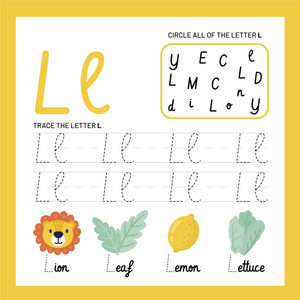
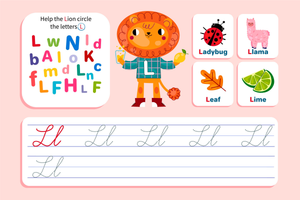
- One minute of a quick word connection, such as writing 'lion' or 'leaf' from a word bank
For students who finish early or need more repetition, keep a small tray of sand or a whiteboard nearby so they can add extra practice without disrupting the group's pace. This also gives you a natural moment to walk the room and note which students need a quick side-by-side model of their own letter versus a correctly formed L, without pulling the whole class off task.
Frequently Asked Questions
1. How many times should a Grade 1 student practice writing letter L before it's mastered?
Most students need roughly five to ten repetitions across different formats, such as tracing, tactile writing, and independent copying, before the formation becomes consistent without a model to follow.
2. What is the correct stroke order for uppercase L and lowercase l?
Uppercase L is one continuous stroke: down from the top line to the baseline, then right to form the base. Lowercase l is a single straight stroke from the top line down to the baseline with no added base.
3. How much time should Grade 1 teachers spend on handwriting instruction each week?
Recommended ranges generally fall between 50 and 110 minutes per week, delivered in short daily sessions of five to ten minutes rather than one long weekly block.
4. What are common mistakes students make when learning to write the letter L?
Frequent issues include a slanted rather than flat base stroke, a lowercase l that stops short of the baseline, and letters that drift below the writing line instead of sitting on it.
5. How can letter L worksheets be paired with phonics instruction?
Adding vocabulary words that start with L, such as leaf, lion, or log, onto the same worksheet lets students connect the letter's sound to its written form while practicing the motor skill.