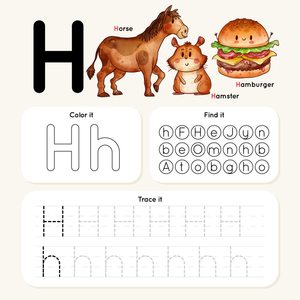
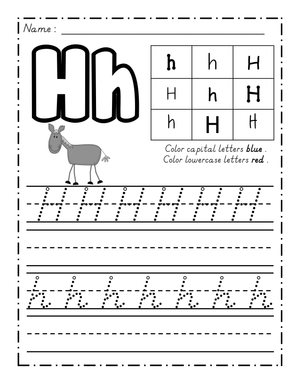
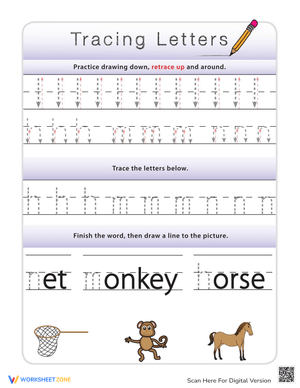
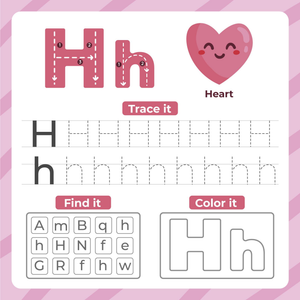
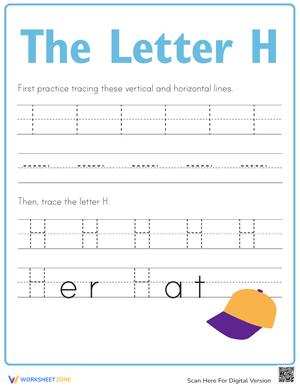
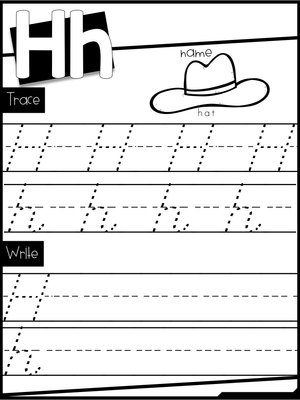
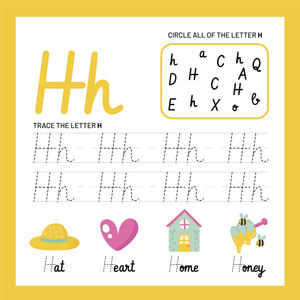
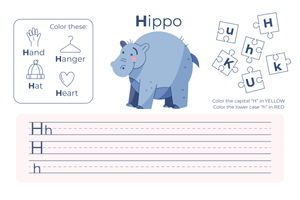
Letter H shows up early in most grade 1 alphabet sequences, and it gives students a chance to practice two tall vertical lines connected by a horizontal bar. That combination builds the same motor control students need for other tall letters like B, F, and E. When a student can form H cleanly, teachers usually see that skill carry over into faster, more confident production of the letters around it. Letter H handwriting worksheets for grade 1 are most useful when they are treated as a quick skill-builder rather than a one-time worksheet to finish and file away.
Building Correct Stroke Order for Uppercase and Lowercase H
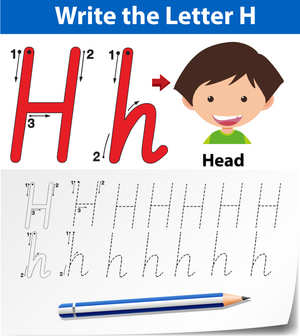
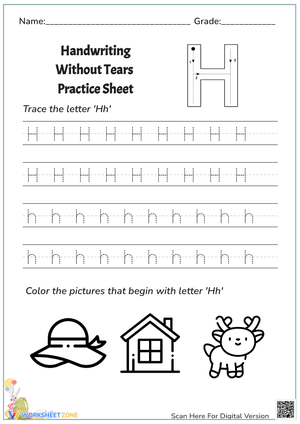
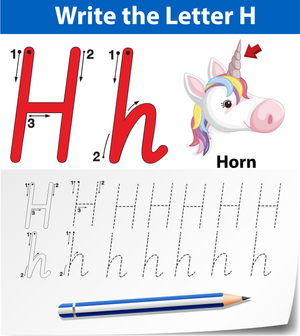
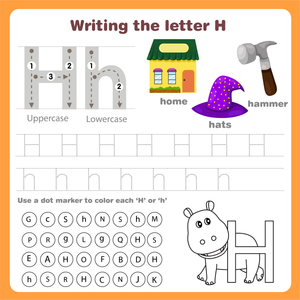
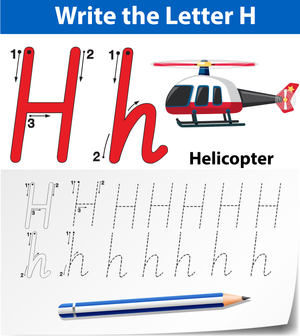
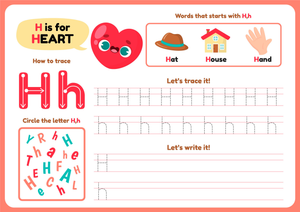
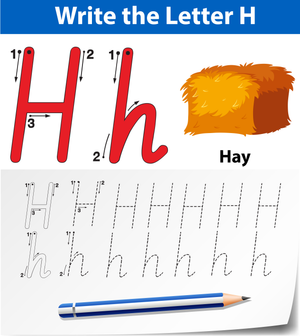
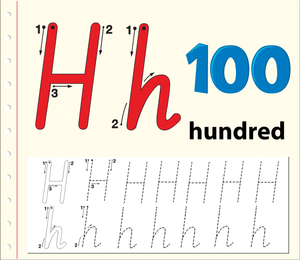
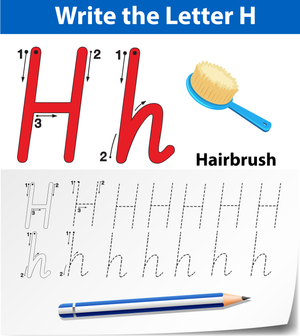
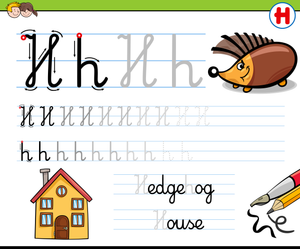
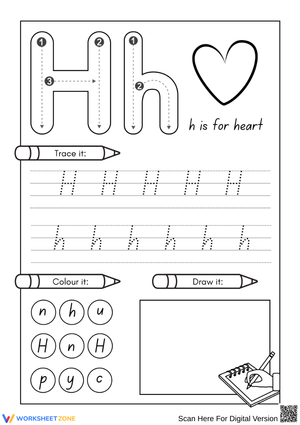
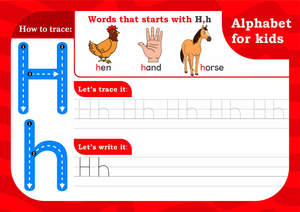
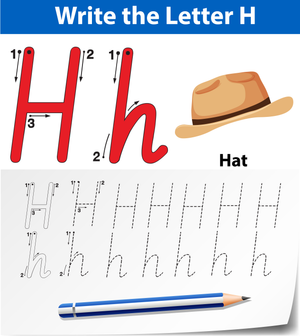
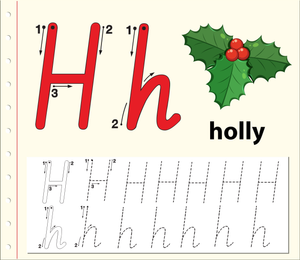
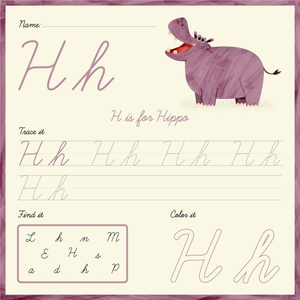
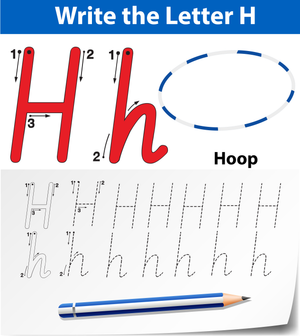
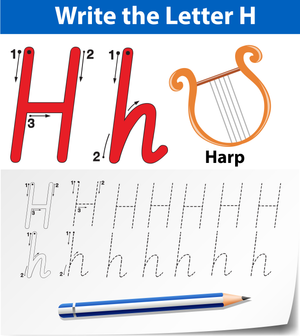
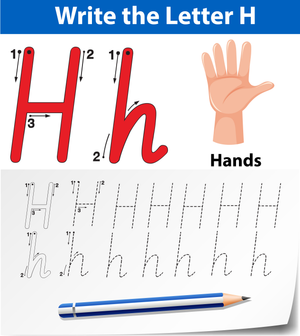
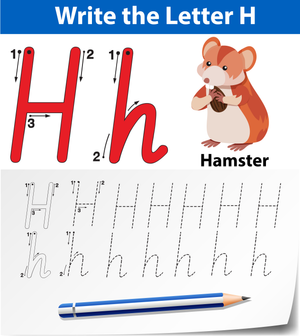
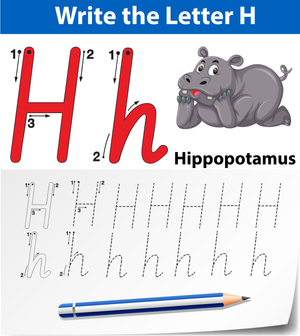
Uppercase H asks a student to make a tall line down, lift the pencil, make a second tall line down, then connect the two with a straight line across the middle. Lowercase h starts the same way with a tall line down, but the pencil does not lift; it curves up and over into a hump before landing back on the baseline. Worksheets that isolate each stroke, rather than asking students to copy the whole letter at once, tend to produce cleaner formation habits. A simple three-step model works well: trace the first stroke only, trace the second stroke only, then trace the complete letter.
Grade 1 students are still building the fine motor strength to control pencil pressure, so expect some wobble in early attempts. What matters most at this stage is stroke sequence and direction, not perfect straightness. Teachers who prioritize sequence first typically see straighter lines follow within a few weeks of consistent practice.
Using Starting Dots and Directional Arrows to Guide Independent Practice
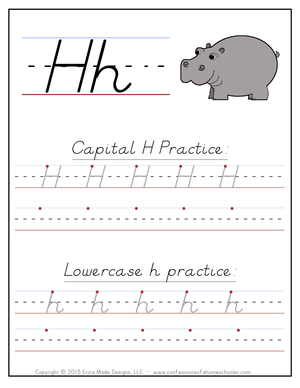
Starting dots and path-of-motion arrows are two of the most effective visual supports on a letter H worksheet because they let a student practice correctly without a teacher standing over their shoulder. A dot marks exactly where the pencil should touch down, and an arrow shows which direction the stroke should travel. This matters especially for H, since students who start at the bottom and pull upward tend to produce shakier, less legible lines than students who start at the top and pull down.
In practice, classrooms that fade starting dots gradually, first removing them from every third letter, then every other letter, see students retain correct formation better than classrooms that remove all visual supports at once. A gradual release model gives the motor pattern time to become automatic before the visual cue disappears completely, which matters most for a letter like H where two separate strokes have to line up.
Fitting Letter H Practice into a Short Daily Handwriting Routine
Handwriting research points to 50-100 minutes per week of instruction in grades K-3, and most of that time works best delivered in short 5-10 minute daily sessions rather than one long weekly block. For a letter H worksheet, that might look like two minutes of teacher modeling on a whiteboard, three minutes of guided tracing, and two to three minutes of independent practice on the worksheet itself. Keeping the session short keeps attention high and prevents the fatigue that leads to sloppy end-of-page letters.
Pencil grasp is worth a quick visual check during this routine. A student gripping the pencil with a fist or with fingers too close to the tip will struggle to control the curved hump in lowercase h, even if they understand the correct stroke order. A 10-second grasp check before independent practice begins can save a lot of re-teaching later.
Frequently Asked Questions
1. How much time should grade 1 teachers spend on letter H handwriting practice?
A single letter H worksheet fits comfortably into a 5-10 minute daily handwriting block, which aligns with the recommended 50-100 minutes per week of handwriting instruction for K-3 classrooms.
2. What are common letter H formation mistakes grade 1 students make and how can teachers correct them?
Uneven leg heights, a misplaced crossbar, and inconsistent spacing are the most common issues. Isolating each stroke during modeling and using starting dots on the worksheet usually corrects these within a few practice sessions.
3. How can teachers support struggling writers without pulling them into a separate session?
Adding extra practice rows to the same worksheet, offering a multisensory tracing option like a sand tray at a station, or pairing a struggling writer with a peer model lets teachers add repetition without disrupting the whole-group routine.
4. How does letter H handwriting practice connect to grade 1 reading and spelling skills?
Writing a letter by hand reinforces the same visual-motor memory used for quick letter recognition, which supports spelling and early reading fluency alongside handwriting legibility.
5. What should teachers look for when assessing legibility on a letter H worksheet?
Check that the letter is recognizable at a glance, that both vertical strokes are similar in height, and that the crossbar sits roughly in the middle rather than near the top or bottom.