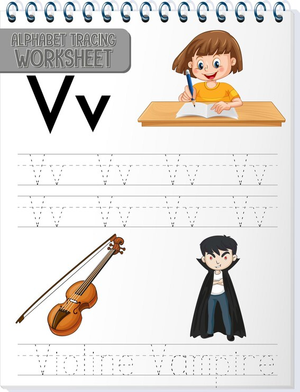
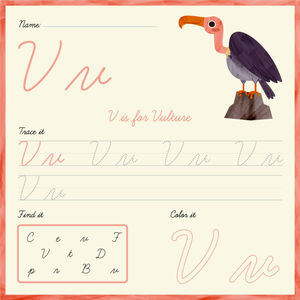
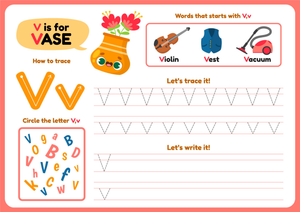
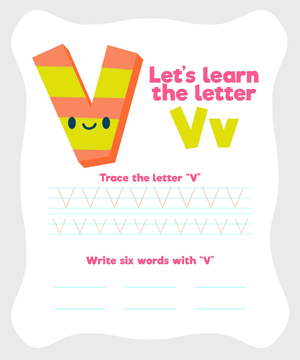
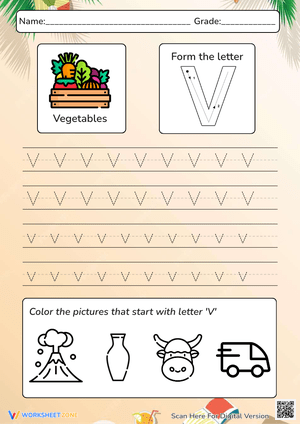
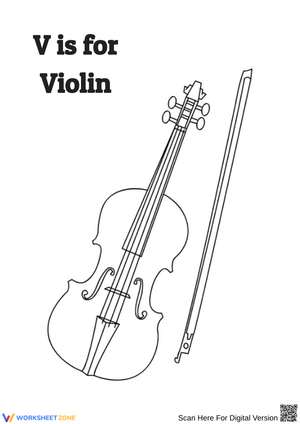
Ask any grade 1 teacher which letters slow students down during handwriting time, and diagonal-stroke letters usually come up fast. Letter V asks a first grader to control two straight diagonal lines that meet cleanly at a point, without the built-in support of a vertical line or a familiar curve. That is a different motor demand than letters like L or O, which rely on single directions or continuous curved motion.
Grade 1 students are still building the visual memory and directionality skills needed to plan where a diagonal line starts, where it ends, and how it should angle toward a partner stroke. A dedicated letter V handwriting worksheet gives students repeated, guided practice with that specific stroke pattern instead of treating V as just another letter in an alphabet packet.
What the Research Says About Diagonal-Stroke Letters
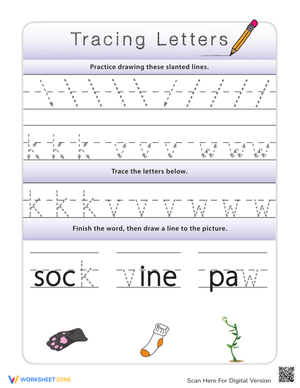
Handwriting researchers commonly group letters by the type of stroke required to form them: straight vertical or horizontal lines, curves, and diagonals. Letters that combine two diagonal strokes meeting at a point, such as V, W, X, and Y, are consistently identified as more demanding for early writers than single-direction or curved letters, because they require more precise motor planning and line control.
This matters for lesson pacing. If a teacher assumes every letter takes the same amount of practice, diagonal letters like V often get shortchanged, and students carry sloppy formation habits into cursive-readiness work later. Treating V as a letter that deserves its own short, focused practice block, rather than folding it into a generic A-Z worksheet, matches what stroke-type research suggests about where first graders actually struggle.
How Letter V Practice Fits a Grade 1 Handwriting Routine
Most grade 1 classrooms run handwriting as a short daily or several-times-weekly routine, often five to ten minutes, layered into morning work or a literacy block rotation. A letter V worksheet slots naturally into that structure as one day's or one week's focus letter, following a sequence that has already covered easier straight-line and curved letters.
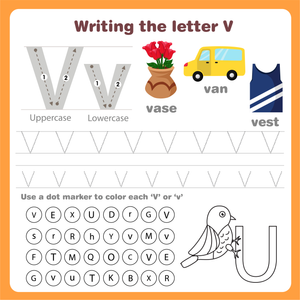
- Whole-group modeling: the teacher demonstrates uppercase and lowercase V on chart paper or a whiteboard, narrating the stroke path aloud.
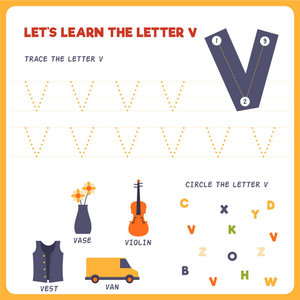
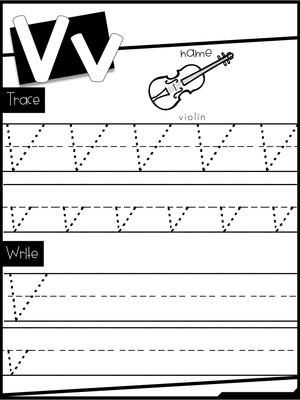
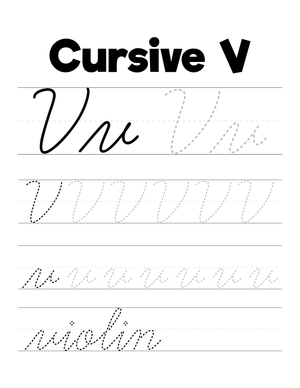
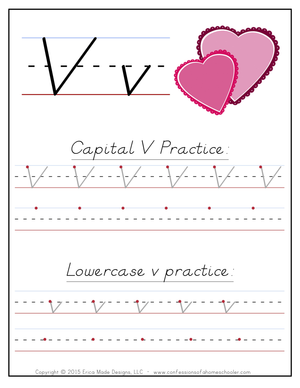
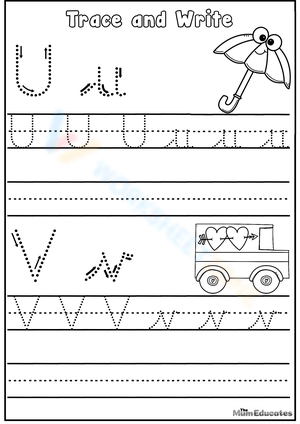
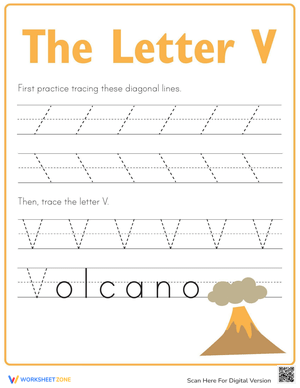
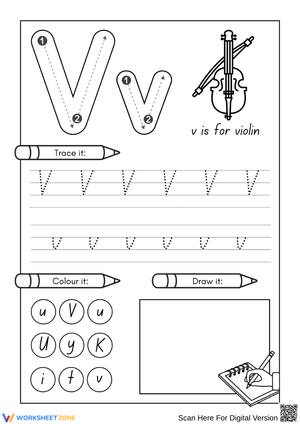
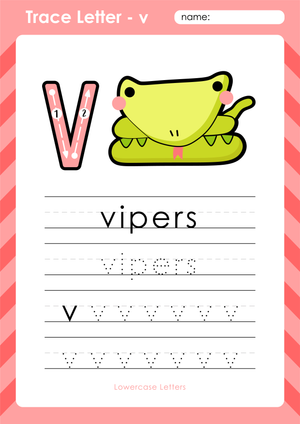
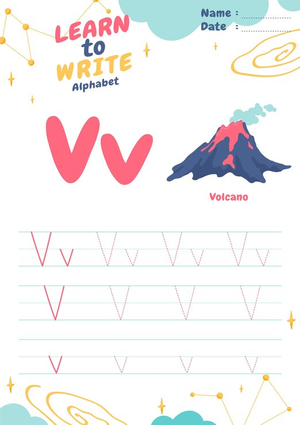
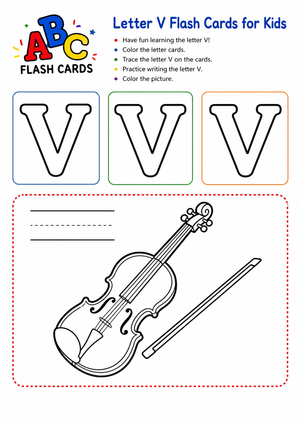
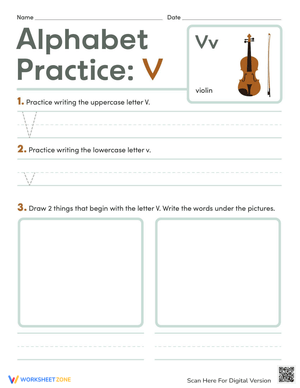
- Guided practice: students trace dotted or faded V models on the worksheet while the teacher circulates.
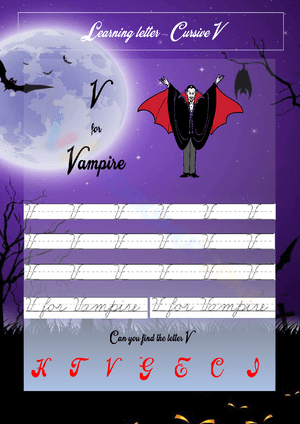
- Independent practice: students complete rows of uppercase and lowercase V without tracing support, building toward automatic recall.
Because the goal is motor memory, not novelty, repetition across a few consecutive days tends to work better than a single isolated worksheet.
What the Data Shows About Handwriting and Later Achievement
According to research summarized in Improving Fine Motor and Handwriting Skills (NWCommons), fine motor skill development in the earliest grades is linked to broader academic outcomes, with associations to reading and math achievement tracked as far as fifth grade, underscoring why structured letter-formation practice like a dedicated letter V worksheet belongs in a first grade routine rather than being treated as optional filler.
Teacher's Guild To Use These Worksheets
To get real value from a letter V worksheet, keep the routine simple and consistent:
- Introduce the letter with a verbal stroke description (down, down, meet at the bottom) before students pick up a pencil.
- Check pencil grip and paper position at the start of the activity rather than after students have already practiced with poor form.
- Rotate the worksheet through a handwriting center so students who need a few extra repetitions can revisit it without disrupting the whole class's pace.
- Send a short version home or use it as an early-finisher option so practice extends beyond the single classroom session.
- Save a sample from each unit so you can compare a student's V formation over time, which is more useful than judging a single worksheet in isolation.
These steps keep the focus on formation quality and pacing, which matters most for a letter as motor-demanding as V, without turning the lesson into a lengthy separate intervention block.
Frequently Asked Questions
1. What is the correct stroke order for writing uppercase and lowercase letter V?
For both uppercase and lowercase V, students start at the top left, draw a diagonal line down to a point at the bottom, then draw a second diagonal line back up to the top right, meeting at that same bottom point.
2. How much time should grade 1 teachers spend on individual letter handwriting practice like letter V?
Short, frequent sessions work best: five to ten minutes of focused practice across two or three days for a diagonal letter like V tends to build stronger motor memory than one long single session.
3. What words can teachers use to reinforce letter V during handwriting practice?
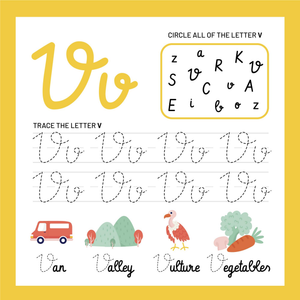
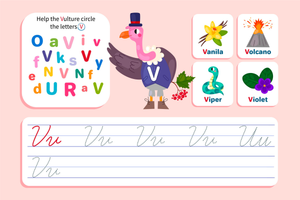
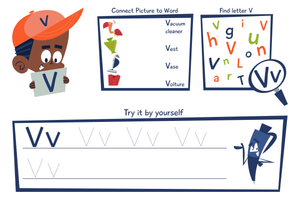
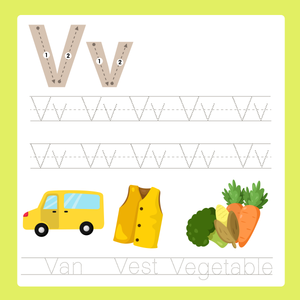
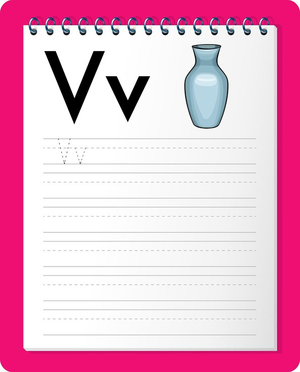
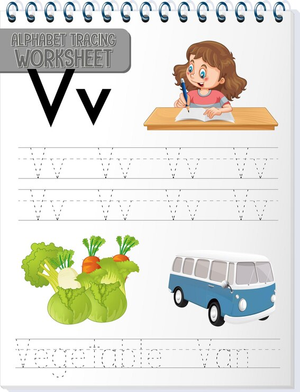
Simple, familiar words like van, vest, vase, vet, and volcano work well because they are easy for grade 1 students to sound out while also reinforcing the letter's beginning sound.
4. How can teachers tell if a student is struggling with letter V formation specifically versus handwriting in general?
If a student forms straight-line and curved letters smoothly but consistently reverses direction, rounds the point, or misjudges spacing only on diagonal letters like V, W, X, and Y, the issue is likely tied to diagonal stroke control rather than a broader handwriting difficulty.