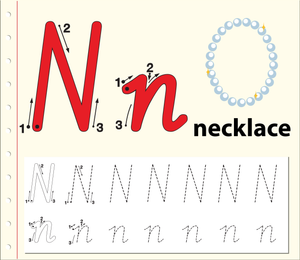
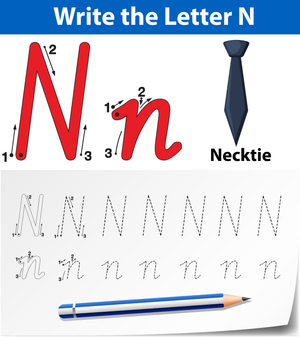
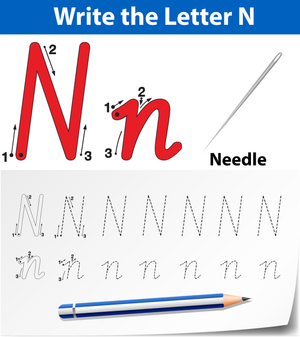
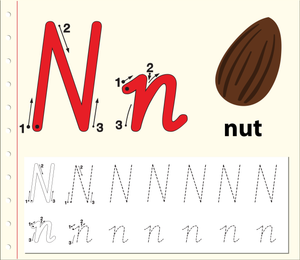
By the time first graders reach letter N in an alphabet sequence, they have usually built some print stamina with simpler letters like l, i, and t. N introduces a new challenge: a diagonal stroke sandwiched between two vertical lines. That combination trips up a lot of six- and seven-year-olds, which is exactly why dedicated letter N handwriting worksheets for grade 1 earn a spot in a teacher's rotation rather than getting folded into a generic tracing packet. Students need repeated, guided exposure to the diagonal motion before they can produce it consistently on lined paper without a model to copy.
Letter N also shows up constantly in early reading material and in student names, so mastering it has payoff beyond the handwriting block. When a student can form N smoothly, that fluency frees up attention for spelling and composing sentences instead of struggling with pencil control.
Correct Stroke Order for Uppercase and Lowercase N
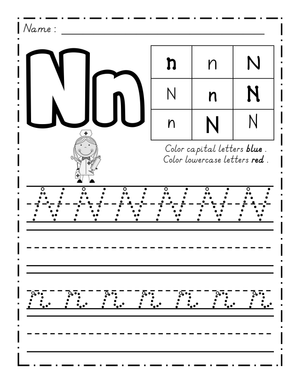
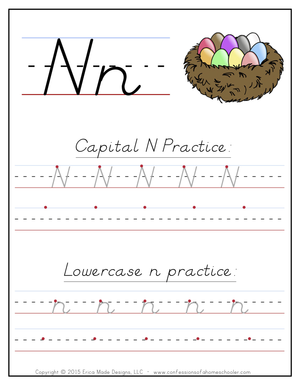
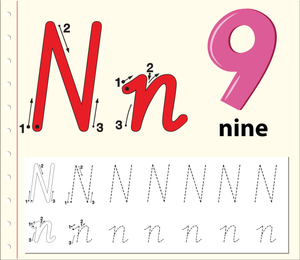
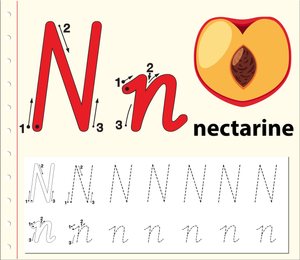
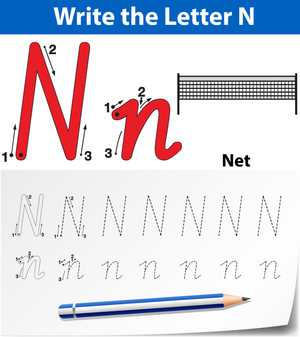
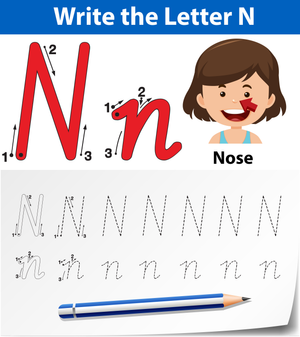
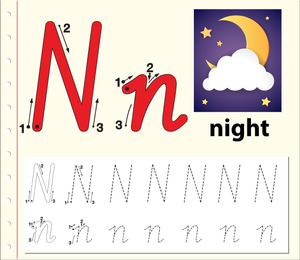
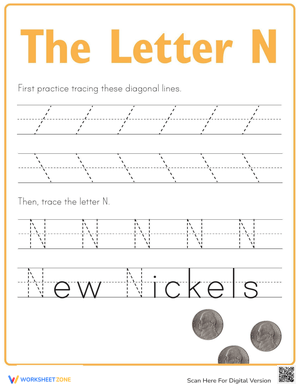
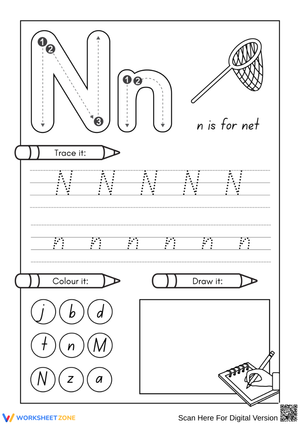
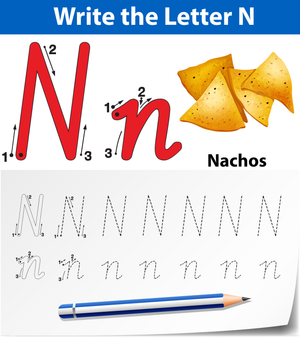
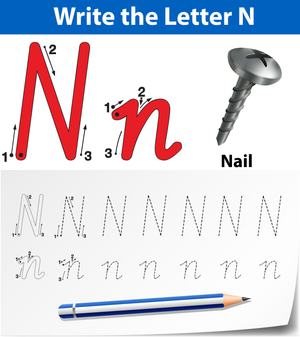
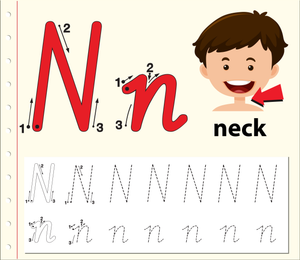
Uppercase N uses three strokes: a vertical line from top to bottom, a diagonal line from the top back down to the bottom-right, and a final vertical line from bottom to top. The diagonal is the piece most first graders get wrong, since young writers tend to let the slant drift or curve instead of staying straight. Worksheets that include directional arrows and a dotted diagonal guide help students see exactly where that middle stroke should land.
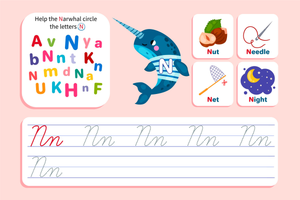
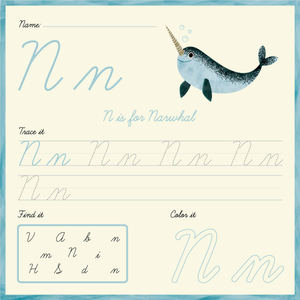
Lowercase n starts differently. Students begin with a short vertical stroke from the midline down to the baseline, then lift and trace an arch back up and over, landing again on the baseline. It is the same motion used for m, just with a single hump instead of two, which makes n a useful bridge letter for reinforcing the arch pattern before or after m practice.
Common Formation Errors and How Worksheets Correct Them
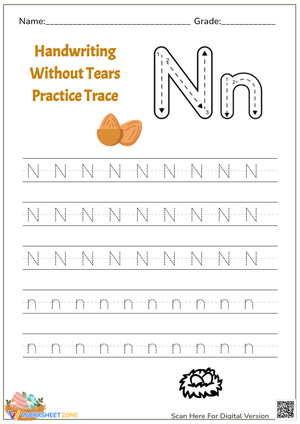
Two mistakes show up over and over in early N practice. The first is an inconsistent diagonal slant, where the middle stroke on uppercase N ends up too shallow or too steep from one repetition to the next. The second is uneven letter height, where lowercase n either shrinks below the midline or grows taller than the letter should be relative to neighboring letters.
Worksheets with consistent baseline, midline, and top-line guides address both errors directly because they give students a fixed visual target on every line of practice. Instead of correcting height and slant issues after the fact, guided lines prevent the drift from happening in the first place, which matters because early handwriting habits tend to stick once a student has repeated a motion dozens of times without correction.
Connecting Letter N Practice to Phonics and CVC Words
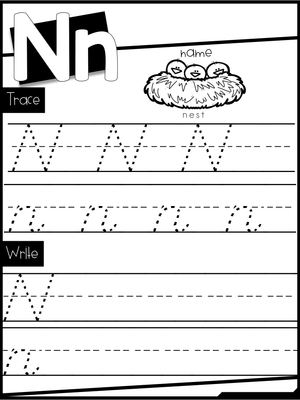
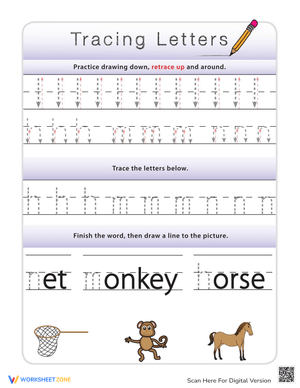
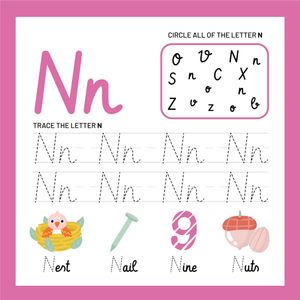
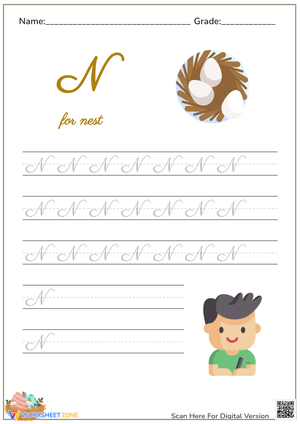
Letter formation practice sticks better when it is tied to meaning rather than isolated tracing. Pairing N worksheets with short CVC words such as net, nap, nine, and nut gives students a reason to care about forming the letter correctly, since a sloppy N can make a word hard to read back. A simple worksheet sequence might move from tracing isolated uppercase and lowercase N, to tracing N inside a word, to writing the full word independently on a lined space.
This progression also supports phonics instruction happening elsewhere in the school day. A student practicing the /n/ sound in reading groups benefits from seeing and writing that same letter in a handwriting context the same week, which reinforces the letter-sound connection from two different angles.
Classroom Implementation
A practical letter N lesson fits into a 20 to 30 minute handwriting block. Start with two minutes of air-writing the letter using the verbal cue, move to a tracing worksheet for uppercase and lowercase N, then finish with a page that asks students to write both forms independently next to a CVC word. Keep the whole-class portion short since attention for fine motor tasks tends to drop off quickly at this age.
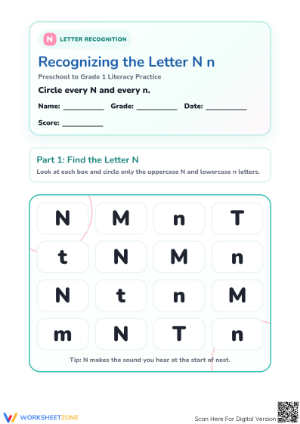
For students who finish early, a short word-building worksheet using letter N in context keeps them engaged without introducing new content. For students who need more repetition, a second tracing page with wider guide lines gives extra practice without singling anyone out in front of the group. Rotating letter N worksheets through morning work, small-group stations, and homework folders over the course of a week gives most first graders enough repeated exposure to move from tracing to independent writing.
Frequently Asked Questions
1. What is the correct stroke order for writing uppercase and lowercase N?
Uppercase N uses three strokes: down, diagonal down to the bottom-right, then up. Lowercase n uses two strokes: down to the baseline, then an arch back up and over, similar to the motion used for m but with only one hump.
2. How many practice sessions does a grade 1 student typically need to master a new letter like N?
This varies by student, but most first graders benefit from several short sessions across a week rather than one long practice block, moving from traced letters to independent writing as accuracy improves.
3. How do letter N worksheets connect to CCSS grade 1 writing standards?
CCSS.ELA-Literacy.L.1.1.a asks first graders to print all upper- and lowercase letters correctly, and letter-by-letter worksheets like these give teachers a direct, trackable way to document that skill.
4. What common mistakes do first graders make when writing the letter N?
The two most frequent errors are an inconsistent diagonal slant on uppercase N and uneven letter height on lowercase n, both of which guided baseline and midline worksheets help correct.
5. How can teachers use letter N worksheets in small-group or whole-class handwriting instruction?
Teachers can open with a short whole-class stroke-order cue, move into individual worksheet practice, and use quick formation checks to decide who needs an extra tracing page or is ready for independent writing.