




























Views
Downloads

Essential Object Pattern Worksheet | Grade 1 Printable

Paste this activity's link or code into your existing LMS (Google Classroom, Canvas, Teams, Schoology, Moodle, etc.).
Students can open and work on the activity right away, with no student login required.
You'll still be able to track student progress and results from your teacher account.
Comprehensive Pattern Practice
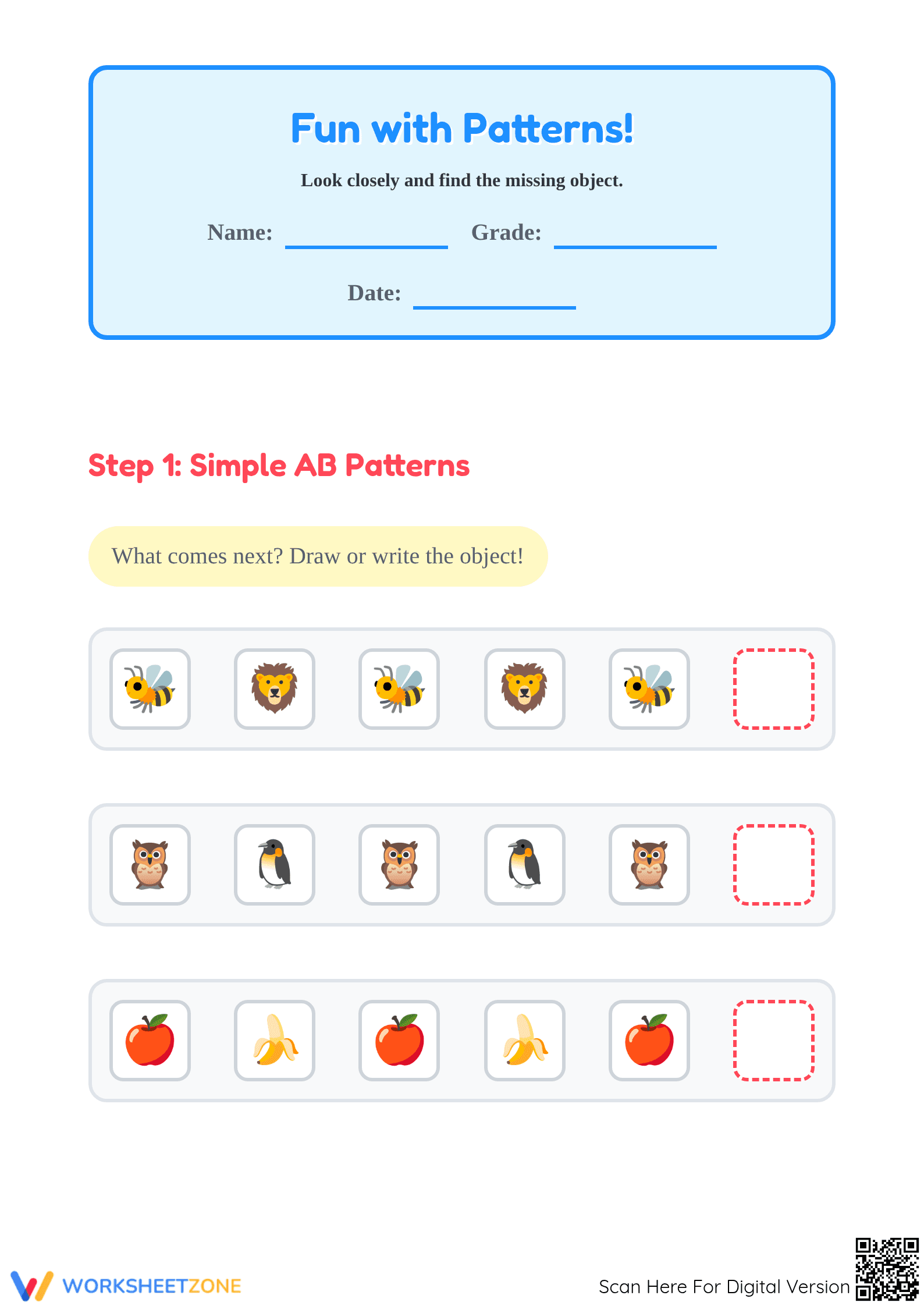
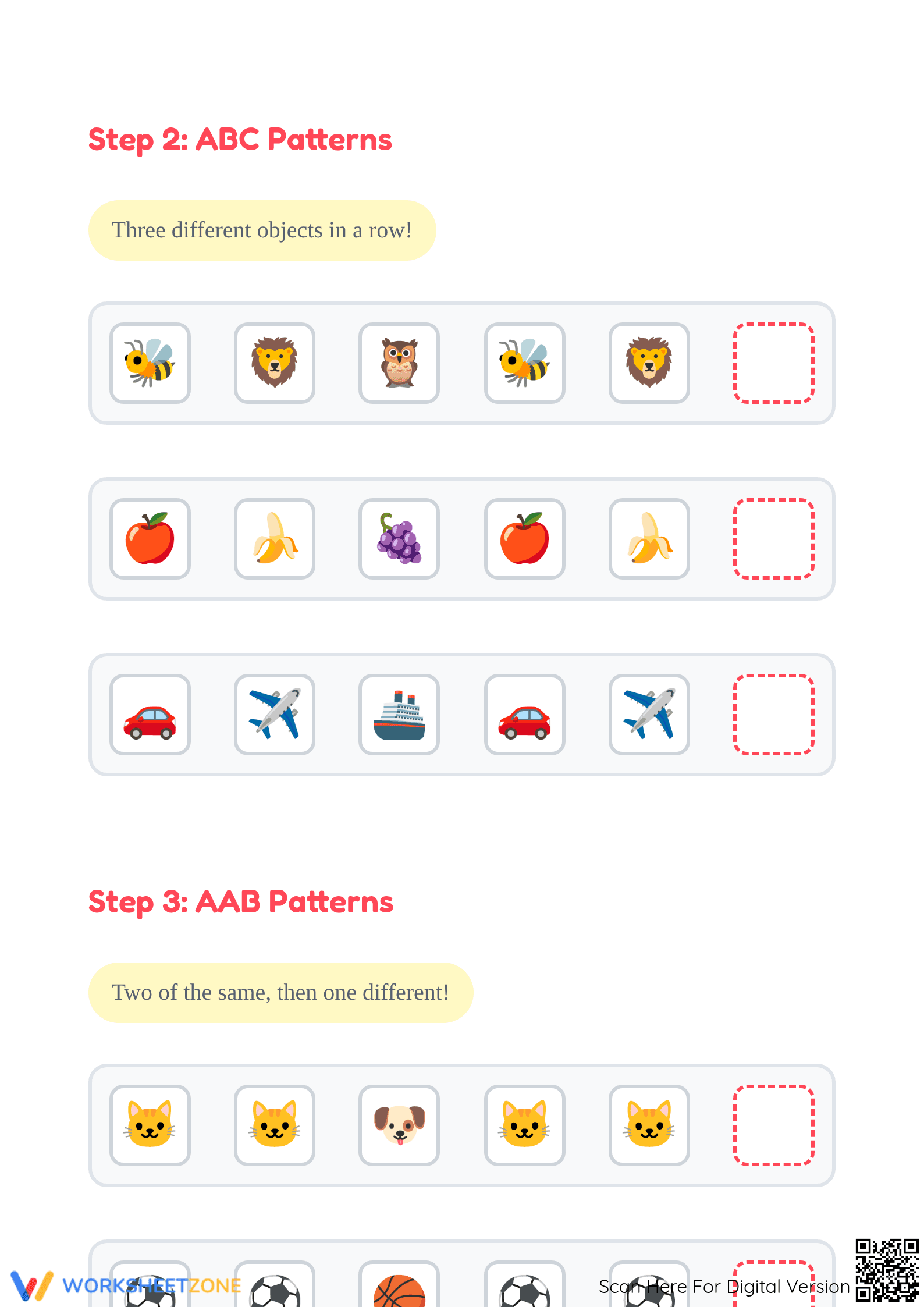
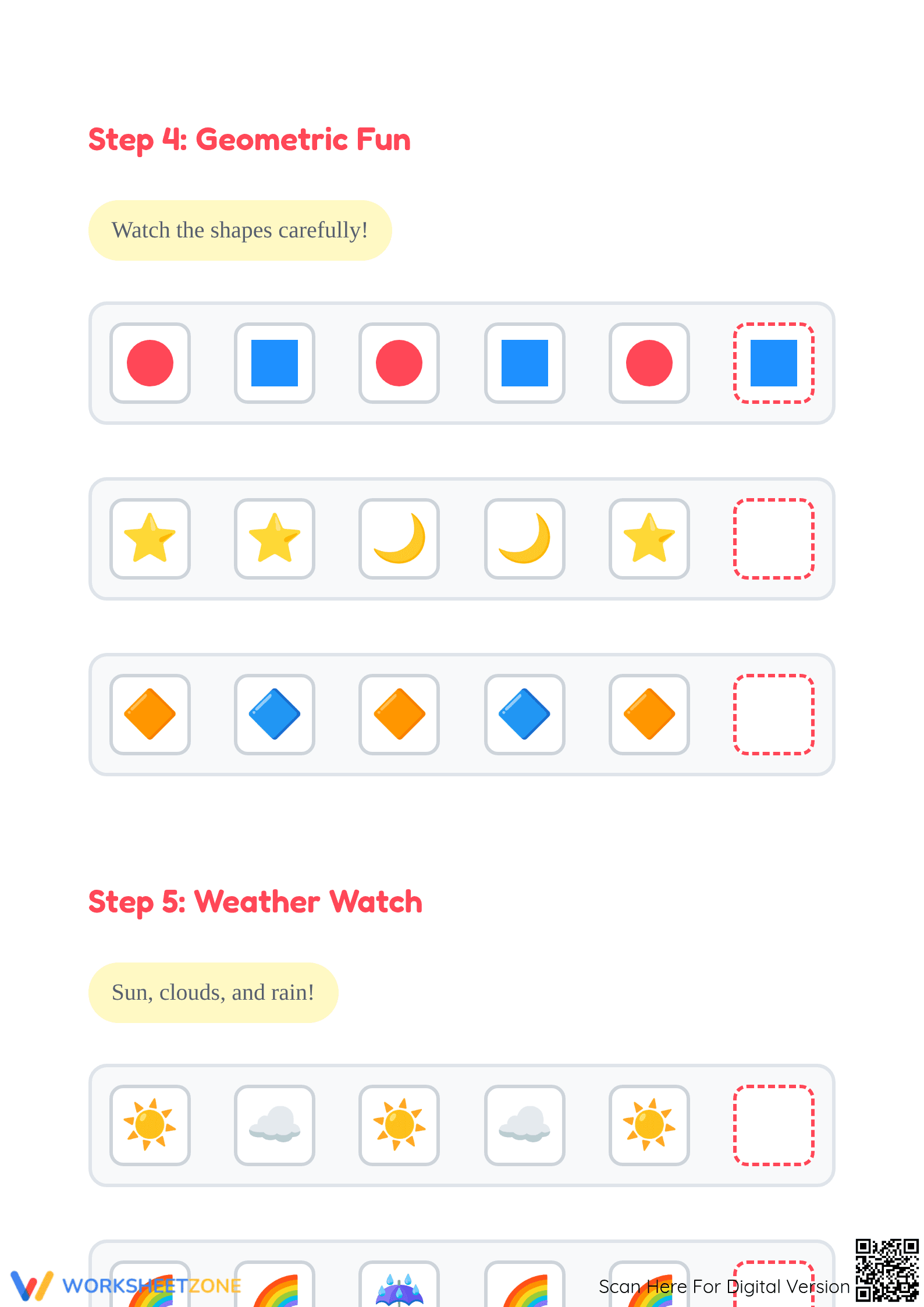
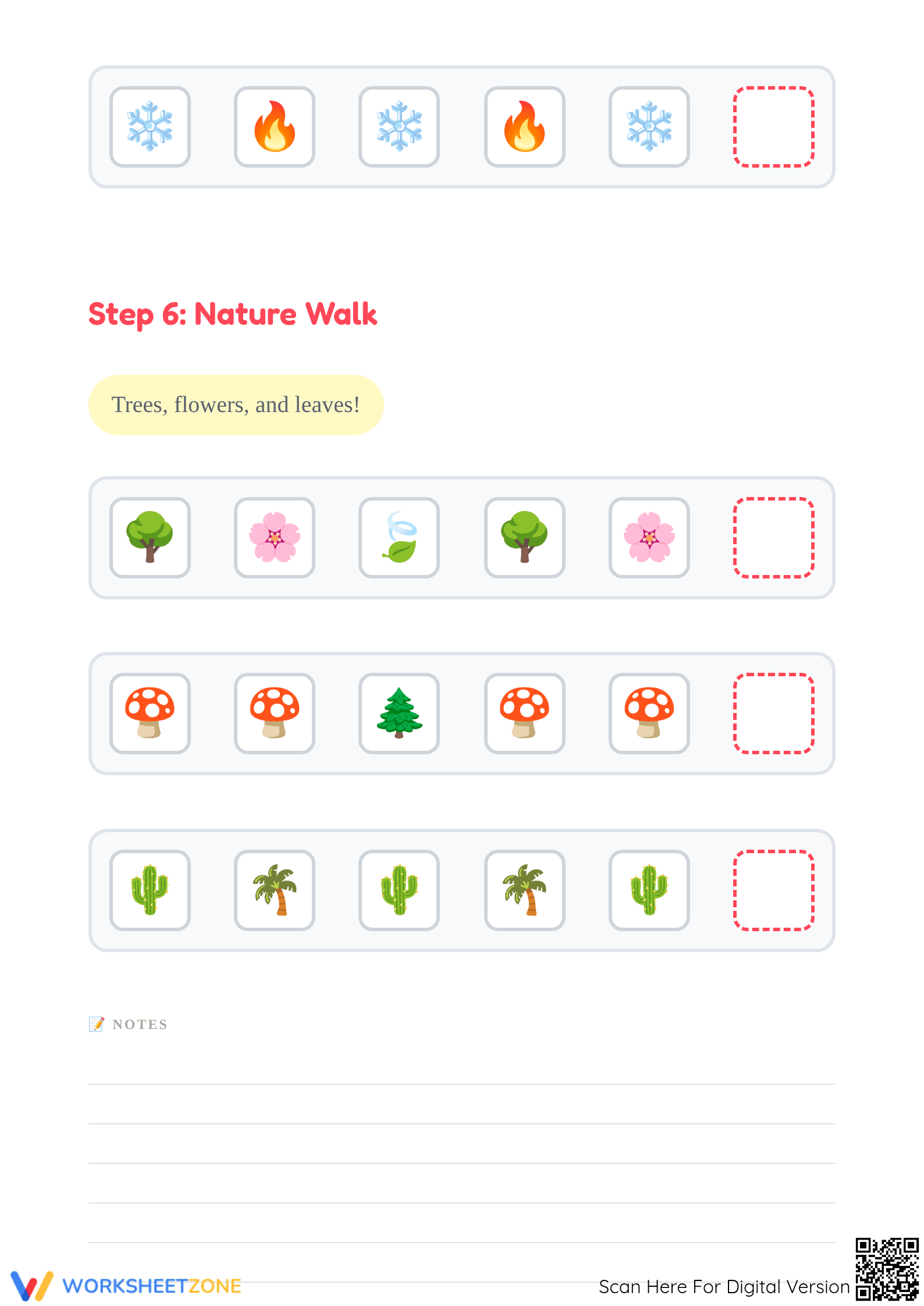
This comprehensive object pattern worksheet provides a structured approach for early learners to master sequence recognition and extension. Students engage with various themes, from animals to nature, identifying logic in AB, ABC, and AAB sequences. This essential resource builds foundational algebraic thinking through visual discrimination and logical reasoning in a classroom-ready format.
At a Glance
- Grade: Grade 1 · Subject: Math
- Standard:
CCSS.MATH.CONTENT.3.OA.D.9— Identify arithmetic patterns and explain them using properties of operations- Skill Focus: Visual Pattern Extension
- Format: 5 pages · 15 problems · Answer key included · PDF
- Best For: Early Algebra Readiness and Logic Development
- Time: 20–30 minutes
What's Inside
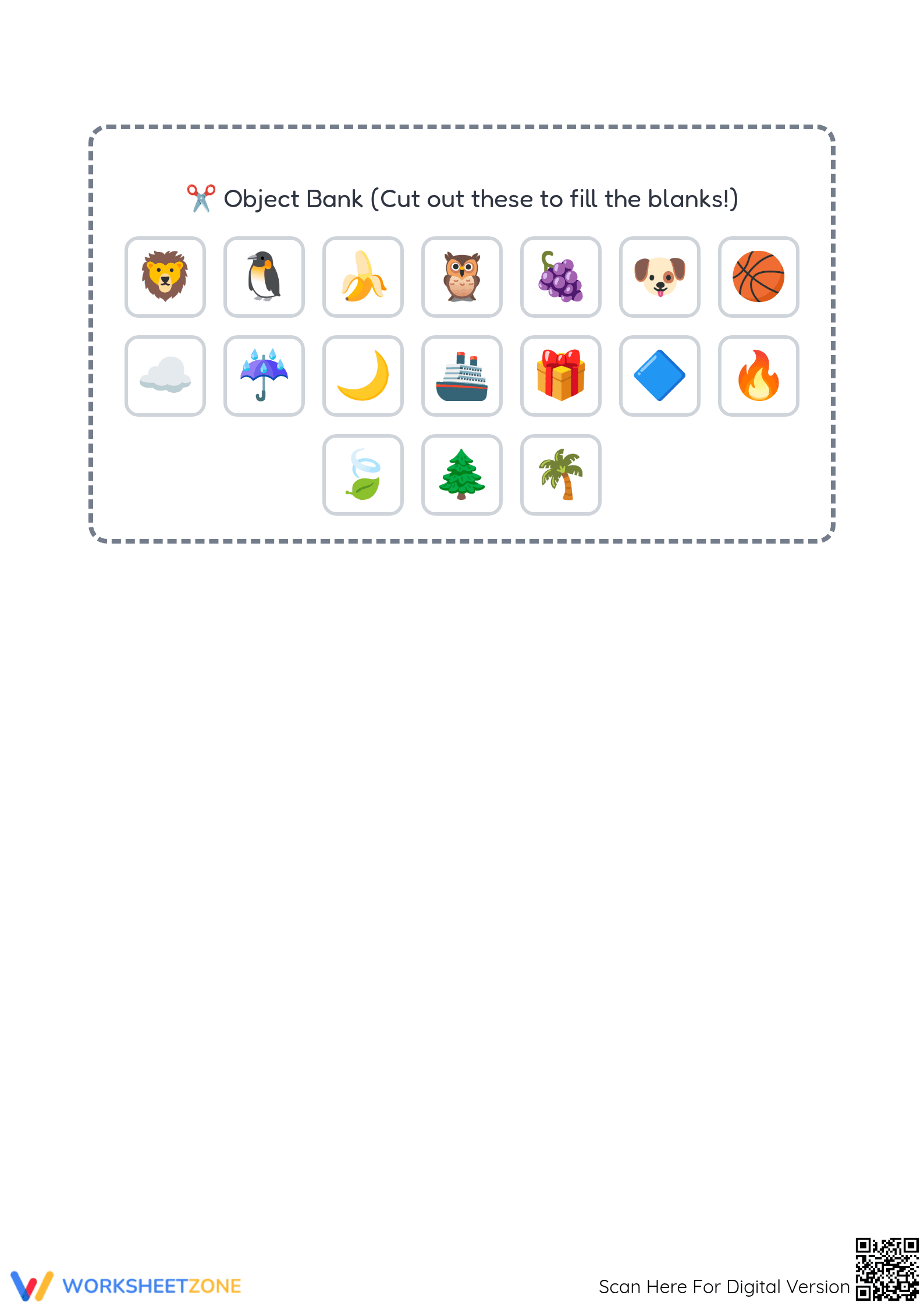
This five-page PDF includes 15 distinct pattern sequences categorized by complexity. The packet features an interactive cut-and-paste object bank on the final page, allowing students to physically manipulate icons like lions, bees, and apples. It includes dedicated sections for geometric shapes, weather icons, and nature themes, accompanied by a full answer key for immediate feedback.
Level Descriptions
- Below Grade Level: Students focus on simple AB patterns using high-contrast animal icons with direct visual support and a simplified choice set from the object bank.
- On Grade Level: Learners extend ABC and AAB sequences across multiple thematic categories, requiring stronger visual memory and symbolic processing of different attributes.
- Above Grade Level: Advanced students tackle complex geometric and nature-based patterns with three or more variables, requiring deep analysis of multiple attributes simultaneously.
Standards Alignment
The primary alignment is CCSS.MATH.CONTENT.3.OA.D.9, which requires students to identify and explain patterns. While applied here to visual objects, these tasks develop the structural logic necessary for numerical sequences. This code can be copied directly into lesson plans, IEP goals, or district curriculum mapping tools to document progress in algebraic thinking strands.
How to Use It
Use this worksheet during independent practice after a direct instruction lesson on sequence logic. Use the nature walk section as a formative assessment to observe if students can verbalize the pattern rule before pasting. It typically takes 20 to 30 minutes to complete, making it an ideal choice for center rotations or morning work during math blocks.
Who It's For
This resource is designed for Kindergarten and Grade 1 students, including those requiring Tier 2 intervention for logical reasoning. It pairs naturally with a hands-on pattern block lesson or an anchor chart displaying common sequence types like AB and ABC to reinforce vocabulary and structural identification during the activity.
The development of early algebraic thinking through object patterns is a critical precursor to numerical mastery in later elementary grades. According to the RAND AIRS 2024 report on early childhood mathematics, the ability to identify, extend, and create patterns is strongly correlated with future success in function-based math and logical problem-solving. This worksheet utilizes a gradual release model, moving from basic AB sequences to more complex AAB and ABC structures to support cognitive load management. By using visual objects instead of abstract numbers, students can focus entirely on the logic of the sequence, building the structure-seeking habits defined by academic standards. Research from the NAEP highlights that students who receive early exposure to diverse pattern types demonstrate 15% higher accuracy in identifying recursive rules by Grade 3. This standards-aligned resource ensures that foundational skills are practiced with high-fidelity visual aids and structured task complexity.


