


























Views
Downloads
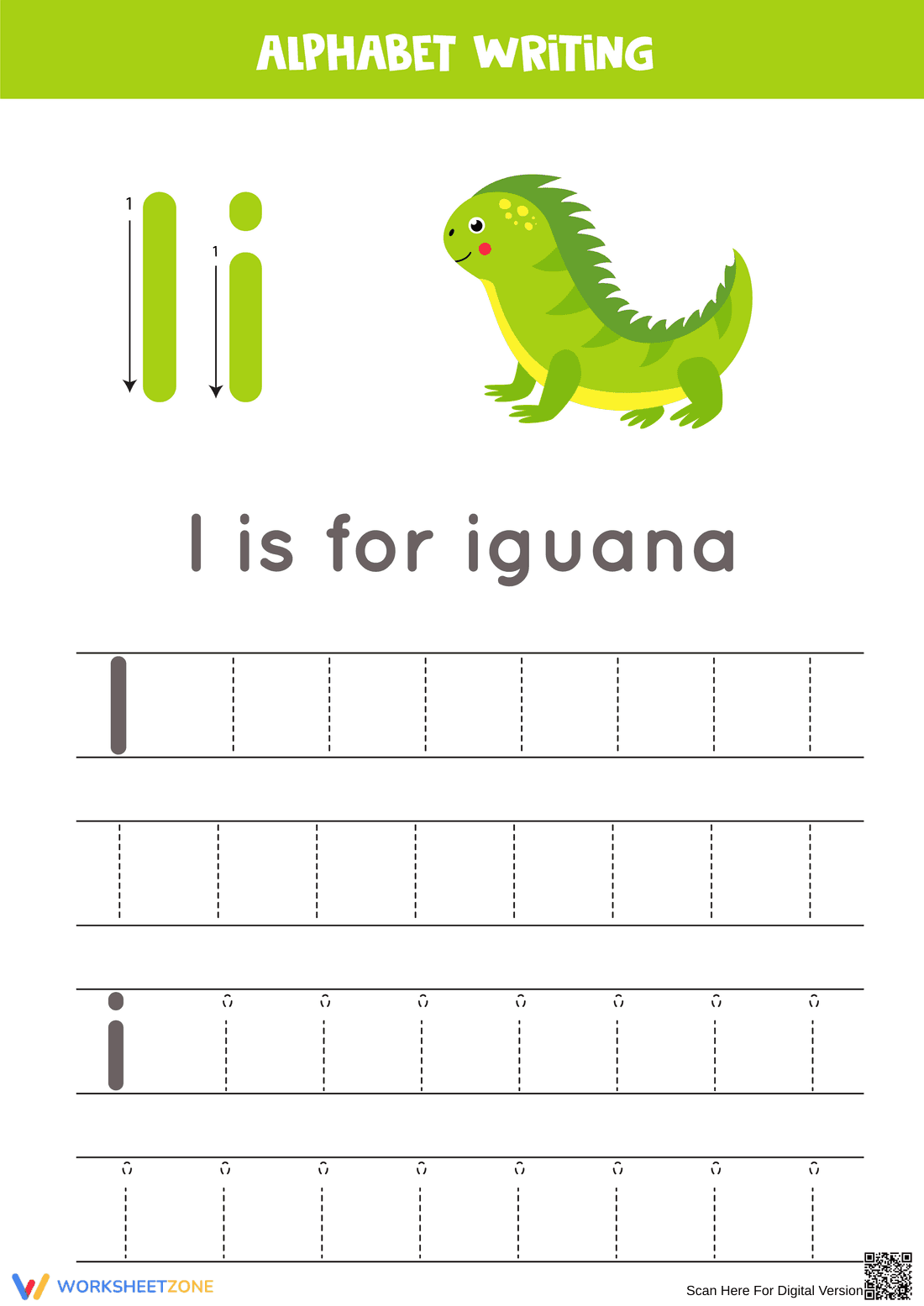

Letter I Writing Practice | Grade K Essential Worksheet
Paste this activity's link or code into your existing LMS (Google Classroom, Canvas, Teams, Schoology, Moodle, etc.).
Students can open and work on the activity right away, with no student login required.
You'll still be able to track student progress and results from your teacher account.
This Grade K alphabet worksheet provides targeted practice for mastering the letter I through guided tracing. Students develop fine motor control while reinforcing the connection between the letter shape and the initial /i/ sound. By focusing on both cases, learners build the foundational handwriting skills necessary for early literacy success.
At a Glance
At a Glance
- Grade: Kindergarten · Subject: ELA
- Standard:
CCSS.ELA-LITERACY.L.K.1.A— Print many upper- and lowercase letters- Skill Focus: Letter I formation
- Format: 1 page · 32 problems · Answer key included · PDF
- Best For: Daily morning work or literacy centers
- Time: 5–10 minutes
What's Inside
The worksheet features a clean, distraction-free layout with four dedicated tracing rows. The top section introduces the letter with directional arrows for proper stroke order, paired with a friendly iguana illustration. It includes 16 uppercase and 16 lowercase tracing opportunities, ensuring repetitive practice without overwhelming young learners. The large font size is specifically designed for early childhood pencil control.
Zero-Prep Workflow
This resource is designed for a zero-prep classroom workflow. Teachers can print the single-page PDF in under 30 seconds. Distribution takes less than a minute during transition periods or as students arrive. Reviewing student work is instantaneous, as the dotted lines provide immediate visual feedback on letter formation accuracy and pencil control. It is an ideal solution for emergency sub plans or quick literacy interventions.
Standards Alignment
This worksheet is aligned to `CCSS.ELA-LITERACY.L.K.1.A`, which requires students to "Print many upper- and lowercase letters." This resource specifically targets the vertical and horizontal strokes required for the letter I, ensuring students meet the developmental expectations for Kindergarten writing. Both standard codes can be copied directly into lesson plans, IEP goals, or district curriculum mapping tools.
How to Use It
Use this as a morning work activity to settle students as they arrive, or place it in a literacy center with dry-erase sleeves for reusable practice. For formative assessment, observe the student's grip and stroke direction—starting from the top down—to ensure they are not developing inefficient writing habits. Expected completion time ranges from 5 to 10 minutes depending on the student's fine motor proficiency.
Who It's For
This is ideal for Preschool, Kindergarten, and Grade 1 students who are beginning their handwriting journey. It serves as an excellent Tier 1 instructional tool or a supplemental resource for students needing extra fine motor support. Pair this with an alphabet anchor chart or a phonics song about the short /i/ sound to create a multi-sensory learning experience.
According to Fisher & Frey (2014), the gradual release of responsibility begins with clear modeling, which the directional arrows and dotted outlines in this worksheet provide. Research from the RAND AIRS 2024 report emphasizes that repetitive tactile practice in letter formation is a significant predictor of later reading fluency and writing endurance. By isolating the letter I, this resource allows students to focus on the specific motor pathways required for this character. The inclusion of a visual mnemonic, the iguana, aligns with dual-coding theory, helping students store the letter's sound and shape in long-term memory. This evidence-based approach ensures that the 32 tracing tasks contribute directly to the mastery of CCSS.ELA-LITERACY.L.K.1.A. Educators can rely on this structured format to provide the high-frequency practice necessary for early childhood developmental milestones in English Language Arts.


