Where Letter D Practice Fits Your Literacy Block
By the time most kindergartners reach the letter D, they've already met a handful of alphabet friends, and the challenge shifts from "what is this letter?" to "can I make it myself?" That gap matters more than it looks. Letter recognition tends to come first, while producing the letter on paper lags behind, so students who can point to a D on the word wall may still struggle to draw one that holds its shape. Letter D worksheets give your class a repeatable surface to practice the two strokes that trip up small hands, and they slot neatly into the printing benchmarks you're already tracking. This page walks through how to sequence that practice, tie it to the /d/ sound, differentiate by skill level, and use finished pages as quick evidence of growth.
Teaching Correct Letter D Stroke Order
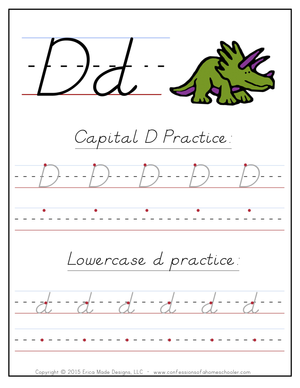
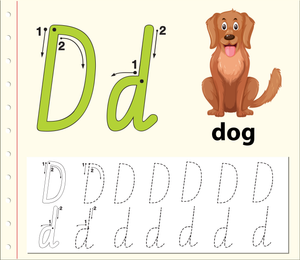
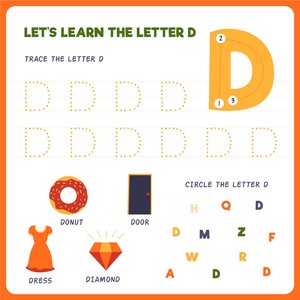
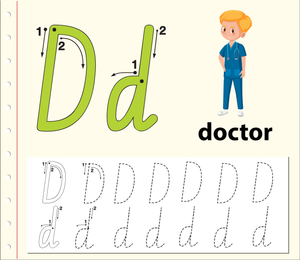
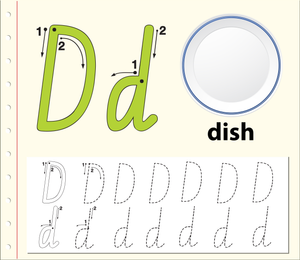
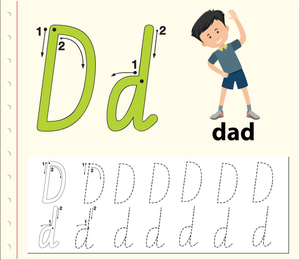
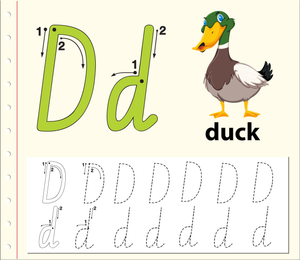
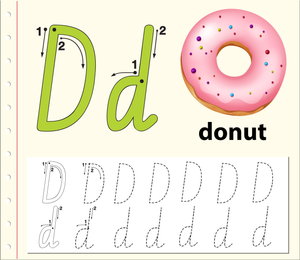
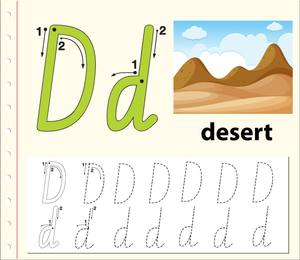
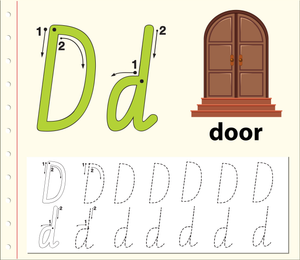
Uppercase D starts with a straight line pulled from top to bottom, then a wide curve that swings from the top of that line out to the right and back down to the baseline. Lowercase d flips the logic: students draw the round belly first, like a lowercase c, then add a tall straight line down the right side. Modeling stroke order out loud — "big line down, big curve around" for the capital — keeps students from building the letter from the bottom up or curving before they anchor the line, habits that are hard to unlearn once they set. Watch start points more closely than neatness at this stage; a wobbly D drawn in the right order is worth more than a tidy one drawn backward.
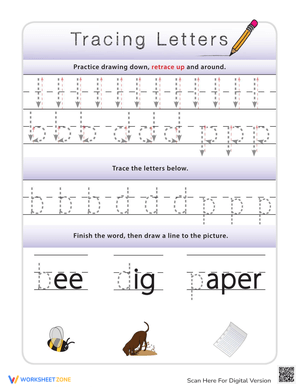
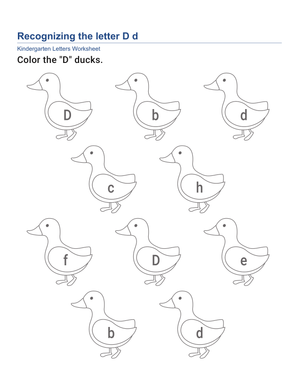
Here's the detail many formation pages skip: lowercase d and lowercase b share the exact same parts but mirror each other, and the order you teach them in shapes how often students confuse the pair later. Introducing d with a "circle first, then the line" cue anchors the round part on the left side of the tall stroke. When b shows up later with its line-first start, the two letters carry distinct motor stories instead of one blurry reversal, which cuts down on the b/d flips that show up all over early writing samples.
Tracing vs. Independent Printing
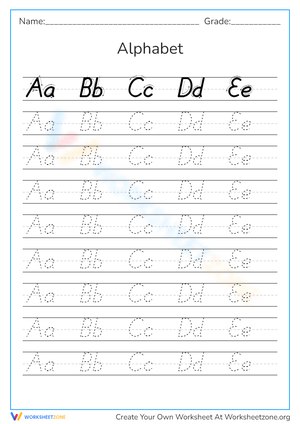
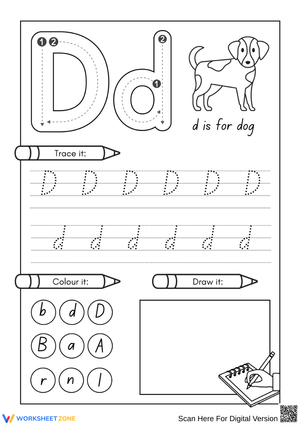
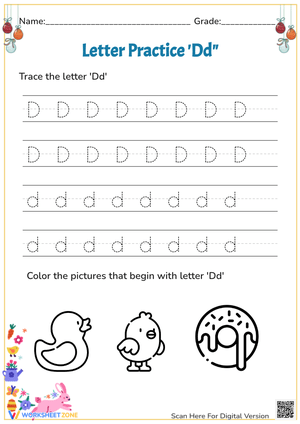
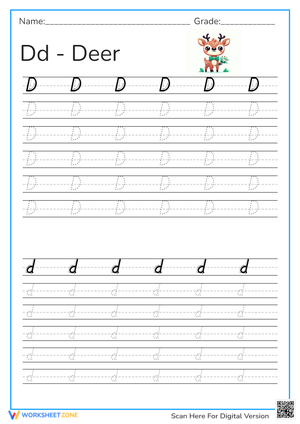
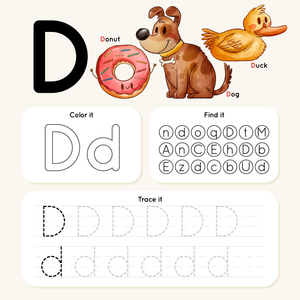
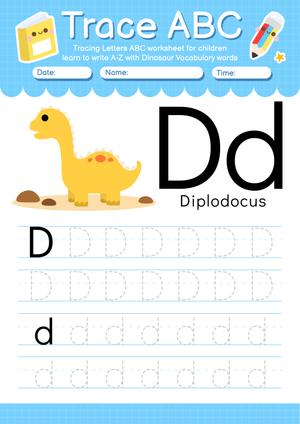
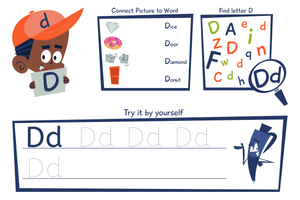
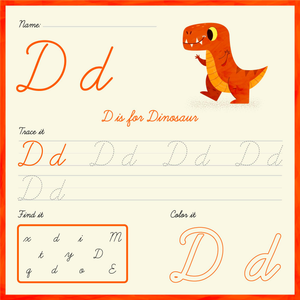
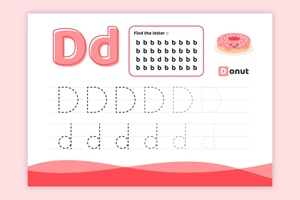
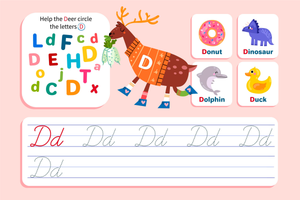
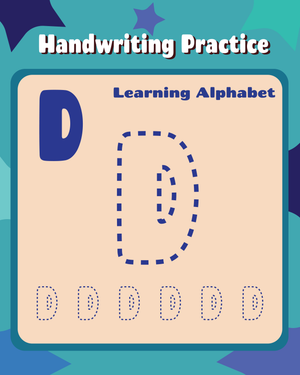
Tracing and printing build different skills, and strong letter D practice uses both. Traced guides let students rehearse the path with support, so their hand learns the movement before memory has to carry it alone. Independent printing — copying D from a model or writing it from a spoken prompt — forces recall and execution at the same time, which is much closer to what real writing demands. A worksheet that moves left to right from bold traced letters, to faint dotted letters, to blank practice lines mirrors that gradual release of support on a single page. Don't rush students off the traced portion; let the movement feel automatic before you pull the guide away.
Pairing Letter D With the /d/ Sound
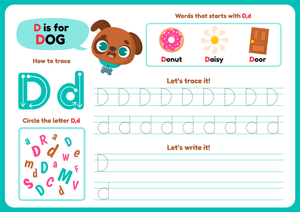
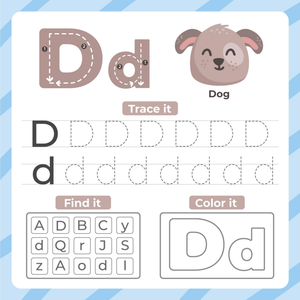
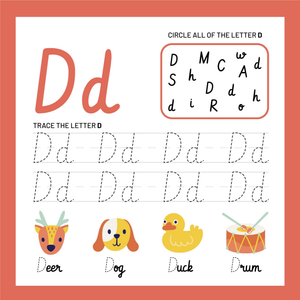
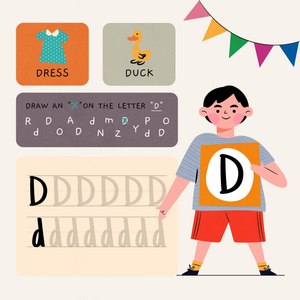
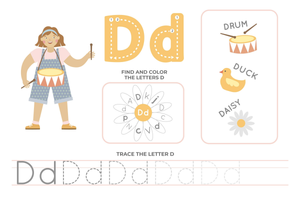
Formation practice sticks better when the letter carries meaning, and D is a generous phonics partner. Most letter D worksheets pair the shape with familiar /d/ words — dog, duck, dolphin, door — so students hear the initial sound while their hand builds the symbol. Say the word, stretch the first sound, then trace: that three-step loop ties the /d/ phoneme to the grapheme in one motion. For emergent readers, this dual practice is more efficient than teaching sound and shape in separate lessons, and it gives students a mental hook — "D like dog" — that helps them retrieve the letter faster during independent writing. Picture prompts on the page do the same work for students who aren't reading the words yet.
Classroom Implementation
Short and frequent beats long and occasional every time. Handwriting routines work best in sessions of about 5-10 minutes, two to three times a week, which builds motor skill without the fatigue that turns young writers off the task entirely. Here's a rotation that fits inside a standard literacy block:
- Open with 60 seconds of air-writing the D strokes while you narrate the path.
- Move to a traced worksheet row, watching for correct start points rather than speed.
- Finish with two or three independent D's, no guide, as a quick recall check.
- Pull a small group of students still reversing the letter for a one-on-one model.
Keep finished pages in a dated folder for each student so you can lay out a month of D's side by side and show real growth at conferences. Those folders also make it obvious which students need a second round before you move on.
Differentiating Uppercase and Lowercase D
Pre-K and kindergarten sit at different points on this skill, so the same worksheet shouldn't ask the same thing of every student. Younger or newer writers do well starting with uppercase D alone — its single straight line and one open curve are more forgiving than the tight lowercase belly. Once uppercase is steady, layer in lowercase d, and for students who are ready, add mixed rows that switch between the two cases to test control. Give students still building fine motor strength larger letters and wider lines before you shrink the practice space, and let them use a pencil grip or a slant board if that's what steadies the hand. The goal is a form students can repeat, not a single lucky letter.
Frequently Asked Questions
1. What is the best way to teach letter D stroke order?
Model it out loud and slow. For uppercase D, cue "big line down, then big curve around." For lowercase d, use "round like a c, then a tall line down the right." Narrating the start point and direction as students write keeps them from forming the letter backward.
2. How is printing letter D different from tracing it?
Tracing supports the movement so students rehearse the path without holding it in memory. Independent printing removes that guide, forcing them to recall the form and execute it at once. Both matter, but printing is the harder skill and the one closest to real writing.
3. How often should kindergartners practice letter formation?
Aim for short, frequent sessions — about 5-10 minutes, two to three times a week. Brief practice builds motor memory while avoiding the hand fatigue that makes young writers resist handwriting altogether.
4. Which standards do letter D worksheets support?
They align with standards that ask kindergartners to print many upper- and lowercase letters and to recognize and name all letters in both cases. Formation and recognition are tracked as separate skills, so your assessments should reflect both.
5. Can letter D worksheets teach phonics too?
Yes. Pages that pair D with /d/ words like dog and duck let students connect the sound to the shape. Say the word, stretch the first sound, then trace the letter to link the phoneme and grapheme in one step.