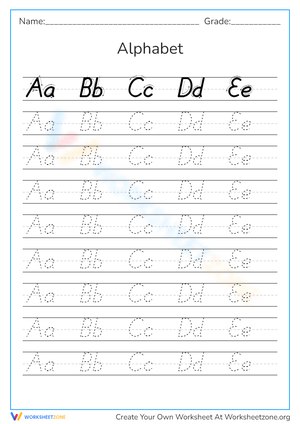
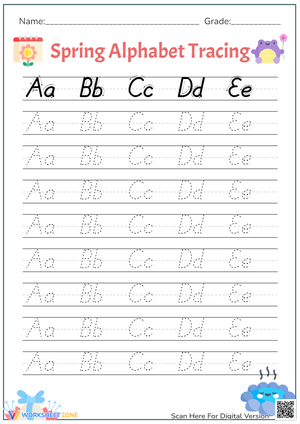
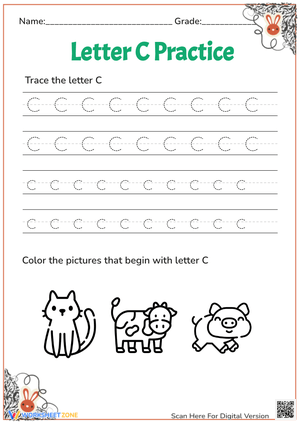
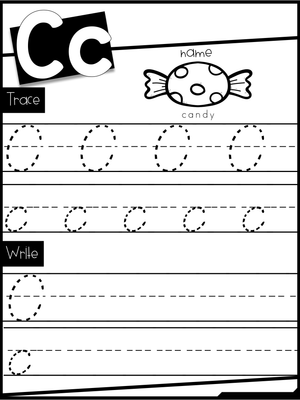
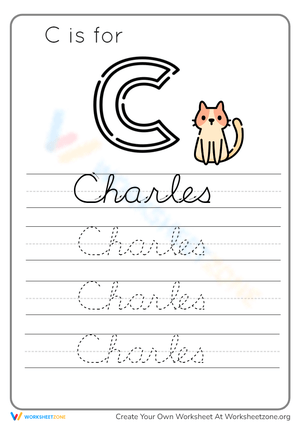
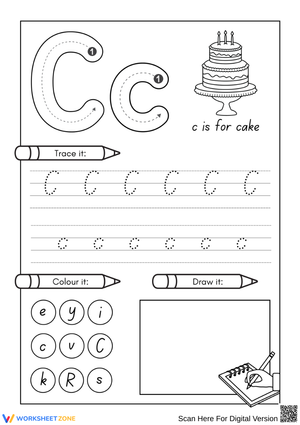
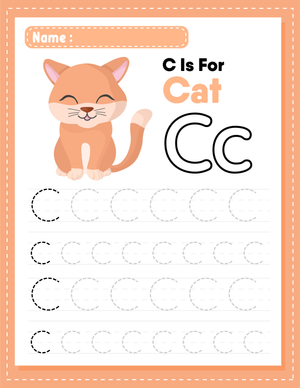
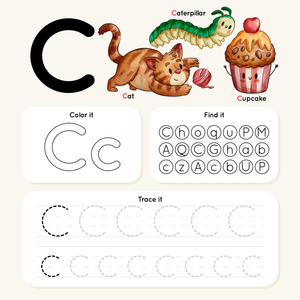
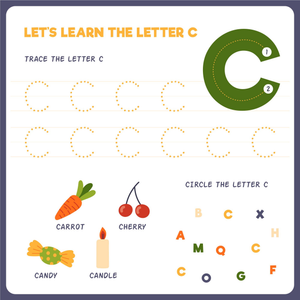
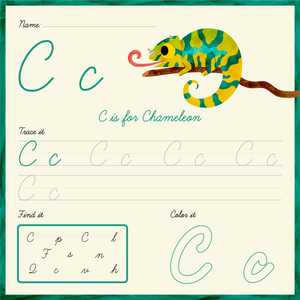
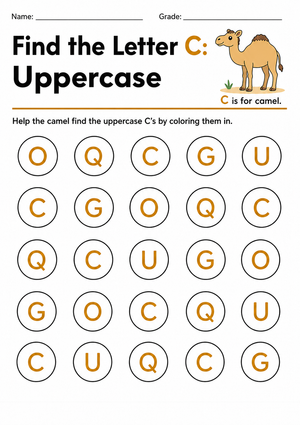
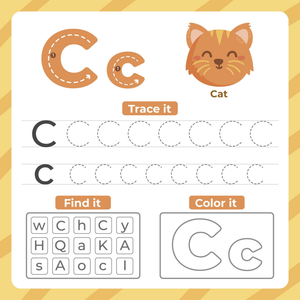
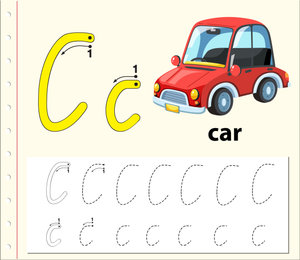
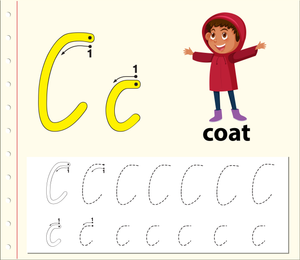
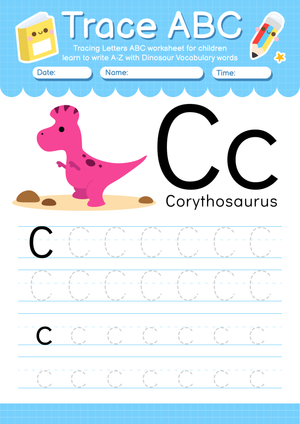
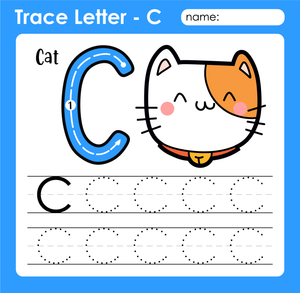
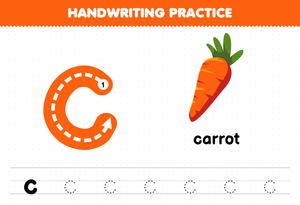
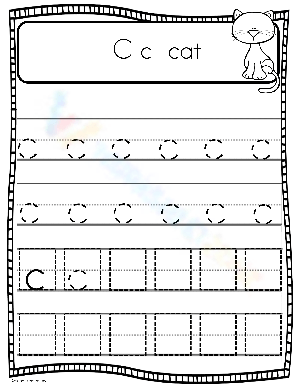
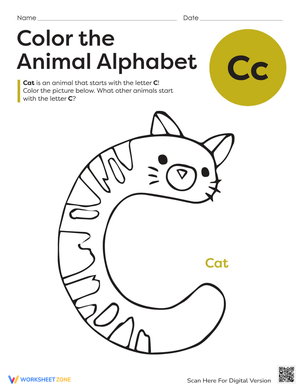
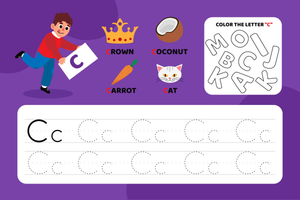
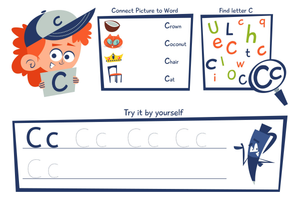
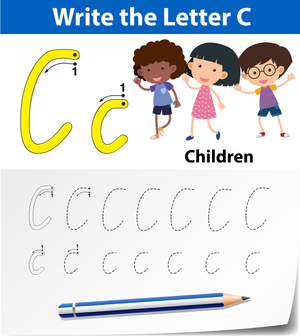
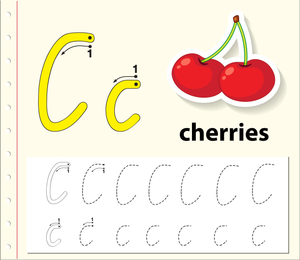
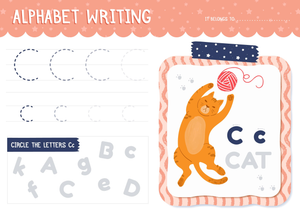
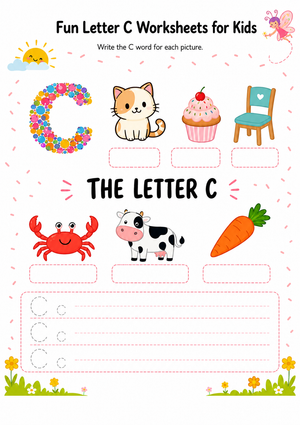
When pre-K and kindergarten teachers plan alphabet instruction, letter C worksheets often show up early in the sequence for a good reason. The letter is formed with a single curved stroke, which makes it one of the more approachable shapes for beginning writers who are still building pencil control. A well-designed letter C handwriting worksheet gives students a structured, low-pressure way to practice that curve over and over before they are asked to write it from memory.
Alphabet knowledge is one of the strongest early predictors of later reading and writing success, so treating letter formation practice as a core instructional block rather than a filler activity pays off. Letter C worksheets are rarely the whole lesson, but they are a dependable tool for reinforcing what students see and hear during a letter-of-the-week unit or a daily handwriting warm-up.
Teaching the Correct Stroke Formation for Uppercase and Lowercase C
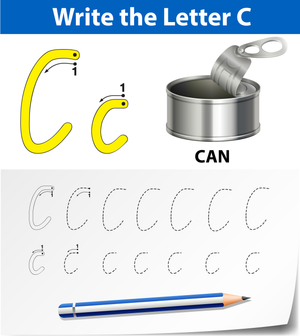
Both uppercase and lowercase C are formed with one continuous curved stroke, starting near the top and sweeping counterclockwise. Teaching this explicitly matters because students who are never shown a starting point often develop inconsistent habits that are harder to correct later, especially once they move toward cursive formation in later grades.
A useful classroom routine is to have students trace the letter in the air with a finger while saying the stroke direction out loud before touching pencil to paper. This verbal-motor pairing gives students a second sensory channel for the movement pattern, and teachers often find it reduces reversals and inconsistent starting points more effectively than tracing practice alone.
Moving from Tracing to Independent Writing
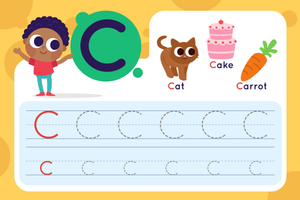
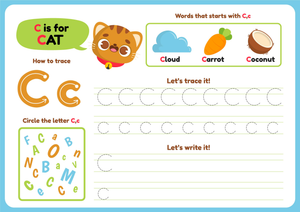
Tracing is a bridge, not the destination. Once students can consistently trace letter C with correct stroke direction, the next step is fading the support: worksheets that start with a few traced letters and then shift to blank lines for independent writing. This gradual release helps students transfer the motor pattern they practiced under guidance into writing they produce on their own.
Teachers do not need a fixed number of repetitions for every student, but a general classroom guideline of a handful of traced letters before attempting independent ones gives students enough practice to build muscle memory without turning the page into a tedious drill. Watching for fatigue or a sloppy pencil grip partway through a worksheet is a better signal to stop than reaching a specific count.
Building Fine Motor Skills Alongside Letter C Practice
Handwriting worksheets are more effective when paired with hands-on fine motor work rather than used in isolation. Rolling playdough into a C shape, forming the letter with pipe cleaners, or practicing the stroke in a tray of sand or shaving cream all build the same hand strength and control that worksheet tracing reinforces on paper.
According to Education.com's kindergarten handwriting resources, structured tracing practice paired with hands-on motor activities supports the pencil grip and hand-eye coordination young writers need before they can form letters consistently on their own, making repeated practice across multiple formats more effective than a single worksheet alone.
Classroom Implementation
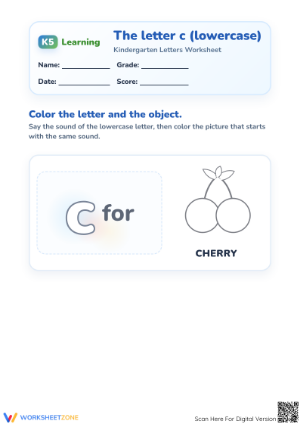
For teachers building a letter-of-the-week unit, letter C worksheets fit naturally into a short daily cycle: introduce the letter and sound on day one, provide tracing practice on day two, connect it to beginning-sound picture activities on day three, and finish with an independent writing check by the end of the week. This structure gives students repeated, spaced exposure instead of a single burst of practice.
Worksheets also serve as a quick, low-stakes formative check. A teacher glancing at a stack of completed letter C pages can quickly spot which students are reversing the curve, starting in the wrong place, or struggling with pencil control, and can group those students for a short reteach without disrupting the whole class schedule.
Frequently Asked Questions
1. What age or grade level is best for letter C handwriting worksheets?
These worksheets are best suited for preschool, pre-K, and kindergarten students who are building early letter recognition and pencil control as part of alphabet instruction.
2. How many times should a child trace letter C before writing it independently?
There is no strict number that fits every student, but a small handful of guided traces is usually enough before moving to independent attempts, as long as the student is still showing correct stroke direction and has not become fatigued.
3. What is the correct stroke order for uppercase and lowercase letter C?
Both forms start near the top of the letter and move in one continuous curved stroke that sweeps counterclockwise, ending near the bottom of the curve.
4. How can teachers use letter C worksheets for students who struggle with pencil grip?
Pairing the worksheet with hands-on motor practice, such as tracing the shape in sand or forming it with playdough, helps build the hand strength needed before returning to pencil-and-paper tracing.
5. How do letter C worksheets fit into a broader alphabet curriculum?
They typically slot into a letter-of-the-week rotation, combining formation practice with phonics activities that connect the letter shape to its sound, so handwriting and early reading skills develop together.