Where Letter U Fits in Your Alphabet Sequence
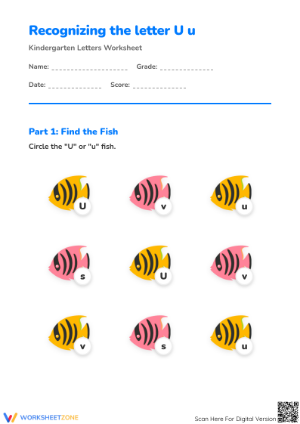
The letter U rarely gets the spotlight that A, B, and C do, but it's one of the trickier vowels for young writers to place and pronounce. Because U is a vowel, it carries extra instructional weight: students need to recognize it, connect it to its short and long sounds, and form both cases before it shows up in decodable words. Most teachers slot letter U worksheets into the back half of a kindergarten alphabet unit, once children have built some formation habits on easier letters and are ready for curved, symmetrical strokes.
Sequencing matters here. A predictable arc — recognize the letter, connect it to its sound, practice formation, then apply it in words like up, umbrella, and under — gives students repeated exposure without overwhelming them. Letter U worksheets work best as one piece of that arc, not a standalone drill you hand out and forget.
Multi-Sensory Formation for Uppercase and Lowercase U
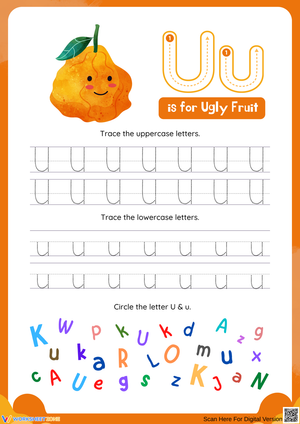
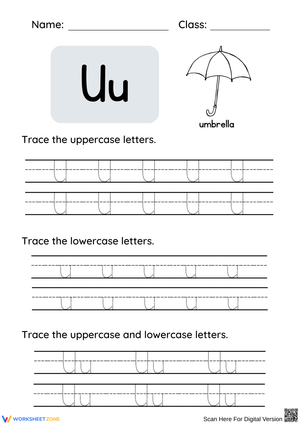
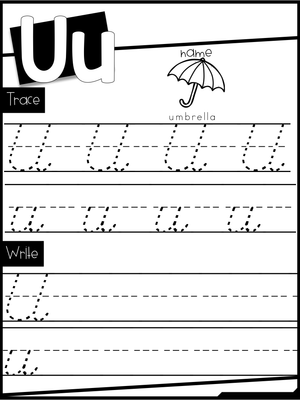
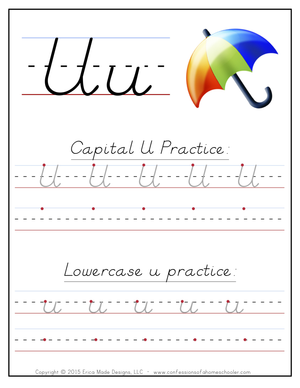
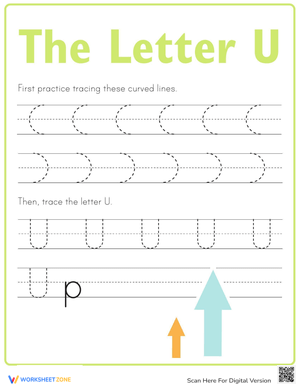
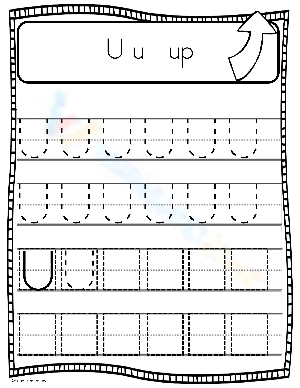
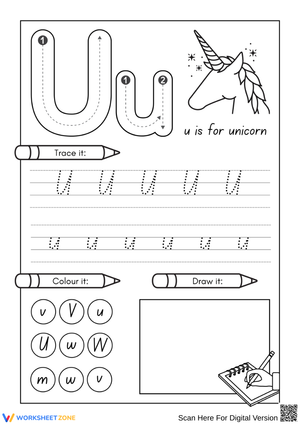
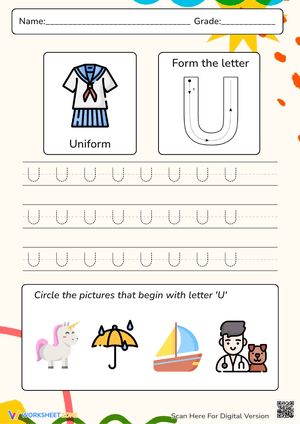
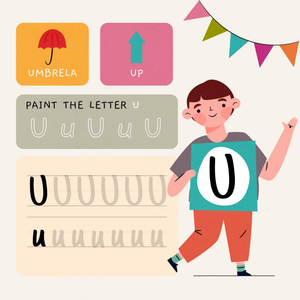
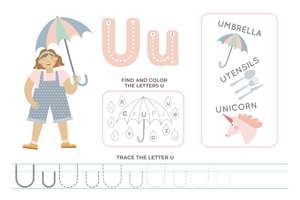
Uppercase U is a single smooth stroke: start at the top left, pull straight down, curve across the bottom, and push back up to the top right. Lowercase u follows the same U-shape but adds a short return stroke on the right side. Both letters reward slow, deliberate practice because the curve is where students tend to collapse the shape or flatten the bottom.
Research on handwriting instruction favors a multi-sensory approach that combines numbered arrows, starting-point dots, and air writing to help children build consistent formation. Layer those cues before the pencil ever touches paper:
- Trace the arrows on the worksheet with a finger first, then a pencil, so the motor path is set before independent writing.
- Anchor the start with a starting-point dot so students always begin at the top, not the bottom of the curve.
- Air write a giant U while saying the stroke direction aloud, giving kinesthetic and verbal input at once.
- Say the sound — the short /u/ in up — each time the letter is completed to bind formation to phonics.
Classroom Implementation
Handwriting research is clear that short, frequent sessions beat long ones: just 10 to 15 minutes of daily practice measurably boosts writing fluency. That finding should shape how you use these pages. Rather than a single 30-minute letter U block, build a brief daily touchpoint across a week so the skill consolidates through spaced repetition.
A workable weekly rhythm looks like this:
- Day 1: introduce uppercase U with air writing and a traced worksheet.
- Day 2: add lowercase u and a sound sort with anchor words.
- Day 3: mix both cases on one page and check letter direction.
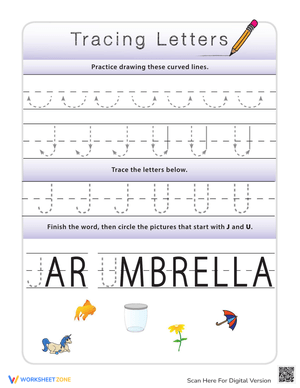
- Day 4: apply U in short words like up and under.
- Day 5: a quick independent page you can use as a formative check.
Keep the pencil time inside that 10-to-15-minute window and use the rest of your literacy block for read-alouds and word work that recycle the same sound.
Frequently Asked Questions
1. What is the best age or grade level to introduce letter U worksheets?
Most classrooms introduce focused letter U practice in the back half of kindergarten, once students recognize at least 10 letters and have steady formation habits on simpler shapes. Many pre-K rooms preview the uppercase U earlier with tracing, saving lowercase and word application for kindergarten.
2. How can teachers tell if a student has mastered uppercase and lowercase U formation?
Look for a student who starts at the top, keeps the curve rounded, and writes both cases without a model or arrows. Producing U correctly on an arrow-free page and connecting it to the /u/ sound signals mastery beyond simple tracing.
3. How many minutes of letter U practice should be built into a lesson plan?
Aim for 10 to 15 minutes of handwriting practice a day, since short daily sessions boost fluency more than one long block. Spread letter U work across a week rather than front-loading it into a single sitting.
4. What classroom activities pair well with letter U worksheets to reinforce sound recognition?
Sound sorts, thumbs-up listening games, and anchor-word hunts with up, umbrella, and under all reinforce the U sound. Air writing while saying the stroke direction adds a kinesthetic link between the shape and its sound.
5. How can letter U worksheets be adapted for students who need extra fine motor support?
Use larger letters, dotted trace lines, and fewer repetitions per line. Add textured surfaces for finger tracing or let students build the U with a manipulative before writing, lowering the motor demand while keeping the formation target the same.