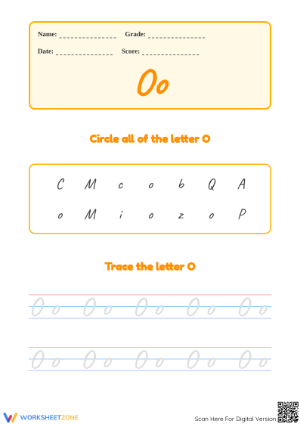
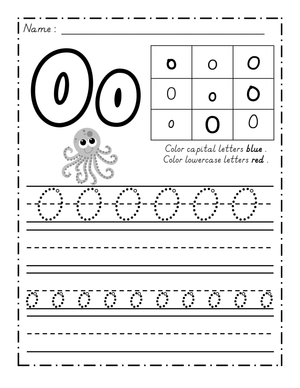
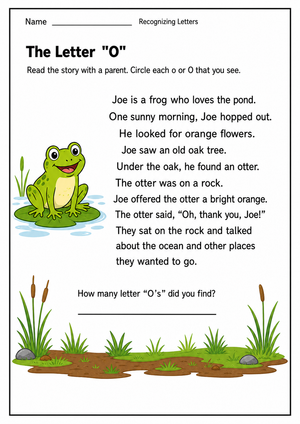
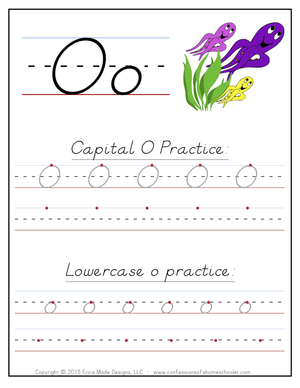
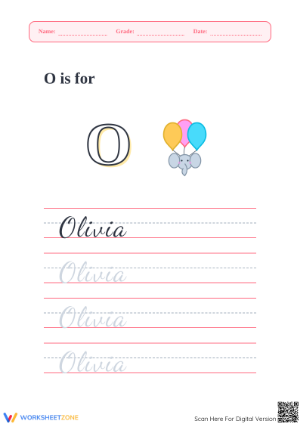
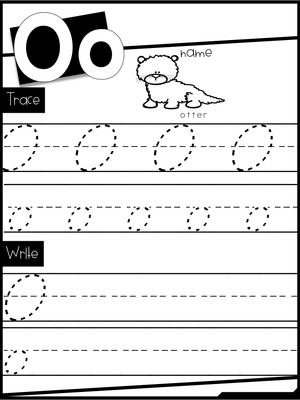
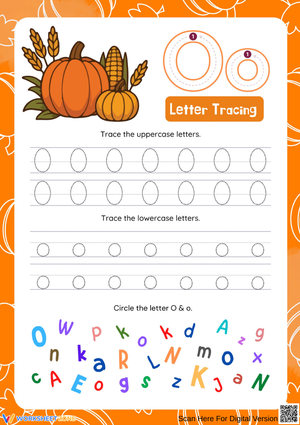
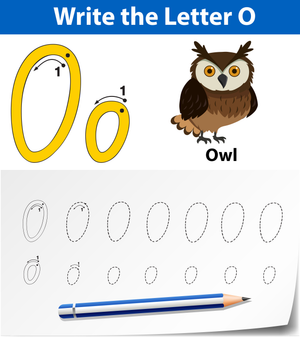
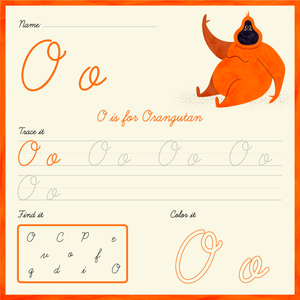
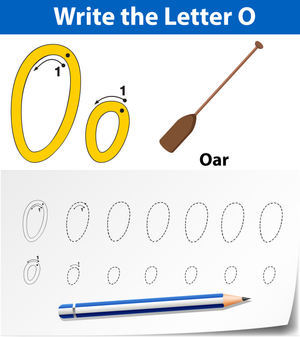
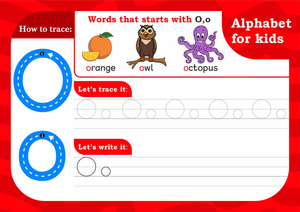
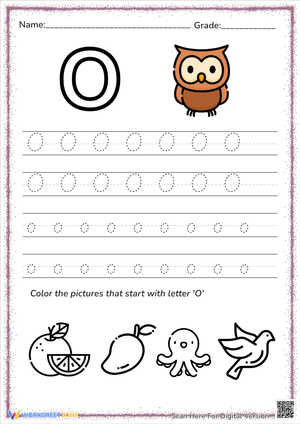
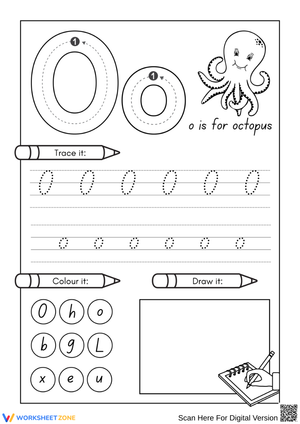
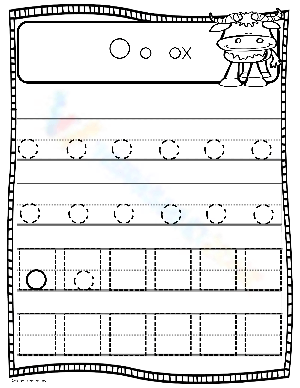
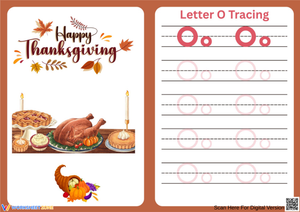
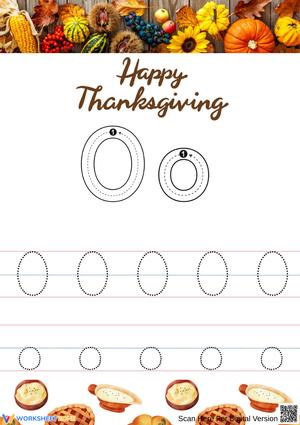
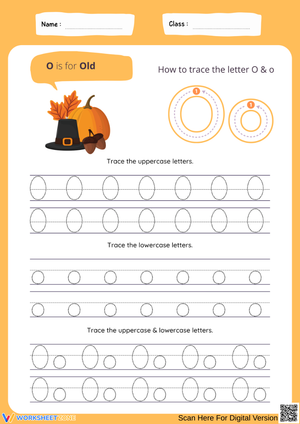
A single letter can anchor a full week of alphabet instruction, and letter O is one of the friendliest letters to teach. Its rounded shape gives young writers an early win with pencil control, and its short and long sounds show up in words your students already recognize. These letter O worksheets give you ready-to-print pages for tracing, matching, and letter-sound review across whole-class, small-group, and intervention time, so you can plan a focused rotation without hunting for materials the night before.
Where Letter O Fits in Your Kindergarten Standards
Letter recognition is not a side skill in kindergarten. It sits inside CCSS.ELA-LITERACY.RF.K.1.d, which asks students to recognize and name all upper- and lowercase letters of the alphabet. When you assign letter O worksheets, you are working directly toward that standard, not just filling a center. Naming the uppercase O and lowercase o, matching the two forms, and connecting them to a beginning sound are all measurable behaviors you can check against RF.K.1.d during a unit.
Letter-naming fluency is one of the earliest quantitative signals you get about a reader. In a kindergarten study of children at risk for learning to read, 71.8% of 2,100 students had attained full letter-naming knowledge by May of the school year, and that same letter-naming knowledge accounted for 31% of the variance in their spelling skill. The practical takeaway for your planning: the students who are still slow to name letters like O in the winter are the ones most likely to need targeted spelling support in the spring, so a quick letter O check doubles as an early-warning screen.
What Letter O Worksheets Actually Build
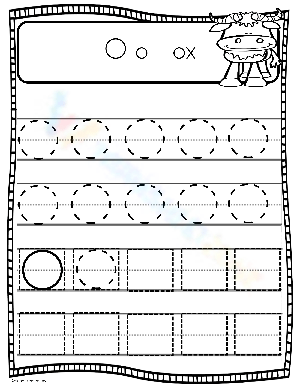
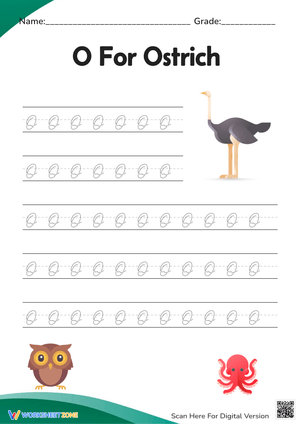
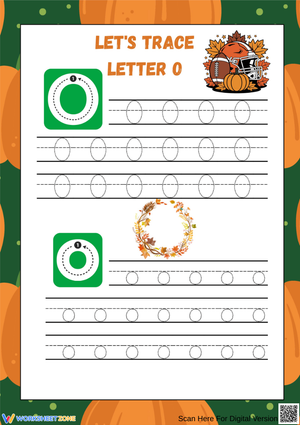
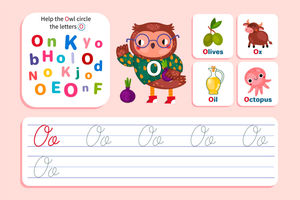
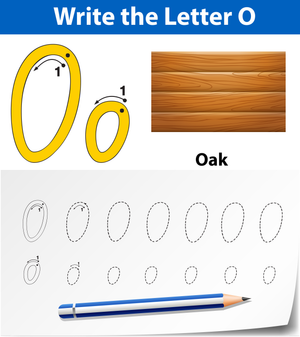
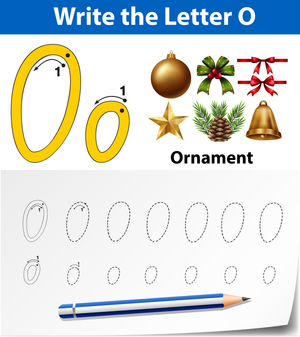
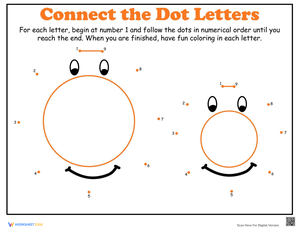
Recognition is the headline, but a good letter O page trains several skills at once. Tracing rounded strokes helps preschoolers and kindergartners build the pencil-control and stroke-direction habits they need before they attempt full alphabet writing. The circular path of both the uppercase and lowercase O reinforces a continuous, closed stroke that transfers to letters like C, G, and Q. Picture-sound pages add phonemic awareness by asking students to connect the letter to its sound in a word.
- Letter recognition and naming for uppercase O and lowercase o
- Fine motor and pencil-control practice through tracing
- Beginning-sound awareness with short and long O
- Discrimination between visually similar letters such as O, Q, and C
- Handwriting stamina in short, low-frustration doses
Classroom Implementation
A predictable rotation makes a "Letter O week" easy to run. Build a four-station center block that students move through in small groups while you pull an intervention table.
- Trace station: Uppercase and lowercase O tracing pages with directional arrows.
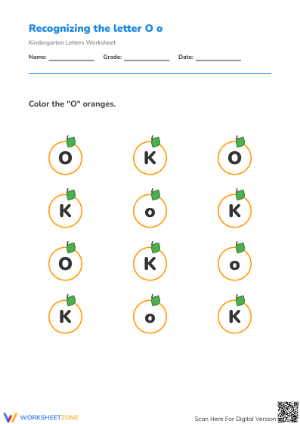
- Match station: Cut-and-paste pairs that link capital O to lowercase o.
- Sound station: Picture cards sorted by short and long O, glued onto a worksheet.
- Teacher table: A three-minute letter O naming check with your intervention group.
Rotate groups every eight to ten minutes so attention stays high. Keep a small stack of finished pages as work samples; they document progress toward RF.K.1.d for your data binder and for family conferences. If your block runs short, drop the match station and keep tracing, sound, and the teacher table, since those three carry the most instructional weight.
Common Letter O Confusions to Watch For
Even a simple round letter trips up new readers in predictable ways, and knowing the patterns helps you plan targeted correction. The most common mix-up is confusing the lowercase o with the number zero, especially on pages that combine letters and digits. Keep early letter O worksheets letter-only so students are not sorting two symbols at once. A second frequent error is reversing the start point of the stroke; some students begin the O at the bottom, which makes the closed shape wobble and later slows their C and G formation.
Watch for students who can trace O perfectly but cannot name it on a bare flashcard. Tracing is a motor task and naming is a recognition task, so mastery of one does not guarantee the other. Always check both. Finally, some students learn the letter name but attach only the long O sound because it matches the name, missing the short O entirely. Balance your picture sets so short O words appear at least as often as long O words during the week. Catching these small errors in week one prevents them from hardening into habits that show up across the rest of the alphabet.
Frequently Asked Questions
1. What skills do letter O worksheets build besides letter recognition?
They build fine motor control through tracing rounded strokes, beginning-sound awareness through short and long O practice, and visual discrimination between similar round letters like O, C, and Q. Many pages also give handwriting stamina practice in short, manageable doses.
2. What age or grade level are letter O worksheets appropriate for?
They fit pre-K, kindergarten, and early first grade. Pre-K students use them for enrichment and first exposure, kindergartners use them to work toward CCSS RF.K.1.d, and first graders who need review can use them in intervention groups.
3. How can teachers use letter O worksheets in small-group intervention?
Pull a small group to your teacher table, reduce the items per page, and model the O stroke aloud before students trace. Add a quick naming check at the start and end so you can track whether recognition is moving from emerging to mastered.
4. How do letter O worksheets connect to Common Core kindergarten standards?
They target CCSS.ELA-LITERACY.RF.K.1.d, which requires kindergartners to recognize and name all upper- and lowercase letters. Naming, matching, and forming both the uppercase O and lowercase o are direct evidence toward that standard.
5. How often should teachers assign letter O practice during an alphabet unit?
A focused "Letter O week" with daily short practice works well, followed by brief spiral review when you cover later letters. Keep individual sessions short and frequent rather than long, since young learners retain more from repeated low-stress reps.