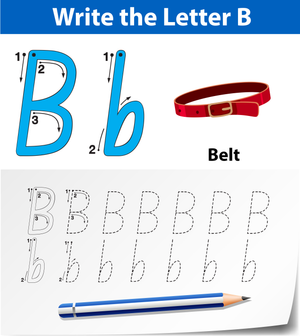
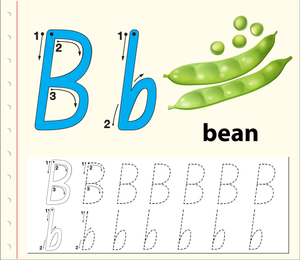
Where Letter B Worksheets Fit in Your Alphabet Plan
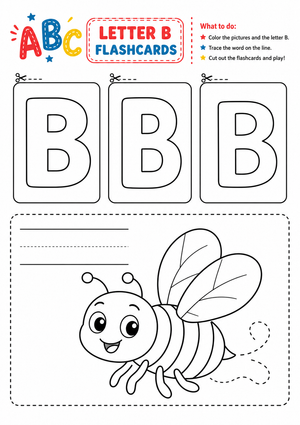
When you pull a stack of letter B worksheets for your pre-K or kindergarten table, the goal isn't to fill twenty minutes. It's to move one specific letter from unfamiliar to automatic. Letter B usually lands early in an alphabet sequence, and it gives students a clean, high-contrast shape to practice before trickier letters arrive. The strongest teachers treat these pages as one station inside a planned unit, not as standalone busywork that happens to feature a bee.
Alphabet knowledge is worth that attention. Reading Rockets breaks it into four parts: alphabet recognition, letter-name knowledge, letter-sound knowledge, and letter production. A good letter B page touches all four at once, because a child names the letter, hears the /b/ sound, spots B among other letters, and forms the strokes with a pencil. That overlap is why a single worksheet can do more work than it looks like on paper.
Here is the detail many pacing guides miss: of those four components, letter-sound knowledge has the closest relationship to decoding ability, so a worksheet that only asks students to trace the shape leaves the highest-value skill on the table. Pairing each tracing row with a spoken /b/ and a keyword like ball or bus turns a formation drill into sound practice, which is where the reading payoff actually lives.
What the Research Says About Early Letter Practice
Colleagues and administrators sometimes ask why so much time goes to single letters. The honest answer is that alphabet skills predict later reading more reliably than almost anything else you can measure at school entry, so the minutes are an investment rather than a delay.
Reading Rockets, drawing on early-literacy research, reports that alphabet knowledge is the single strongest school-entry predictor of later reading success, and that children who enter kindergarten recognizing 18 or more letters learn to read markedly faster than peers who know fewer than 10.
That gap is why letter B practice counts as instruction, not filler. The same body of research ties strong kindergarten letter-name knowledge to first-grade reading ability, right alongside phonological processing. When you help a student lock in B, you're building part of that predictive base, one letter at a time.
Uppercase, Lowercase, and the /b/ Sound
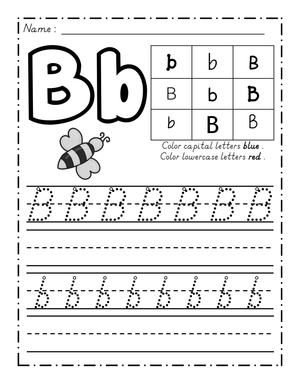
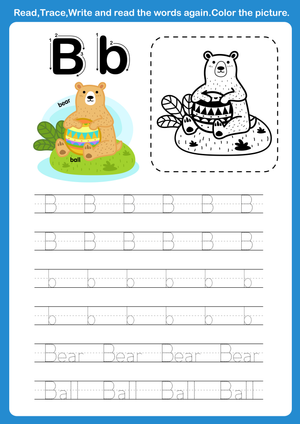
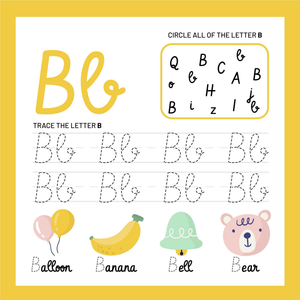
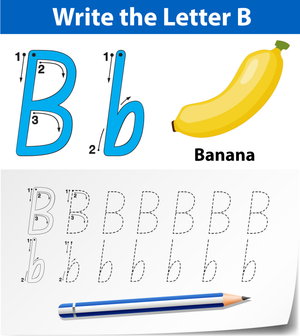
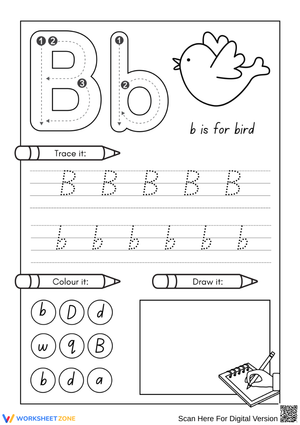
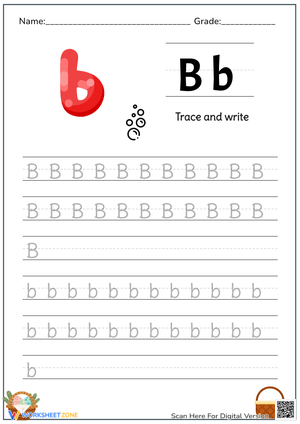
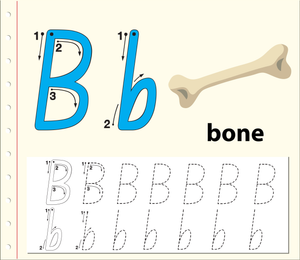
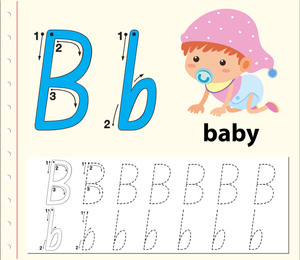
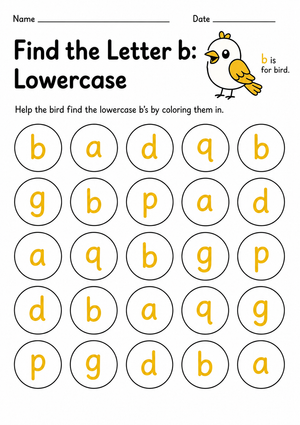
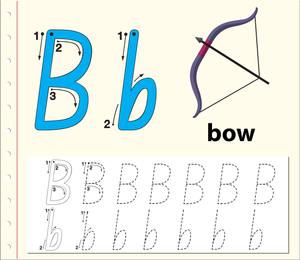
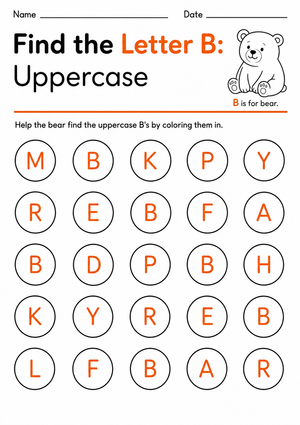
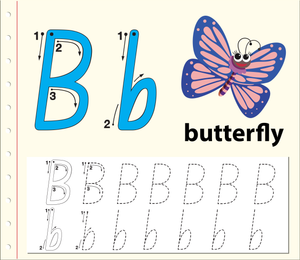
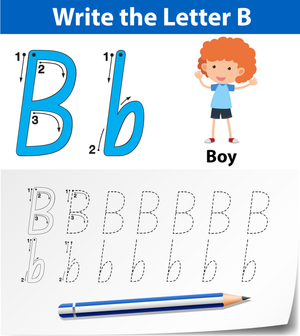
Most letter B worksheets show both B and b, and it helps to be intentional about how you use them. Uppercase B has two bumps stacked against a single vertical line, which many students find easier to control than the lowercase form. Lowercase b, with its straight line first and a single bump to the right, is the version students will read and write far more often, so give it the majority of practice time.
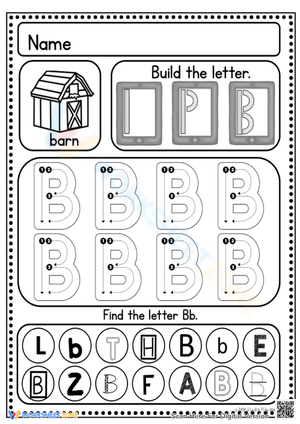
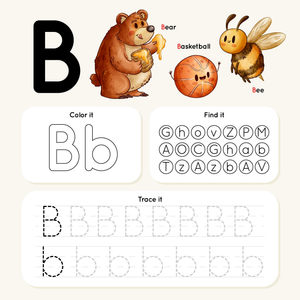
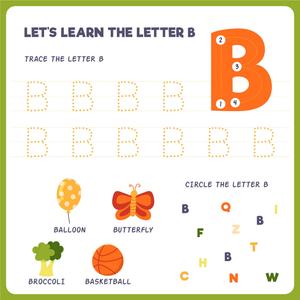
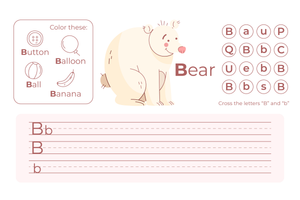
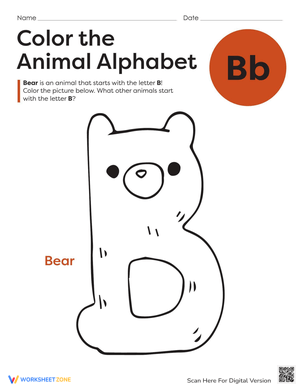
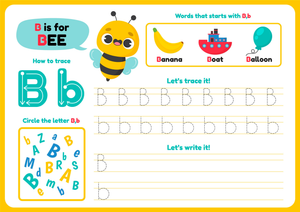
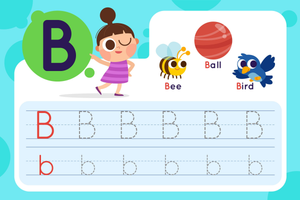
Layer the /b/ sound onto every page. As students trace, have them whisper the sound and then a keyword. You can build a short list on the board with ball, bear, book, and bus, then ask students to circle the picture on the worksheet that starts with /b/. This keeps letter-sound knowledge front and center instead of letting the activity slide into silent copying.
Heading Off the b/d Reversal
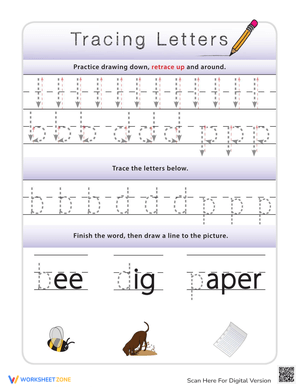
The b/d mix-up is the most predictable snag in letter B instruction, and it's worth planning for rather than reacting to. Both letters share a circle and a stick, so young writers naturally confuse which side the bump belongs on. Worksheets that isolate lowercase b and repeat the straight-line-then-bump motion give students a consistent motor pattern to lean on.
Keep your expectations developmentally honest here. Research on early handwriting treats variation in how children form letters as a normal, useful part of learning, not a defect to stamp out. A few reversals in October are information, not alarm. Use a simple cue like bat first, then the ball, and let repeated, low-pressure practice do the smoothing rather than heavy correction that can make a child tense up.
Multisensory Extensions Beyond Tracing
Tracing pages work best when they anchor a wider set of activities rather than standing alone. Handwriting itself is a strong lever: as the Iowa Reading Research Center notes, practice activates brain networks tied to memory and language while engaging fine motor coordination, letter-sound awareness, and language development at the same time. That combination is why forming a letter by hand often sticks better than tapping it on a screen.
Wrap a few quick extensions around each worksheet. Have students air-write a giant B before they pick up a pencil, trace the shape in a tray of sand or salt, and connect the letter to their own world by hunting for B in classmates' names or the classroom library. These tactile and personal links give the worksheet meaning and help the shape and sound settle in memory.
Letter B also sticks faster when students see it working in words they care about. A class almost always has a Ben, a Bella, or a Brianna, and noting that their name opens with the same B on the page makes the letter feel useful rather than abstract. Build a small B word bank on chart paper, revisit it all week, and have the group say /b/ each time a new word joins the list.
Using Completed Worksheets as Formative Assessment
A finished letter B page is a small data source, so read it before it goes in the folder. Scan for the direction of the bump, the starting point of each stroke, pencil grip clues, and whether the student matched B to /b/ picture prompts correctly. These signals tell you who is ready for the next letter and who needs another short round.
Sort the pages into quick groups such as secure, almost there, and needs reteaching, and let that sort drive tomorrow's small groups. This turns a routine worksheet into a planning tool and catches formation or reversal habits while they're still easy to reshape, long before they harden into automatic errors in first grade.
Classroom Implementation
Spread letter B across a week so practice stays short and frequent instead of one long sitting. A workable rhythm looks like this:
- Day 1: Whole-group introduction. Model uppercase and lowercase B, say the /b/ sound, and brainstorm B words together.
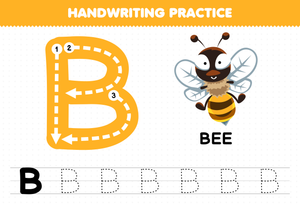
- Day 2: Guided tracing worksheet at your table, watching stroke order and grip in real time.
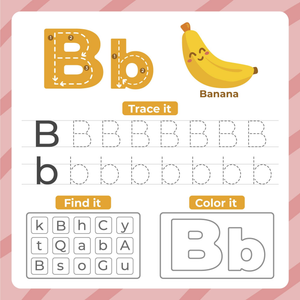
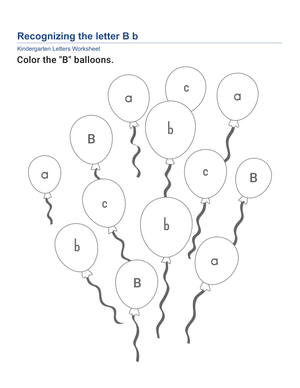
- Day 3: Independent center rotation with a recognition-and-sound page while you pull a small group.
- Day 4: Targeted intervention for students showing b/d confusion, using isolated lowercase b practice.
- Day 5: Quick check plus a take-home page so families can reinforce the same formation you taught.
Keep each session to about eight to ten minutes. Short, repeated exposure fits how early letter learning actually consolidates, and it leaves room to cycle back to B during later review weeks rather than treating one week as your only shot at mastery.
Frequently Asked Questions
1. What age or grade level is right for letter B worksheets?
Most students meet letter B worksheets in pre-K and kindergarten, roughly ages four to six. They also serve first-grade intervention groups and any older student who still needs formation or letter-sound support, so lean on the skill a child shows rather than the number on the roster.
2. How do these worksheets help with b/d reversal confusion?
Pages that isolate lowercase b and repeat the straight-line-then-bump motion build a steady motor pattern, which reduces guessing about where the bump goes. Add a verbal cue and remember that occasional reversals are a normal stage of early writing, not a sign of a disorder.
3. How many letter B sessions are needed before moving on?
There's no fixed number, but several short sessions across a week usually beat one long block. Watch the work: when a student names B, produces the /b/ sound, and forms both cases with reasonable control, they're ready to move ahead, with B folded into later review.
4. Should letter B worksheets focus on uppercase, lowercase, or both?
Introduce both so students can recognize each form, but give lowercase b the larger share of practice, since it appears far more often in real reading and writing. Uppercase B pairs naturally when you talk about names and the start of sentences.
5. How can teachers use letter B worksheets in small groups?
Small groups let you watch stroke order, correct grip gently, and target the exact students who confuse b and d. Use completed pages to sort learners by need, then reteach with tactile extensions like air writing or sand tracing before returning to a paper page.