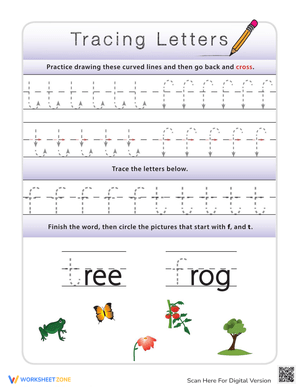
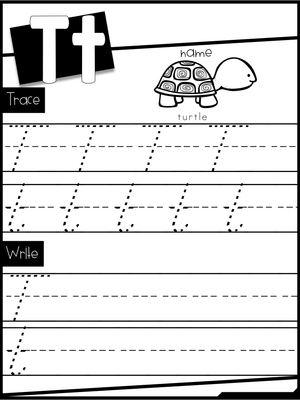
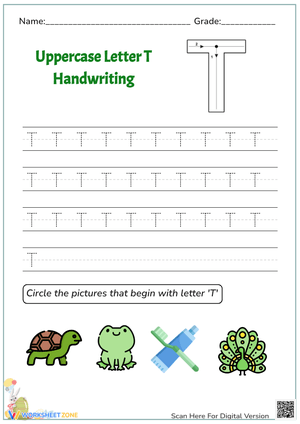
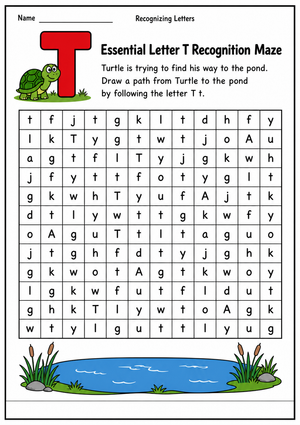
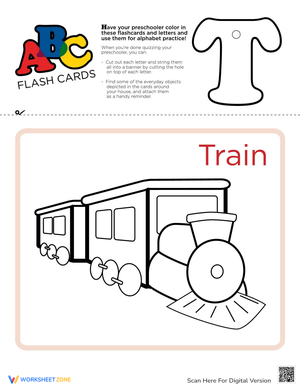
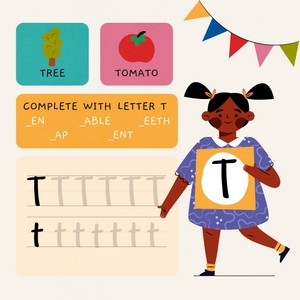
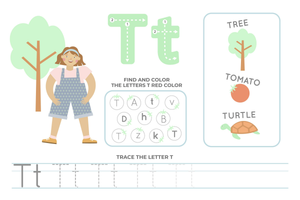
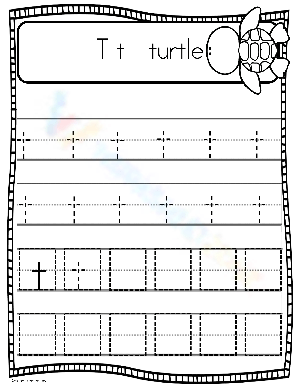
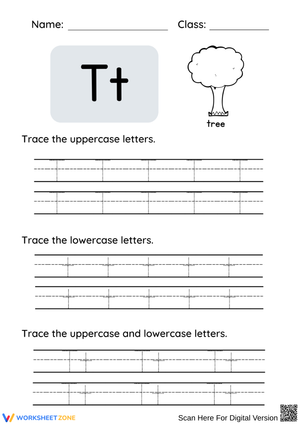
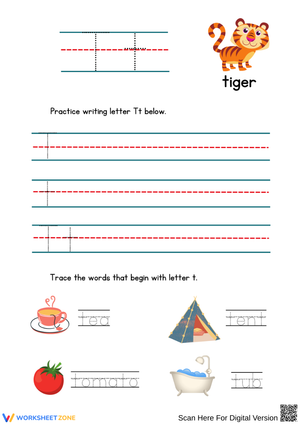
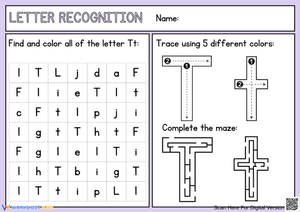
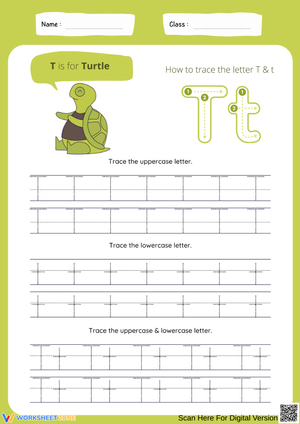
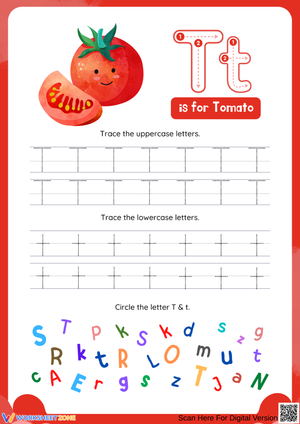
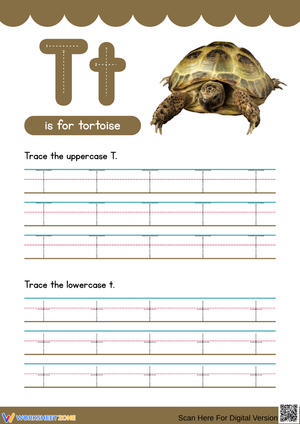
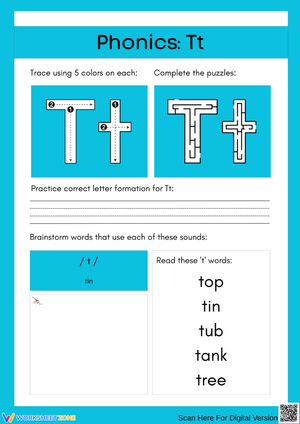
Letter T looks simple on the page, but it asks young writers to coordinate two separate strokes into one clean letter shape. A top-down vertical line meets a horizontal crossbar, and getting that intersection right takes repetition. For preschool and kindergarten teachers building an alphabet sequence, letter t handwriting worksheets give students a low-pressure way to rehearse this motion again and again until it becomes automatic. That automaticity matters later: when the motor pattern for T is secure, students spend less mental energy thinking about pencil movement and more energy connecting letters to sounds and words.
Teaching the Correct Stroke Order for Uppercase and Lowercase T
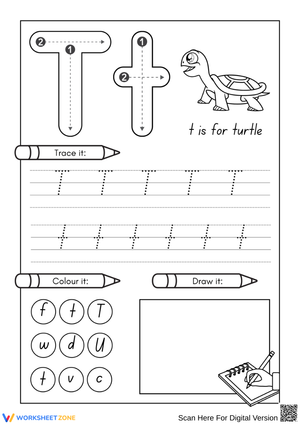
Uppercase T starts with a straight vertical line drawn from top to bottom, followed by a horizontal line drawn left to right across the top. Lowercase t follows a similar pattern but starts slightly below the top line, extends down through the baseline, and adds a shorter crossbar partway down the vertical stroke. Teaching this sequence explicitly, rather than letting students guess at stroke direction, prevents habits that are hard to correct later.
Model the stroke order on a whiteboard or chart paper while narrating each step aloud, such as down, then across. Letter t handwriting worksheets that include directional arrows and numbered strokes give students a visual reference they can return to independently, which frees you to circulate and coach individual students during practice time.
Building a Daily Handwriting Warm-Up Routine
Short, consistent practice beats occasional long sessions. A five-to-seven-minute handwriting warm-up at the start of a literacy block gives students a predictable routine and keeps letter formation fresh without crowding out other instruction. Rotate letter T worksheets into this warm-up alongside multisensory activities like air writing, tracing in sand trays, or forming the letter with pipe cleaners.
A meta-analysis and meta-synthesis of handwriting fluency research spanning 2000 to 2020 found that repeated, structured practice tasks produced measurable gains in handwriting proficiency among preschool and elementary-age students, reinforcing that brief, frequent practice sessions are more effective than infrequent long ones for building durable letter formation skills.
Center-based classrooms can rotate letter T worksheets through a writing station, pairing them with a checklist so students self-monitor stroke order before moving to independent tracing. This structure supports both whole-class instruction and smaller rotating groups without requiring a separate lesson plan for each setting.
Classroom Implementation
Introduce letter T with a short whole-group demonstration, then hand out worksheets for guided practice while you circulate. Encourage students to say the stroke directions aloud as they write, since verbal narration reinforces the motor sequence. For students who need extra support, a brief small-group check-in during center time can reinforce grip and stroke direction without singling anyone out in front of the whole class.
Store finished letter T worksheets in a simple alphabet portfolio so families and specialists can see formation progress over the year. This also gives you a quick reference when planning review cycles, since you can pull past T worksheets to compare against current samples and confirm whether formation has become more consistent.
Frequently Asked Questions
1. What is the correct stroke order for writing uppercase and lowercase letter T?
Uppercase T is formed with a top-to-bottom vertical stroke followed by a left-to-right horizontal stroke across the top. Lowercase t follows a similar vertical stroke through the baseline with a shorter horizontal crossbar added partway down.
2. At what age or grade level should students master letter T handwriting?
Most students begin forming letter T with guided support in preschool and work toward independent, consistent formation by the end of kindergarten, aligning with CCSS.ELA-LITERACY.L.K.1.A expectations for printing letters.
3. How can teachers use letter T worksheets to support students who reverse or struggle with letter formation?
Watch for reversed strokes or inconsistent crossbar placement on completed worksheets, then offer brief guided practice with verbal narration of each stroke direction to rebuild the correct motor pattern.
4. How do letter T worksheets align with kindergarten literacy standards?
They support CCSS.ELA-LITERACY.L.K.1.A, which addresses printing letters, and CCSS.ELA-LITERACY.RF.K.1.D, which addresses recognizing and naming upper- and lowercase letters.
5. How often should letter T practice be repeated for retention?
Short, frequent sessions of five to seven minutes, repeated across several days and revisited weeks later in mixed-letter review, tend to build stronger retention than a single extended practice session.