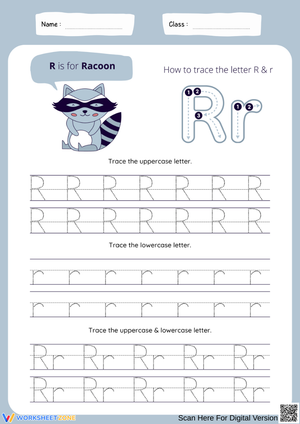
Where Letter R Fits in a Kindergarten Alphabet Unit
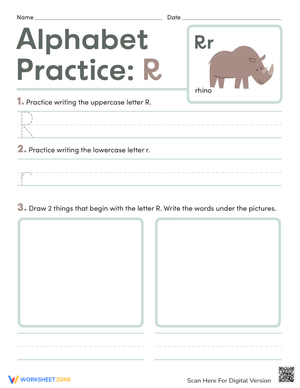
By the time most classes reach R, students have already met a handful of letters, so letter R worksheets work best as one stop inside a planned alphabet sequence rather than a standalone craft. In pre-K and kindergarten literacy blocks, the goal is to connect the letter name, its formation, and the /r/ sound in the same short cycle. When you introduce R, anchor it to names and objects students already know, then hand them a page that asks for tracing, independent formation, and sound matching all in one place.
Placing R inside a system matters because alphabet knowledge is cumulative. Letter-name and letter-sound knowledge at kindergarten entry is one of the strongest predictors of first-grade reading, so every letter you teach adds to a foundation you'll lean on all year. Treat R not as an isolated activity but as a checkpoint in a longer arc toward automatic letter recognition and confident decoding.
Teaching Letter R Formation Without Chasing Perfection
Uppercase R and lowercase r ask for different motor moves, and young writers rarely produce either cleanly on the first try. That's expected. Research on early letter formation shows that variability in children's attempts is a normal, even useful, part of learning to identify and form letters. Consistent practice matters more than exact precision in pre-K and kindergarten, so resist the urge to erase and redo every wobbly line a student makes.
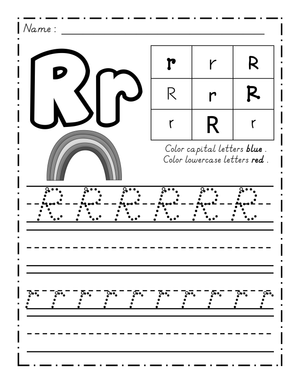
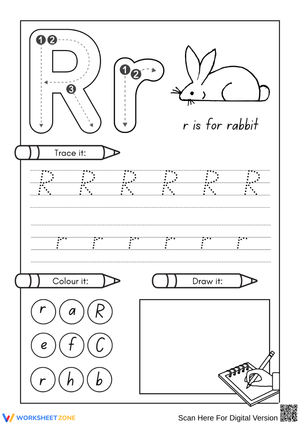
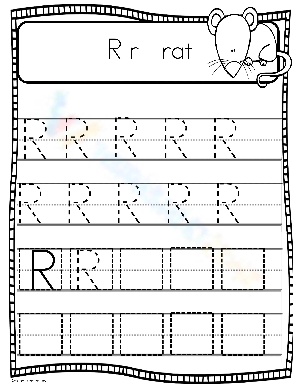
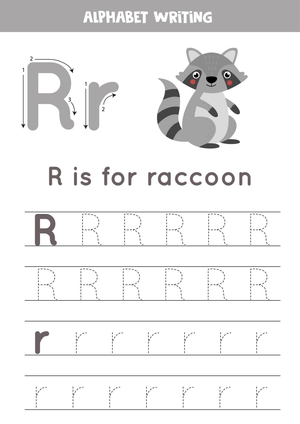
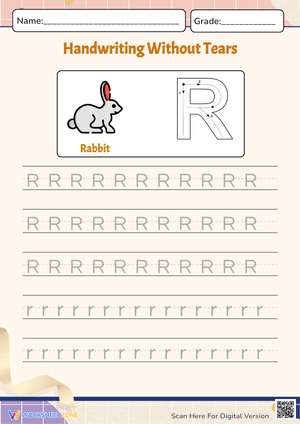
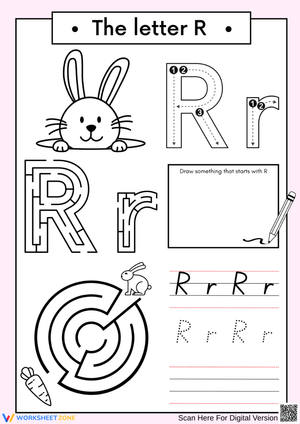
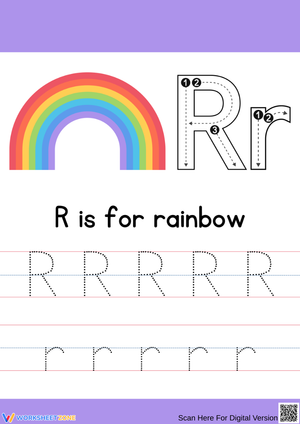
Give students a clear verbal path for each form: for uppercase R, "down, up and around, then a kick out"; for lowercase r, "down, up, and over a little." Pair that language with tracing rows, then a few boxes for independent tries. Worksheets that fade support gradually, moving from full tracing to dotted guides to blank lines, let students carry more of the load as their fine motor control grows over the unit.
Classroom Implementation
A letter R worksheet earns its place when it plugs into a routine. Try a simple daily flow that keeps the page active instead of passive, and keeps you moving among students to catch errors early.
- Open with a 60-second warm-up: air-write R, then name three words that start with /r/.
- Model both cases on the board using the same verbal path printed on the worksheet.
- Give students tracing rows first, then independent boxes, then a sound-match strip.
- Pair the page with a sensory center, such as forming R in sand or with playdough, since combining mnemonic instruction with fine motor centers has boosted both handwriting and letter-name knowledge.
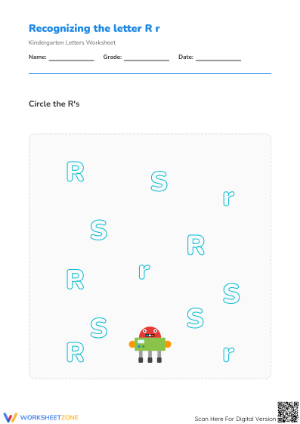
- Close with one quick check: students circle their best R and read a short R word aloud.
Frequently Asked Questions
1. How should teachers introduce letter R in a classroom alphabet sequence?
Introduce R inside your planned sequence rather than in isolation. Connect the letter name, the /r/ sound, and both written forms in one short cycle, anchoring R to familiar names and objects before students trace and write it independently.
2. How much time should be spent on letter formation practice each week?
Aim for roughly 50 to 100 minutes of handwriting practice per week, delivered in short, frequent sessions. Five to ten minutes daily fits young learners better and supports mastery more effectively than a single long weekly block.
3. What is the difference between letter recognition and letter-sound instruction for R?
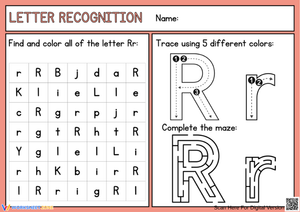
Recognition means naming R and telling uppercase from lowercase. Letter-sound instruction means producing the /r/ sound tied to the letter. Because letter-sound knowledge underlies decoding, worksheets should push past naming to sound production.
4. How can letter R worksheets support small-group or intervention instruction?
Use one master page with adjustments: larger guidelines, fewer boxes, and hand-over-hand support for strugglers, and word-writing or sorting extensions for advanced students. This lets whole-class review and targeted intervention run from the same worksheet.
5. When should letter R worksheets be used for assessment versus practice?
Use supported, guided pages for practice early in the letter cycle. Use a clean, unsupported page at the end as a light formative check of formation, uppercase-lowercase discrimination, and letter-sound matching to guide reteaching.