Where the Letter W Fits in Your Alphabet Sequence
Most systematic phonics programs don't teach letters in ABC order, so the letter W usually shows up later in the sequence, once students have mastered higher-frequency letters like s, a, t, and m. By the time you introduce W, your pre-K or kindergarten students already have a routine for meeting a new letter: name it, say its sound, trace it, and write it. Letter W worksheets slot into that routine as the independent-practice piece, giving each child repeated exposure to both the shape and the /w/ sound.
Because W is a less common initial letter, students get fewer natural encounters with it in decodable text, which makes deliberate practice matter even more. A focused worksheet set lets you build that exposure on purpose instead of hoping it happens incidentally during read-alouds or shared writing.
Building Letter W Formation and Fine Motor Control
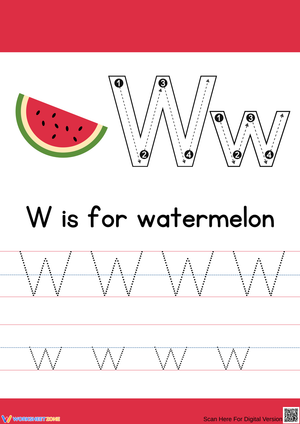
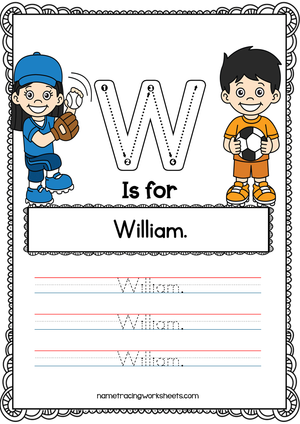
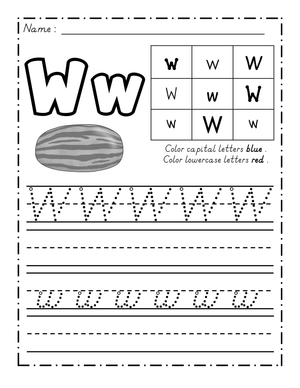
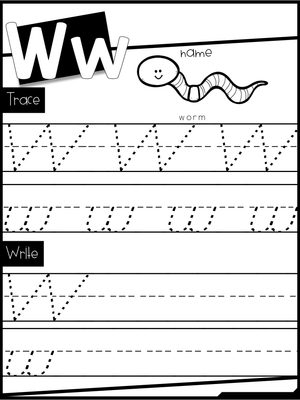
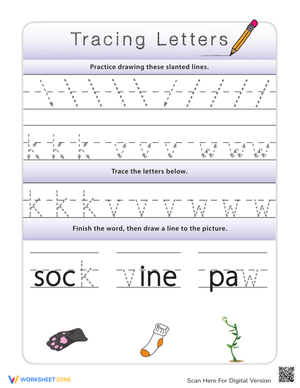
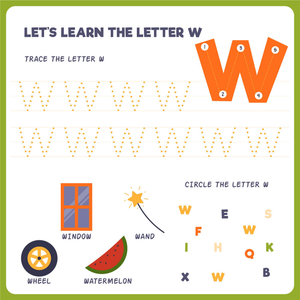
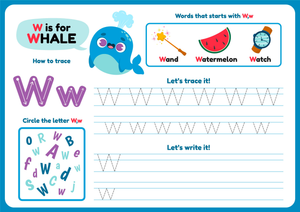
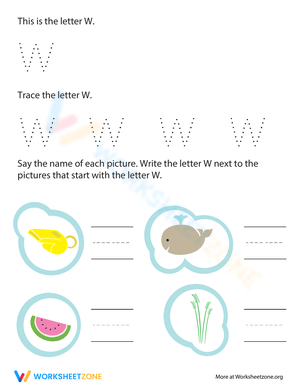
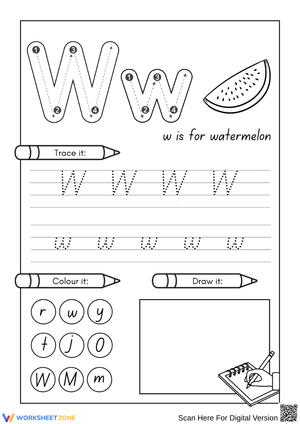
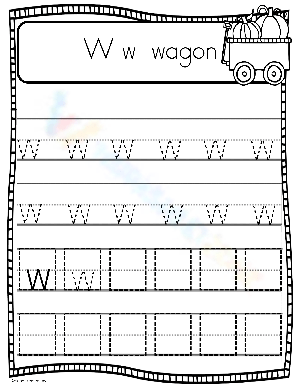
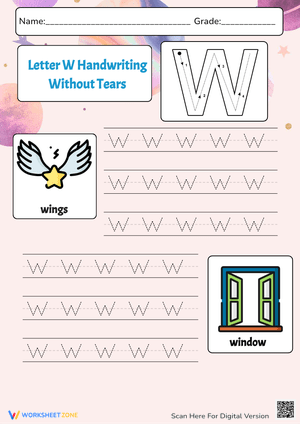
The letter W is one of the friendlier letters to form because it's built from four straight diagonal strokes with no curves or reversals. Tracing worksheets let students internalize the down-up-down-up motion before they attempt it freehand. Start with large models, move to dotted midline guides, and finish with a blank line where students write W on their own.
Handwriting practice does double duty in these early grades. As students trace and copy the letter W, they're also strengthening the fine motor control and pencil grip that support all later writing. Meta-analytic research on handwriting instruction for preschool and elementary students points to explicit, repeated practice as an effective way to build fluency, so the formation reps on a worksheet aren't busywork. Pairing letter recognition with formation means one worksheet advances two developmental goals at once.
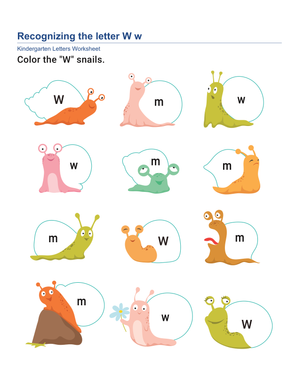
Here's a detail many pre-K teachers overlook: uppercase W and lowercase w share the same shape, unlike most letters where the two cases differ. That symmetry is a teaching gift. You can have students practice both cases on a single letter W worksheet and explicitly point out that the only change is size, which lowers cognitive load and frees up attention for the harder work of anchoring the /w/ sound.
Classroom Implementation
Fold letter W practice into routines you already run rather than adding a separate block. A few options that work in most pre-K and kindergarten rooms:
- Morning warm-up: a two-minute tracing strip students complete as they settle in.
- Literacy center: a rotation station with tracing pages, /w/ picture sorts, and a whiteboard for freehand writing.
- Partner check: students quiz each other on the letter name and sound before turning in the page.
- Take-home practice: a single page that lets families reinforce the exact formation you model in class.
Keep the multi-sensory element front and center. Have students trace the letter W in the air, on a sand tray, or on a partner's back before they commit it to paper. That variety keeps practice engaging and gives every learner more than one route to the same skill.
Frequently Asked Questions
1. How should teachers use letter W worksheets in a kindergarten classroom?
Use them as the independent-practice piece of a name-sound-trace-write routine. Introduce the letter W together, model formation, then let students complete a worksheet in a center or warm-up while you observe and pull anyone who needs a closer look.
2. What skills do letter W worksheets build besides handwriting?
Beyond formation, they build letter recognition, letter-naming fluency, and letter-sound correspondence for /w/. The tracing itself also develops the fine motor control and pencil grip that support all later writing tasks.
3. How do letter W worksheets align with Common Core standards?
They support CCSS RF.K.1d, which covers recognizing and naming upper- and lowercase letters, and CCSS RF.K.3a, which asks students to produce the primary sound for each consonant. A page that pairs tracing with /w/ picture cues touches both.
4. When should teachers introduce the letter W?
Follow your program's scope and sequence rather than strict ABC order. Most systematic sequences introduce W after higher-frequency letters, once students have a stable routine for learning a new letter and its sound.
5. How can letter W worksheets help struggling readers?
In small-group intervention they give struggling students extra, targeted repetitions with the letter's name, shape, and sound. Because alphabet knowledge predicts later reading, these focused reps are among the highest-value practice you can offer early.