These muscle printable worksheets give teachers a direct path from lecture content to student-produced evidence of understanding — no lab materials required, no tech setup, and no waiting for a shared device cart. The set spans tissue classification, anatomical labeling, functional relationships between muscle groups, and the vocabulary that shows up on unit tests and standardized assessments alike.
The Specific Skills Targeted
Three muscle tissue types anchor the earliest worksheets in the set. Students sort skeletal, smooth, and cardiac muscle by location, appearance, and voluntary versus involuntary control. This sorting work matters because the three-way distinction is conceptually clean in a diagram but blurs quickly when students try to apply it — more on that below.
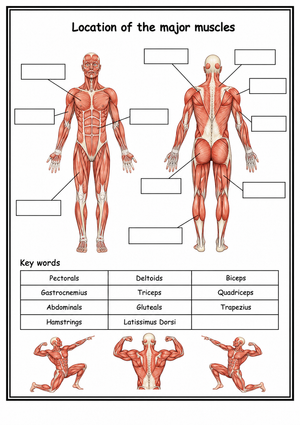
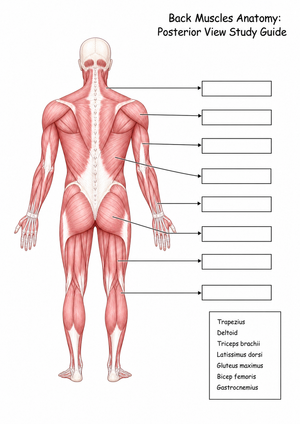
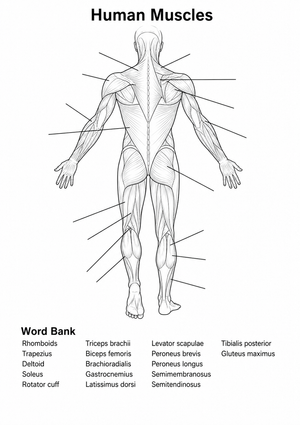
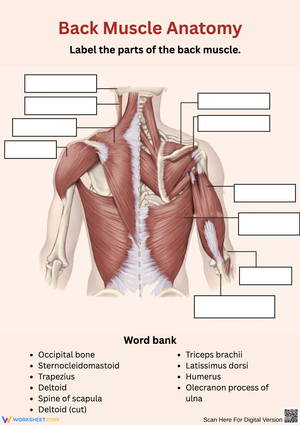
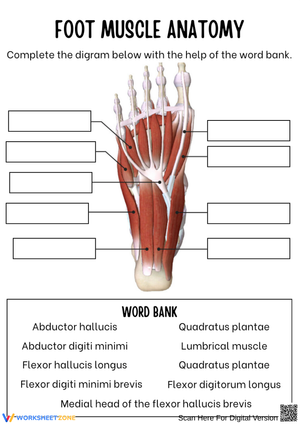
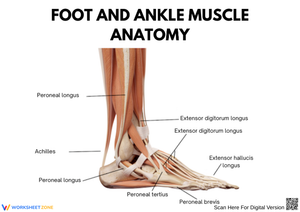
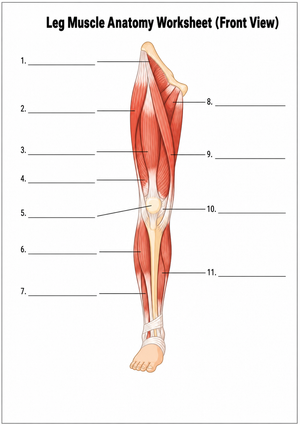
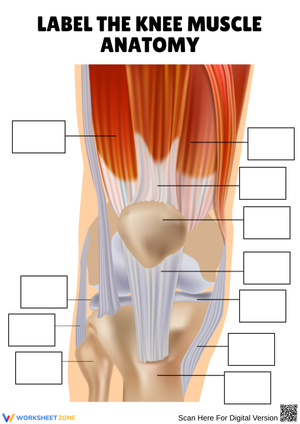
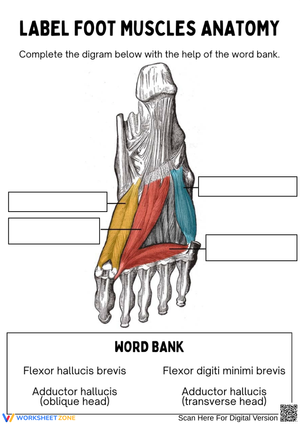
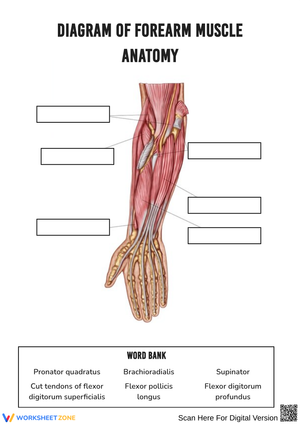
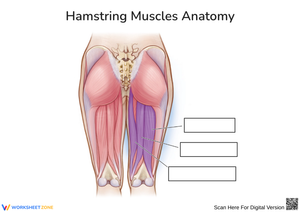
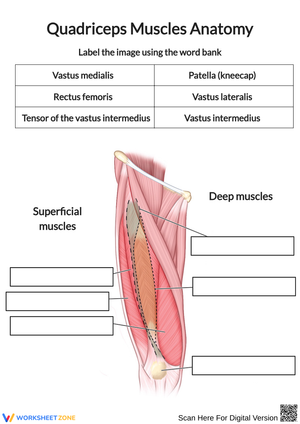
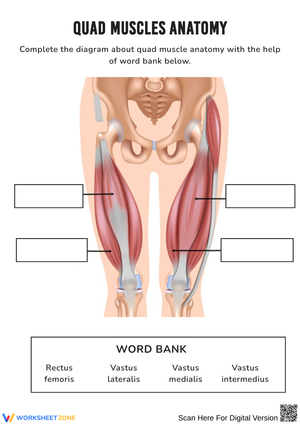
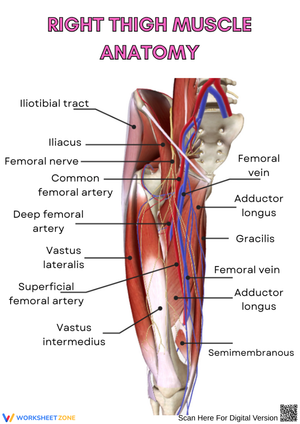
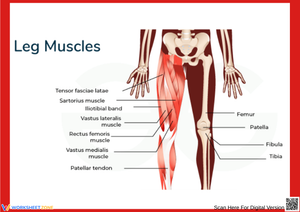
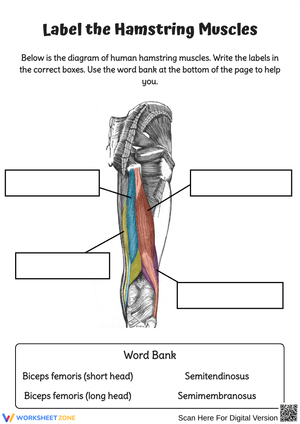
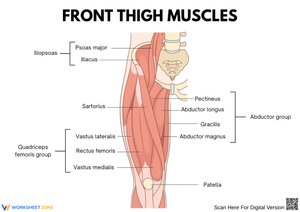
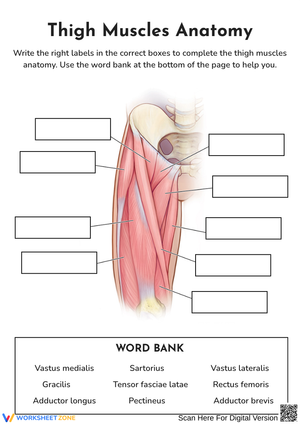
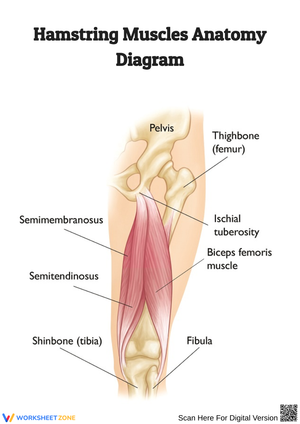
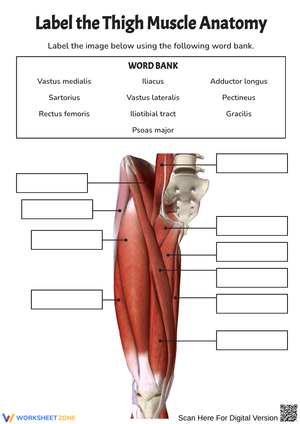
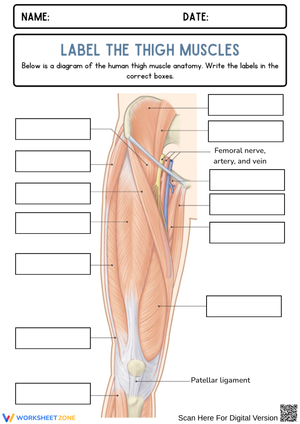
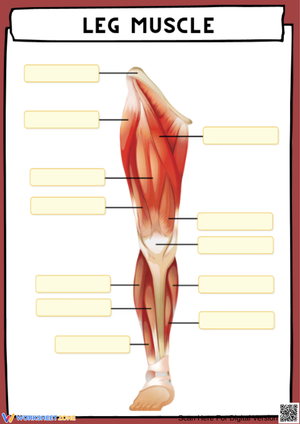
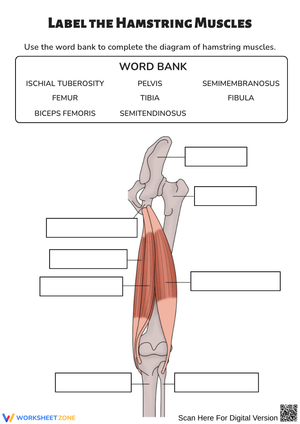
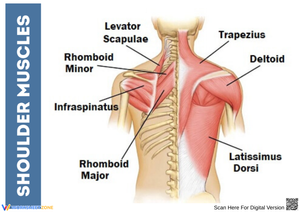
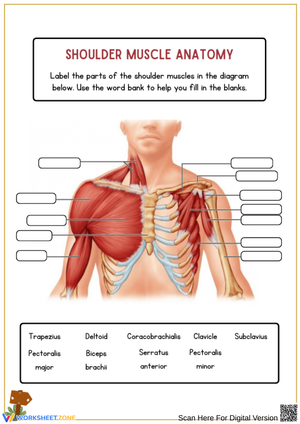
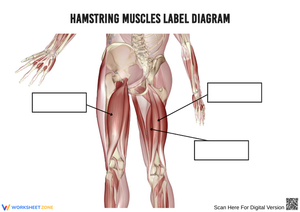
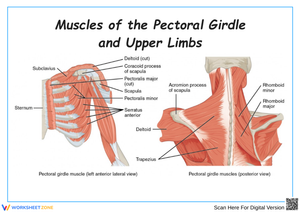
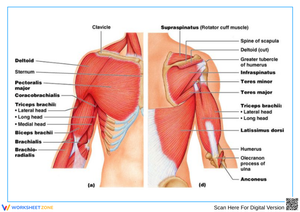
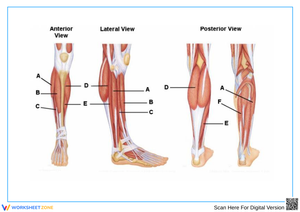
Labeling worksheets present anterior and posterior body outlines where students identify major skeletal muscles: deltoids, trapezius, pectorals, biceps, triceps, rectus abdominis, quadriceps, hamstrings, and gastrocnemius. These exercises do double work — they build anatomical vocabulary and force students to think spatially about where muscles attach and how they cross joints.
Additional worksheets cover antagonistic pairs, requiring students to annotate which muscle contracts and which relaxes during flexion and extension at the elbow; tendon and ligament functions, addressed through short-answer prompts that distinguish the two connective tissues; and vocabulary reinforcement through matching exercises and crossword formats targeting terms like myofiber, origin, insertion, and fascia.
Errors Students Reliably Make — and How to Address Them
The confusion that surfaces most consistently is between smooth and cardiac muscle. Both are involuntary, so students lump them together on comparison charts. The distinction — cardiac muscle is striated and rhythmically self-initiating, smooth muscle is nonstriated and responds to local chemical signals — requires more than one instructional pass. Students who sort correctly on Thursday often revert the following week unless the difference reappears in a new context, which is exactly what the reading comprehension worksheets in this set provide.
A second pattern appears on posterior labeling diagrams: students confuse the trapezius and the deltoid because both sit in the shoulder region. The fix is asking them to trace each muscle's origin and insertion rather than match by silhouette shape alone.
The subtlest error involves antagonistic pairs. Students asked to explain how the biceps and triceps cooperate will frequently write that both muscles contract simultaneously. The word "antagonistic" is not yet doing cognitive work for them. Worksheets that ask students to draw directional arrows showing contraction, then label the resulting joint movement, resolve this more reliably than verbal re-explanation.
Fitting These Worksheets Into Your Unit Sequence
Vocabulary matching and sorting activities belong in the first two class periods, before students encounter full anatomical diagrams. Front-loading the terminology reduces cognitive overload when labeling asks students to recall and place a dozen muscle names simultaneously — they are already carrying enough in working memory without decoding unfamiliar words at the same time.
The labeling worksheets work best mid-unit, after an anatomical overview but before any summative checkpoint. Pair the anterior diagram worksheet with a brief flex-and-point routine: have students stand, flex each major muscle group, and locate it on their own body before writing anything on paper. That five-minute physical priming step measurably improves recall during the worksheet itself, and it gives kinesthetic learners a legitimate entry point into what can otherwise feel like a purely verbal exercise. These muscle printable worksheets slot into this sequence most naturally when each format is matched to a specific phase of instruction rather than distributed as a packet on day one.
Reserve reading comprehension and short-answer worksheets for the final week of the unit. By then, students have the vocabulary to move through a passage on muscle contraction without stopping at unfamiliar terms every other sentence.
Standard Alignment
MS-LS1-3 under the Next Generation Science Standards asks middle school students to construct an argument supported by evidence that the body is a system of interacting subsystems composed of groups of cells. The muscular system is one of the clearest entry points for this standard because its connections to the skeletal system (attachment points), nervous system (motor neuron signals), and circulatory system (cardiac muscle function) are concrete and visually demonstrable. Worksheets that ask students to trace a nerve signal to a specific skeletal muscle, or to explain how cardiac muscle failure disrupts blood delivery, build exactly the cross-system reasoning the standard targets. Students who complete this set as formative preparation consistently arrive at summative assessments already integrating multiple body systems — they made those connections during worksheet practice, not for the first time on the exam.
Tailoring the Set for Different Student Levels
For students who need additional support, add a word bank to labeling diagrams and reduce the initial muscle count to six, expanding the list once accuracy stabilizes. Providing one completed row in a comparison chart gives students a structural model without removing the cognitive demand of the remaining cells. Students with IEP accommodations for reduced written output benefit most from the cut-and-sort and diagram formats, which generate demonstrable evidence of understanding without requiring extended prose.
For students ready to work beyond grade-level expectations, remove the word bank from the muscle printable worksheets entirely and add extension prompts: "What would happen to range of motion at the elbow if the biceps tendon were severed?" or "Explain why cardiac muscle fatigue is life-threatening while gastrocnemius fatigue is only uncomfortable." These questions require applying tissue-type knowledge in a clinical reasoning frame — an appropriate stretch for students moving toward advanced science coursework.
Frequently Asked Questions
What grade levels does this set work for?
The set spans grades 5 through 10, with natural break points by complexity. Worksheets covering the three tissue types and basic major muscles suit upper elementary and early middle school. Antagonistic pair analysis, tendon and ligament distinction, and cross-system connections fit grades 7 and 8. Reading comprehension on contraction mechanics works for grades 9 and 10. A sixth-grade teacher and a ninth-grade biology teacher will draw from different parts of the same set.
Do the worksheets come with answer keys?
Answer keys accompany each worksheet. For labeling diagrams, the key shows correctly placed labels on the same body outline students use, so comparison is immediate. When students self-check against a key that matches their own diagram format, they identify precisely which muscle they misplaced rather than cross-referencing a separate text list.
How are tendons and ligaments addressed?
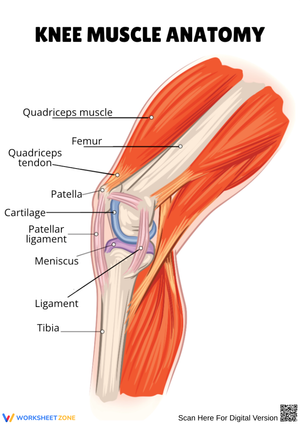
Several worksheets directly target this distinction. It deserves deliberate attention: students who define both terms correctly on a vocabulary exercise still regularly swap them when applying them to a specific joint. Writing "ligament" at the point where the Achilles tendon meets the calcaneus is a reliable error pattern. Short-answer prompts requiring students to name the tissue type and explain its role in a given scenario are the most reliable format for catching and correcting that substitution.
Can these worksheets function as assessments, or are they practice only?
Both. The muscle printable worksheets in this set are structured so that lower-demand formats — vocabulary matching, sorting — serve formative purposes, while labeled diagrams without word banks and short-answer synthesis questions function as summative checkpoints. A teacher running a two-week unit can use the set to build a complete assessment picture without sourcing materials from multiple places.